 Florida Atlantic University is hosting the first Arctic-Florida Symposium next week (May 3-5). This is a big event and should prove interesting I will be speaking. The idea is to evaluate the arctic and Florida and open some dialogue. Florida and Alaska would seem to be opposites when it comes to many things. Alaska is cold; Florida is the land of eternal summer. Alaska has snow and blizzards; Florida has tropical storms with pounding rain. Sea Level rise is a critical concern to much of Florida’s coast, but much of Alaska’s coast is mountains. Temperatures affect the permafrost in Alaska, but heat is not new in Florida, where permafrost has not existed in millions of years, if ever. So how are these two states, located over 5000 miles apart, similar? That was the question posed before the Arctic-Florida conference in 2016. The result was that Alaska and Florida share many commonalities, and there is much to learn from each other. For example, population migration is at hand in Alaska. It is in Florida’s future. Likewise diseases have impacted at risk areas in Alaska, portending a potential future condition for southeast Florida. Adaptation strategies are underway in Florida, which can help in Alaska. Roads, water supplies, water storage, wastewater and storm water are all issues that pose challenges to both states, so there are answers in infrastructure adaptation strategies. Many common problems can be solved by sharing information. The Florida–Alaska connection is an example of looking outside the box to find ideas that can be useful to those deemed to be far different. More to come on this….
 Curtailed water use and conservation are common topics of conversation in areas with water supplies limitations. As drought conditions worsen, the need for action increases, so when creating a regulatory framework, or when trying to measure water use efficiency, water supply managers often look for easily applied metrics to determine where water use can be curtailed. Unfortunately, the one-size-fits-all mentality comes with a potential price of failing to fully grasp the consequences decision-making based on such metrics.

 A week or so ago, on a Sunday afternoon, I flew across Middle America to Colorado for a meeting and was again struck by the crop circles that dominate the landscape west of the Mississippi River. They are everywhere and are a clear sign of unsustainable groundwater use. I recently participated in a fly in event for National Groundwater Association in Washington DC, where several speakers, including myself, talked about dwindling groundwater levels and the impact of agriculture, power and economies. The impact is significant. Dr. Leonard Konikow, a recently retired USGS scientist, noted that he thinks a portion of sea level rise is caused by groundwater running off agriculture and from utilities and making its way to the ocean. He indicated that 5% of SLR each year was caused by groundwater runoff, and has upped his estimates in the past 10 years to 13%. This is because it is far easier for water to runoff the land than seep into rocks, especially deep formations that may take many years to reach the aquifer. And since ET can reach 4 ft below the surface, many of the western, dry, hot areas lose most of this water during the summer months. Hence the impact to agriculture, and the accompanying local communities and their economies will be significant.
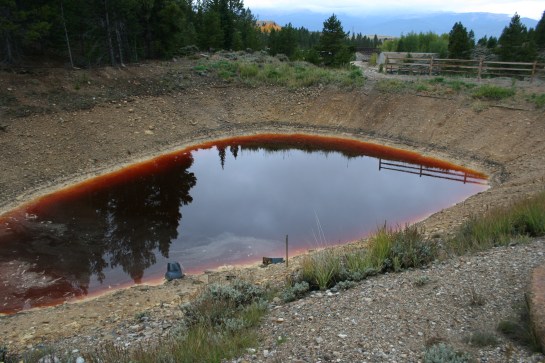 In the last blog we talked about Flint’s water quality problem being brought on by a political/financial decision, not a public health decision. Well, the news get worse. Flint’s deteriorated water system is a money thing as well – the community has a lot of poverty and high water bills, so they can’t pay for improvements. They are not alone. Utilities all over the country have increasing incidents of breaks, and age related problems. So the real question then is who are the at risk utilities? Who is the next Flint? It would be an interesting exercise to see if a means could be developed to identify those utilities at risk for future crises, so we can monitor them in more detail as a means to avoid such crises.
 publicutilitymanagement