Archive

economy


In June, President Obama made a speech about the increase in renewable power that the United States had created in the last 4 years, and announced goals to double this amount in the next four.  Virtually all of this power was solar and wind power.  Little mention was made of hydroelectric or onsite sources.  But the latter have been around much longer than the former sources and there may be options to increase their contributions under the right circumstances. 


Hydroelectric power has been in use in the US for over 100 years.  By the 1930s, 40 percent of the nation’s power came from hydroelectric dams, including some fantastic accomplishments of the time like the Hoover Dam.  Today we have over 100,000 dams in the US, most of which provide power.  Today hydroelectric is only 6 percent of our total.   The reluctance to continue with hydroelectric power involved fisheries, land acquisition costs and legal issues.  Some hydropower options are excellent.  Hurting fisheries (which disrupt local economies dependent on those fisheries) may not be, and therein lies part of the dilemma.


But water and wastewater utilities are actively looking for means to reduce power costs.  Depending on the utility, pumping water can account for 80-90 percent of total power consumption, especially with high service pumps on water systems that require high pressures.  More efficient pumps is one obvious answer, but of fairly limited use unless your pumps are really old.  Variable speed drives can increase efficiency, and the cost is dropping.  But note that with all that high pressure, how do utilities recapture the energy?  We often don’t and the question is whether there is a means to do so that can benefit up.  The first step is looking at plant hydraulics.  Is there a way to recapture energy in the form a pressure.  For example of reverse osmosis systems, we can install a turbine to recapture the pressure on the concentrate side.  They are not very efficient at present, but the potential is there.  On long gravity pipe runs for water supply, a means to recapture pressure might also be available. 


Of course on-site generation of power is a potential solution. Water and sewer utilities have land, and on the wastewater side, methane, so producing power is possible.  This solution, however, may not be embraced by power utilities due to the potential revenue reduction potential and loss of embedded reserve capacity at water and wastewater plants.  As the water facility takes on on-site generation, their load profile may shift significantly placing them in under a different rate structure. This may greatly reduce the benefit to the facility.  There are, however, approaches to permit win-win solutions. The goal is to put willing power and water utilities together to permit local generation that will benefit both power and water utility systems to encourage public – private partnerships.  A medium to large wastewater plant can generate at least a third of its power needs.  Some even more if they take in grease, oils and other substances that should not be put into the sewer system.  The potential there is significant.  EBMUD has a plant that is a net seller of power.  We should look for opportunities.  But don’t forget, water utilities can create hydropower without impacting fish populations. We just need to seek out the right opportunities.


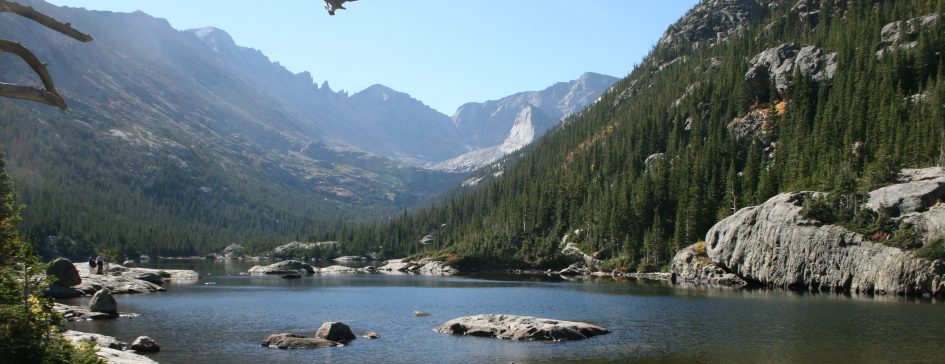
I went to Colorado in July, and it was bone dry like I noted in a prior blog.  The trend was expected to continue, but then something happened.  It rained.  A lot. It’s been raining for almost a month.  Last week it was wet out there, really wet, devastatingly wet on the east side of Rocky Mountain National Park (Boulder, Estes Park, Longmont, Lyons). The rain has not really let up so mountain streams are over-running their banks, flooding streets, washing away bridges, damaging property and businesses.  Helicopter evaluation of the damage indicates that miles of roadways are badly damaged. Route 34/36, the primary eastern entrance to Rocky Mountain National Park may have 17 miles (of 20) damage pavement and foundation needing immediate repair.  Estes Park is cut off from the world and there was mud in the streets.  Rocky Mountain National Park is closed to allow access from Grand Lake for emergency vehicles, residents and supplies.  And eastern emergency route from Nederland is also available.  Tourism has halted in the peak of Fall tourist season.

How fortunes have changed, and continue to change.  Three years ago it was the west side of Colorado with 300 inches of snow that flooded downstream communities.  Three months ago was drought. Are these changes part of a larger issue, or a continuation of the status quo?  Hard to know, but certainly both events were far above any prior events experienced in the area.  The local infrastructure was not constructed to meet these conditions, so either the climate is changing, our models are wrong, or both.  We see the same issue playing out regularly around the world when the 100 year or 500 year storm event occurs and wreaks havoc on a community which does not have infrastructure planned for events like this.

 Expect NE Colorado to be a federal disaster area.  Expect billions to be spent on reconstruction of roadways.   But the larger question is whether the new, replacement infrastructure will survive a similar, or larger climate event in the future.  Will our infrastructure planning be short sighted or will it be adjusted accordingly?  The potential for us to protect infrastructure, and property is completely related to our ability to adjust to infrastructure needs and to minimize exposure to weather events.  Keep in mind our economy and way of life is directly related to our infrastructure condition.  But people want to live near rivers and streams, but rarely consider the real risk and consequences. 

How do we address these risks?  FEMA evaluates the probability of flooding to set flood insurance, but FEMA does not prevent construction in flood zones.  Where construction can occur is a state or local issue.  Of course, few local entities want to limit development in any way, so we keep putting people at risk.  Local officials, like those in Florida, keep pushing FEMA officials to reduce flood risks, despite evidence of increasing rainfall intensity that would increase flooding.  Florida is not alone.  No doubt Colorado officials have the same views.  We need to impress upon local officials the risks and encourage them to reduce risks to citizens.  It’s our tax money and insurance premiums they are raising.  But they are rarely held accountable.  Nor are non-elected officials.  Somehow, this needs to change.  We need leaders to stand up and draw the  line in the sand.


Why are health care costs increasing so fast?  Did you ever wonder about that?  We keep hearing about how health care costs, Medicare, Medicare, Obamacare are going to bankrupt us, but why is that?  Why are the cots going up so fast?  It is an important challenge for local officials and utilities who generally pay the health insurance costs for their workers.  There is more to the story that we are not being told.

One problem that get identified quickly is that only 80% of the population is included in the health care system.  Many who are not are “healthy” young people who don’t demand the services.  The concept of the health care bill was to solve this problem by spreading the costs of health care across the entire population using private and public providers.  First, I think there are way more unhealthy  people included in the 20% than we realize because the political dialogue keeps focusing on the few that want to live off the grid – I feel great so I don’t need insurance.  That guy is part of the problem.  That guy gets into a car accident, gets taken to a public hospital, gets treated, gets a bill for $26,000 to fix his broken leg, refuses to pay anything, and the taxpayers get stuck with the bill.  My solution to that guy is if you don’t want to pay for health insurance, bring cash.  Otherwise, “no soup for you!” to paraphrase a famous Seinfeld episode.  Of course my doctor, nurse and therapy friends think that’s a little cold hearted. 

The next argument is the cost of doctors, therapists and nurses.  Okay, I know a bunch of them, and that’s not where the money goes.  These people have lost money in the past 10 years.  Many are going form full-time to part-time employments as Medicare, Medicaid and health insurance bureaucrats decide services are no longer needed.  They will tell you the major change in their lives is paperwork….hold that thought for a moment.

The cost of drugs comes up.  Medicare and Medicare are the largest purchasers of pharmaceuticals in the world.  So in other works, they set the lowest price by supposedly bidding the “contracts” for services. Only there is often only one provider, so exactly how does that work?   Sounds like we don’t get a good deal there, which is why the arguments for importing Canadian drugs or drugs from Mexico keeps popping up.  They get a better deal than we do and most of these are supposedly AMERICAN companies.  No home town discount (I guess I know where free agent baseball players get the idea).   And my medical friends confirm this as an issue.  Check out the comments from Mr. Falloon at Life Extension (www.lef.org) for discussion. 

So let’s go back to the paperwork discussion.  Once upon a time doctors simply sent a little paperwork to the health insurance company or the federal government and said you needed some service.  And the insurance company processed the bill for the services.  The cost was paid by insurance premiums collected by the insurance company.  Everyone was happy.  But then someone at an insurance company said, “wait we could make more money if we asked more questions and paid less for these services.  It would help our bottom line.”  So you hear the complaint that the folks at the insurance companies are deciding whether you need that procedure or not.  And contractors decide if someone needs Medicare or Medicaid services, not the government, not your doctor, your nurse or your therapist.  Not any person that knows you, but some unseen, private sector bureaucrat who’s goal is to minimize the amount of your premium spent on services so they can enhance their bottom line.  And apparently they are very effective because the health insurance industry is very lucrative.  So maybe we have stumbled onto something here.  Maybe the cost of medical coverage is more related to drugs and bureaucracy (and it is not government bureaucracy!!) than the actual cost of services.  Maybe the old system, even if there was some fraud in it, wasn’t nearly as bad as it was made out to be.  It reminds me of one of the 4 laws of City management I developed years ago:  Never give elected officials a bad alternative – it becomes a magnet.  It always worked (hence a law).  I didn’t learn why until years later when I realized, that the worst option was the one all the lobbyists lobbied for even at the local level.  It was the option where they could make the most money “fixing


School is back in session.  It is a great opportunity to see what kind of great things we can learn this year.  We can learn from the students as much as they learn from us.  Working with college students, in bridging that connection between my real world clients and my students keeps me engaged and allows me to act as a conduit of information between the two sectors.  That conduit potentially includes jobs for students and technology for clients.  It is remarkable how much the skills sets of the students have changes and increased in certain areas in five years, let alone 10.  I remind them that 5 years after they graduate, the skill set of the next group will be far ahead of theirs. Get your license and keep learning and staying up to date with technology.  It is far too easy to get behind and it is surprising how many graduates figure they are done with learning when the graduate.  Far from it.  The advances and changes in the industry move so quickly.  All my students are doing 3 dimensional projects versus cad drawings 5 years ago.  And those cad drawings were so far above the cad drawings of ten years ago.  All three groups are ahead of a lot of engineering firms with respect to technology.  And there accompanying utilities as well.  My students make great interns for GIS – it comes naturally to them.  My older friends?  Well, let’s say there is a bit of a learning curve.  As we try to be more efficient, training and skill development become continuous exercises.  It is obvious when you compare skill sets of recent, current or older graduates.  Of course skill sets may not translate to knowledge, for there is no substitute for field experience, especially in the water and engineering fields.  The reality is often much different than you expect, for a variety of reasons.  How you adapt means experience.  It is why the older crowd and the younger crowd need each other and need those communication avenues.  I find that my teaching keeps you engaged in the changes in technology, viewpoints and the new generation while maintaining the relationships with the real world


A new GAO report suggests that the short and long-term future for state and local revenues may be more difficult that currently anticipated, despite the economy recovering in many places.  My last blog outlined a number of the problems including that many public entities chose to reduce tax rates to balance the budget as opposed to restocking reserve funds.  When property values plummented and tourism and consumer buying diminished, the taxes related to all three plummented as well.  None have yet returned to their pre-2008 levels.  The failure to stockpile reserves caused many governments to spend down what limited reserves they had in the past 5 years as a means to avoid the hard and unpopular decision – raising taxes to collect the same revenues as before the mid-2000s cuts.  Now the lack of reserves creates an issue going forward – as costs increase faster than revenues, there are no reserves to tap into.  It is a problem that just keeps on giving. –

As I noted, I never like Chicken Little, because he never had a solution for the problem. There are solutions for local governments, some good and some bad.  Clearly local governments need to revisit the revenue production tools.  Taxes and fees will go up.  Taking more money from the utility, an all too popular decision in the past 5 or more years IS NOT THE ANSWER!  That just transfers the problem to the utility system and we already know that there are huge amounts of deferred maintenance and capital projects with utilities – $300 billion and counting at last count. The utility should be run as an enterprise, not as a cash cow to avoid hard political decisions.  Solutions for replacing those ARRA funds and federal grants for police are needed.  Just saying “We ran out of money so lay those people off” is not a solution.  What that is, is poor leadership and planning – a failure to develop the investment made by the feds to better the fiscal position of the community.  A lost opportunity.

There are many options.  And we can lay blame at the feet of elected officials, but it does not all belong there.  The citizens who elect those officials, are to blame.  Most elected officials react to citizenry, not the other way around.  And don’t forget the managers who bring bottom line business practice to local government management who recommend options. We’ve lost a generation of good government managers who understood the service aspect of government who have been banished in favor of the bottom line approach.  We need to change this as well. 

A more entrepreneurial spirit is needed.  I recall a prior entity I worked for where we proposed doing lab work in our certified water lab for other utilities.  That got shot down because it was “unfair to compete with the private sector for this work.”  Really?  That sounds like a private sector red herring.  They know they will lose business, and they can’t compete.  How is that in the spirit of capitalism? It cost less for other entities to have us do it?  A huge missed opportunity.  There are many.  If we want government to operate more like a business, we need accept the opportunities that come with it, not quash them. 

We need to market the community.  Not just give money away hoping to attract businesses that will locate for a short while.  That certainly has been a fiasco in Florida.  Other places as well I am sure.  No, we need to “sell ourselves.”  We need to marketing program to distinguish the community, its assets, its water and sewer reliability and quality, its people, education and opportunities.  It means spending money to invest in the community, not just spending money to fix a few roads and install some pavers, although they are good.  It’s also not just fixing up the distressed neighborhoods, but investing in the better ones as well. The most distressed City in America is quietly encouraging new artists and startup businesses to relocate to Detroit to take advantage of the availability of warehouses, cheap rents and a talented workforce.

We need to avoid the pitfalls of falling victim to reinforcing the past.  Florida’s economy is based on tourism, agriculture and building housing to attract retirees.  Weird business model.  Two of the three are highly susceptible to economic disruptions.  We are still recovering from 2008.  The economy also produces mostly minimum wage jobs, not the way to build a better tax base of encourage investment in education.  The state manufactures nothing, yet fails to take full advantage of what assets it might have to create industry.  As Sun-Sentinel writer Stephen Goldstein noted recently, why is it that south Florida has yet to take advantage of the private sector interest in investing in understanding age –related diseases?  Much of the local economy and the two local public universities are not positioned to take a leadership role?  Yet it is an easily marketed issue given the current population, assuming funds can be secured.  Public investment is needed, and of course that’s the rub.

We can market ourselves.  May communities have.  And most deserve better than their current lot in life.  Alexis de Tocqueville,” you get the government you deserve.”  I think we deserve better, and I think we can do better.  I think we can develop a better future and I think we can overcome challenges.  So maybe it is time for to us to change the perspective!


A new GAO report suggests that the short and long-term future for state and local revenues may be more difficult that currently anticipated, despite the economy recovering in many places.  For most of the 1990s and the mid 2000s, many states and local governments operated with surpluses, or could have.  Many elected officials, like those in Florida (or Congress in 2001), chose to reduce tax rates to balance the budget as opposed to restocking reserve funds.  When property values plummented and tourism and consumer buying diminished, the taxes related to all three plummented as well.  None have yet returned to their pre-2008 levels.  In fact, the property values lag so badly, it may be 10-20 years in many jurisdictions before they return to their former selves.  In South Florida’s suddenly “hot” real estate market, local officials are raving about the 28% increase in property values in 2012/2013.  Sounds great until you realize that they need to increase 100% to return to pre-2008 levels.  Even in a hot market it may be over 5 years to recover.  So property values are not a short-term problem.  Some communities may never recover.  So much for saving for that rainy day.

It should be plain to all of us that the failure of those in power to stockpile reserves caused many governments to spend down what limited reserves they had in the past 5 years as a means to avoid the hard and unpopular decision – raising taxes to collect the same revenues as before the mid-2000s cuts.  Now the lack of reserves creates an issue going forward – as costs increase faster than revenues, there are no reserves to tap into.  It is a problem that just keeps on giving.  The failure to address the root cause – the failure to set revenues collections at an appropriate level and accumulate surpluses when you are lucky enough to get them.  Unfortunately the political discussion keeps going back to keeping costs down, but cuts in costs means cuts in services.  Sounds great to cut the Plantation trolley because of budget needs, but what about those citizens that rely on the trolley?  Or the businesses it serves.  Cutting Meals on Wheels which primarily serves shut-ins is a great idea in Broward County with a hue population of elderly that find it difficult to get out of the condo?  And does it really make much impact on the overall budget?  Not really.  There are cosmetic issues.  There a more symptomatic issue here?

GAO points to health care as a cost increasing faster than the rate of increase in revenues, but the latest data seems to indicate that the rate of growth may be less than projected by those opposed to the new Health Care laws.  Underfunded pensions are also a potential area of concern, but cutting employees is not the solution for that as outlined in a prior blog.  Cutting employees cuts the funding for pensions which guarantees future problems.  So that idea actually works against the goal of shoring up the problem.  So, no that is not the answer.  We are clearly paying for the sins of 15 years ago when we were awash with funds, but decided to cut or public “income.”  Who does that anyway?!?!

I never like Chicken Little, because he never had a solution for the problem.  Part 2 will outline some thoughts…


I went back to Colorado last week and it’s dry again out there.  Ok, maybe not this past week when it rained a bit, but despite late snow (March to May), the forests are dry.  The bark beetle problem has not made things easier, so lightning from thunderstorms can easily create fires, like the fire down in Colorado Springs or the Big Meadows fire that is ongoing in Rocky Mountain National Park.  The latter has been ongoing (although fortunately mostly out) for over a month, and has closed some trails in the park.  I hiked through the Fern Lake fire remnants (although virtually all the fire was around Cub Lake). That fire burned for a couple months last fall, only finally burned out in the winter after snowfall. 


The west is dry and “drier than in the past” is the new normal it seems in Colorado.  So now water managers are faced with three new challenges:  less water, faster runoff and more difficult water to treat.  The fires cause the loss of protective vegetation, which means less water is kept in the forest.  As a result, the tiny, light ash particles easily run off in the rain.  Ash is hard to remove without activated carbon or other advanced processes.  The loss of vegetation increases runoff, which means larger sediment content in otherwise pristine water supplies.  That can make a major impact on downstream water plants that may not have planned for such events.  The cost of fire suppression for the last 60 years confounds the current water supply and quality problems.  There are also ecological effects that may impact local economies. 


All this said, I am unsure what the solution is.  Clearly the climate in Colorado is changing.  It is unlikely we can alter the current course any time soon.  Instead we must adapt to the changes and attempt to mitigate the impacts on water supplies.  Creativity, innovation and likely more infrastructure will be required. Concepts like aquifer storage and recovery are coming back to the fore as a result of the current condition. It will be interesting to see how this all plays out. 


A recent Wall Street Journal article noted that 50 % or people have paid their utility (water, sewer, electric) bills late, but only 24.8% have paid the internet late, 39.5% the cable late and 44% the phone bill. Really? We are willing to pay water, sewer and electric late, but not the internet bill? This should be a wake-up call to water and sewer utility leaders nation-wide that we have a problem. Combined water and sewer bills across the United States average something around $50. True they are often higher in California, SE Florida, and some other areas, but they are also lower in many areas. Most of the time even in those high cost areas, the bill is under $100.

I have done a number of rate studies and I find that the cable bill, and the cell phone bills are almost always higher than the water+sewer bill locally, so why are people willing to pay our bill late, but not the others? Is it the perceived benevolence of local utilities, most of which are public entities? Is it a perception that water should be free so it is not important to pay the bill? Or is it the lack of marketing of an essential product by waterutilities? I have heard all these arguments, but I am thinking the latter may be more important. Most people know they need to pay the bill, and I don’t really know anyone who thinks water should be free in the US. People are used to cheap water, and costs are going up. Complaining to local elected officials often keeps rates artificially low, which means maintenance and replacement programs get deferred. That makes the utility more at risk to failure. EPA, GAO and others report regularly that we have been keeping rates low and deferring capital and maintenance for years to the tune of hundreds of billions of dollars. So what is wrong?

I suggest that as an industry, we have failed in marketing water. Treatment plants, piping and pump stations are out of the way, pipes are buried. No one sees them and people assume these faciliaites will work, but rarely ask how they work or how long they will work. They do not understand the complexity or the regulatory stringency of operating a utility. They do not understand that the number one priority is public health, and protecting the public health costs money. We have not made people understand this because we do not market our product. I have taught elected official classes where the elected officials tell me public dollars should not be spent on marketing, but they never say why when pressed. Rarely is marketing included in a budget. But if water and sewer is a business, isn’t marketing an important strategy to maintain that business?

Meanwhile we have a host of celebrities marketing cellphones, which are not required to survive. We have a host of glitzy cool advertisements for cable service options, but we don’t need cable to survive. The power companies send out glitzy stuffers in their bills that no one reads, but they do end up in the papers regularly. And power really helps us survive, but we could do without it (although it would be unpleasant). Our forefathers did. But no one ever survived without water. Maybe it is just too obvious. But maybe because it is so obvious, people are less conscious of it. We need to market better. As a private sector marketing manager would say – we have lost our market share!! We need to get it back.


Previously I blogged about retirement systems since they were getting a lot of negative attention in the Florida Legislature and in Congress. One of my tenets was that the economy is more of an issue in dealing with the sustainability of retirement systems than most other factors. Specifically I outlined the current Social Security issues, noting that the long-term borrowing rate and number of people paying into the system affected the apparent long-term viability at any given point in time. I also suggested that as a result, trying to opine about the viability of any retirement system at a specific point in time is a futile exercise, unless there is some underlying political agenda. The economics changes constantly, so the long-term trends are far better means to view the viability of pension programs. After the 2008 economic collapse, few retirement systems looked like they were in good shape, yet a few years earlier, they appeared much better, much like Florida’s did..

Fast forward to 2013. After all the hoopla in Congress about the fate of Social Security and scary Congressional statements that Social Security will not be remain for future retirees unless drastic changes are made, guess what? The annual trustees’s report on Social Security (and you though Congress managed it!) reported that as a result of the economic uptick in the past couple years, the outlook for Social Security in the short term is good, and the long-term is far better than it has been in years. Surprised? Only if you don’t understand how pension systems work. The economy has improved, so the investments made by Social Security likely are getting a better return. The jobless rate has dropped, and more people are paying into the system, precisely the two things that improve the long-term sustainability of any pension system. But we don’t hear Congress talking about that because that doesn’t address the political agenda.

Worse for certain Congressional leaders, the report suggests that Social Security is positioned better than many 401K programs, the type of system some in Congress suggest should be the future of Social Security, because the risk are far lower with Social Security’s investment strategy than any 401k invested in the marketplace. They noted that most 401k programs lost half their value in the 2008 financial collapse, while Social Security’s portfolio, invested in far more conservatively, did not see near the same type of drop in investment value. The report outlined that the lower and middle class retirees were hit less severely buy the 2008 downturn than upper middle class pensioners who relied more on 401K returns. That should be no surprise either.

The findings are particularly important for lower and middle class families that receive 2/3 of their retirement income from Social Security as private pension systems become a thing of the past. Those private pension programs suffered from investments in private companies that can have shifting stock values and outsourcing of jobs to other countries – more risk and fewer payees equals unsustainable pension program. No surprise the private sector has shed many of those programs, but precisely why Social Security becomes more relevant for most Americans. The private pension systems are precisely the opposite of the Social Security model.

So why the push to try to change retirement programs? Some are in difficulty, especially where there are generous benefits, and fewer people paying in due to cuts in government employees, and at risk investments strategies that have performed poorly. All three are management issues, and the second is a political issue. Bash public employee pensioners, because fewer private entities offer them, seems to be politically popular, but it is a political means to pit people with pensions against those who do not to hide the real issue which is simply money. The investment value of Social Security’s portfolio is huge. Wall Street would love to see that portfolio in the stock market. More investment dollars will drive up stock prices. That seems good, but recall that the repeal of the 1930s vintage banking rules that prohibited banks from investing YOUR savings in the stock market, drove stock prices up fast in the 1990s, but it didn’t turn out so well in 2008. Investing Social Security’s portfolio similarly can be expected to have a similar result. And then, Social Security will really be in trouble and someone in Congress will tell you – I told you so. Maybe the better argument is that all these politicians should keep their fingers out of pension plans.


The concept of horizontal wells arises from riverbank filtration concepts.  Riverbank filtration has been practiced for nearly 200 year in Europe, where the concept was to remove debris form polluted waters by drawing through the banks of rivers.  Much of the concepts for groundwater flow are related to the filtration ability of water to move through a porous media.  The concept was to dig trenches along the river and draw water from the trenches as opposed to the polluted rivers.  The concept worked relatively well.  The result is an abundant, dependable supply of high-quality water with a constant temperature, low turbidity, and low levels of undesirable constituents such as viruses and bacteria. Riverbank filtration also provides an additional barrier to reduce precursors that might form disinfection byproducts during treatment.

Now let’s look at this from another perspective, and we’ll pick on southeast Florida as is provides a great case study.  Sea level rise will inundate coastal property, both via coastal flooding and from a rise in groundwater. Since most stormwater drainage depends on gravity flow, drainage capacity will suffer as sea level rises reducing the head differential between interior surface waters and tide. Saltwater intrusion will be exacerbated. Furthermore, reduced soil storage capacity, groundwater flow and stormwater drainage capacity will contribute to increased flooding during heavy rain events in low-lying areas.  In low lying areas, current practices like exfiltration trenches will become impractical, as will dry retention will become wet retention.

Stormwater utilities will be faced with dramatic, currently unanticipated increases in capital expenditures and operating costs, and time will be needed for planning, design, securing permits and compliance. Additional local pumping stations on secondary canals will be needed to supplant the storm drainage system in order to prevent unacceptable ponding. Design capacities of these stations will depend on local rain patterns, drainage basin size and secondary canal system design.  Many will operate continuously, which means ongoing operations will increase substantially. Hundreds of pumping stations may be needed in some communities.

Permits will be a major challenge due to contaminants in the runoff as regulated by MS 4 Stormwater permits, and the inability to treat this water under the current structure. The cost and energy required for stormwater treatment would be a major concern going forward. But what if we sent this continuous flow to water plants as raw water?  All of a sudden we have a solution to two problems – stormwater and raw water supplies.  How often do you see a 2 for 1 solution?