Archive

engineering


So Detroit defaulted on it’s debt obligations.  Do does that impact you?  Well, that depends on whether you are a utility looking revenue bonds, a city looking for general fund bonds or some combination.  The issue in Detroit with debt is that they pledged the full faith and credit of their taxing authority to repay the debt.  Their taxing ability was insufficient to accomplish this goal, which means that there could now be distrust in that promise for other cities.  So if you are a city and you are making this pledge, Detroit could impact you, or at least create more review on your balance sheets.  If you are a utility that is pledging revenues that have no limitations on amount, the concern is likely less.  Of course in either cases, the question is what the rest of your balance sheet looks like.  If you have no reserves, do not charge the full cost for service, have a heavy debt load, have high rates already, or send a lot of funds to the general fund, that could be a problem.  If you have avoided these pitfalls, the bond market will see much less of an issue. 

Keep in mind that Detroit is not the only default – another big one is the Birmingham and several other create questions about general fund uses of funds, which makes it of greater importance to keep our financial house in order.  IN part this can be done by creating the appropriate enterprise funds and remove those services from the general property tax fund.  That permits local focus on the true cost of general taxing users and creates a delineation between general fund and enterprise costs.  That can help elected officials focus on the true general fund issues:  police, fire, EMS, administration without hiding those costs with subsidies from other funds.


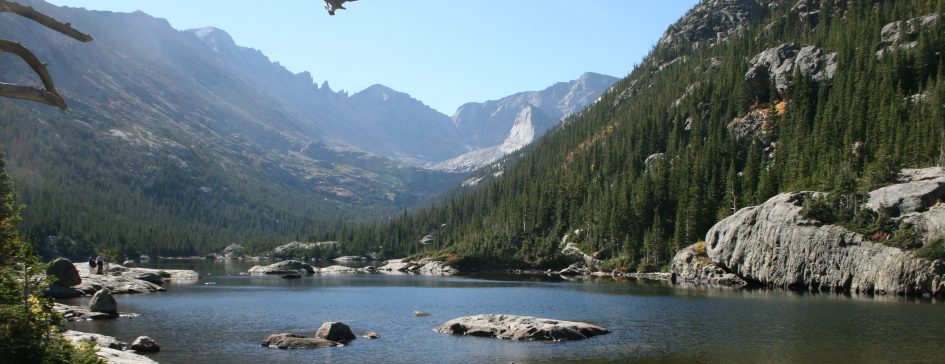
I read a recent article in Roads and Bridges on the reconstruction of the roadways to Estes Park.  An excellent effort by state officials and private contractors to rebuild over 20 miles of roads that were wiped away in mid-September when unprecedented rainstorms cut Estes Park off from the front range.  I actually had reservations in Estes Park as part of a plan to go hiking at Lawn Lake, among others.  Lawn Lake was one the harder hit areas in the park.  Went to Leadville.  If you have never been, go.  The early money in Colorado came out of Leadville – silver was the money-maker.   I did a 12 mile hike thought the mining district as it snowed – note it is the 2 mile high City.  Great hike in the am – the photos were fantastic as well.  

But the point is that people expect government to solve problems like the roadways in Colorado.  They expect we will solve water, sewer and storm water problems.  We have done a great job of it because people take these services for granted.  What we don’t want is to have a catastrophic failure, natural or otherwise.. ..


Sorry I have been off-blog for over a week.  Things can get crazy as we all know.  Collegiate activities accelerate after Spring Break, which was the first week of March for the Florida universities.  Now we are on to midterms, finishing projects and competitions.  So this weekend is the southeast competition for ASCE student chapters.  Those of you who are civil engineers likely remember the competitions.  Concrete canoes, steel bridges, soil stabilization, water treatment (filters), and a variety of other “contest” abound.  We had concrete Frisbees when I was in school.  I think I saw where a school in Oregon has carried on a tradition that has never made it to the southeast competition.  Some think these competitions are purely a weekend on fun, but that fails to recognize the effort put into the contests by students.  Yeah, it’s fun, but a concrete canoe takes many hours of effort by dozens of student to insure it floats.  Problem solving is needed to insure the concrete is both lightweight and strong enough to hold up.  Might get rammed you know.  Seen it happen. It is a good place to meet other students and faculty to exchange ideas.  Many practicioners act as judges to the connection to the “real” world is present as well.

We get back from the ASCE contest for the Concrete Expo on campus, which is an opportunity for the students to meet practicioners in a seminar environment (outside of course).  It is an opportunity to meet students and very helpful if you are looking for the next generation of people to fill your jobs.  Except that we are seeing most of our seniors with jobs before they graduate, sometimes as early as late junior year. That means the economy is improving so jump on the good students early.

After the concrete expo we have the FWEA student water/wastewater design contest.  So our students are competing and their project is an indirect potable reuse concept to recharge wellfields for a local community that has looked at the idea.  We have researched the subject here before and did some work to demonstrate we could remove phosphorous to under 10 ppb and remove the constituents of emerging concern – the pharmaceuticals etc.  Worked great and I think most of our papers are out on the project.  Our students looked at and improved it for their contest entry.  Then it is time for the FE, final capstone projects and graduation.  So much in a month. 

And somehow I missed St. Paddy’s day…… 


We all know that our infrastructure is deteriorating.  Deferred maintenance increases the risk of system failure. The need for capital reinvestment within the utility industry has historically been very low. As a result, in its “2013 Report Card for America’s Infrastructure,” the American Society of Civil Engineers assigned a grade of “D” to America’s drinking water systems, citing billions of dollars of annual funding shortfalls to replace aging facilities near the end of their useful lives and to comply with existing future federal water regulations (ASCE, 2013).  AWWA estimates that investments of at least $1 trillion are needed over the next 25 years.

While a pay-as-you-go capital funding seems like the best way to go, that is difficult to accomplish with the large outlays needed to upgrade the infrastructure system and the controls on rates often exercised by local officials.  As a result, borrowing is required and the condition of infrastructure and the lack of reserves are a part of how the utility is viewed by those who lend monies.   Utility managers need to understand how the lending agencies evaluate risk. 

Lenders use many tests.  Among them are: whether the utility’s annual depreciation expense is used of accumulated as reinvestment in the system, whether adequate reserves are present, whether  annual capital spending that is below the amount of annual depreciation and the amount of revenues in excess of projected debt (debt service coverage).  The target debt service coverage may depend upon the requirements of the underwriter, the rating agencies and the investors.  Debt service coverage could be as low as 15% or as high as 50%.  In 2012, the median all-in annual debt service coverage excluding connection fees for utilities rated “AAA” by Fitch Ratings was 220%, while the median for AA-rated and A-rated utilities was 180% and 140%, respectively. (Fitch, 2012).  

A working capital target of 90 days of rate revenue is a minimum, but since 2008, more is likely to be required depending on the size of the system and the history of revenues.  Where the revenues were stable despite 2008, less may be required.  For those utilities that suffered major decreases, reserves should be far larger – perhaps a year or more.  Other criteria that could be used to evaluate the projects when borrowing money include public health and safety, regulatory compliance, system reliability, the risk and consequences of asset failure, redundancy, community/customer benefit  and sustainability. At the same time, the expectation is that  the utility systems that retain all monies in the system to be utilized to improve the system and pay for debt service, except those used  for the purchase of indirect services from the General Fund that are justified with indirect cost studies. 


Despite the above, rate are an issue.  Fitch Ratings has indicated that it considers rates for combined water and wastewater service that are higher than 2% of the median household income – or 1% for an individual water or wastewater utility – to be financially burdensome (Fitch, 2012).  The Environmental Protection Agency (EPA) considers that rates for an individual water or wastewater utility that are greater than 2% of median household income may have a high financial impact on customers. (EPA, 1997). Utilities with a stronger financial profile might have residential charges for combined water and wastewater service that are less than or equal to 1.2% of median household income, or less than or equal to 0.6% for an individual water or wastewater utility. All revenues generated through system operations generally must remain within the system and can only be used for lawful purposes of the system.

Canadian utilities employ more formal polices to establish fiscal policies to provide reserves to insure stability in the event of unforeseen circumstances. Reserve targets focus on ensuring liquidity in the event there is an interruption in funding, increased capital costs due to new regulatory requirements or a short term funding emergency – all the issues evaluated by the bankers.  Reserve targets are policy decisions. Benchmarking is an evolving practice within Canadian public sector utilities particularly as it relates to financial planning and capital financing. The benchmarking exercise provides valuable information to help assess fiscal performance, the needs of customers, and provide the tools to help support optimum performance. 

As water and sewer utilities, the public health and safety of our customers is our priority – it is both a legal and moral responsibility. The economic stability and growth of our community depends on reliable services or high quality. The priority is not the same with private business. Private businesses have a fiduciary responsibility to their stockholders, so cutting services will always be preferred to cutting profits. Therein lies the difference and yet the approach is different. Many corporations retain reserves for stability and investment and to protect profits. Many governments retain inadequate reserves which compromises their ability to be stable and protect the public health and safety. Unlike corporations, for government and utilities, expenses are more difficult to change without impacting services that someone is using or expects to use or endangering public health. Our recent economic backdrop indicates that we cannot assume income will increase so we need to reconsider options in dealing with income (revenue) fluctuations. If there are no reserves, when times are lean or economic disruptions occur (and they do regularly), finding funds to make up the difference is a problem. The credit market for governments is not nearly as “easy” to access as it is for people in part because the exposure is much greater. If they can borrow, the rates may be high, meaning greater costs to repay. Reserves are one option, but reserves are a one-time expense and cannot be repeated indefinitely. So if your reserves are not very large, the subsequent years require either raising taxes/rates or cutting costs. An example of the problem is illustrated in Figure 1. In this example the revenues took a big hit in 2009 as a result of the downturn in the economy. Note it has yet to fully return to prior levels as in many utilities. This system had accumulated $5.2 million in reserves form 2000-2008, but has a $5.5 million deficit there after. Reserves only go so far. Eventually the revenues will need to be raised, but the rate shock is far less if you have prudently planned with reserves. You don’t get elected raising rates, but you have a moral responsibility to do so to insure system stability and protection of the public health. So home much is enough for healthy reserves? That is a far more difficult question. In the past 1.5 months of operating reserves was a minimum, and 3 or more months was more common. However, the 2008-2011 economic times should change the model significantly. Many local governments and utilities saw significant revenue drops. Property tax decreases of 50% were not uncommon. It might take 5 to 10 years for those property values to rebound so a ten year need might be required. Sales taxes dropped 30 percent, but those typically bounce back more quickly - 3-5 years. Water and sewer utilities saw decreases of 10-30%, or perhaps more in some tourist destinations. Those revenues may take 3-5 years to rebound as well. Moving money from the utility to the general fund, hampers the situation further. Analysis of the situation, while utility (government) specific, indicates that appropriate reserves to help weather the economic downturns could be years as opposed to months. The conclusion is that governments and utilities should follow the model of trying to stabilize their expenses. Collect reserves. Use them in lean times. Develop a tool to determine the appropriate amounts. Educate local decision-makers and the public. Develop a financial plan that accounts for uncertainty and extreme events that might impact their long-term stability. Take advantage of opportunities and most of all be ready for next time. In other words, plan for that rainy day.


A number of years ago I had the pleasure of speaking with archeaologist Bryan Fagan for an hour or so before a presentation he gave at a conference.   Dr. Fagan is a modern-day Indiana Jones, who has been all over the world studying ancient ruins.  Dr. Fagan expressed his career as “50 years of studying drainage ditches,” but with studying drainage ditches he could provide you with the rise and fall of civilizations through history.  His book Elixir outlines a number of these civilizations:  Egyptian, Babylonia, Southeast Asia, and even the American West.  His findings were that the civilization expended as far as infrastructure could be constructed to allow water to flow to where it was needed, whether that was Alexandria or Ur.  Later civilizations expanded and developed as technology allowed water to flow further.  Rome demonstrated that water could be moved with more than ditches, which would have been a severe limitation for Rome and other civilizations based in dry areas with topography.  The Romans constructed extensive tunnels and aqueducts to supply Rome with water from mountains to the east and north. A recent article noted that we probably know about 20% of the Roman tunnel system as we keep discovering more of it each year – tunnels lost in the Dark Ages after the fall of Rome.  Dr. Fagan notes that it was access to water that allowed human civilizations to develop and evolve.  It is why a number of engineering organizations like Water for People and Engineers Without Borders focus their efforts on providing access to clean water to people in Third World countries.  It is their only way to get to the modern world.  All other infrastructure:  roads, major buildings, etc., result from the access to clean water that allows people to be healthy and productive.

So if civilization rises and falls with access to water, why is it so hard to get public officials to fund water supply and rehabilitation projects?  We talk of an infrastructure crisis in the United States because our average water and sewer infrastructure systems are working on 50 years old and deterioration is evident.  We have many mid-western communities with water, but no customers to pay for deteriorating infrastructure (Detroit), and southeastern utilities that have lost factories that supported the bulk of their utility, and insufficient growth in the customer base to deal with operations and maintenance.  As a result, outages and breaks occur more frequently, costing more money to repair, but under the auspices of maintaining rates, the revenues do not increase to support the needed repairs. 

At least the southeast has surface supplies, albeit perhaps limited, which constrains growth (Atlanta), but our fastest growth often occurs in areas we know have limited precipitation, like a lot of the American West.  Yet somehow we expect groundwater sources that do not recharge locally, to sustain the community indefinitely without disruption – ignoring the fact that history tells us communities cease to function when water supplies are exhausted.  USGS identified many areas that have long-term permanent declines in aquifers as a result of pumpage for agricultural and community uses.  No one raises the question about the aquifer levels – permits get issued, but little data is gathered and very limited plans are available in most places to deal with the declines.  And no one raises a question about aquifer levels because stopping growth to deal with water supplies is not in conformance with the desire to grow, which is required to support additional services demanded by the community. 

No one questions how to secure the water either, much of which has been “created” by federal tax dollars spend over 50 years ago during the era of great dam building (1920-1960).  However, as these systems and populations age, the concern about costs will continue to engender discussion.  And hand wringing.  Water costs money.  Water creates civilization and sustains it.  When we take it for granted, it becomes all too easy to fall behind the proverbial “eight-ball,” and the system crashes.  It is a testament to the utility personnel – the managers, engineers and operators – that these systems continue to operate as they do.  But bailing wire and duct tape only go so far.  We need to develop a frank discussion about the need to infuse funds – local, federal, state and private – into addressing our infrastructure needs.  The dialog needs to commence sooner, as opposed to after failure. 


I have said before in this blog that my Dad’s family were born and raised in Detroit – not the suburbs, in the City, about a mile north of Tiger Stadium.  My great-grandfather was a butcher.  His sons all became butchers, so my Dad grew up around the butcher shop as a kid.  It was the Depression, but because of the shop, my Dad had food on his table.  My Great-grandmother managed the money, and acquired a number of properties in the area of 13th and Magnolia that the sons, and extended families would eventually move to.  It was a solution to the difficulties outside the shop.  Family was the means to survive the hard times of the Depression. 

Of course Detroit was a booming city – over 100 auto companies were in Detroit at the turn of the last century, and the City was becoming the center of a new mode of transportation – the automobile.  Henry Ford developed the assembly line to allow everyone to own a car, furthering the status of the City.  As the twenties developed, Detroit and Chicago competed to become the “jewel” of the Midwest.  Elaborate stone buildings, expanding infrastructure for roads, trains, water, sewer and storm water were all centerpieces of pride in the City.  Employment and incomes were high, worker benefits were good, the workforce was highly skilled and education was good. Profits were good and the auto industry was Detroit-centric. Detroit was a vibrant City in the first 50 years of the last century. 

Scroll ahead 60 years and how the city has fallen.  The City has lost a million people.  It has $18 billion in debt, and is collecting $0.3 billion less in revenues since 2008.  The tax base has been decimated.  Houses can be purchased for minimal prices.  Churches have been abandoned.  Crime is high.  Employment is down, unemployment remains above the state and national average.  Poverty is up, incomes are down.  Huge areas must be served but serve no one or only a very few.   The City filed the highest profile bankruptcy for a municipality ever.

The television show Low Down Sun last summer provided a graphic look at the City – blocks of the City devoid or mostly so of housing or other buildings, schools no longer in use, roads in disrepair, classic stone buildings with the windows broken out.  You can see what the City was, and the haunting view of the City today are a stark reality.  To add insult to injury, the Sun-Sentinel wrote a recent article about how people are making money doing tours of abandoned buildings in Detroit, or how farming is occurring in the City limits. 

So if Detroit failed, why not Cleveland, Akron, Pittsburgh, St. Louis, Cincinnati or virtually any other large, older Midwestern industrial city?  Sadly many of these cities have lost the industries that made them famous and provided jobs and a stable tax base and incomes.  Many of these cities are also stressed, much as we found Birmingham was.  There are many arguments for what precipitated these losses:  unions, shifts in population, outsourcing offshore, competition within the US, changes in consumer preferences, technology…… the list goes on.  But the reality is it doesn’t matter why, the City must deal with the reality that is.  We all look at Detroit and its recent bankruptcy filings.  Maybe looking at Detroit allows us to feel better about our situations, but we need to learn the lesson from Detroit, Birmingham, Cleveland and others who filed for bankruptcy.  We need to look back to determine where the decisions were that created the issues.  Was it expanding to fast, poor economic assumptions, failure to manage finances better, political failures, failure to raise revenues/taxes/water fees, or failure to maintain or replace infrastructure?  Rarely is it corruption, so it is people trying to do well but failing in their jobs.  The question is why? 

I would start with training.  We need to train our public managers better, but MPA and MBA schools are not teaching about these failures.  In part it may be because we tend to teach positive lessons, versus negative ones, but they would be useful case study of the potential challenges.  In a prior blog I noted that the biggest challenge for government managers is managing in lean times.  Often lean times can be overcome by saving money as fund balances and investing (well), but long-term downturns like Detroit, Cleveland and other cities have experienced cannot be corrected this way.  There are major policy implications that must be overcome. 

From a utility perspective it is important to note that the economic difficulties are not limited to cities and counties but utilities are subject to long-term declines as well.  The problem is particularly acute in industrial communities where a large industry (think mills in the mid-Atlantic states) move away and leave water and wastewater facilities at far less capacity than they were designed for. Small systems may be especially at risk.

As an industry we need to learn from these failures.  We should study the difficult times to determine how the problems can be avoided.  The need to figure out how to manage funds better, deal with customer losses, and define strategies to overcome losses.  If anyone has some thoughts, please respond to the blog, but doesn’t this sound like a research project in the making?

When we ask what the biggest issues facing water and sewer are in the next 20 years, the number one answer is usually getting a handle on failing infrastructure.  Related to infrastructure is sustainability of supplies and revenue needs.  Resolving the infrastructure problem will require money, which means revenues, and overcoming the resistance to fully fund water and sewer system by local officials, the potential for significant costs or shortfalls for small, rural systems and the increasing concern about economically disadvantaged people. 

The US built fantastic infrastructure systems in the mid-20th century that allowed our economy to grow and for us to be productive.  But like all tools and equipment, it degrades, or wears out with time.  Our economy and our way of life requires access to high quality water and waste water. So this will continue to be critical. 

ASCE and USEPA have both noted the deteriorated condition of the water and wastewater systems.  In the US, we used to spend 4% of the gross GNP on infrastructure.  Currently is it 2%.  Based on the needs and spending, there is a clear need to reconstruct system to maintain our way of life.  This decrease in funding comes at a time when ASCE rates water and wastewater system condition as a D+ and estimates over $3 trillion in infrastructure investment will be needed by 2020.  USEPA believes infrastructure funding for water and sewer should be increased by over $500 billion per year versus the proposed federal decrease of similar amounts or more. 

Keep in mind much of what has made the US a major economic force in the middle 20th century is the same infrastructure we are using today. Clearly there is research to indicate there is greater need to invest in infrastructure while the politicians move the other way.  The public, caught in the middle, hears the two sides and prefers less to pay on their bills, so sides with the politicians as opposed to the data.  Make no mistake, our way of life results from extensive, highly efficient and economic infrastructure systems. 

In many ways we are victims of our own success.  The systems have run so well, the public takes them for granted.  It is hard to make the public understand that our cities are sitting on crumbling systems that have suffered from lack of adequate funding to consistently maintain and upgrade.  Public agencies are almost always reactive, as opposed to pro-active, which is why we continuously end up in defensive positions and at the lower end of the spending priorities. So we keep deferring needed maintenance. The life cycle analysis concepts used in business would help. A 20 year old truck, pump, backhoe, etc. just aren’t cost effective to operate and maintain.

Another part this problem is that people have grown used to the fact that water is abundant, cheap, and safe. Open the tap and here it comes; flush the toilet and there it goes, without a thought as to what is involved to produce, treat and distribute potable water as well as to collect, treat, and discharge wastewater.

Water and Sewer utilities are being funded at less than half the level needed to meet the 30 year demands.  Meanwhile relying on the federal government, which is trying to reduce funding for infrastructure for local utilities is not a good plan either. We need education, research and demonstrations to show those that control funding of the needs. The education many be the toughest part because making the those that control funding agree to increase rates carries a potential risk to them personally.  But there are no statues to those that don’t raise rates – only those with vision.  We need to instill vision in our decision-makers.


Back during the dark days of the late-1970s, when America was being held hostage by Middle East oil interests, the Department of Energy was created, ostensibly to free our economy from the dependence on foreign oil and all that trappings that go with it.  It was a noble goal – the American economy could grow without the risks posed by foreign governments.  Thirty five years later, could we finally be reaching that goal? 

Interesting the often criticized billions of energy company subsidies of the Bush era do not appear to be responsible for solving the issue.  Nor are the prior efforts to subsidize or otherwise encourage investments before.  The energy subsides since 2000 do not appear to be the reason, but the arctic wilderness did not need to be disturbed either.  The success had nothing to do with any of it, but instead a series of private risk takers to a gamble on an unproven technology, to make great strides – fracking.

Based on the success of the development of fracking for natural gas, we have made major improvements.  But it is not just fracking, as many power plants are or have been rehabilitated to convert away from oil and coal to cleaner burning natural gas, thereby developing the market for natural gas.  Local governments have been migrating their fleets to natural gas for years – natural gas can use the same engine with an $8000 conversion kit that allows automobiles to run on both.  The conversions have made the demand for natural gas greater, making the investments needed to frack, more profitable.  The US has significant reserves of natural gas, and fracking has made it easier to capture this resource.  The benefit of natural gas is that the demand for oil is down, creating a glut of oil on the market and a decrease in price (at least for now).

But the question that has been left unanswered is what the domino effect of natural gas is.  Certain advertisements will argue there is 200 years of natural gas available for the US so we don’t need to worry about energy.  Others will argue that only 10-15% of that supply is actually recoverable (it should be noted that this assumes current methods), which is a far shorter horizon.  But in either case, natural gas in the ground is not a renewable resource so the question must be asked – does the fracking boom interfere with investment in truly renewable resources? 

Since 2000, Washington has invested heavily in renewable resources – wind, solar and to an extent waves.  Some energy companies like NextEra have been investing heavily in wind and solar power (they are the biggest investors in renewable power in the US), so what of these truly renewable investments?  Will the rush to frack turn resources away from truly renewables?  Or will renewable continue to be a small fraction of energy demands for the near future?  The question remains unanswered for now.

The bigger question for utilities is whether fracking will divert money away from plans for renewable efforts like digester gas capture, solar cells and wind power at reservoirs and the like that utilities are using to help reduce power purchases.  Will it impact utility efforts to become self-sufficient energy consumers like East Bay MUD?  You see the economy has few favorites.  Government can create favorites, by subsidizing products that would otherwise be too expensive like PV panels. The benefit of subsides can be to reduce costs of emerging technologies that may never otherwise see widespread use.  Subsidizing renewables fit this mode.

Utilities should be concerned that the rush to frack pulls money away from their plans for renewable power.  As the feds look to reduce their contributions to water and wastewater infrastructure, public money to energy does not appear to be decreasing.  And unlike publically owned water and sewer systems, private investment in energy is increasingly available as a result of the potential profits that can be made.  The diversion of funds may decrease prospects for funding water and sewer utility options, especially if interest rates begin to rise.  The Federal Reserve Bank’s concern about rising interest rates was manifested earlier this year when interest rate increased, housing sales decreased immediately.

Of course the issue of fracking goes beyond the potential to disrupt monies for renewable energy.  There are questions about the practice of fracking include water quality impacts, causing earthquakes, land subsidence, etc., issue that have yet to be resolved.  Keep an eye out for a risk assessment that AWWA and others will be involved with to look at these risks.  


We get to start the new semester this week.  The economy is looking up in Florida.  Unemployment is down, although the job growth appears to be mostly minimum wage jobs.  So it is useful to look at last semester’s graduates and see how they are doing.  The good news is they are getting jobs.  In fact our seniors mostly have jobs or internships and none of them are minimum wage jobs.  Excellent news, but let’s look at the new graduates and the workplace. 

A lot of our assumptions about the workplace will change in the 21st century.  The workplace at the “office” is less necessary and younger workers are more comfortable working outside the office environment.  They may be more productive than 20th century managers think they will be because of the side benefits that flex hours allow.  Their entry into the workforce places four generations at work at once:  Traditionalists, Baby Boomers, Gen X, and Gen Y or Millennials.  The latter are the fastest growing segment of the workforce, and are already a larger percent of the workforce than Gen X or Traditionists.  The Traditionalists are retiring and are expected to be under 8 % in 2015.  Gen X and Gen Y will encompass about a third of the workforce going forward.

All of these groups have different perspectives.  Recent studies indicate the following.  Baby Boomers grew up post-WWII in a time of change and reform.  Some believe they are instruments of change.  They are optimistic, hard-working and motivated by position.  Gen X grew up in an era of both parents working, so are resourceful and hardworking, but not as motivated by position.  They are independent, and prefer to work on their own.  And many are contributing to the way government operates throughout the world. They accept technology as a way to involve others.  The use of online means to solicit feedback in government is particularly a Gen X phenomenon.  Public participation, traditionally are arena where limited public involvement actually occurs except with highly unpopular issues.

Gen Y was born in an era when both parents worked, but in their off-time, the parents spent more focus on the kids.  Think of no winners or losers in sports, but at the same time they have had unprecedented access to technology and are often well ahead of their work mates with respect to the use of tools in the workplace.  But, they are resourceful and can easily overcome technology barriers in the workplace. They care about their image and the world around them.  We can use that to implement change.

However, Gen Y is facing a workplace that clearly has winners as well as some skepticism about technology.  While we can expect some difficulties, it is up to the Gen X and Baby Boomers to help Gen Y make the transition. They have fresh viewpoints as they have had to be creative to get ahead.  Just doing things “the same old way,” doesn’t cut it.  I actually find this refreshing and a positive challenge to me because I use these challenges to go back of evaluate what my thinking was (or is).  We need to embrace this perspective and channel their energy and independence to solving today’s problems. 

We need to help them acclimate to the business world, while understanding that their motivations are not the same as Dan Pink notes in his book “Drive.”  We need new ideas and perspectives while welcoming them to the workplace.  That is how we improve productivity, product new ways to work, and develop new tools.  We need all of these in the utility industry as we need better ways to upgrade infrastructure and deliver our services.

There is a lot of talk about the difficulties that Gen Y is having getting jobs.  They often lack experience, but how do you get experience if no one hires you.  It is circular logic and we have all been there. 

We need to give the kids a chance.  I see a lot of potential in our graduates, nearly all of whom are Gen Y.  I see many who are hard working and know how to find answers to their questions.   They are far better prepared than many think.  We get comments all the time about how good our students are.  That is good, because the truth is, especially in the engineering and utility world, the Gen Y workforce does not understand why things were done a certain way in the past, nor why they should remain that way.  I actually find this refreshing and a positive challenge to me because I use these challenges to go back of evaluate what my thinking was (or is).  We need to embrace this perspective and channel their energy and independence to solving today’s problems.  They offer fresh ideas – and don’t necessary understand why.  That’s ok.  Long-term engineering graduates will make contributions to our water, sewer and other infrastructure.