Archive

engineering


I love stories about sewage in print.  As a water/wastewater guy, it is amusing to see sewer stories in the local papers and national news when they are about the “oddities” of operations.  One recent article talked about the impact of “flushable items” that should not go down the toilet.  “Flushable” wipes was the offender this time, but past discussion involved tampons, diapers and paper towels.  The reality is that NONE of these items should ever go down the toilet.  Those paper toilet seat covers are questionable as well.  Let’s see why. 

Sewer agencies have a very different view of what is flushable that tampon manufacturers, diaper manufacturers, paper towel and now flushable wipe makers.  Sewer agencies are responsible to insure that waste moves down the gravity pipes and through the lift station pumps without creating backups in the system.  The majority of material in a sewer system is water.  Followed by chopped up solids.  The design of the toilet involved two separate concepts.  One is simply creating the opportunity for a syphon to move waste when flushed but holding water when not.  It is a gravity principle based on partial pressures.  Simple stuff.  But toilets also tend to “chop up” material when the flushing action occurs.  The flush is violent and thin toilet paper and the soft solids in the toilet are easily shredded and blended into the water.  Think about your blender.  Soft stuff gets chopped up.  Enough mixing, it is all liquid.  As a result there is very limited opportunity for either thin toilet paper or most solids to plug up a toilet. 

But people don’t like thin toilet paper.  So we have manufactures making toilet paper with cotton fibers in it to make the paper soft.  And people like the “high quality” paper towels that upscale restaurants use.  Unfortunately too many people use those high end paper towels on the toilet seat, so down they go.  Wipes are reinforced paper also.  Fibers make them strong enough to, well wipe.  Tampons are notorious as absorbant fibers.  The key in each case is the fibers.  Fibers are not chopped up during a flush because the toilet flush is not designed to shed cloth.  As a result two things happen.  First, the fibers then to stay together as a mass.  Grease and other materials in the sewer system will stick to eh fibers making an even larger glob of material.  A recent YouTube photos showed a 15 ton grease ball in a large sewer system.  Grease and fiberous materials in the sewer system – you don’t want that to plug up your interceptor.

The other problem is lift stations.  The pumps at lift stations are designed to pass a 2.5 in ball, but not a bunch of strings.  As a result the fibers get stretched out, and wind around the pump impeller rendering it useless.  Or the material may mat in the impeller preventing the pump from pumping water.  One of the most common lift station problems is fiberous material winding around impeller shafts that burn out pumps.  Pumps cost thousands of dollars to repair or replace, so this is money from the ratepayers’ pockets.  One of my clients had the restaurant problem.  The lift station impellers would completely clog every 3 days.  The lift station would nearly overflow before the pumps were removed, the guys would open up the pump, and dig out the material.  Obviously fiberous paper and there were only two connections to the lift station.  The City ended up installing a $160,000 grinder system to grind up this material because the restaurant was unwilling to change their practice.  The major offender was women using the paper towels as seat covers.  The lines inside were a mess as well. 

The moral of the story is that toilet paper, water and body waste goes down the sewer.  Not napkins, feminine hygiene products, baby wipes or any fiberous paper material that feels soft, but won’t deteriorate, regardless what the manufacturer claims on the box.  These material do not degrade, the only create costly repairs, inconvenient and costly backups and a host of other problems for downstream users and the utility.  Put this material in the proper trash can. 

And see where else can you talk about this stuff, except when talking about sewage?


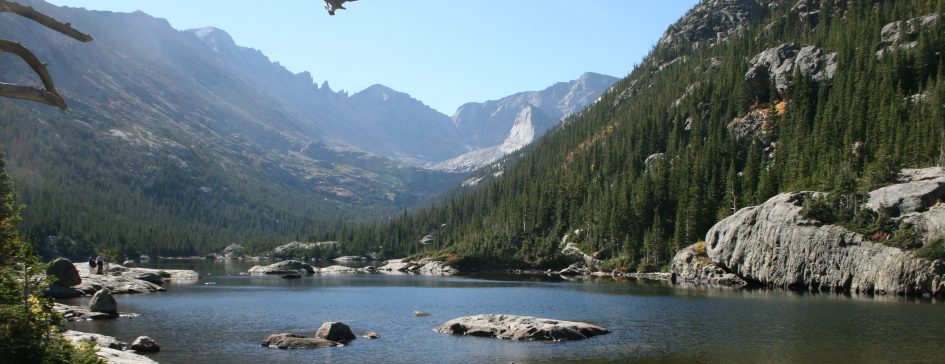
I went to Colorado in July, and it was bone dry like I noted in a prior blog.  The trend was expected to continue, but then something happened.  It rained.  A lot. It’s been raining for almost a month.  Last week it was wet out there, really wet, devastatingly wet on the east side of Rocky Mountain National Park (Boulder, Estes Park, Longmont, Lyons). The rain has not really let up so mountain streams are over-running their banks, flooding streets, washing away bridges, damaging property and businesses.  Helicopter evaluation of the damage indicates that miles of roadways are badly damaged. Route 34/36, the primary eastern entrance to Rocky Mountain National Park may have 17 miles (of 20) damage pavement and foundation needing immediate repair.  Estes Park is cut off from the world and there was mud in the streets.  Rocky Mountain National Park is closed to allow access from Grand Lake for emergency vehicles, residents and supplies.  And eastern emergency route from Nederland is also available.  Tourism has halted in the peak of Fall tourist season.

How fortunes have changed, and continue to change.  Three years ago it was the west side of Colorado with 300 inches of snow that flooded downstream communities.  Three months ago was drought. Are these changes part of a larger issue, or a continuation of the status quo?  Hard to know, but certainly both events were far above any prior events experienced in the area.  The local infrastructure was not constructed to meet these conditions, so either the climate is changing, our models are wrong, or both.  We see the same issue playing out regularly around the world when the 100 year or 500 year storm event occurs and wreaks havoc on a community which does not have infrastructure planned for events like this.

 Expect NE Colorado to be a federal disaster area.  Expect billions to be spent on reconstruction of roadways.   But the larger question is whether the new, replacement infrastructure will survive a similar, or larger climate event in the future.  Will our infrastructure planning be short sighted or will it be adjusted accordingly?  The potential for us to protect infrastructure, and property is completely related to our ability to adjust to infrastructure needs and to minimize exposure to weather events.  Keep in mind our economy and way of life is directly related to our infrastructure condition.  But people want to live near rivers and streams, but rarely consider the real risk and consequences. 

How do we address these risks?  FEMA evaluates the probability of flooding to set flood insurance, but FEMA does not prevent construction in flood zones.  Where construction can occur is a state or local issue.  Of course, few local entities want to limit development in any way, so we keep putting people at risk.  Local officials, like those in Florida, keep pushing FEMA officials to reduce flood risks, despite evidence of increasing rainfall intensity that would increase flooding.  Florida is not alone.  No doubt Colorado officials have the same views.  We need to impress upon local officials the risks and encourage them to reduce risks to citizens.  It’s our tax money and insurance premiums they are raising.  But they are rarely held accountable.  Nor are non-elected officials.  Somehow, this needs to change.  We need leaders to stand up and draw the  line in the sand.


School is back in session.  It is a great opportunity to see what kind of great things we can learn this year.  We can learn from the students as much as they learn from us.  Working with college students, in bridging that connection between my real world clients and my students keeps me engaged and allows me to act as a conduit of information between the two sectors.  That conduit potentially includes jobs for students and technology for clients.  It is remarkable how much the skills sets of the students have changes and increased in certain areas in five years, let alone 10.  I remind them that 5 years after they graduate, the skill set of the next group will be far ahead of theirs. Get your license and keep learning and staying up to date with technology.  It is far too easy to get behind and it is surprising how many graduates figure they are done with learning when the graduate.  Far from it.  The advances and changes in the industry move so quickly.  All my students are doing 3 dimensional projects versus cad drawings 5 years ago.  And those cad drawings were so far above the cad drawings of ten years ago.  All three groups are ahead of a lot of engineering firms with respect to technology.  And there accompanying utilities as well.  My students make great interns for GIS – it comes naturally to them.  My older friends?  Well, let’s say there is a bit of a learning curve.  As we try to be more efficient, training and skill development become continuous exercises.  It is obvious when you compare skill sets of recent, current or older graduates.  Of course skill sets may not translate to knowledge, for there is no substitute for field experience, especially in the water and engineering fields.  The reality is often much different than you expect, for a variety of reasons.  How you adapt means experience.  It is why the older crowd and the younger crowd need each other and need those communication avenues.  I find that my teaching keeps you engaged in the changes in technology, viewpoints and the new generation while maintaining the relationships with the real world