Archive

planning


I worked for a while in rural North Carolina.  I confronted two issues there that are instructive. The first was that many people did not value education because for the most part they expected to do menial labor activities on farms or in construction.  They figured they did not need much education. That was the adults!!  Kids in such situations have little hope of succeeding academically when their parents do not value education, and in some cases may either ridicule their efforts or at least be un-supportive of same.  The second was the idea that the “guys” who could not work anywhere but needed a job should get a job with the “city.”  Wow, I’d like to hope we are past both of these, but the Census statistics clearly show we are not on the education part at least.  Census data indicates that when you look at educational spending, per capita income, graduation rates and unemployment rates, the bottom 10 states are:

North Carolina

Tennessee

South Carolina

Nevada

Kentucky

Alabama

Mississippi

West Virginia

Louisiana

Arkansas

All but Nevada (#35) are in the bottom 12 in spending per student and the academic achievement of their students appears to indicate the efforts are inadequate.  For the most part these are largely rural southern states, so my experiences 25 years ago may be no different now. Kids see low wages, higher unemployment and figure what does education get them?, so it perpetuates the myth of their parents. Or maybe it is not a myth afterall?  Interesting these are primarily the states with the highest number of students in poverty, lead my Mississippi’s whopping 71%.  All are over 50%. All among the states with highest rates of food stamp recipients.  So the kids are living the low income expectations.

Where I currently am I periodically interact with inner-city kids. No surprise, there is a similar mindset – the kids see their future as minimum wage jobs that require no skills, or the expectation that the violence of their surroundings will catch up to them (crime, welfare, etc).  None of their expectations require education (although it is surprising how sophisticated their understanding of all of these issues are), so many do not pursue learning with vigor after 10 or 12 years old. Skipping school, suspensions, lower scores and grades are common.  Too many parents do not encourage their kids and the mindset creates deterioration of urban schools. Periodically I have students who are actively trying to escape the stereotypes, but they will confirm that school is not a priority for far too many  inner city kids.  No surprise they learn this from their parents who are often underemployed or lack good employment because they never obtained the education needed to escape the neighborhood. 

In both cases the problem is lack of employment expectations. The kids look around them and figure they have no hope of escaping the minimum wage, limited skill jobs. Unfortunately our job resurgence indicates that these are the jobs we are producing the most on far too many areas.  In the past 2 years, the State of Florida suggests that 90% of the jobs created are minimum wages jobs.  The local casinos are advertising for hundreds of jobs – as waiters, kitchen help, maintenance, etc. most starting at or just above minimum wage rate.  The hospitality industry is full or low wage, limited skill jobs. So is agriculture in rural areas. The problem is the message sent to kids?  Education is not rewarded, so why bother.

So what does this have to do with utilities?  Utilities are everywhere and inn every community. Education affects utilities because as technology grows, we need better job skills from workers.  Gone are the days of hiring people to dig ditches that may not need to read, write or do math.  We are computerizing everything.  As a result all of our jobs, regardless how much labor may be involved, need skills.  Utility field people are the face of the utility.  We need qualified, employees to can represent the utility well, not uneducated, ignorant people who can’t answer questions or who cannot communicate with the public about what they are doing.  The question is how to solve this problem especially in rural areas where education may not be valued. 

First, we need to get into the schools.  Not colleges, but middle schools.  That is where many students appear to be lost.  They get to be 16 and drop out.  Hanging out, not working, gangs, crime, drug cultures, etc all appear to be “easier” than going to school and then working to earn a living.  We need to create value in all of our jobs.  Certainly not all jobs need a college education, but  a high school diploma with basic abilities to read, write, do math and communicate to the public are needed to create value for us. We need to impress on rural communities and inner city kids that we provide desirable jobs and encourage them toward us.  That may mean internships, student efforts in schools, tours, and lots of interaction with teachers.  It takes time, but may be worth our while on many levels.  

In front of house

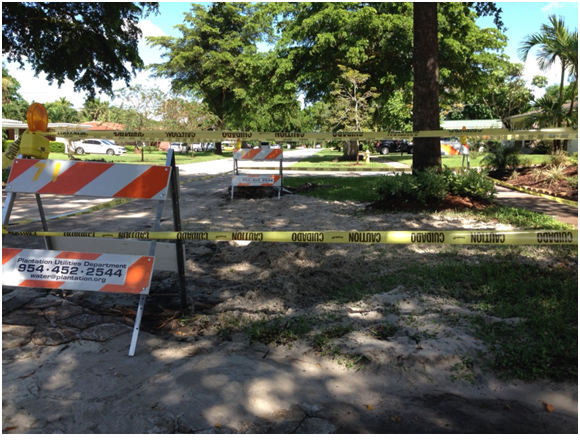
The doorbell rang and it was 1:30 am on a Saturday morning.  It was my neighbor telling me about a small problem on the street.  I looked out and the entire block was flooded.  Water was moving. It was dark, and while my street light was working, it shed little light in the blackness.  However I figured out the old AC pipeline in front of my house had sheared and the block’s leak was actually my problem.  We had no water.  Fortunately the water department was able to get the main repaired in a couple hours.

The next morning we were not as lucky.  Another break on the next street over had shut us down again.  AC water main, but this time under a tree.  They had to remove the tree before fixing the line.  We were out all day.  The water plant guys and the repair crew said that the lines were supposed to be replaced a couple years ago, but that the City had delayed the replacement for budget problems.  


SUSTAINABILITY OF UTILITIES – PART 2

Let’s take a look at some scenarios. Let’s assume you are a utility that serves 20,000 people (8000 customers), with 60 miles of water pipe, 60 miles of sewer pipe, 17 lift stations, and a water and wastewater plant.  Replacing this infrastructure might be valued at $90 million for pipe, $35 million for treatment plants, water supply and pumping equipment (current day dollars).  Let’s also assume that their annual budget is $11 million and the typical demands are 3 MGD yielding a monthly bill of $115/mo (water and sewer).

Let’s make some general assumptions like that the pipe infrastructure might last 100 years, but clearly the treatment and mechanical parts would mot.  They would need ongoing maintenance and replacement.  50 years is probably too long, but let’s go with it.  If the overall costs increase at 3% per year and money is set aside for repair and replacement. The utility will see fairly steady rates if the customer base grows 2-3% per year.  Ten years out, the budget will be $16 million.  Now for the scenarios.

If the customer base has grown at 3% per year, the customers will increase to almost 27,000.  More of an issue is what happens if that increase in demand (from 3 to over 3.4 MGD) needs to come from a new water source and requires new capacity.  Many utilities will use impact fees to offset this cost to current customers so as not to adversely impact current customers too severely .That’s the current assumption.  The result looks like this at 10 and 20 years:


Component


Value today

10 years

20 years

Customers


20000

26878

36122


Accounts


8000

10751

14449


Water  Pipe

60 mi

 $   45,000,000

 $     98,509,418

 $215,646,786

Sewer Pipe

60 mi

 $   45,000,000

 $     98,509,418

 $215,646,786

Treatment Plants and Pumping

3 MGD

 $   35,000,000

 $     76,618,436

 $167,725,278

Operations budget


 $     9,000,000

 $     16,255,001

 $  29,358,340

Capital Budget


 $     1,600,000

 $       3,502,557

 $    7,667,441

Debt


 $        400,000

 $         400,000

 $      400,000

Monthly Amount


 $              115

 $                156

 $             216

Increase per year


5%

5%


Assume 1% of pipe Replacement Costs +2% Plant


Assume operating budget inc 3%/yr but construction increases 5%/yr


But what if the new treatment and supply are 50% more costly and impact fees assume the lower investment (typical)?  The cost for the budget and for the infrastructure replacement increases (with the delta from debt).  Cost are 50% higher:


Component


Value today

10 years

20 years

Customers


20000

26878

36122

Accounts


8000

10751

14449

Water  Pipe

60 mi

 $   45,000,000

 $     98,509,418

 $215,646,786

Sewer Pipe

60 mi

 $   45,000,000

 $     98,509,418

 $215,646,786

Treatment Plants and Pumping

3 MGD

 $   35,000,000

 $     92,289,117

 $202,029,937

Operations budget


 $     9,000,000

 $     23,731,487

 $  42,861,706

Capital Budget


 $     1,600,000

 $       3,815,971

 $    8,353,534

Debt


 $        400,000

 $       1,325,000

 $    2,825,000

Monthly Amount


 $              115

 $                224

 $             312

Increase per year


8%

7%


The normal assumptions are that growth will continue, but what if it does not?


What can be gleaned as a result of a non-growth or net decrease scenario?  How does sustainability get affected?  Let’s look at the no growth scenario.  In this light, rates will need to increase at least 5% per year to insure that the utility remains rate neutral.  If there is significant deferred maintenance, which is typical of may utilities, that cost will be added to the bill.  There are examples of utilities in Florida who finally caught up with deferred obligations which doubled their customers’ bill.  This scenario is doable, but the only real assumption changes that can be made are related to the lack of growth.  Deferring maintenance will once exacerbate the problem as there is not guarantee that growth will return.  Rate neutrality becomes a public relations issue, but not insurmountable.


Component


Value today

10 years

20 years


Customers


20000

20000

20000

Accounts


8000

8000

8000

Water  Pipe

60 mi

 $   45,000,000

 $     73,300,258

 $119,398,397

Sewer Pipe

60 mi

 $   45,000,000

 $     73,300,258

 $119,398,397

Treatment Plants and Pumping

3 MGD

 $   35,000,000

 $     57,011,312

 $  92,865,420

Operations budget


 $     9,000,000

 $     12,095,247

 $  16,255,001

Capital Budget


 $     1,600,000

 $       2,606,231

 $    4,245,276

Debt


 $        400,000

 $         400,000

 $      400,000

Monthly Amount


 $              115

 $                157

 $             218

Increase per year


5%

5%


Now let’s look at the decline issue.  If the population decreases by 25% over the ten year horizon, what does this say?  The costs will remain relatively constant, but the number of customers and demands for water will drive the rates up significantly. In ten years the rates could double in a community that is likely economically disadvantaged.  The higher rates may begin to discourage economic development, rate neutrality exacerbate the problem and may increase in costs for regulatory or deferred maintenance obligation becomes a significant issue:


Component


Value today

10 years

20 years

Customers


20000

16341

13352


Accounts


8000

6537

5341


Water  Pipe

60 mi

 $   45,000,000

 $     73,300,258

 $119,398,397


Sewer Pipe

60 mi

 $   45,000,000

 $     73,300,258

 $119,398,397


Treatment Plants and Pumping

3 MGD

 $   35,000,000

 $     57,011,312

 $  92,865,420


Operations budget


 $     9,000,000

 $     12,095,247

 $  16,255,001


Capital Budget


 $     1,600,000

 $       2,606,231

 $    4,245,276


Debt


 $        400,000

 $         400,000

 $      400,000


Monthly Amount


 $              115

 $                193

 $             326


7%

7%


Assume 1% of pipe Replacement Costs +2% Plant


Assume operating budget inc 3%/yr but construction increases 5%/yr


 What can we glean from this?  Interestingly the failure to accumulate costs for growth, and the declining rate base end up with similar monthly costs.  Only by the no growth and collecting appropriate impact fees will costs be controlled, and even in that case, costs will double every 20 years or less.  The reality is that the failure to follow proper revenue collection protocols will severely limit the utility in future years.  High capital costs impact rates significantly.  Leaving it to some future commissioner to raise the rates is unfair to both the future decision-makers and customers.  It does not make you a leader either. 


My apologies for being off line for a couple weeks.  We finished the summer semester the first week of August, and are now gearing up for the Fall semester.  Lots to do, and proposals and other projects to complete before the plunge.  The most interesting project this summer has been the conclusion of a national survey of aquifer storage and recovery (ASR) projects.  The concept of ASR wells is to store water underground until you need it later.  If you have a utility with limited water supplies, or if you have high demands a certain part of the year but not the rest, ASR has been touted as a solution.  Storage underground eliminates the evaporation losses, but the question has always been can you get the water back.  The survey, which will be fully published next year, shows 204 sites.  It shows only about a third are operational projects and over 50 that have been functionally abandoned.  The reasons for abandoning them include metals leaching(mostly a Florida problem), the inability to recovery the water (particularly a problem in brackish aquifers), lack of capacity and trihalomethanes (a regulatory issue in a couple states).  ASR was successful with limited injection rates (700 gpm) and where the aquifer was denuddded (South Carolina).  Growth seems to be in the west after a lot of effort in the southeast.  The road forward should prove interesting.  With completion of the study it is hoped that more data can be gleaned to indicate the factors that make ASR project successful, thereby increasing the rate of success for the future. 


Sequestration is the word we are all using to explain the failure of the Congress to put together a budget with appropriate revenues and expenditures.  Congress can’t figure out how to reach a budget agreement, so the federal government set itself up for mandatory cuts in services. I had a recent grant sequestered, then cancelled.  It really could have helped a local community with long-term water supply and quality problems identify adaptation and mitigation strategies fo rites future.  Minor money for Washington, but a big deal down here.  Likewise I have spent the last 6 months on a subcommittee for USGS that is focusing on what could be cut from USGS.  That means less testing water quality, water levels in groundwater, stream gauges and less evaluation of results.  Most of the water issues USGS looks at crosses local and even state lines.  Since we all rely on water, this is at national concern.  Precisely when we need the information most, we may be getting less.  Expect to start seeing more sequestration issues. 


The problem is that the biggest expenses, social security and debt, cannot be cut without major backlash in the financial and voter markets.  So the cuts come from the smaller accounts – things like the federal share of state revolving funds, water research and water/wastewater programs.  The community and tribal assistance account was slashed $210 million while the environmental program budget was cut $135 million. While some may be cheering EPA cutbacks, the reality for water and wastewater users is less federal assistance to our industry.  That means more of the onus is on us, and on our customers.  The  unintended consequences of the failure of Congress to act….


I went back to Colorado last week and it’s dry again out there.  Ok, maybe not this past week when it rained a bit, but despite late snow (March to May), the forests are dry.  The bark beetle problem has not made things easier, so lightning from thunderstorms can easily create fires, like the fire down in Colorado Springs or the Big Meadows fire that is ongoing in Rocky Mountain National Park.  The latter has been ongoing (although fortunately mostly out) for over a month, and has closed some trails in the park.  I hiked through the Fern Lake fire remnants (although virtually all the fire was around Cub Lake). That fire burned for a couple months last fall, only finally burned out in the winter after snowfall. 


The west is dry and “drier than in the past” is the new normal it seems in Colorado.  So now water managers are faced with three new challenges:  less water, faster runoff and more difficult water to treat.  The fires cause the loss of protective vegetation, which means less water is kept in the forest.  As a result, the tiny, light ash particles easily run off in the rain.  Ash is hard to remove without activated carbon or other advanced processes.  The loss of vegetation increases runoff, which means larger sediment content in otherwise pristine water supplies.  That can make a major impact on downstream water plants that may not have planned for such events.  The cost of fire suppression for the last 60 years confounds the current water supply and quality problems.  There are also ecological effects that may impact local economies. 


All this said, I am unsure what the solution is.  Clearly the climate in Colorado is changing.  It is unlikely we can alter the current course any time soon.  Instead we must adapt to the changes and attempt to mitigate the impacts on water supplies.  Creativity, innovation and likely more infrastructure will be required. Concepts like aquifer storage and recovery are coming back to the fore as a result of the current condition. It will be interesting to see how this all plays out. 


Close UP Radio # 4

Here’s the 4th in a series of radio shows I did on line.  These are topics discussed:

Desalination is often argued as a water supply option.  But the costs for power are significant.  Power requires water.  Water treatment requires power, we can’t make decisions in a vacuum.

We do have ongoing discussions about indirect and direct potable reuse of wastewater – ie toilet to tap.  There are regulatory and public perception barriers, but in truth we do this in rivers every day

It is hard to define that term  sustainability, and it depends on who you are and what your issues are.  But water is a medium of social change as well as economic development.  Too often we look at short term solutions, which frustrate long-term potential.  Klamath River OR is an example.  

Enjoy


A recent Manhatten Institute for Policy Research report titled “America’s Growth Corridor: The Key to National Revisal” noted that the future economy in the US will tend to growth in certain corridors, which echos a prior report that identified “super-regions” where population, manufacturing, education and economic growth were likely to be concentrated. Both reports suggest that the super-regions will prosper, with the rest of the country lagging behind. The seven high growth areas in the Mnahatten Institute report are the Pacific Coast, the Northeast, the Front Range, Great Lakes, the southeast/piedmont, Florida/Gulf Coast, and Texas/southern plains. This new report focuses more on the politics of the region, noting that each region is politically fairly consistent internally, indicating there is more than one way to do business. The current business climate, driven primarily by energy favors the Plains, with the southeast starting to import jobs from Japan and Korean as a result of low wage rates. The report goes on to draw a series of political conclusions about business climates and the politics of why growth is occurring in certain areas. But let’s look at a different view of the report. Each of these regions has had “ it’s day in the sun” so to speak, and some a couple of days, like California. Business cycles are cyclical so shifts in growth corridors is not unexpected. However there are some potential limiting issues that are not addressed in the report that are of significant interest or concern.

First, where is the water? Texas and the Plains have significant water limitations, as does much of the southeast. Trying to build an economy when you lack a major resource becomes difficult. That is why the Northeast, Great Lakes and later the Pacific grew earlier than the south, mountain and Gulf states. The Northeast and Great Lakes had water for industrial use and transport of goods, a real key historically for industry. Those regions also had (and still have) better embedded transportation facilities (rail, roads, airports).

The next question is where is the power coming from? The answer that will be given is that the Plains states and Texas have created 40 % of the jobs in the energy sector in the past 4 years so that is where the energy comes from, but having energy and being able to convert it efficiently to power that is useful to people or industry is a different issue. You need water to cool natural gas plants, unless you want to sacrifice a lot of efficiency. Back to water again. Moving the gas to other parts of the country to convert coal or oil plants to natural gas would work, but getting the electricity back does not come without 6% losses and a real need to make major improvements to the electrical grid. Not a small job.

So while the Manhatten Institute reprort suggest that all seven corridors will grow, but that the southern corridors are growing faster, the sustainability of this growth is at question. I recall a similar prediction when I graduated from college in the early 1980s, when the jobs for engineers were limited to the energy fields in Texas and Louisiana and the prediction was that al the industrial growth would be in the south. And then Silicon Valley happened, and then the housing boom in California, Nevada and Florida happened, and a few things in between. Oh and that energy economy collapsed in the late 1980s …. You get the picture. This is not to say that some marketing the power, water and transportation benefits of the historical industrial areas of the north are not needed – they are, but the fact is that there is significant available water, power, transportation and people capacity that is unused. If I am an industry, I may want to look at the power/water issue a little more closely.


In the past week I have had the opportunity to experience the extremes with water – heavy rains/tropical weather in SE Florida, and dry weather in Denver at America Water Works Association’s Annual Conferences and Exposition. Two months ago with was snowing in Denver and there had been limited rain in SE Florida. Six months ago we were both dry and there was significant concern about drought in both places. How quickly fortunes change and the associated attitudes as well. It is part of a perception problem – looking at the near term – instant gratification, as opposed the long-term consequences. In truth neither set of conditions is historically different or should have created major panic or much shift in attitudes, but it is the potential to predict conditions that require the water manager’s scrutiny. We have all become risk managers.

Managing risk is not in the job description of most water and sewer personnel (risk managers aside, and they are focused on liability risks from incidents caused by or incurred by the utility like accidents, not water supply risks). We spend a lot of effort on the engineering, operation and business side, but less on planning or risk/vulnerability assessments. EPA has required vulnerability assessments in the past, but having seen some of those exercises, most are fairly superficial and many put on a shelf and forgotten. I have had clients ask me if I still had copies because they did not. Clearly we need a renewed commitment to vulnerability assessment.

Vulnerability starts with water supplies. Groundwater is particularly tricky. A new USGS study reports significant decreases in water levels in many aquifers across the US, especially confined aquifers in the west. That situation is not improving, and the situation will not correct itself. Loss of your water supply is a huge vulnerability for a community. Finding a new supply is not nearly as simple as it sounds or as many are led to believe. Confined aquifers do not recharge quickly and therefore have finite amounts of water in them. Remove too much water and all too often land subsidence occurs, which means the aquifer collapses and will never hold the same amount of water. USGS has mapped this and it matches up well with the drawn down aquifers. More data needs to be collected, but Congress is looking to cut USGS funds for such purposes, just when conditions suggest the data is needed most.

Many watershed basins and many aquifers are over allocated and overdrawn, and not just in the west. New England and the Carolinas have examples. Overallocation means competition for water will increase with time and it will be utilities that everyone will look at to solve the problem. Afterall the utilities have money as opposed to agriculture and other users, right? To protect themselves, water utility managers will need to look beyond their “slice of the pie” to start discussions on the holistic benefits to water users throughout the watershed, which will extend to understanding economic and social impacts of water use decisions. It is not just about us, and paradigm shift that is coming and one that we as an industry need to be the leading edge for. Our use impacts others and vice versa. Every basin wants to grow and prosper, but decisions today may reduce our future potential. Klamath River is a great example of misallocated water priorities. The biggest potential economy in the basin is Salmon ($5B/yr), followed by tourism ($750 M and growing), which relies on fishing and hiking. But agriculture ($0.2 B/yr) get the water first. Then power, which warms the water (salmon like cold water). Then a few people (a few 100,000 at the most in the basin). The result, the salmon industry gets reduced to $50 M/yr. Now how could we create more jobs, which would result in more income and a bigger economy? The easy answer is encourage the salmon industry, but that doesn’t sit well with the other, smaller users that will become more vulnerable to losses.

I suggest that to harden our water future in any given basin, we need to start looking a little more holistically at the future. This type of analysis is clearly not in the job description of the utility or its managers, utility managers may have the best access to technical expertise and information. As a result to protect their interests and manage risk, we may need to shift that paradigm and become holistic water managers.


Radio Program last week

Hi all.  Here is another radio show I did last week talking about  my company Public Utility Management and Planning Services Inc. and water sustainability. Take a listen. Let me know what you think.  Thanks

Fred