Archive

Risk


Most states were doing pretty well before the 2008 recession hit, but that ended in 2009. Most states had to make extremely difficult cuts or raise taxes, which was politically unacceptable. Of course invested pension systems received a lot of attention as their value dropped and long term sufficiency deteriorated, which was fodder for many changes in pensions, albeit not how they were invested. The good news is a lot of them came back in the ensuing 5 years, but 2015 may be different. A number of states have reported low earnings in 2015 and whether this may be the start of another recession. The U.S. economy has averaged a recession every six years since WWII and it has been almost seven years since the last contraction. With China devaluing their currency, this may upset the economic engine. At present there are analysts on Wall Street who suggest that some stocks may be overvalued, just like in 1999. If so, that does not bode well states like Illinois, Kansas, New Jersey, Louisiana, Alaska and Pennsylvania that are dealing with significant imbalances between their expenses and incomes. Alaska has most of its revenue tied to oil, so when oil prices go down (good for most of us), it is a huge problem for Alaska that gives $2200 to every citizen in the state. An economic downturn portends poorly for the no tax, pro-business experiment in Kansas that has been unsuccessful in attracting the large influx of new businesses, or even expansion of current ones. California and next door Missouri, often chided by Kansas lawmakers as how not to do business, outperform Kansas.

Ultimately the issue that lawmakers must face at the state and as a result the local level is that tax rates may not be high enough to generate the funds needed to operate government and protect the states against economic down turns. There is a “sweet spot” where funds are enough, to deal with short and long term needs, but starving government come back to haunt these same policy makers when the economy dips.   It would be a difficult day for a state to declare bankruptcy because lawmakers refuse to raise taxes and fees.


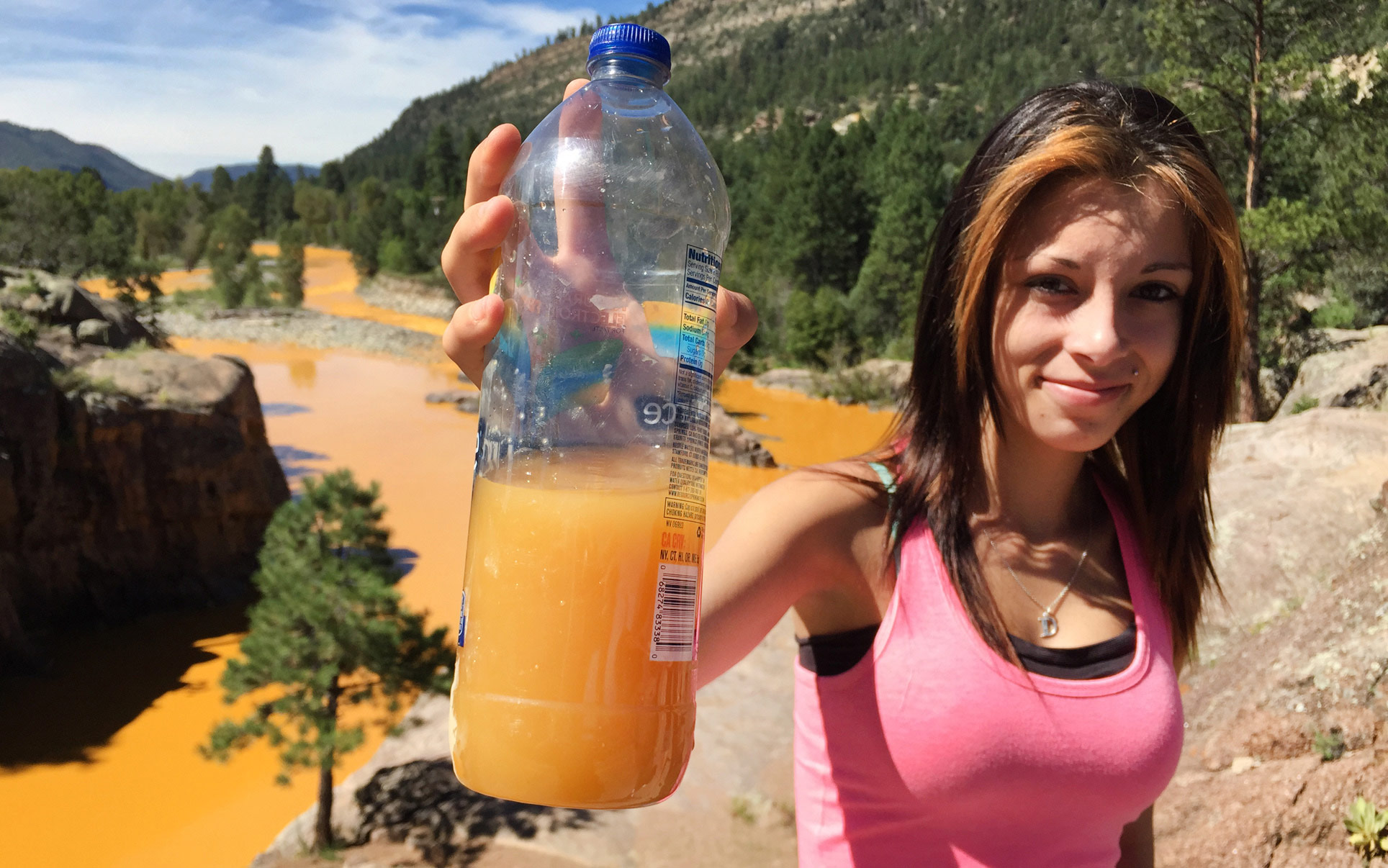
In an interesting twist of fate, USEPA caused a spill on the Animas River when a staffer accidently breached a dike holding back a solution of heavy metals at the Gold King mine because the misjudged the pressure behind the dike.  Pressure?  The spill flowed at 500 gpm (0.7 MGD), spilling yellow water spilled into the river.  Downstream, the plume has travelled through parts of Colorado, New Mexico and Utah, and will ultimately hit Lake Mead.  Officials, residents, and farmers are outraged.  People were told not to drink the water because the yellow water carried at least 200 times more arsenic and 3,500 times more lead than is considered safe for drinking. The conspiracy theorists are out.  The pictures are otherworldly.

colorado-mine-spillRayna Willhite holds a bottle of water she collected form the Animas River north of Durango Colo., on Thursday, August 6th, 2015. About a million gallons of toxic mine waste emptied out of the Gold King Mine north of Silverton that eventually made it into the Animas River. (Jerry McBride/Durango Herald via AP)

0807 colo spill epa-spill-

But they are all missing the point, and the problem.  This is one of hundreds of “legacy disasters” waiting to happen.  We are just surprised when they actually do.  A legacy disaster is one that is predicated on events that have happened in the past, that can impact the future.  In some cases the far past.  There are two big ones that linger over communities all over the west and the southeast – mines and coal.  Now don’t get me wrong, we have used coal and needed metals form mines.  That’s ok.  But the problem is no one has dealt with the effects of mining or coal ash for many years.  And then people are upset.  Why?  We can expect these issues to happen.

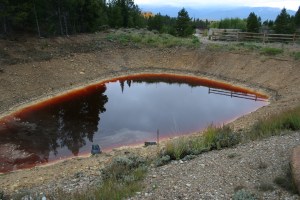
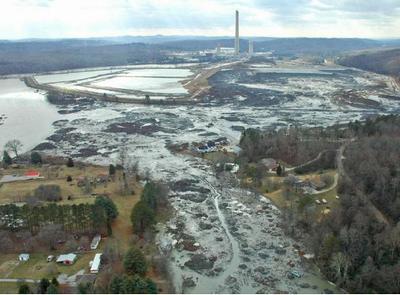
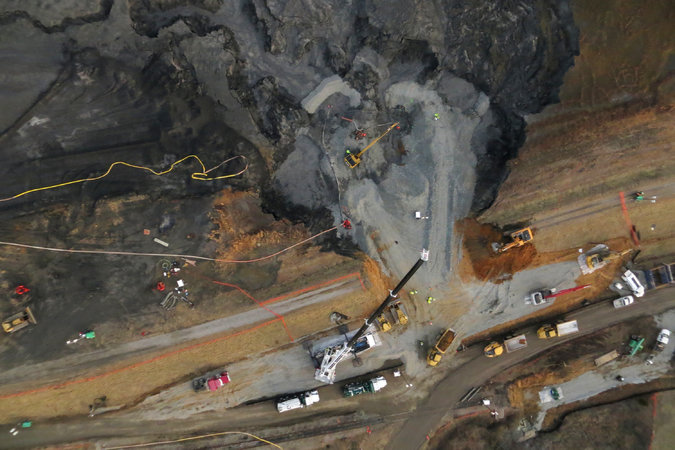
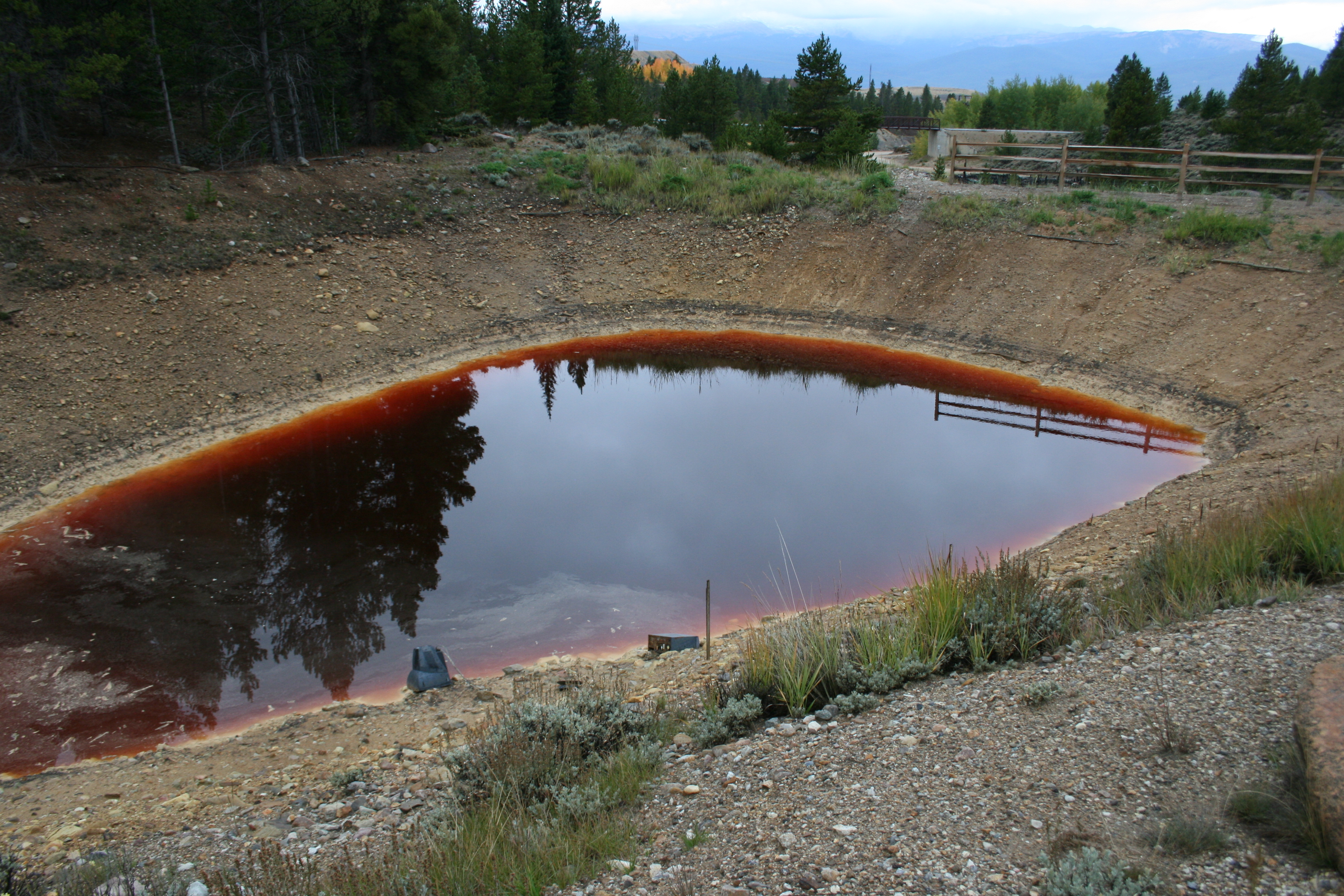
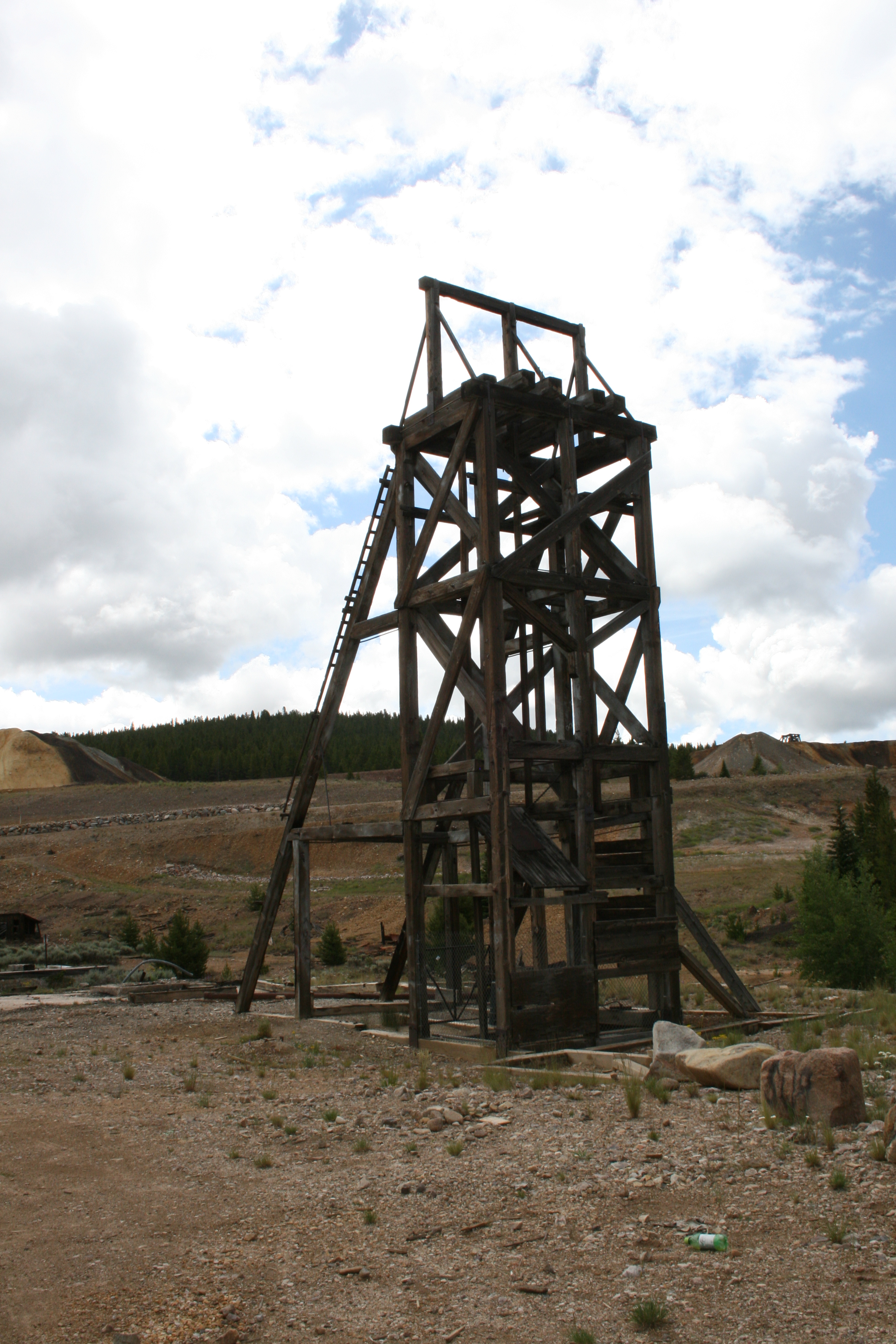
One major problem is that both are often located adjacent to or uphill from rivers.  That’s a disaster waiting to happen.  The King Gold mine is just the latest.  We had recent coal ash spills in Kingston, Tennessee (TVA, 2008) and the Dan River in 2014 (Duke Power). The Dan River spill was 30-40,000 tons.  Kingston cleanup has exceeded a billion dollars.  Coal ash is still stored at both places.  Next to rivers.  We had the federal government build ion exchange facilities in Leadville, CO and Idaho Springs, CO to deal with leaking water from mine tailings from the mountains. Examples are in the hundreds.  The photos are of the two coal spills, mine tailings that have been sitting the ground for 140 years in Leadville and one of the stormwater ponds – water is red in Leadville, not yellow.
kingston_coalash POLLUTE-master675 IMG_4803 IMG_6527 (2015_03_08 17_53_48 UTC)

When the disaster does occur, the federal government ends up fixing it, as opposed those responsible who are usually long gone or suddenly bankrupt, so it is no surprise that EPA and other regulatory folks are often very skeptical of mining operations, especially when large amounts of water are involved.  We can predict that a problem will happen, so expensive measures are often required to treat the waste and minimize the potential for damage from spills.  That costs money, but creates jobs.

For those long gone or bankrupt problems, Congress passed the Superfund legislation 40 years ago to provide cleanup funds.  But Congress deleted funding for the program in the early 2000s because they did not want to continue taxing the business community (mines, power plants, etc.).  So EPA uses ARRA funds from 2009.  And funding is down from historical levels, which makes some businesses and local communities happy.  The spectre of Superfund often impacts potential developers and buyers who are concerned about impacts to future residents.  We all remember Love Canals and Erin Brockovich.  Lack of development is “bad.”  They ignore the thousands or jobs and $31 billion in annual economic activity that cleanup creates, but it all about perception.

But squabbling about Superfund ignores the problem.  We continue to stockpile coal ash near rivers and have legacy mine problems.  Instead we should be asking different questions:

WHY are these sites permitted to store ash, tailings, and liquids near water bodies in the first place?  EPA would not be inspecting them if the wastes were not there.

WHY aren’t the current operators of these mines and power plants required to treat and remove the wastes immediately like wastewater operators do?  You cannot have millions of gallons of water, or tons of coal ash appear overnight on a site, which means these potential disasters are allowed to fester for long periods of time.  Coal ash is years.  Mine tailings… well, sometimes hundreds of years.

One resident on the news was reported to have said “Something should be done, something should be done to those who are responsible!”  Let’s start with not storing materials on site, next to rivers.  Let’s get the waste off site immediately and disposed of in a safe manner.  Let’s recover the metals.  Let’s start with Gold King mine.  Or Duke Power.  Or TVA.

The US EPA estimates that there is a $500 billion need for infrastructure investment by 2025.  The American Water Works Association estimate $1 trillion.  Congress recently passes the Water infrastructure Finance and Innovation Act (WIFIA) at $40 million/year, rising to $100 million in 5 years, which is a drop in the bucket.  Peanuts.  We have so many issues with infrastructure in the US and Congress tosses a few scheckles at the problem and thinks it is solved.  The reality is that the federal government wants to get out of the water infrastructure funding business and shift all water infrastructure to the local level.  This is a long-standing trend, going back to the conversion of the federal water and sewer grant programs to loan programs.

The reality is that local officials need to make their utility system self-sustaining and operating like a utility business whereby revenues are generated to cover needed maintenance and long-term system reliability.  The adage that “we can’t afford it” simply ignores the fact that most communities cannot afford NOT to maintain their utility system since the economic and social health of the community relies on safe potable water and wastewater systems operating 24/7.  Too often decision are made by elected officials who’s vision is limited by future elections as opposed to long-term viability and reliability of the utility system and community.  This is why boom communities fall precipitously, often never recovering – the boom is simply not sustainable.  Long-term planning is a minimum of 20 years, well beyond the next election and often beyond the reign of current managers.  Decisions today absolutely affect tomorrow’s operators.  Dependency on water rates may be a barrier, but this ignores the fact that power, telephone, cable television, gas, and internet access are generally more expensive hat either water or sewer in virtually all communities.  We need water. Not so sure about cable tv or he internet.  Great to have, but needed to survive?

The growth in costs can lead to mergers where a utility cannot afford to go it alone – as the economy of scale of larger operations continues to play out in communities.  Several small plants cannot operate at the same cost as one larger plant.  As a result larger projects will increase – from 87 to over 336 between 2005 and 2014.

But these costs are generally plant costs – treatment and storage, not piping.  Distribution pipelines remain the least recognized issue for water utilities (collection pipelines for sewer are similarly situated).  The initial Clean Water Act and Safe Drinking Water acts did not focus on piping systems – only treatment and supply.  The national Council on Public Works concluded their first assessment grade for infrastructure in the 1980s – but piping was not discussed.  ACSCE’s first report card in 1998 did not express concern about piping system.  Yet piping continues to age, and expose communities to risk.  In many communities greater than 50% of their assets are buried pipes.  Tools for assessing the condition of buried pipes especially water distribution pipes is limited to breaks and taps.  As a result the true risk to the community of pipe damage is underestimated and the potential for economic disruption increases.  The question is how do we lead our customers to investing in their/our future?  That is the question as the next 20 years play out.  Many risk issues will be exposed.  The fact that there are not more issues is completely related to the excellent work done by the utility employees.  More to come….


A project I am currently involved with looks at the impacts of climate change on public health in southeast Florida.  The initial grant focused on looking at socially vulnerable populations and the impact on chronic diseases these groups from climate change.  The question was whether climate change, which in southeast Florida is basically sea level rise, would have an impact on health issues.  On the face of it, the correlation between chronic health conditions and climate seems tenuous although the statistics support the link between chronic health impacts and socially vulnerable populations.  But what is interesting is that in general, the climate vulnerable topography and the socially vulnerable people do not correlate.  This may be a southeast Florida issue, but it is the less socially vulnerable who live in the climate vulnerable topography.

Those familiar with the history of southeast Florida know that makes sense because of the beaches.  The beaches are topographically vulnerable but eh wealthy want to live there anyway. But the problem is more pervasive.  The data actually can be mined further to reveal that the older homes (1940s-1960s), generally smaller and of lower value, were traditionally built on the high ground.  Turns out our ancestors were a little smarter than we thought – they actually thought this out.  Aside from Henry Flagler building the railroad on the high ground, most of the cities were located similarly – on the coastal ridge.  Drainage of the Everglades permitted the western migration of residences – newer and larger, but at lower elevation and mostly reliant on drainage across the ridge to the ocean via canals.  But as sea level rises, the water moves more slowly.

The question that must be asked then is what happens as this housing stock ages?  We already see some newer communities, primarily built for retirees, moving to relieve themselves of the 55+ designations to allow the housing stock to be sold – the children of the retirees don’t want the property and desire to sell it – often quickly.  To increase speed of sales (and ultimately retaining some value), eliminating the 55+ opens younger families to move in.  However the lower value of the properties makes them conducive to migration of people who are social vulnerability, so migration may be toward social vulnerable people moving to topographically challenged property.  That portends poorly for the link between climate and health in the future.

Two issues arise from the research.  First future health vulnerability from climate may be more related to vectors and waterborne disease than chronic health effects.  That expands the health vulnerability to all populations.  The second issue is that storm water, sewer roadway and water infrastructure may relieve some pressure on these topographically vulnerable properties, but the people who are moving to then will have significantly less ability to pay for those improvements, creating a political conundrum that will that a significant amount  of leadership to overcome.  That means that resiliency must be built into infrastructure and redevelopment projects now, to address future conditions.  Building in resiliency is not currently being considered by local planners and engineers because the situation is not well understood and a 50 year planning horizon is not the norm.  Also, it would likely create a firestorm of fuss from developers who would pay the costs, which discourages good planning.

Finally, if things accelerate, wealthier parties may begin to see a retreat from vulnerable eastern beaches to higher ground as being a reasonable concept.  However the high ground is currently occupied by socially vulnerable people, creating a potential area of conflict over the fate of displaced residents who’s social status may force them toward the vacant, topographically vulnerable properties.  This is a future problem for planners, developers and officials approving new development with an eye to displacement a concept not in the current thought process.  Thinking about vulnerability means a lot of infrastructure must not only be constructed, but maintained meaning local public works and utility budgets will need to increase in kind.  That means higher rates and charges to populations that may have limits to their ability to pay   Stay tuned…..


The number of people that recall the Dust Bowl of the 1930s is dwindling and that may portend poorly for society (likewise the loss of Depression memories and two world wars).  The Dust Bowl was aptly names for the regular storms of windblown dust that pummeled farm fields and blew away valuable topsoil needed by farmers.  Why it occurred was more interesting and foretelling.

The amount of farming had exploded in the late 1920s as a result of  record wheat price, motorized tractors and government programs encouraging farmers to plow up the prairie and plant.  The crops replacing the native plants did not have the same root structure and were less drought tolerant as a result.  When wheat prices collapsed, the fields were left fallow exposing the topsoil to the elements.  Since the topsoil was no longer anchored to the soil by plants, the wind and lack of rain caused much of the topsoil to migrate with the wind as dust.  Topsoil was lost, rain ran off, transpiration decreased, and the cycle just go worse.   Up to 75% of he topsoil was lost.

Rains returned in the 1940s but much of the dry farming (no irrigation) practice was immediately converted to wet framing using deep wells to capture water from aquifers.  The result was healthier crops, more consistent yields and protection of the remaining topsoil as a result.  Or is it?

Visit California today.  They are in the midst of severe drought conditions. Farmers have attempted to protect themselves by drilling more wells – deeper wells which diminish water supplies to the shallower neighboring wells.  Water levels decline, land subsides, the aquifer collapses, and there is little recharge.  Some areas of the central valley have sunk over 8 feet in the past 100 years.  But we have up until this point, had healthier crops and more productive yields, which protects the valley until the rains return.  Or does it?

While the lack of rainfall is a natural cycle, there is an argument to be made that man-made impacts have exacerbated the situation.  In the Dust Bowl states, the initial error was plowing up the native grasses without understanding how they had adapted to the mostly dry conditions on the prairie.  Many of the prairie states receive under 20 inches or rain each year, and scarcely any during the summer, which limited evapotranspiration, which limits thunderstorm and regional rainfall activity.  Less ET = drier conditions.  So growing crops is not what one would immediately identify and a “normal” land use for the prairie.  We altered the environment, but the Midwestern farming thought process doesn’t work in the dry prairie.  Irrigation was needed, but the lack of surface water limited irrigation unless wells are used.  Wells were drilled which returned and improved crop yields, but the well use has caused massive decreases in aquifer levels in the prairie states. The amount of water is finite, so as long as withdrawal exceed recharge, and with only 20 inches of rain that mostly runs off the land, there is a point in time when the well runs dry.  As the well runs drier, productivity will fall.  The interim fix is drill deeper, but the bottom of the aquifer is in sight.  Then, fields will be fallow, agriculture will be impacted dramatically, and it is not inconceivable the Dust Bowl type conditions could reoccur. Policies by man exacerbate the problem because the prairie productivity is accelerated will above its natural condition.

Likewise much of the land subsidence problem in California is irrigation driven – water is pulled through wells in an ever increasing competition to maintain one’s crop yield.  Water wars and fights with one’s neighbors over wells drying up is increasing more common as irrigation needs increase and recharge to the aquifer is diminished.  Much of California is even drier than the Dust Bowl states, and more reliant or wells and irrigation.  Less water also means less ET which means less local rainfall.  So while California has done much to protect itself over the years from drought, the current experience says that declining aquifer levels means we have exceeded the productivity of that state as well.  So is the California Dust Bowl coming?

Man is an ingenious creature.  We overcome much that the Earth throws at us.  But at the same time, we rarely consider the consequences of our actions in overcoming the challenges Earth poses.  These two examples show how our efforts to solve one problem, may actually damage the long term sustainability of these areas.  Short term gain, long term problem.


Ray Rice gets video-taped punching out his wife in an elevator in a casino.  Wes Welker gets videotaped at the Kentucky Derby looking like he has imbibed a bit too much.  We have couple students that, well, let’s just say those photos won’t help them get jobs.  And everyday people are You-tubed doing stupid things they wouldn’t want to get caught doing.  And hackers download photos of celebrities in various states of undress that they thought were secure.  We do not understand the Cloud and we do not understand all the wires that make the internet a useful and productive tool that houses the cloud.  The internet is a great information sharing tool, but almost anything is exchangeable.  To date the internet is open to all, but the wires are owned by corporations.  If you watched the 60 Minutes episode recently with Michael Lewis as he talked about Wall street brokers gaming the stock market by using internet cabling to accelerate their access to your data (his book is Flash Boys), you should not be surprise if corporations won’t want to restrict those tools that help them, including cables and satellites.  Jim Hightower in a recent Lowdown newsletter outlines the reasons we should be watching the mergers of the large entities like Time-Warner who own and therefore control the internet connections.  They can and will impose fees for access of certain types.  Instead of equal access, those who pay can and will receive preferential connections.  They also will get access to data.  Wall Street saw the benefit of using the wiring and cloud and data sharing to their advantage, even when it is your data, so certainly these media giants know all about it.  It makes sense form a business perspective.  It works against you, me and our local water and sewer utilities who do not have the luxury of being able to pay and pay for better access.  Keep it on your radar screens – at home and at work.  Keep in mind deregulation and merger of the airlines didn’t reduce air fares or make service necessarily better.


Once upon a time, people worked until they died.  But the longer people lived, the more infirmities impacted older people, and the concept of stopping work came into play.  So these folks labored all their lives, put some money away in a safe place, like a bank, where someone else would watch over an manage their money until they needed it.  Then one day, they found out that the banks have gambled and lost on real estate, and their money was gone.  There was no government to bail anyone out.  So the people had to try to go back to work, became beggars and destitute or died.  The government thought this was unfair to those older folks who had worked so hard, but through absolutely no fault of their own, had lost everything.  So the government decided that it would “tax” people a portion of their income, and put it into a retirement system.  People could retire at 65, and of course they were only expected to live another r3 or 4 years.  There were 16 people laying in for every person taking out.  And the government told the banks that they could not gamble with people’s hard earned savings, passed legislation and created an insurance pool to backstop losses by criminal or unethical activity.  All was good and the people were happy.

As time went on some things changed.  For one, people lived more than 3 or 4 years.  The population retirees increased, and the ratio dropped to 1:10 and then to 1:6 ration of retirees:workers, but the “tax” did not go up, but investments were made that increased the pool.  It was called good management.  The government also encouraged people to save money by deferring taxes, which they did, and the banks used it to make money.  All good as long as the investors gambled well.  They gambled so well, they were able to talk the government into undoing the anti-gambling rules from the past, so their pool to invest was twice as much.  And the markets grew and the portfolios grew and the people were happy.

And then it came to pass that the banks again gambled on real estates, and created complicated investment tools to hide the risk, but the risk was exposed and half the money was gone overnight.  And the retired were wondering about jobs again.  But there were no jobs.  And the employed now had fewer jobs.  So less people paid into the system.  And the people were sad.  And mad because they thought they were being protected from the gambling of the past.  They did not understand.

And the government could supply no answers because they had changed the rules and they knew the people would be unhappy, so the government felt there was no choice, so they borrowed money, and bailed out the banks.  And some people were happy.  And some people were concerned about all that debt.  And some people wondered why it was that history could repeat itself and put society at risk.  And some people asked why people who did bad things were not punished.

And none of these questions has been answered.  Good thing that these fairy tales don’t depict anything real right?


Earlier this year the Journal for AWWA had several articles about water use and infrastructure needs.  One of the major concerns that has arisen in older communities, especially in the Rust Belt and the West is that demands per person have decreased.  There are a number of reasons for this –the 1992 Energy Policy Act changes to plumbing codes that implemented low flush fixtures, the realization in the west that water supplies are finite and conservation is cheaper than new supplies, a decline in population, deindustrialization, and climate induced needs.  But all add up to the result that total water use has not really changed over the past 30 years and in many locales, water sales may have decreased.  Water utilities rely on water sales for revenues so any decrease in sales must be met with an increase in cost.  Price elasticity suggests the increase will be met with another decrease in sales, etc.  It is a difficult circle to deal with.  So less water, whether through deliberate water conservation or other means, creates a water revenue dilemma for utilities.  A concern about conserving to much and eliminating slack in the system also results.

Less water means less money for infrastructure.  Communities do not see a need for new infrastructure because there are fewer new people to serve.  Replacing old infrastructure has always been a more difficult sell because “I already have service, why should I be paying for more service” is a common cry, unless you are in my neighborhood where the water pipes keep breaking and we are begging the City to install new lines (they are on my street J)  Educating customers about the water (and sewer) system are needed to help resident understand the impacts, and risk they face as infrastructure ages.  They also want to understand that the solutions are “permanent” meaning that in 5 or 10 years we won’t be back to do more work.  Elected officials and projected elected officials (the tough one) should be engaged in this discussion because they should all be on the same page in selling the ideas to the public.  And the needs are big.  We are looking at $1 trillion just for water line replacement by 2050 and that is probably a low number(2010 dollars).  The biggest needs are in the south where infrastructure will start hitting its expected life.  The south want west will also be looking for about $700 billion in growth needs as well.  All this will cause a need for higher rates, especially with ¼ less low interest SRF funds avaialalbe this year from Congress.


Public water and sewer systems have the responsibility to protect the health, safety and welfare of the public they serve, just as engineers do.  This is includes not just complying with regulatory mandates (they are minimum standards), but enacting such precautions as are needed to address things not included in the regs.  Unfortunately we continue to pay too much attention on regulatory compliance and evaluate the condition of the system using unaccounted for water losses or leaks fixed in the system as a measure of condition.  That may be an incorrect assumption.  The problem is that unless we understand how the system operates, including how it deteriorates with time, the data from the past may well be at odds with the reality of the future.  For example, that leak in your roof can be a simple irritation for a long time if you ignore it.  But ignoring it creates considerable potential for damage, including roof failure if too much of the structure underneath is damaged.  With a water system, pipes will provide good service for many years will minimal indication of deterioration.  Then things will happen, but there is little data to indicate a pattern.  But like your roof leak, the damage has been done and the leaks are an indication of the potential for failure.  Bacteria, color, pressure problems and flow volumes are all indicators of potential problems, but long-term tracking is needed to determine develop statistical tools that can help with identifying end of life events.  Basic tools like graphs will not help here.

Construction to repair and replace local water, sewer and stormwater infrastructure is expected to reach $3.2 and $4.8 billion respectively for water and sanitary sewer. The federal SRF programs are only $1.7 Billion in SRF loans, 24% below 2012 and well below the levels identified by the federal government to sustain infrastructure condition.  The only reason for the decrease seems to be a demand by Congress to reduce budgets, especially EPA’s budget where this money resides.  But the 2008 recession and its lingering effects to date have deferred a significant amount of infrastructure investments, and the forecast does not rectify the past deficits, and likely does not address the current needs either.  Few water and sewer systems are flush with funds to update infrastructure and borrowing has become a difficult sell for many public officials.  Lake Worth, FL just had a $60 million bond issue for infrastructure redevelopment defeated by voters two weeks ago.  The officials know they need this infrastructure, but the public is unconvinced because few serious problems have occurred.  We have to get the public past this view so we can improve reliability and public safety.  Those are the arguments we need to demonstrate.  The question is how.


The first month of the fall semester has slammed me, which accounts for a little less blog activity on my part.  But as fall rolls in many local governments are dealing with final budgets, new projects and dealing with taxes and fees.  Students are back to school and industries are looking to the end of the year and 2015.  How fast time flies.  Our students that graduated last spring all have jobs and half of our seniors that will graduate in December do as well.  With engineers or contractors.

The good news is that the economy continues to tick up, construction and construction jobs are back to 2005 levels (which if you recall was a lot), and the stock markets are making money for somebody because they are up as well.  Alan Greenspan can complain that housing maybe lagging, but that is more a lack of people having funds or being able to move.  Meanwhile construction of projects that were deferred might be addressed?  Time will tell but it raises an interesting question –  can we plan on growth forever?  We assume a continuous growth rate (like 1 or 2% per year), but is that reasonable since it means more people come to an area each year than they did the year before?  Works for bacteria, maybe not so much for people.  Ask Detroit.  Or Cleveland.  And does this type of growth create unintended consequences for us?  I think this is a  good question for a future blog and of course a question that economists and politicians do not want to answer.  It would be highly disruptive to our plans.   So since it is election season again, we all need to be prepared for the inundation of campaign sales pitches that try to convince us to vote for someone, or more likely to vote against someone.  That’s probably not the way it was intended to go, but it’s what politics has degenerated to in so many places.  Ideology and adherence to it under any circumstances often prevents us from looking objectively at issues and reaching real solutions, some of which may have winners and losers, but may be necessary to improve long-range forecasts.  Listen to the political patter and decide where the plan is.

For example, ignoring the evidence that the climate is changing, places constituents in perilous positions…..in the future.  Not now and few climate impacts need drastic immediate action.  But longer term, storm sewer will be inadequate, there will be less water stored in glaciers, less rainfall in places (like the southwestern US), more frequent flooding in coastal areas, etc.  The problem may be 50 years from now, but wholesale infrastructure programs take that long.  It took the US 50 years to build the interstate system.  Nearly 40 years to dig canals in south Florida, 20 year to acquire property for a reservoir in North Carolina, etc.  Things take time and meanwhile if we need to alter current practice, such as elevating roadways and building to avoid flooding, the time to start is now, not in 50 years when solving that problem is overwhelming.  Find those water sources now, so development and competitors can be controlled.  Finding water that may take 20 years to secure and construct is an unmanageable issue the year before you need it.  You need a plan.  Where do you hear that planning?

What about that failing infrastructure?  We tend to ignore it until it fails.  But if it fails, that can be catastrophic.  Engineers and operations personnel know deterioration occurs, and know that it will take time to plan, design and refurbish of replace infrastructure.  But projects continue to get deferred for lack of funds.  Aggressively planning repair and replacement may actually save money in the long-run, but our planning tends only to be short-term.  So how do we change that?  Perhaps the state agencies that require local planning to be submitted and approved will push for better evaluation of infrastructure.  GASB 34 clearly did not go far enough.  Too many communities do not track their work and even fewer document the conditions when they make repairs.  Too little data is collected on what fails, when and why.  WE can collect huge amounts of data with work orders that track work.  Perhaps a regulatory frontier.  Or maybe, just maybe, some enlightened managers will decide tracking information is actually fairly easy.  The question is the platform.  Stay tuned… we are working on that…