Archive

sustainability


It’s been two weeks since I last posted.  My apologies.  It is amazing how dependent we are on technology working.  So I was in Alaska.  Upon my return, the internet was not working.  Then I find out the hard drive on my 1.5 year old computer is crashing and must be replaced, and for whatever reason I cannot find my emails even though they were backed up :(.  Tropical storm Isaac came by.  More travel to Denver.  All the while, I don’t have access to the internet.  It throws a light on the dependency we have on technology.

We all depend on technology.  Much of the increase in productivity experienced in the US in the 1990s, when we made more strides in productivity than any other nation, was due to technology.  It makes our lives easier, delegates repetitive tasks to computers, and can allow us to be more creative.

It got me thinking bout all the ways the utility industry has been a benefactor of technology.  Reports, tracking data, mapping and work orders can all be computerized to permit easier development of operating information.  Water and wastewater plants run better, and more efficiently with technology like variable speed drives and control systems.  Of course they come with a cost – spending money to save money.  When the systems fail, well, that can be a problem.   Kinda like the last two weeks for me….


I recently spent time in Denali National Park and surrounding area.  60 in the day, 45 at night, and this time of year, rain.  Lots of rain.  Denali creates its own weather, so precipitation and clouds are common for much of the year.  But it was not all the water in the Denali area that interested me as much as some local discussions about methane release from the permafrost.  I was told that many of the native populations rely on storage below ground in the permafrost to freeze winter provisions.  But a curious thing has occurred in recent years – some of the provisions spoiled.  It seems the permafrost relied upon for generations as a natural freezer is no longer permanent in some areas and the soil, frozen for generations, is now suddenly soggy.  Once unfrozen, the soil appears to release copious amounts of methane that has been trapped for years (no smoking on the tunda!).  The issue is further complicated by the fact that some of the methane could potentially get into surface water supplies and without power, and with limited funds, the treatment becomes far more difficult.


Faced with continuing growth and re-development, an aging lime softening plant, and regulatory issues with disinfection by-products, the City of Dania Beach, FL pursued the construction of a new 2.0 mgd nanofiltration process to complement the City’s existing 3.0 mgd conventional lime softening water treatment plant. Efforts to develop a plant that would improve water quality, meet long term needs and raise community awareness involved CDM Smith engineering and construction teams, the City and FloridaAtlanticUniversity.  This paper presents the innovative membrane treatment plant design that was developed to maximize system recovery while providing a high degree of operating flexibility.  This design includes a two stage nanofiltration unit followed by a convertible third and fourth stage reverse osmosis unit to provide the City with the flexibility to meet their concentrate discharge limits when operating at recoveries up to 95 percent by operating in a four stage configuration.  Operating at this higher recovery was tested by FloridaAtlanticUniversity faculty and students, and preliminary design concepts were gained from student design projects, including meeting LEED certification goals.  This plant secured enough credits  to become the first LEED Gold certified water plant in the world.

So what does this mean to a community?  Is this work pursuing?  Why is this type of certification useful for local governments?  In  many cases it sets a public policy example.  It may cut long-term costs (something many utilities do not focus on), and it may improve sustainabilitiy?  What are your thoughts?  Read more in an upcoming JAWWA article.


2012-07-28 conversion-of-climate-change-skeptic  from the New York Times

July 28, 2012
The Conversion of a Climate-Change Skeptic
By RICHARD A. MULLER
Berkeley, Calif.
CALL me a converted skeptic. Three years ago I identified problems in previous climate studies that, in my mind, threw doubt on the
very existence of global warming. Last year, following an intensive research effort involving a dozen scientists, I concluded that global
warming was real and that the prior estimates of the rate of warming were correct. I’m now going a step further: Humans are almost
entirely the cause.
My total turnaround, in such a short time, is the result of careful and objective analysis by the Berkeley Earth Surface Temperature
project, which I founded with my daughter Elizabeth. Our results show that the average temperature of the earth’s land has risen by two
and a half degrees Fahrenheit over the past 250 years, including an increase of one and a half degrees over the most recent 50 years.
Moreover, it appears likely that essentially all of this increase results from the human emission of greenhouse gases.
These findings are stronger than those of the Intergovernmental Panel on Climate Change, the United Nations group that defines the
scientific and diplomatic consensus on global warming. In its 2007 report, the I.P.C.C. concluded only that most of the warming of the
prior 50 years could be attributed to humans. It was possible, according to the I.P.C.C. consensus statement, that the warming before
1956 could be because of changes in solar activity, and that even a substantial part of the more recent warming could be natural.
Our Berkeley Earth approach used sophisticated statistical methods developed largely by our lead scientist, Robert Rohde, which
allowed us to determine earth land temperature much further back in time. We carefully studied issues raised by skeptics: biases from
urban heating (we duplicated our results using rural data alone), from data selection (prior groups selected fewer than 20 percent of the
available temperature stations; we used virtually 100 percent), from poor station quality (we separately analyzed good stations and poor
ones) and from human intervention and data adjustment (our work is completely automated and hands-off). In our papers we
demonstrate that none of these potentially troublesome effects unduly biased our conclusions.
The historic temperature pattern we observed has abrupt dips that match the emissions of known explosive volcanic eruptions; the
particulates from such events reflect sunlight, make for beautiful sunsets and cool the earth’s surface for a few years. There are small,
rapid variations attributable to El Niño and other ocean currents such as the Gulf Stream; because of such oscillations, the “flattening”
of the recent temperature rise that some people claim is not, in our view, statistically significant. What has caused the gradual but
systematic rise of two and a half degrees? We tried fitting the shape to simple math functions (exponentials, polynomials), to solar
activity and even to rising functions like world population. By far the best match was to the record of atmospheric carbon dioxide,
measured from atmospheric samples and air trapped in polar ice.
Just as important, our record is long enough that we could search for the fingerprint of solar variability, based on the historical record of
sunspots. That fingerprint is absent. Although the I.P.C.C. allowed for the possibility that variations in sunlight could have ended the
“Little Ice Age,” a period of cooling from the 14th century to about 1850, our data argues strongly that the temperature rise of the past
250 years cannot be attributed to solar changes. This conclusion is, in retrospect, not too surprising; we’ve learned from satellite
measurements that solar activity changes the brightness of the sun very little.
How definite is the attribution to humans? The carbon dioxide curve gives a better match than anything else we’ve tried. Its magnitude
is consistent with the calculated greenhouse effect — extra warming from trapped heat radiation. These facts don’t prove causality and
they shouldn’t end skepticism, but they raise the bar: to be considered seriously, an alternative explanation must match the data at least
as well as carbon dioxide does. Adding methane, a second greenhouse gas, to our analysis doesn’t change the results. Moreover, our
analysis does not depend on large, complex global climate models, the huge computer programs that are notorious for their hidden
assumptions and adjustable parameters. Our result is based simply on the close agreement between the shape of the observed
temperature rise and the known greenhouse gas increase.
It’s a scientist’s duty to be properly skeptical. I still find that much, if not most, of what is attributed to climate change is speculative,
exaggerated or just plain wrong. I’ve analyzed some of the most alarmist claims, and my skepticism about them hasn’t changed.
Hurricane Katrina cannot be attributed to global warming. The number of hurricanes hitting the United States has been going down,
not up; likewise for intense tornadoes. Polar bears aren’t dying from receding ice, and the Himalayan glaciers aren’t going to melt by
2035. And it’s possible that we are currently no warmer than we were a thousand years ago, during the “Medieval Warm Period” or
“Medieval Optimum,” an interval of warm conditions known from historical records and indirect evidence like tree rings. And the recent
warm spell in the United States happens to be more than offset by cooling elsewhere in the world, so its link to “global” warming is
weaker than tenuous.
The careful analysis by our team is laid out in five scientific papers now online at BerkeleyEarth.org. That site also shows our chart of
temperature from 1753 to the present, with its clear fingerprint of volcanoes and carbon dioxide, but containing no component that
matches solar activity. Four of our papers have undergone extensive scrutiny by the scientific community, and the newest, a paper with
the analysis of the human component, is now posted, along with the data and computer programs used. Such transparency is the heart
of the scientific method; if you find our conclusions implausible, tell us of any errors of data or analysis.
What about the future? As carbon dioxide emissions increase, the temperature should continue to rise. I expect the rate of warming to
proceed at a steady pace, about one and a half degrees over land in the next 50 years, less if the oceans are included. But if China
continues its rapid economic growth (it has averaged 10 percent per year over the last 20 years) and its vast use of coal (it typically adds
one new gigawatt per month), then that same warming could take place in less than 20 years.
Science is that narrow realm of knowledge that, in principle, is universally accepted. I embarked on this analysis to answer questions
that, to my mind, had not been answered. I hope that the Berkeley Earth analysis will help settle the scientific debate regarding global
warming and its human causes. Then comes the difficult part: agreeing across the political and diplomatic spectrum about what can and
should be done.
Richard A. Muller, a professor of physics at the University of California, Berkeley, and a former MacArthur Foundation fellow, is the
author, most recently, of “Energy for Future Presidents: The Science Behind the Headlines.”
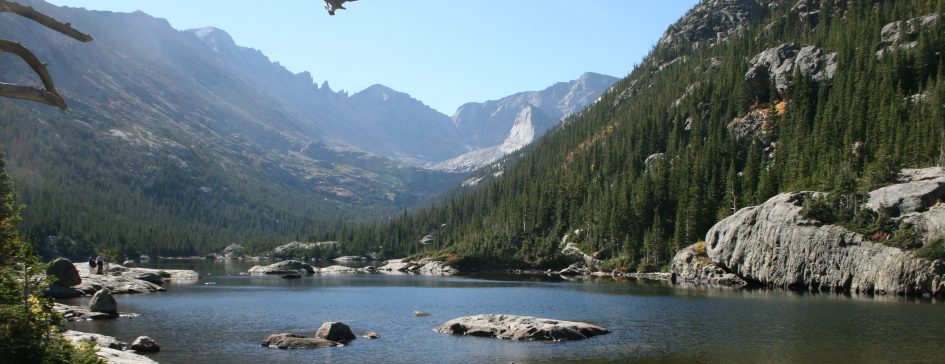

The need for more water for urban and agricultural uses has drive even more competition for limited supplies in stressed basins.  The effects of urbanization and agriculture on surface water supplies are obvious to most people.  We have also seemed the ecosystem impacts from surface water diversions and pollution.  As a result, many areas have pursued groundwater, the unseen resource.

I have been touting a USGS report (#1323 by Reilly, et al, 2009) to many in the water industry.  It is an important report that gives us a little insight on state of groundwater supplies in the US.  As we have developed arid regions and developed better pumps to irrigate in dry places, groundwater has been the obvious choice.  And it is not regulated in some states.  However the extensive and in many cases excessive use of groundwater creates the long-term potential for loss of water supplies in many jurisdictions.  Determining groundwater availability involves more than calculating the volume of groundwater within any given aquifer:  it requires a consideration of recharge, water quality, the economics of recovery or of poor quality, interconnectedness with the hydrologic system and ecosystem/user demands.  Rarely is a consultant paid to determine that sustainable water supplies are not available.  The result is the potential for aquifer drawdown that are accompanied by aquifer mining and land subsidence.  The result is declining water levels in aquifers.

Confounding the situation are confined aquifers that are disconnected for localized recharge and often have overestimated recharge.  The common practice to evaluate aquifer productivity is pump wells that have a significant drawdown for only a few hours each day, allowing an extended period for the aquifer to recover.  Reilly et al, 2009 estimates that the pumpage of fresh ground water in the United States is approximately 83 billion gallons per day (Hutson et al, 2004), which is about 8 percent of the estimated 1 trillion gallons per day of natural recharge to the Nation’s ground-water systems (Nace, 1960), which sounds like it is not a serious issue.  However, Reilly et al, 2009 found that the loss of groundwater supplies in many areas will be catastrophic, affecting economic viability of communities and potentially disrupting lives and ecological viability.

Drilling deeper is not a solution.  Deeper waters tend to have poorer water quality as a result of having been in contact with the rock formation longer and dissolving the minerals in the rock into the water. Additional power will be required to further treat limited, lower quality supplies.  Therefore, while some deep aquifers may be prolific, the quality of water obtained from a well may not be desirable or even usable for drinking water without substantial amounts of treatment.  In addition, most deeper aquifers are confined and therefore do not recharge significantly locally.  The withdrawal of water may appear to be a permanent loss of the resource in the long-term. For example, portions of the aquifer in eastern North and South Carolina were virtually denuded in due to pumpage because there is no local recharge.  As a result the aquifer was mined, exceeding its safe yield, and the large utilities converted to surface water. Likewise, most of the aquifer use in the western states of the U.S. are poised similarly since they have minimal potential for recharge.  In parts of the western plains state and Great Basin, the aquifers have dropped hundreds of feet, but with an average of 13-18 inches per year of rainfall, and high evaporation rates throughout the summer, little of this water has potential to recharge the aquifer (Bloetscher and Muniz, 2008).


Rarely will permit writers or consultants tell you there is no more water available, but if groundwater levels keep declining, clearly the groundwater is over allocated.  It also appears that we have misjudged recharge to most confined aquifers.  They simply do not recharge at the rates estimated creating a long-term decline.  In some cases, maybe many cases, recapturing the water needed to recharge the aquifer will not happen in our lifetimes without specific capital to do otherwise.  Nature just doesn’t recharge confined aquifers quickly.  One reason we like them for water supply.
So the questions are these:

Are many confined aquifers better suited to be drought protection, backup supplies to surface supplies, as opposed to primary water supplies?

  • What is the solution for agricultural operations and utilities where groundwater is quickly diminishing?
  • When can we start the dialogue to manage groundwater resources better in the US without all the legal and political constraints that currently work against protecting our nation’s groundwater supplies?

Clearly we won’t make everyone happy, and may make a lot of people very unhappy.  But better to make those decisions now, than in 20 or 30 years when the groundwater runs out?