Archive

water quality


I am working on a book on engineering ethics. My wife and I were talking about the ethical obligations of engineers and how that compares to the medical industry (which she is in).  Engineers by canon, creed, code and law, have an obligation to protect the public health, safety and welfare above all else, including their clients and their firms.  It is one of the reasons that engineering services provided to the public require a license and why codes exist to help guide design.  My wife recently raised an interesting question – if licensure means that you must protect the public health, safety and welfare, can you sign and seal a project for which the consequences are not perfectly known?  It harkens back to a lecture I do in my summer environmental science and engineering class – the infamous “What could possibly go wrong?” lecture.  In that lecture we look at logging, mining, oil and gas and agriculture.  I should note that we need each of these industries and will continue to need them for the foreseeable future, so abandoning any of them is not an acceptable answer.  But in each case there are large, historical consequences, as well as current ongoing consequences.  Let’s start with logging which fed the rapid development of many cities by providing accessible building materials.  And actually let’s just start in the upper half of the state of Michigan where loggers cut timber across the state for over 50 years, eliminating white pines form many areas.  The logs were sent down small streams and rivers, many of which had to be altered to take the logs.  Rivers like the AuSable and Manistee changed completely afterward (starting with the loss of sweepers, increased siltation, the loss of the grayling (fish), and the need to introduce trout.  Siltation is a difficult issue for water plants to deal with.  Today the AuSable is a “high quality fishing water” with open fishing season, but limits of zero trout kept in many places or only really large fish (rare in cold water), which means catch and release only, which sounds more like – “not enough fish, so put them back” as opposed to high quality fishing waters.    We needed the logs, but the impacts of logging were never considered and 150 years later, we still suffer the effects.  Few engineers were involved.

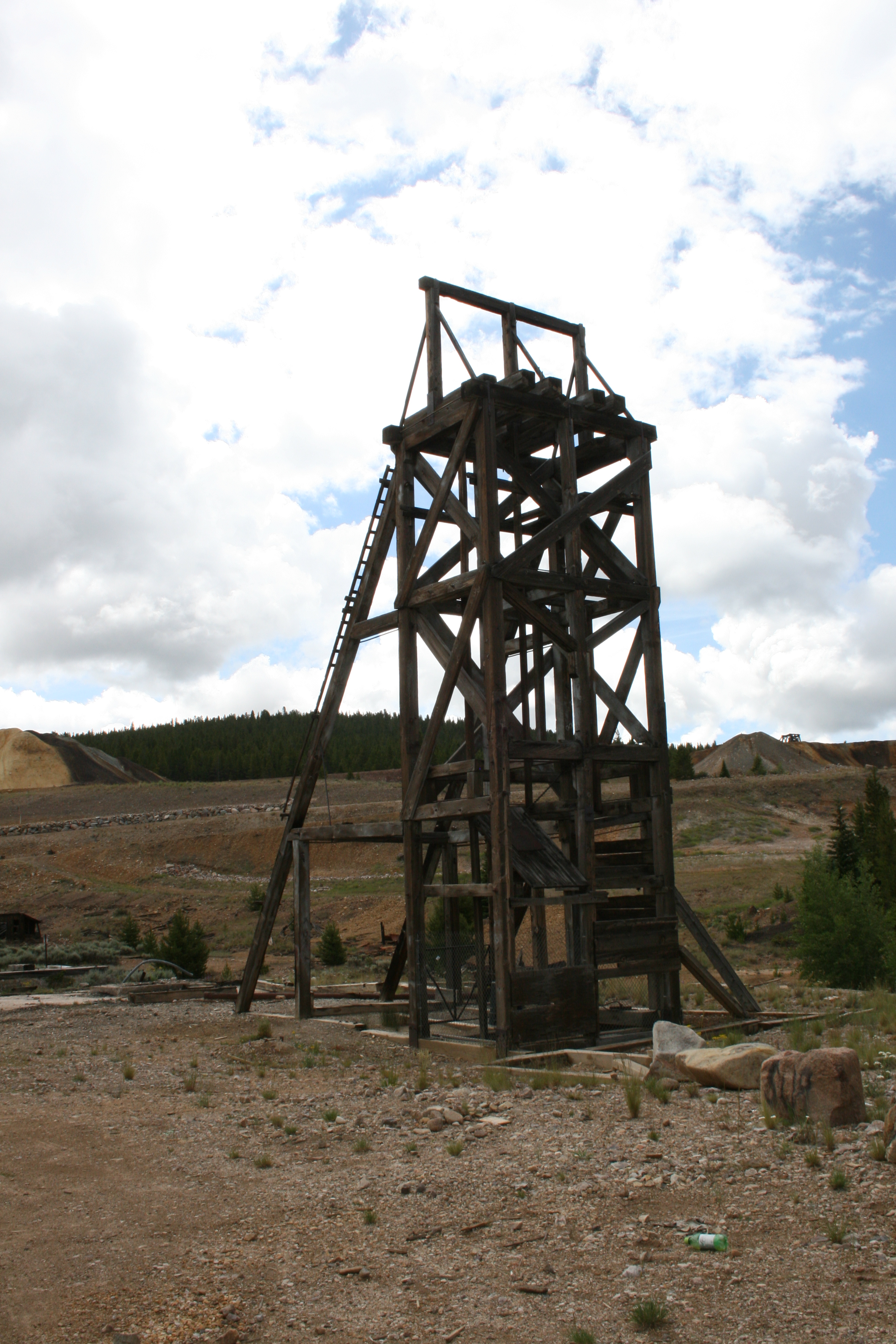
Next we look at mining.  Again we needed the gold, silver, lead, iron, etc. from the mines.  The gold rushes started in the 1840s and expanded across the west.  Material was dug out, metals processed and mines abandoned.  The tailings from these mines STILL leach metals into waterways.  The metals content remains toxic to ecology and to us in drinking water, and will continue be so for years.  Metals are often expensive to remove via treatment.  Sometimes the situation is serious enough that the federal government will construct treatment plants to protect downstream waters (drinking waters for people), as they have done in Leadville and Idaho Springs, Colorado.  The tailings issue will be with us for years, which is why the mining industry is subject to regulations today.  Maybe we learned something?  Engineers have become more involved with mining with time, but historically, not so much.

With agriculture (Ag) the big issue is runoff and siltation.  Siltation has increases as more property is farmed.  The runoff also contains pesticides herbicides, and fertilizers, which impact downstream ecological sites, as well as creating difficulty for water treatment.  Ag is largely unregulated with respect to runoff and best management practices are often lacking.  The results include dead zones in the Gulf of Mexico and the Pacific.  Engineers try to deal with water quality issues in rivers and streams, but the lack of ability to effect changes with Ag practices is limiting.  There are situations like Everglades where the engineers did exactly what was asked (drain it), but no one asked the consequences (lack of water supply), or the impact of farming north of the Everglades (nutrients).

The Everglades results, along with the unknowns associated with fracking (primarily surface and transport) brought the question to my wife — should an engineer sign off on a project for which the consequences are uncertain, unstudied or potentially damaging the public health safety and welfare, like fracking wells, or oil/gas pipelines across the arctic (or Keystone)?  Engineers design with the best codes and intentions and clearly the goal is to design to protect the public, but she has a great point – when you know there are uncertainties, and you know there are unknowns that could impact public health, safety and/or welfare, or which could create significant impacts, should we be signing off?  I am not so sure.  What are your thoughts?

photo 4IMG_6527 (2015_03_08 17_53_48 UTC)


check this out – http://www.laboratoryequipment.com/news/2015/05/home-range-new-wyoming-law-makes-science-open-land-illegal#.VVNg-x-tFlk.linkedin

This could be really serious.  For example, your water system gets contaminated by something.  People  get sick.  We figure out the problem is in the raw water.  Someone is responsible.   But exactly how does one figure out where and who is responsible for impacting the  water systems and downstream users?  How does one comply with Safe Drinking Water Act  provisions for watersheds, or better what does this mean for utilities?  And what could possibly occur on land that cannot be “tested?”

What could possible go wrong?!


A past project I was involved  with involved a look at the feasibility of using wastewater to recharge the Biscayne aquifer In the vicinity of a utility’s potable water supply wells.  The utility was feeling the effects of restrictions on added water supplies, while their wastewater basically unused.  So they wanted a test to see if the wastewater could be cleaned up enough to pump it in the ground for recovery downstream, with the intent of getting added allocations of raw water.  Assuming the water quality issues could be resolved, the increased recovery would solve a number of water resource issues for them, and the cost was not nearly as high as some thought.

So we tested and using sand filters, microfiltration, reverse osmosis, peroxide and ultraviolet light, we were successful in meeting all regulatory criteria for water quality.  The water produced was basically pure water – not constituents in it, and therefore it exceeded all drinking water standards.  We demonstrated that technologically the water CAN be cleaned up.  The only issue is insurance that the treatment will always work – hence multiple barriers and the ground.  This was an indirect potable reuse project and ended because of the 2008 recession and the inability to of current water supply rules to deal with the in/out recovery issues.

The indirect reuse part was the pumping of the water into the ground for later withdrawal as raw water to feed a water treatment plant, as opposed to piping it directly to the head of their water plant.   But recovery of the water can be a challenge and there is a risk that a portion of the injected water is lost.  In severely water limited environments, loss of the supply may not be an acceptable outcome.  Places like Wichita Falls, Texas have instead pursued more aggressive projects that skip the pumping to the ground and go straight into the water plant as raw water.  Technologically the water CAN be treated so it is safe to drink.  The water plant is simply more treatment (added barriers).  So, with direct potable projects, monitoring water quality on a continuous basis maybe the greatest operational challenge, but technologically there is no problem as we demonstrated in our project.

The problem is the public.  You can hear it already – we are drinking “pee” or “poop water” or “drinking toilet water.”  The public relations tasks is a much bigger challenge because those opposed to indirect and direct potable projects can easily make scary public statements.   Overcoming the public relations issue is a problem, but what utilities often fail to convey is that many surface waters are a consolidations of a series of waste flows – agriculture, wastewater plants, etc. by the time they reach the downstream water intake.  Upstream wastewater plants discharge to downstream users.   But the public does not see the connection between upstream discharges and downstream intakes even where laws are in effect that actually require the return of wastewater to support streamflow.  So are rivers not also indirect reuse projects? In truth we have been doing indirect potable reuse for, well ever.

We have relied on conventional water plants for 100+ years to treat surface waters to make the water drinkable.  The problem is we have never educated the public on what the raw waters sources were, and how effective treatment is.  Rather we let the political pundits and others discuss concerns with chemicals like fluoride and chlorine being added to the water as opposed the change in water quality created by treatment plants and the benefits gained by disinfectants.  That message is lost today.  We also ignore the fact that the number one greatest health improvement practice in the 20th century was the introduction of chlorine to water.  Greater than all other medical and vaccine advances (although penicillin and polio vaccines might be a distant second and third above others).   Somehow that fact gets lost in the clutter.

Already the Water Reuse Association and Water Research Foundations have funded 26 projects on direct potable reuse.  Communicating risk is one of the projects.  The reason is to get in front of the issues.  You see, playing defense in football is great and you can sometimes win championships with a good defense (maybe a historically great one, but even they gamble).  Defense does not work that way in public relations.  Offense usually wins. Defenses often crumble or take years to grab hold.

The failure of utilities to play offense, and the failure of elected officials particularly support playing offense is part of the reason we struggle for funds to make upgrades in infrastructure, to perform enough maintenance or to gather sufficient reserves to protect the enterprise today.  And it remains a barrier to tomorrow.   Leadership is what is missing.  It struck me that when looking at leaders, what made them leaders was their ability to facilitate change.  Hence President Obama’s campaign slogan.  But talking about change and making real changes are a little more challenging (as he has seen).  You cannot lead without a good offense, one that conveys the message to the public and one that gets buy-in.  With direct and indirect potable reuse, the water industry has not changed the perception of “toilet water.”  That needs to change.  We need to be frank with our customers.  Their water IS SAFE to drink.  They do not need filters, RO systems, softeners, etc., or buy bottled water, when connected to potable water supplies (private wells, maybe).  We CAN treat wastewater to make it safe, and the technology tis available to make it potable.  . The value they pay for water is low.  Yet in all cases, others, have made in-roads to counter to the industry.  That happened because we play defense.


In this blog we are going to talk about trends in the power industry and how they may affect utilities.  One of the ongoing themes of this blog is that to be leaders in the field, we need to be cognizant of what others are doing and how those actions might affect utility operations.  Power is a big cost for utilities – often 10-15% of the total operations costs where a lot of pumping is involved. In most communities, the utility system is among the largest consumers of power, which is why many utilities have load control agreements in place – power companies can off-load power demands by having the utilities go to onsite generators.  Our community’s building account for 70% or more of local energy use.

The need for power is expanding, albeit at a lower rate that population growth in many communities.  This is because new building construction measures tend to insulate better and install more energy efficient equipment.  Power companies often will subsidize these improvements to reduce the need for more expensive plant expansions.  Where expansions are needed, purchase/transfer agreements or renewables are often a convenient answer.

But long-term we are seeing that the power industry is changing in other ways too.  Already we see a migration away from coal for power generation.  This was occurring before the new regulations were in place for carbon dioxide.  Certain utility companies like NextEra, the largest wind and solar power generator in the US, and the parent of Florida Power and Light, have reduced greenhouse gas emissions from their plants by converting to other sources like combined heat and power (CHP), and increasing efficiency.  The typical oil or coal power plant is 30-35% efficient, while the newer gas turbine systems are up to 45% efficient.  That makes a big difference in costs as well as emissions when gas emissions are half the coal and oil emissions.  NextEra is well placed for carbon trading, a concept some fight, but the US had been emission trading since the early 1990s, so carbon trading markets are already in place.  The only thing needed is the regulations to put them into play.  Buy that NextEra stock now and hope for carbon trading!

But NextEra is not the only likely winner under this carbon trading scenario.  ExxonMobile is big into gas, Exelon is big in the nuclear power industry, Siemens and General Electric, which make wind and gas turbines, are also likely to see growth.  All have poised themselves years ago as the impact of carbon dioxide becomes more apparent.  Most of the industry executives acknowledge climate issues and recognize that people will expect the industry to do its part (the Koch brothers aside).  Many power generators like ConEd and FPL are making changes as well, in advance of the regulatory requirements to do so.  They see it as good business.  They also see it as a means to make more power at a given facility (by increasing efficiency) while reducing water use.  Water use can be a limiting factor, so we will discuss that in a couple days…


So I am reading an article in OneEarth, which is a publication of one of the environmental groups.  The pretext is the issues with the movement of hog farm operations into Iowa and the problems it is causing.  They note that the state has cut the regulatory enforcement budget and the number of inspectors while more incidents of contaminated water are found.  The contamination threatens the raw water supply of  downstream water utilities which must do more treatment and monitoring.  Sorry, I had to giggle because I have heard this story before. 

Going back about decade many will recall the “pfiesteria hysteria” as it was called in North Carolina.  The issue was that the Department of Environmental Management had found fish kills where the fish had these weird sores on their bodies, and then a number of people were diagnosed as being infected with the same condition, some of whom died.  The cause was this pfiesteria, which is a flesh-eating organism that enters the nervous system.  Crazy is one of the side effects but it mostly leads to death.  DEM determined that the organism thrived in waters with significant loading from nutrients that they could trace to…..  wait for it…. hog farms!! 

That was not the first time hog farms were implicated in water quality issues, but due to the significant, political influence of the industry, the transgressions were largely ignored due to a lack of enforcement personnel.  Actually when I was in North Carolina we had a hog farm upstream of our wastewater plant.  Periodically the DEM would test the waters downstream of our plant and find bacteria counts to high and they would want to tag us for the violation.  But we never had any indication of violations at our plant (which we tested daily and reported).  You can’t “make” nutrients appear out of thin air – they come from somewhere.  We told DEM that it was a hog farm that periodically dumped the manure pit n the river when it got full.  No treatment was going on.  Then hog farms exploded in North Carolina which led the pfiesteria event.  Finally the State decided enough was enough and imposed a lot of regulations on hog farms which magically …. moved to Iowa where there are no regulations in place.  I guess there is nothing like a good crisis that kills a few people to get past the political influence of the lobbyists (unless you are the NRA).

But here’s the problem for Iowa, which is what North Carolina found.  The regulations actually are in place.  The Clean Water Act prohibits the contribution of pollutants that will impair the quality of water bodies.  Clearly hog farm effluent clearly falls into this category, but the historical focus of the Clean water Act has been on wastewater treatment plants, and lately stormwater, but not agriculture, which is largely exempted in many, rural states.  Yet agriculture is and has always been a major contributor to water quality degradation in watershed for two reasons.  First they disturb the earth by plowing and planting, so rainfall leads to runoff of material (silt) into streams.  With that runoff is herbicides, pesticides, fertilizer (nutrients), and of course in animal husbandry or CAFO operations, bacteria and other pathogens.  Do not forget that the two most significant examples of water quality impacts on water utilities, Milwaukee and Walkerton, were both agricultural runoff problems.

Agricultural runoff impacts the downstream users which are typically developed areas which use the streams for water supply.  So agricultural practices move land based contaminants to the utility intake, which means more treatment cost to customers.  Sometimes these contaminants are a significant health risk.  It took a significant incident for North Carolina to act. The question is what will it take for Iowa to act, and once they do where do the hog farms go next? 

What needs to happen is that the hog farms develop the treatment systems needed to clean up their act.  It would be great for them to pay the cost but history says they won’t.  So maybe the political leadership needs to participate in that solution to maintain the employment base, and maybe utilities and other source water protection agencies, and there are many of them like the US Water Endowment, can help as well.  Politicians want jobs, while ratepayers do not want to pay all the costs.  A collaborative solution seems reasonable, so we will see what Iowa comes up with.