Bad news for the southwest
Leave a comment
JCB has an all electric backhoe. Very cool. It will look like and operate like the 100 hp 310L backhoe. How cool is that. Electric construction equipment. Very cool.
Not very cool – Tesla’s exploding batteries. Elon, can you see what you can do about that please?


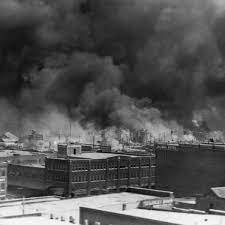
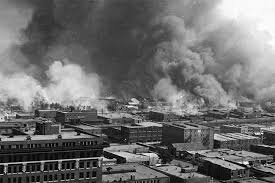
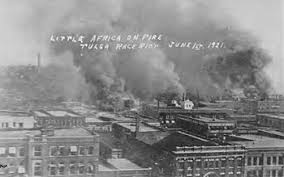
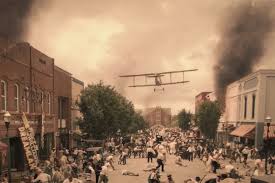

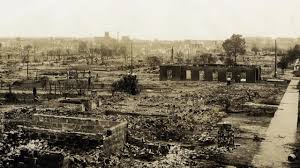
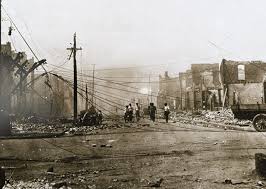
100 years ago today, thousands of homes and businesses in Tulsa Oklahoma were burned to the ground. Hundreds died, hundreds more rounded up and jailed, turpentine bombs were dropped by civilians on homes and businesses. Rioters, supported by the police inflicted this damage on other US citizens. Why? They were black, and successful. And that seems to have been a problem.
Until recently, I did not know this event happened. Did you? Probably not, as it was buried in the mists of time with the hope that it would never see the light of day. Even most people in Tulsa did not know that one of the ugliest chapters in American history happened in their own back yard. As shown on a recent 60 Minutes program, this was more than a riot, it was violence against innocent human beings that were “different.” No one was ever held accountable for this act.
Tulsa is but one example of the price of hate and the rhetoric that demonizes people because they are different. We have all seen Black, Hispanic, Asian, LGBTQ+, Democrats and Republicans demonized by the rhetoric in the past 5 years. It continues to get worse, is encouraged be enemies of America and results from not challenging hate. Words have meaning. Saying nothing “because it doesn’t affect you” is not the answer because inaction encourages their action. It is tasset approval of their views and actions, encourages more hate and divides us further. With very few exceptions, we/they are not the enemy.
The Constitution does permit us to have free speech, which means we can say all kinds of stupid hateful things. And we do. We have few limits. But that does not mean that there cannot be repercussions for being stupid or hateful. Many of those that participated in the January 6 storming of the Capitol have been arrested, fired form their jobs, ostracized from their friends, etc. Be stupid and there will be consequences, just as those who do not follow the rules for using services will have services cut off. Private industry does not have to tolerate hate and violent rhetoric, stupid or abuse of their services.
Germany during the Great Depression found out the hard way about unchecked rhetoric. A portion of Germans elected Hitler based on grievances and demonizing people. They installed the Nazi party. It was all rhetoric – back then the demons were the Romas, gypsies, people living in certain portions of Poland and Czechoslovakia, Jews, disabled, etc. Anyone that was not Hitler’s view of Aryan. People ignored what was happening because “it did not affect them.” Until it did.
The day after Memorial Day 2021, 100 years after Tulsa, we should remember that over 100,000 US soldiers lost their lives, and 500,000 were injured to defeat the Nazism and their ilk in Europe. We no not need them here. Yet free speech guarantees them a voice and they do not try to hide themselves. Their views are all over the internet. We need to hold them accountable for their words and deeds. And we need to tone down the all demonizing rhetoric – all of it. Society depends on it.
As we all awake from the Covid slumber we have been in for the past 15 months, we should stop, before the party begins, to remember all those who made the ultimate sacrifice for our freedoms, and how much their sacrifices have allowed us to build the country we have today. I was lucky. My Dad, his brother and my mother’s brother were all in World War II and all came back (Dad with a purple heart). My grandfather made it through the Ardennes in World War 1.
However, my Dad’s lifelong best friend, who went to school together with him at Cass Tech in Detroit, and volunteered with my Dad in 1943, did not return. Arnold Bridges and my Dad were very close, as was his older system Marge. They both were infatuated with airplanes and joined the Army Air Force. My Dad’s eyes were not quite as good as Bridges’, so he ended up in a B-17 for 25 missions. Arnold trained to be a P-38 fighter pilot. Unfortunately, a plane crash in Minneapolis on April 14, 1944 killed him and the others on board just as they had completed training and were headed to England. While confident in his P38, he never saw combat over Germany. He was given a Gold Star. My Dad and his sister felt that loss the rest of their lives.
This is day to remember those lost. Be happy their sacrifice lives on with you.





May i be actively working, doing what i love, and making a difference at 91. You are an inspiration to us all and sets a goal for me to strive for. Keep it up – be a model for the rest of us. And many more birthdays (and movies).
ASCE complies a report card of the nation’s infrastructure every four years. They look at all infrastructure, from dams and airports to water and sewer. The newest release was March 2021. Table 1 shows a comparison over the past 20 years. The grades are bad. The new report shows slight improvements in water and sewer, but a D+ and C- still are not passing grades. It points to significant needs for infrastructure in our field as well as the accompanying fields for power, roads, drainage and more. It also suggests that as utilities have invested over the past 4 years, we can move the grades upward. It is just that more needs to be done. Washington has been talking about this problem for many years but little has come from. We got some money in 2009, but since then, very little other than WIFIA funds. Now its Biden’s chance.
Table 1 ASCE infrastructure grades

The reality is that our infrastructure condition probably peaked in the 1950s or early 1960s. The major roadway, water, and sewer piping and treatment expansions were well underway of nearing completion. Rural areas had running water and sewers, something that did not exist before the Great Depression. The construction of infrastructure has always been critical for economic development. Look no further than China to demonstrate this.
The Biden Plan started with $2.3 trillion dollars, about 15% of the total economy per year, and less than the value of private property in south Florida (which doesn’t sound quite as expensive as it initially seemed). The package would include investments fixing 10,000 bridges (there are over 600,000 bridges and nearly 50,000 that are inadequate), 20,000 miles of roads (there are 4.2 million miles of roads in the US), $120 billion for water and sewer (AWWA says the need exceeds $1 trillion in the next 20 years), $150 billion for transit and rail, $100 billion for broadband so rural and underprivileged areas have better access to the internet, and funds for the electrical grid which is woefully inadequate in many places.
The funds would be spent over 8 years. The payback is expected to exceed 2:1 in private sector economic activity. Most of the funds would be directed by government’s to the private sector for design and construction (and Engineer and contractor employment act), which translates to millions of jobs. People can easily see how this benefits them by increasing employment and likely increases wages due to tightening job markets. As a result, there is a lot of support for this in much of the country among the people.
There are contrarians in Congress who think it costs too much or for other reasons. But look at the statistics – one could easily argue that the proposed expenditures are 10% of what is really needed – the bill does not go nearly far enough. But if this is only a start to returning American infrastructure to its glory days, the economy appears to have taken notice. Bloomberg forecasts the economy to increate 5.5% this year. Goldman Sacs thinks that is conservative. The more federal dollars move to the private sector, the more fuel there is in the economy. Getting unemployment in the construction industry down from 9.6% is part of that plan. The Federal Reserve is keeping inflation in check which could wipe out this growth, but needs to ensure that secular stagnation does not appear (a stalled economy). Continued investments by both the pubic and private sector can prevent this.
But returning the infrastructure to the 1950s is not going to be enough in the 21st century. And no one can expect the federal government to foot the entire bill. Local communities will need to invest more as will the states. The US has permitted its infrastructure to decline under the premise that if it works fine, we do not need to worry about it. Until it fails. Then there is a big discussion to assign blame. The blame goes back to many people many years when actions could have been taken. Reactive maintenance is the expensive kind. Proactive replacement is easier to plan and develop. And less costly.
There is an argument that our lack of attention to infrastructure condition has weakened our economy. We invested heavily in automation in the 1990s and early 2000s to increase our productivity (through robotics which created massive job losses for factory workers), but not in the replacement jobs for those displaced. There is an argument that part of the Rust Belt’s problems is antiquated infrastructure (think Flint). There is an argument that rural dissatisfaction in the US, especially toward government, is directly related to the fact that little investment in infrastructure has taken place there, causing the economy to pass them by. Less jobs, lower pay, higher unemployment, poorer healthcare and less access to quality education are common rural complaints. And the complaints are not without merit because we know that relying on the private sector to construct the grid means that they will invest where the payback is highest, which is populated areas. That is why these differences between rural and urban areas exist and continue to widen. Hence the broadband cost in the Biden proposal. The situation is no different than the rural electrification efforts that started in the 1930s.
ASCE estimates that delays to infrastructure upgrades may cost US households $3400 per year, increasing with time. This includes water and sewer utilities. A study conducted 2 yea4rs ago indicated that only about 20% of Flroida utilities were spending the needed amount on infrastructure. Some of those who did, relied on larger periodic bond issues that come with rate increases, to accomplish their updates. Pay as you go can be demonstrated to be a cheaper, but too subject to trimming for political reasons. The question is how to get elected and appointed officials to buy into the long-term upgrade plans so we can make that C+ and D- into at least a B. At the same time, the costs will impact certain segments of the population that have not participated as yet in the economic growth. But that is a topic for another column.
For many years, and especially over the past four years we have heard about a variety of subsidies the industry. Subsidies come in a variety of forms – from outright cash payments, to reduced amounts for use of land.
Agriculture gets huge subsidies from the federal government each year ($46 billion or 39% of all ag income). So does the oil and gas industry ($20 billion per year). Many others as well. The question is why? Why subsidized industries that are profitable? Ranching, mining and oil and gas also get to use federal lands at ridiculously low costs for lease costs -far less than any individual of corporate entity would charge for similar leases. Oil and gas is an industry that makes money every year – there are huge private corporations. Most of the agricultural subsides go to huge agri-businesses because the family farm is quickly becoming something of the past. The question is why?
In theory, subsides are used by governments to encourage private companies to invest in new technologies. One of the most obvious is recycling. In the early 1970s when the US decided recycling should be a goal, there was no easy way to recycle steel, aluminum and plastics. Ten years or so later, these technologies emerged as a result of taxes on these products. Today virtually no bauxite mining occurs (the material that yields aluminum) because the amount of material that can be recycled exceeds the demand. Small pug mills to recycle steel have become the backbone of the steel industry in the US< much to the Chagrin of Big operators like Bethlehem steel. The small pug mills can be located almost anywhere. Bu the technology was born of innovation and taxes on steel that were used to subsidize the industry until it became competitive.
Another place where subsidies have paid off is renewable energy, the price of which has fallen by 99% in the past 20 years. If we want a less-carbon energy future, the investment in renewable energy seems like a good investment. And if we create the patents for these new technologies, we can make them and earn the profits off royalties in others. It is what we did with cars and oil.
Subsidies to develop fracking and like technologies might be a place to subsidize exploration, bu that was generally not the case. Those developments were created by innovative entrepreneurs and corporate backers. It has also allowed the US to become independent from certain energy sources because we can now recapture oil and gas in places that used to be to costly to recover.
What about markets we do not want to encourage? Coal and tobacco have received huge subsides in the past. If we want to move away from coal, subsidies would need to end. Coal plants in some area lose money that rate-payers pay for. So people subsidize coal plants? That make little sense. Many Americans live paycheck to paycheck. Most corporations do not. A Bloomberg article from October 2020 notes that corporate America has over $2 trillion saved up in reserves and cash, money that has not been reinvested. Many of these companies are likely to be those with subsidies.
So let’s ask – with $2 trillion in cash, do you think there might be a better use of subsides than cash on hand right now??
 publicutilitymanagement