Archive

water sewer management


We are all aware of the major drought issues in California this year – it has been building for a couple years.  The situation is difficult and of course the hope is rain, but California was a desert before the big water projects on the 1920s and 30s. Los Angeles gets 12 inches of rain, seasonally, so could never support 20 million people without those projects.  The central valley floor has fallen over 8 feet in places due to groundwater withdrawals. Those will never come back to levels of 100 years ago because the change in land surface has collapsed the aquifer. But the warm weather and groundwater has permitted us to develop the Central Valley to feed the nation and world with produce grown in the desert.  The development in the desert reminds me of a comment I saw in an interview with Floyd Dominy (I think), BOR Commissioner who said his vision was to open the west for more people and farming, and oversaw lots of projects to bring water to where there was none (Arizona, Utah). The problem is that the west never head much agriculture or population because it was hot, dry and unpredictable – hence periodic droughts should be no surprise – the reason they are a surprise is that we have developed the deserts far beyond their capacity through imported water and groundwater.  Neither may be reliable in the long run and disruptions are, well, disruptive.  Archaeologist Bryan Fagan traced the fall of Native American tribes in Arizona to water deficits 1000 years ago.

Yet policymakers have realized that civil engineers have the ability to change the course of nature, at least temporarily, as we have in the west, south, Florida. I often say that the 8th and 9th wonders of the world are getting water to LA over the mountains and draining the southern half the state of Florida. I have lived in S. Florida for 25+ years and am very familiar with our system. The difference though is that we have the surficial Biscayne aquifer and a rainy season that dumps 40 inches of rain on us and LA doesn’t (as a note of caution, for the moment we are 14 inches below normal in South Florida – expect the next drought discussion to ensue down here in the fall). The biggest problems with the Everglades re-plumbing are that 1) no one asked about unintended consequences – the assumption was all swamps are bad, neglecting impacts of the ecosystem, water storage, water purification in the swamp, control of feedwater to Florida Bay fisheries, ….. 2) one of those unintended consequences is that the recharge area for the Biscayne aquifer is the Everglades. So less water out there = less water supply along the coast for 6 million people 3) we lowered the aquifer 4-6 ft along the coastal ridge, meaning we let saltwater migrate inland and contaminate coastal wellfields 4) we still have not figured out how to store any of that clean water – billions o gallons go offshore every day because managing Lake Okeechobee and the upper Everglades was made much more difficult when the Everglades Agricultural Area was established on the south side of Lake Okeechobee, which means lots of nutrients in the upper Everglades, and a lack of place for the lake to overflow, which meant dikes, more canals, etc. to deal with lake levels.

The good news is that people only use 11% of the water in California and Florida, and that Orange County, CA and others have shown a path to some degree of sustainability (minus desal), but the real problem is water for crops and the belief that communities need to grow. When we do water intensive activities like agriculture or housing, in places where it should not be, it should be obvious that we are at risk. Ultimately the big issue it this – no policy makers are willing to say there is “no more water. You cannot grow anymore and we are not going to send all that water to Ag.”  Otherwise, the temporary part of changing nature will come back to haunt us.


As technology advances I have an observation, and a question that needs to be asked and answered.  And this could be a pretty interesting question.  Back in the day, say 100 or 150 years ago, there were not so many people.  Many activities occurred where there were few people and impacts on others were minimal.  In some cases ecological damage was significant, but we were not so worried about that because few people were impacted by that ecological damage.  In the 20th century, in urban locations, the impact of one’s activities on others became the basis for zoning laws – limiting what you could do with your property because certain activities negatively impacted others.  And we certainly had examples of this – Cuyahoga River burning for one.  Of course this phenomenon of zoning and similar restrictions was mostly an urban issue because there potential to impact others was more relevant in urban areas.  We also know that major advances in technology and human development tend to occur in population centers (think Detroit for cars, Pittsburgh and Cleveland for steel, Silicon Valley, etc.).  People with ideas tend to migrate to urban areas, increasing the number of people and the proximity to each other.  Universities, research institutions, and the like tend to grow up around these industries, further increasing the draw of talent to urban areas.  The observation is that urban areas tend to have more restrictions on what people do than rural areas.  So the question – do people consciously make the migration to urban areas realizing that the migration for the potential financial gain occur with the quid pro quo of curbing certain freedoms to do as you please?  Of does this artifact occur once they locate to the urban areas?  And is there a lack of understanding of the need to adjust certain activities understood by the rural community, or does it become yet another point of philosophical or political contention?  I have blogged previously about the difference between rural and urban populations and how that may affect the approach of utilities, but read a recent article that suggests that maybe urban citizens accept that financial gains potential of urban areas outweighs the need to limit certain abilities to do as you please to better the entire community.  They are motivated by potential financial opportunities that will increase their standing and options in the future.  So does that mean urban dwellers understand the financial tradeoff differently than rural users?  Or is it a preference issue.  And how does this translate to providing services like water to rural customers, who often appear to be more resistant to spending funds for improvements?  While in part their resistance may be that their incomes tend to be lower, but is their community benefit concern less – i.e. they value their ability to do as they please more than financial opportunities or the community good?  I have no answer, but suggest that this needs some further study since the implications may be significant as rural water systems start to approach their life cycle end.


I am working on a book on engineering ethics. My wife and I were talking about the ethical obligations of engineers and how that compares to the medical industry (which she is in).  Engineers by canon, creed, code and law, have an obligation to protect the public health, safety and welfare above all else, including their clients and their firms.  It is one of the reasons that engineering services provided to the public require a license and why codes exist to help guide design.  My wife recently raised an interesting question – if licensure means that you must protect the public health, safety and welfare, can you sign and seal a project for which the consequences are not perfectly known?  It harkens back to a lecture I do in my summer environmental science and engineering class – the infamous “What could possibly go wrong?” lecture.  In that lecture we look at logging, mining, oil and gas and agriculture.  I should note that we need each of these industries and will continue to need them for the foreseeable future, so abandoning any of them is not an acceptable answer.  But in each case there are large, historical consequences, as well as current ongoing consequences.  Let’s start with logging which fed the rapid development of many cities by providing accessible building materials.  And actually let’s just start in the upper half of the state of Michigan where loggers cut timber across the state for over 50 years, eliminating white pines form many areas.  The logs were sent down small streams and rivers, many of which had to be altered to take the logs.  Rivers like the AuSable and Manistee changed completely afterward (starting with the loss of sweepers, increased siltation, the loss of the grayling (fish), and the need to introduce trout.  Siltation is a difficult issue for water plants to deal with.  Today the AuSable is a “high quality fishing water” with open fishing season, but limits of zero trout kept in many places or only really large fish (rare in cold water), which means catch and release only, which sounds more like – “not enough fish, so put them back” as opposed to high quality fishing waters.    We needed the logs, but the impacts of logging were never considered and 150 years later, we still suffer the effects.  Few engineers were involved.

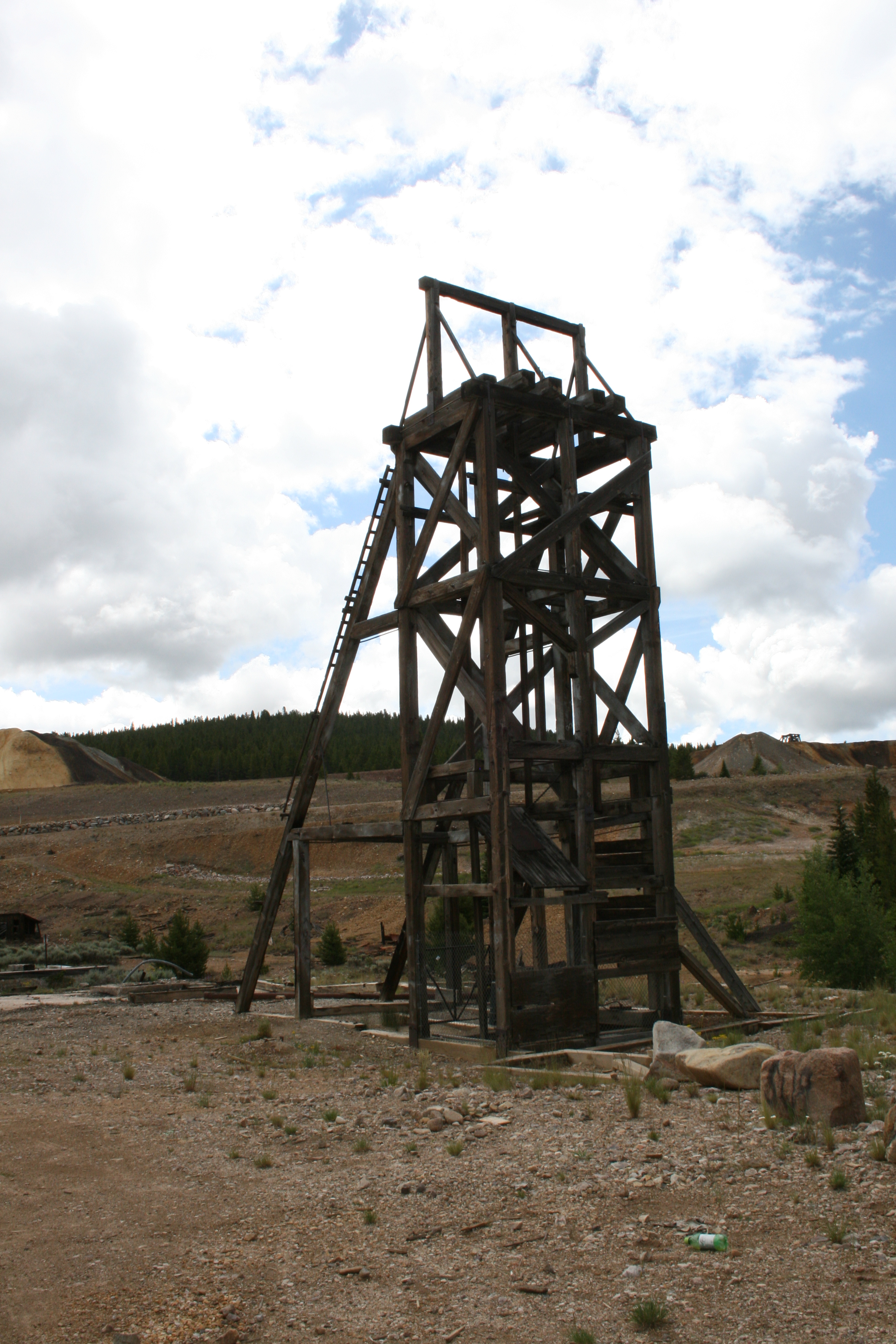
Next we look at mining.  Again we needed the gold, silver, lead, iron, etc. from the mines.  The gold rushes started in the 1840s and expanded across the west.  Material was dug out, metals processed and mines abandoned.  The tailings from these mines STILL leach metals into waterways.  The metals content remains toxic to ecology and to us in drinking water, and will continue be so for years.  Metals are often expensive to remove via treatment.  Sometimes the situation is serious enough that the federal government will construct treatment plants to protect downstream waters (drinking waters for people), as they have done in Leadville and Idaho Springs, Colorado.  The tailings issue will be with us for years, which is why the mining industry is subject to regulations today.  Maybe we learned something?  Engineers have become more involved with mining with time, but historically, not so much.

With agriculture (Ag) the big issue is runoff and siltation.  Siltation has increases as more property is farmed.  The runoff also contains pesticides herbicides, and fertilizers, which impact downstream ecological sites, as well as creating difficulty for water treatment.  Ag is largely unregulated with respect to runoff and best management practices are often lacking.  The results include dead zones in the Gulf of Mexico and the Pacific.  Engineers try to deal with water quality issues in rivers and streams, but the lack of ability to effect changes with Ag practices is limiting.  There are situations like Everglades where the engineers did exactly what was asked (drain it), but no one asked the consequences (lack of water supply), or the impact of farming north of the Everglades (nutrients).

The Everglades results, along with the unknowns associated with fracking (primarily surface and transport) brought the question to my wife — should an engineer sign off on a project for which the consequences are uncertain, unstudied or potentially damaging the public health safety and welfare, like fracking wells, or oil/gas pipelines across the arctic (or Keystone)?  Engineers design with the best codes and intentions and clearly the goal is to design to protect the public, but she has a great point – when you know there are uncertainties, and you know there are unknowns that could impact public health, safety and/or welfare, or which could create significant impacts, should we be signing off?  I am not so sure.  What are your thoughts?

photo 4IMG_6527 (2015_03_08 17_53_48 UTC)


A past project I was involved  with involved a look at the feasibility of using wastewater to recharge the Biscayne aquifer In the vicinity of a utility’s potable water supply wells.  The utility was feeling the effects of restrictions on added water supplies, while their wastewater basically unused.  So they wanted a test to see if the wastewater could be cleaned up enough to pump it in the ground for recovery downstream, with the intent of getting added allocations of raw water.  Assuming the water quality issues could be resolved, the increased recovery would solve a number of water resource issues for them, and the cost was not nearly as high as some thought.

So we tested and using sand filters, microfiltration, reverse osmosis, peroxide and ultraviolet light, we were successful in meeting all regulatory criteria for water quality.  The water produced was basically pure water – not constituents in it, and therefore it exceeded all drinking water standards.  We demonstrated that technologically the water CAN be cleaned up.  The only issue is insurance that the treatment will always work – hence multiple barriers and the ground.  This was an indirect potable reuse project and ended because of the 2008 recession and the inability to of current water supply rules to deal with the in/out recovery issues.

The indirect reuse part was the pumping of the water into the ground for later withdrawal as raw water to feed a water treatment plant, as opposed to piping it directly to the head of their water plant.   But recovery of the water can be a challenge and there is a risk that a portion of the injected water is lost.  In severely water limited environments, loss of the supply may not be an acceptable outcome.  Places like Wichita Falls, Texas have instead pursued more aggressive projects that skip the pumping to the ground and go straight into the water plant as raw water.  Technologically the water CAN be treated so it is safe to drink.  The water plant is simply more treatment (added barriers).  So, with direct potable projects, monitoring water quality on a continuous basis maybe the greatest operational challenge, but technologically there is no problem as we demonstrated in our project.

The problem is the public.  You can hear it already – we are drinking “pee” or “poop water” or “drinking toilet water.”  The public relations tasks is a much bigger challenge because those opposed to indirect and direct potable projects can easily make scary public statements.   Overcoming the public relations issue is a problem, but what utilities often fail to convey is that many surface waters are a consolidations of a series of waste flows – agriculture, wastewater plants, etc. by the time they reach the downstream water intake.  Upstream wastewater plants discharge to downstream users.   But the public does not see the connection between upstream discharges and downstream intakes even where laws are in effect that actually require the return of wastewater to support streamflow.  So are rivers not also indirect reuse projects? In truth we have been doing indirect potable reuse for, well ever.

We have relied on conventional water plants for 100+ years to treat surface waters to make the water drinkable.  The problem is we have never educated the public on what the raw waters sources were, and how effective treatment is.  Rather we let the political pundits and others discuss concerns with chemicals like fluoride and chlorine being added to the water as opposed the change in water quality created by treatment plants and the benefits gained by disinfectants.  That message is lost today.  We also ignore the fact that the number one greatest health improvement practice in the 20th century was the introduction of chlorine to water.  Greater than all other medical and vaccine advances (although penicillin and polio vaccines might be a distant second and third above others).   Somehow that fact gets lost in the clutter.

Already the Water Reuse Association and Water Research Foundations have funded 26 projects on direct potable reuse.  Communicating risk is one of the projects.  The reason is to get in front of the issues.  You see, playing defense in football is great and you can sometimes win championships with a good defense (maybe a historically great one, but even they gamble).  Defense does not work that way in public relations.  Offense usually wins. Defenses often crumble or take years to grab hold.

The failure of utilities to play offense, and the failure of elected officials particularly support playing offense is part of the reason we struggle for funds to make upgrades in infrastructure, to perform enough maintenance or to gather sufficient reserves to protect the enterprise today.  And it remains a barrier to tomorrow.   Leadership is what is missing.  It struck me that when looking at leaders, what made them leaders was their ability to facilitate change.  Hence President Obama’s campaign slogan.  But talking about change and making real changes are a little more challenging (as he has seen).  You cannot lead without a good offense, one that conveys the message to the public and one that gets buy-in.  With direct and indirect potable reuse, the water industry has not changed the perception of “toilet water.”  That needs to change.  We need to be frank with our customers.  Their water IS SAFE to drink.  They do not need filters, RO systems, softeners, etc., or buy bottled water, when connected to potable water supplies (private wells, maybe).  We CAN treat wastewater to make it safe, and the technology tis available to make it potable.  . The value they pay for water is low.  Yet in all cases, others, have made in-roads to counter to the industry.  That happened because we play defense.


So what does ability to pay really mean?  We hear this discussed by political pundits and local officials but few really understand what this means.  Likewise the “I’m on a fixed” budget argument pops up a lot, and it is hard to understand what this really means.

The ability to pay concept was developed many years ago by political scientists and economists looking at the allocation of costs to consumers for government services.  Property taxes are a logical place to start – higher value homes have more potential for loss, so their taxes were more (the percent was the same but because of their value the amount was higher).  For income taxes, those with higher incomes we deemed to have more disposable income and again more to lose, so the rates increased as income rose (we forget that until 1963 the highest income tax rate was 90%, and the economy was growing quickly!).  People with lower incomes had little disposable income because all their money went to food and housing.  Today the issue of affordability arises with water, sewer, taxes and storm water fees, as well as federal and state taxes.  The SRF and bonding agencies often look at 3.5% or 4.5% and the maximum water or water/wastewater cost as a percent of income, but few  utilities charge this much.  Few water and sewer utilities (combined) approach the cost for power per household, let along the cost of cable or cell phone use for all but the cheapest carriers.  Certainly water, sewer and storm water are essential service, but not so much cable, although there are those who will argue the point.  So somehow the ability to pay issue does not apply to private sector services, but does to essential services, especially when we all know we do not collect enough money to cover significant infrastructure needs on those public works systems?  That just does not make logical sense except in the political world.

Likewise the “fixed income” argument is often applied in tandem.  Fixed income is generally applied to retirees, but let’s not forget that 10% of those in poverty are retirees, but 18% of millionaires are over 65.  But don’t most people have a fixed income – their income is fixed by their employer.  They can change jobs but the argument that younger folks should change jobs if they want to earn more is like telling retirees to go back to work.  There is only so much we can do and only so much income to be earned because few control their income.

So on both counts, the ability to pay argument seems like an argument created to keep public service costs down and prevent the full cost application to many.  The squeaky wheel gets coddled, at the expense of society.  Somehow that is not fairness, and subjects us all to unnecessary risks.  The question is who is going to be the person/group to stand up and say enough?


A project I am currently involved with looks at the impacts of climate change on public health in southeast Florida.  The initial grant focused on looking at socially vulnerable populations and the impact on chronic diseases these groups from climate change.  The question was whether climate change, which in southeast Florida is basically sea level rise, would have an impact on health issues.  On the face of it, the correlation between chronic health conditions and climate seems tenuous although the statistics support the link between chronic health impacts and socially vulnerable populations.  But what is interesting is that in general, the climate vulnerable topography and the socially vulnerable people do not correlate.  This may be a southeast Florida issue, but it is the less socially vulnerable who live in the climate vulnerable topography.

Those familiar with the history of southeast Florida know that makes sense because of the beaches.  The beaches are topographically vulnerable but eh wealthy want to live there anyway. But the problem is more pervasive.  The data actually can be mined further to reveal that the older homes (1940s-1960s), generally smaller and of lower value, were traditionally built on the high ground.  Turns out our ancestors were a little smarter than we thought – they actually thought this out.  Aside from Henry Flagler building the railroad on the high ground, most of the cities were located similarly – on the coastal ridge.  Drainage of the Everglades permitted the western migration of residences – newer and larger, but at lower elevation and mostly reliant on drainage across the ridge to the ocean via canals.  But as sea level rises, the water moves more slowly.

The question that must be asked then is what happens as this housing stock ages?  We already see some newer communities, primarily built for retirees, moving to relieve themselves of the 55+ designations to allow the housing stock to be sold – the children of the retirees don’t want the property and desire to sell it – often quickly.  To increase speed of sales (and ultimately retaining some value), eliminating the 55+ opens younger families to move in.  However the lower value of the properties makes them conducive to migration of people who are social vulnerability, so migration may be toward social vulnerable people moving to topographically challenged property.  That portends poorly for the link between climate and health in the future.

Two issues arise from the research.  First future health vulnerability from climate may be more related to vectors and waterborne disease than chronic health effects.  That expands the health vulnerability to all populations.  The second issue is that storm water, sewer roadway and water infrastructure may relieve some pressure on these topographically vulnerable properties, but the people who are moving to then will have significantly less ability to pay for those improvements, creating a political conundrum that will that a significant amount  of leadership to overcome.  That means that resiliency must be built into infrastructure and redevelopment projects now, to address future conditions.  Building in resiliency is not currently being considered by local planners and engineers because the situation is not well understood and a 50 year planning horizon is not the norm.  Also, it would likely create a firestorm of fuss from developers who would pay the costs, which discourages good planning.

Finally, if things accelerate, wealthier parties may begin to see a retreat from vulnerable eastern beaches to higher ground as being a reasonable concept.  However the high ground is currently occupied by socially vulnerable people, creating a potential area of conflict over the fate of displaced residents who’s social status may force them toward the vacant, topographically vulnerable properties.  This is a future problem for planners, developers and officials approving new development with an eye to displacement a concept not in the current thought process.  Thinking about vulnerability means a lot of infrastructure must not only be constructed, but maintained meaning local public works and utility budgets will need to increase in kind.  That means higher rates and charges to populations that may have limits to their ability to pay   Stay tuned…..


Spring is in the air, at least in some places, so it gives us a chance to take stock of where we are after the winter.  Boston actually is seeing the ground after record snow.  The west is seeing lots of ground, even though some areas should not be seeing ground at this point.  I recall the Colorado Rockies having snow at 8000 ft a couple years ago, but not this year.  Some ski resorts in western Colorado never opened.  Not a good sign.  Snow was 10% of normal in parts of California which means the drought will continue.  12% in Oregon and Washington is some part – not good for places that rely on snow for water supplies.  So the question is whether the current drought is the start of a longer climate driven issues and/or the result of where demands have permanently exceeded supplies?  And if the latter is true, conservation is one option, but has obvious financial and supply limitations since urban use is less than 12% of water total use (agriculture is 40% and power plant cooling water is 39%).

Better management is part of a toolbox, but when the supply is finite, the economics says that costs will increase, shutting out certain sectors of the economy.  This is where the “market system” theory of economics fails large sectors of the population – at some point finite supplies become available only to those who can afford to pay, but water is not one of those commodities that is a luxury – we need it to survive.  Certainly the argument can be made that water is underpriced, but like energy, low water prices have helped fuel economic development while improving public health.  It is a chicken/egg conundrum where the argument that conservation will solve all problems is not realistic, nor is using the market or curtailing economic activity.  This is where the market fails and therefore governments have a role in insuring that all sectors are treated fairly and the commodity can be provided to all those in need of it – serving the public good.  The public good or public welfare argument is often lost in the political dogma of today, but our forefathers had this figured out and designed regulations to insure distribution after seeing the problems that arose in the late 19th and early 20th centuries.  We have forgotten many of those lessons.

The public good or welfare does not mean unlimited distribution to areas that would otherwise be bereft of the commodity.  The early engineers in Los Angeles realized that development could only continue if water was brought in.  So massive water movement projects were developed.  The economic benefit was the only consideration – the impacts of these changes were not considered.  Likewise the Corps of Engineers was directed to drain the Everglades, but no one asked if this was a good idea or would have negative impacts.  Loss of the Everglades permitted economic development that is southeast Florida – 40% of the economy of the state, but it impacted water supply and places millions are risk for future sea level rise impacts.  Worse, agriculture was fostered in the upper Everglades as the federal government sold off the acreage to private interests cheaply to encourage sugar cane and winter vegetables.  That agriculture is now planning to develop the Everglades if the property is not purchased by the state.  But purchasing the property rights a prior error in consequences – it is likely in the public interest as an effort to restore water supplies in the Biscayne acquire that feed southeast Florida, and to increase water flows to retard saltwater migration in the southern Everglades.  These are both ”sins” of the past, made with good intentions but with very little thought of consequences beyond the economic benefits.  Both have resulted in water shortages in the areas they were meant to serve as climate patterns have changed.

The question is whether we continue to make these mistakes.  Development in desert areas, areas known to be water poor, and deepening wells to get groundwater supplies who’s levels continue to decline are all poor long-term decision, despite the short-term potential gains.  California farmers continue to deepening wells but those aquifers have a limit in depth.  Deepening wells means those wells do not recharge (otherwise the aquifer levels would not continually decline).  What happens when the wells run dry permanently? Clearly the sustainability criteria is not met.

Meanwhile lower aquifer can divert surface waters into the ground – not enough for full recharge, but perhaps enough to impact surface water flows to other farmers, potable water users, and ecosystems.  Droughts are climate driven- and we have persevered droughts before, and will again.  However in light of the California drought, perhaps we should all assess more closely the long-term trends – lowering groundwater, increasing demands, lessening availability and make better decisions on water use – not only in California but in many parts of the US and the world.  Changing water use patterns is great, but it is just part of a larger issue — do we need to change our current behaviors – in this case water use – in certain areas?  Are there just places we should not develop?  Is there a limit to water withdrawals?  And how do we deal with the economic losses that will come?  All great question – but do we have the leadership in place to make the hard decisions?


Earlier this year the Journal for AWWA had several articles about water use and infrastructure needs.  One of the major concerns that has arisen in older communities, especially in the Rust Belt and the West is that demands per person have decreased.  There are a number of reasons for this –the 1992 Energy Policy Act changes to plumbing codes that implemented low flush fixtures, the realization in the west that water supplies are finite and conservation is cheaper than new supplies, a decline in population, deindustrialization, and climate induced needs.  But all add up to the result that total water use has not really changed over the past 30 years and in many locales, water sales may have decreased.  Water utilities rely on water sales for revenues so any decrease in sales must be met with an increase in cost.  Price elasticity suggests the increase will be met with another decrease in sales, etc.  It is a difficult circle to deal with.  So less water, whether through deliberate water conservation or other means, creates a water revenue dilemma for utilities.  A concern about conserving to much and eliminating slack in the system also results.

Less water means less money for infrastructure.  Communities do not see a need for new infrastructure because there are fewer new people to serve.  Replacing old infrastructure has always been a more difficult sell because “I already have service, why should I be paying for more service” is a common cry, unless you are in my neighborhood where the water pipes keep breaking and we are begging the City to install new lines (they are on my street J)  Educating customers about the water (and sewer) system are needed to help resident understand the impacts, and risk they face as infrastructure ages.  They also want to understand that the solutions are “permanent” meaning that in 5 or 10 years we won’t be back to do more work.  Elected officials and projected elected officials (the tough one) should be engaged in this discussion because they should all be on the same page in selling the ideas to the public.  And the needs are big.  We are looking at $1 trillion just for water line replacement by 2050 and that is probably a low number(2010 dollars).  The biggest needs are in the south where infrastructure will start hitting its expected life.  The south want west will also be looking for about $700 billion in growth needs as well.  All this will cause a need for higher rates, especially with ¼ less low interest SRF funds avaialalbe this year from Congress.


Public water and sewer systems have the responsibility to protect the health, safety and welfare of the public they serve, just as engineers do.  This is includes not just complying with regulatory mandates (they are minimum standards), but enacting such precautions as are needed to address things not included in the regs.  Unfortunately we continue to pay too much attention on regulatory compliance and evaluate the condition of the system using unaccounted for water losses or leaks fixed in the system as a measure of condition.  That may be an incorrect assumption.  The problem is that unless we understand how the system operates, including how it deteriorates with time, the data from the past may well be at odds with the reality of the future.  For example, that leak in your roof can be a simple irritation for a long time if you ignore it.  But ignoring it creates considerable potential for damage, including roof failure if too much of the structure underneath is damaged.  With a water system, pipes will provide good service for many years will minimal indication of deterioration.  Then things will happen, but there is little data to indicate a pattern.  But like your roof leak, the damage has been done and the leaks are an indication of the potential for failure.  Bacteria, color, pressure problems and flow volumes are all indicators of potential problems, but long-term tracking is needed to determine develop statistical tools that can help with identifying end of life events.  Basic tools like graphs will not help here.

Construction to repair and replace local water, sewer and stormwater infrastructure is expected to reach $3.2 and $4.8 billion respectively for water and sanitary sewer. The federal SRF programs are only $1.7 Billion in SRF loans, 24% below 2012 and well below the levels identified by the federal government to sustain infrastructure condition.  The only reason for the decrease seems to be a demand by Congress to reduce budgets, especially EPA’s budget where this money resides.  But the 2008 recession and its lingering effects to date have deferred a significant amount of infrastructure investments, and the forecast does not rectify the past deficits, and likely does not address the current needs either.  Few water and sewer systems are flush with funds to update infrastructure and borrowing has become a difficult sell for many public officials.  Lake Worth, FL just had a $60 million bond issue for infrastructure redevelopment defeated by voters two weeks ago.  The officials know they need this infrastructure, but the public is unconvinced because few serious problems have occurred.  We have to get the public past this view so we can improve reliability and public safety.  Those are the arguments we need to demonstrate.  The question is how.


So what does this mean for water and sewer utilities. First, we’d love to stay out of the fray. Water and sewer utilities recognize that they are the “peak” power supply for electric utilities. The means to expand power supplies is made difficult by the rules for capital recovery for power utilities that penalizes peak and redundant power supply construction. It must be used and useful to qualify for a return. Hence NextEra builds inexpensive, small increment renewable wind systems to be made whole and encourages residents to reduce demands so they do not need to build more large scale capacity. That works as long as access to renewables or increases in efficiency are available. The use of federal subsidies encourages the used of new technology but without the subsidies, expect the construction to slow.

The European Union is looking to phase out renewable power subsidies by 2017, which may have fairly significant consequences for the European renewable market. The Koch brothers and the Tea Party operatives they fund through many organizations like the Institute for Energy Research, Americans for Prosperity and the Heritage Foundation, are fighting federal tax credits for wind, while backing tax credits for oil and gas. Why do the Koch brothers keep showing up? Because as we noted in a prior blog – they stand to lose profits if the US depends less on oil and gas IT si a problem with big money interests using that money for self preservation as opposed to progression of technology and ideas.

Think what would have happened 100 years ago if big money was allowed to control progress. And I have just the perfect scenario pitting two sides of my family. My mother’s great uncle made Concord coaches. As long as horse drawn carriages and coaches were the primary transportation options, they made money. OF course many cities and towns found that they spend much of their tax money cleaning up after the horses, one of the all-time yuckiest jobs. Tons of horse poop was cleaned up nightly on the streets on many cities. Images are available on line. Of course there was also the stench, disease, vectors, etc associated with all that poop.

Then came Henry Ford. My Dad’s side of the family were Detroiters. They got jobs in the Ford factories, and made money from services to autoworkers as well. The cities loved having cars – less poop. In fact Henry’s cars worked so well, that very quickly cities didn’t have to pick up poop. And the stench and disease decreased. Of course back then, my mothers’ family did not have the same means to buy influence to prevent Henry Ford from producing cars. My uncle went broke, but America and my father’s family in Detroit, benefitted greatly as a result of the new technology. I think we all benefitted from the automobile. Thankfully the coachmakers didn’t have money.

Using politics and influence to resist new technology seems unAmerican. Using subsidies to encourage is seems far more beneficial to society as long as those subsidies actually benefit society. Subsidies have long been a means for governments to alter consumer and corporate behavior and encourage new technologies. Subsidies for recycling steel, aluminum, glass, paper and other materials remained in place until the technology was cost effective to compete with new materials. Now recovered steel is cheaper than new steel materials. The subsidies had their effect. The same is true with aluminum and glass. Subsidies in the form of grants encouraged water and sewer utilities to upgrade treatment and install pipes to serve new customers. Now those are low interest loans because most of the cost effective connections have been made. It benefitted society.

Subsides have been used for years in the US and Europe to encourage renewable power use. The result is a reduction in renewable costs as more people invested in the technology. Greater supply means lower costs (economy of scale, and, theory of economic supply and demand), and subsides are designed to reduce purchase prices sooner than the market might otherwise. Otherwise most of these industries never get off the ground because they cannot get to cost effective production levels. Stay tuned.