Archive

water sewer management


I worked for a while in rural North Carolina.  I confronted two issues there that are instructive. The first was that many people did not value education because for the most part they expected to do menial labor activities on farms or in construction.  They figured they did not need much education. That was the adults!!  Kids in such situations have little hope of succeeding academically when their parents do not value education, and in some cases may either ridicule their efforts or at least be un-supportive of same.  The second was the idea that the “guys” who could not work anywhere but needed a job should get a job with the “city.”  Wow, I’d like to hope we are past both of these, but the Census statistics clearly show we are not on the education part at least.  Census data indicates that when you look at educational spending, per capita income, graduation rates and unemployment rates, the bottom 10 states are:

North Carolina

Tennessee

South Carolina

Nevada

Kentucky

Alabama

Mississippi

West Virginia

Louisiana

Arkansas

All but Nevada (#35) are in the bottom 12 in spending per student and the academic achievement of their students appears to indicate the efforts are inadequate.  For the most part these are largely rural southern states, so my experiences 25 years ago may be no different now. Kids see low wages, higher unemployment and figure what does education get them?, so it perpetuates the myth of their parents. Or maybe it is not a myth afterall?  Interesting these are primarily the states with the highest number of students in poverty, lead my Mississippi’s whopping 71%.  All are over 50%. All among the states with highest rates of food stamp recipients.  So the kids are living the low income expectations.

Where I currently am I periodically interact with inner-city kids. No surprise, there is a similar mindset – the kids see their future as minimum wage jobs that require no skills, or the expectation that the violence of their surroundings will catch up to them (crime, welfare, etc).  None of their expectations require education (although it is surprising how sophisticated their understanding of all of these issues are), so many do not pursue learning with vigor after 10 or 12 years old. Skipping school, suspensions, lower scores and grades are common.  Too many parents do not encourage their kids and the mindset creates deterioration of urban schools. Periodically I have students who are actively trying to escape the stereotypes, but they will confirm that school is not a priority for far too many  inner city kids.  No surprise they learn this from their parents who are often underemployed or lack good employment because they never obtained the education needed to escape the neighborhood. 

In both cases the problem is lack of employment expectations. The kids look around them and figure they have no hope of escaping the minimum wage, limited skill jobs. Unfortunately our job resurgence indicates that these are the jobs we are producing the most on far too many areas.  In the past 2 years, the State of Florida suggests that 90% of the jobs created are minimum wages jobs.  The local casinos are advertising for hundreds of jobs – as waiters, kitchen help, maintenance, etc. most starting at or just above minimum wage rate.  The hospitality industry is full or low wage, limited skill jobs. So is agriculture in rural areas. The problem is the message sent to kids?  Education is not rewarded, so why bother.

So what does this have to do with utilities?  Utilities are everywhere and inn every community. Education affects utilities because as technology grows, we need better job skills from workers.  Gone are the days of hiring people to dig ditches that may not need to read, write or do math.  We are computerizing everything.  As a result all of our jobs, regardless how much labor may be involved, need skills.  Utility field people are the face of the utility.  We need qualified, employees to can represent the utility well, not uneducated, ignorant people who can’t answer questions or who cannot communicate with the public about what they are doing.  The question is how to solve this problem especially in rural areas where education may not be valued. 

First, we need to get into the schools.  Not colleges, but middle schools.  That is where many students appear to be lost.  They get to be 16 and drop out.  Hanging out, not working, gangs, crime, drug cultures, etc all appear to be “easier” than going to school and then working to earn a living.  We need to create value in all of our jobs.  Certainly not all jobs need a college education, but  a high school diploma with basic abilities to read, write, do math and communicate to the public are needed to create value for us. We need to impress on rural communities and inner city kids that we provide desirable jobs and encourage them toward us.  That may mean internships, student efforts in schools, tours, and lots of interaction with teachers.  It takes time, but may be worth our while on many levels.  

I recent Wall Street Journal article outlined where growth is likely to be coming.  Of no surprise, Arizona, Las Vegas, Central Valley, San Antonio, Dallas, Houston, Denver, Albuquerque, Boise, Pensacola, Tallahassee, Raleigh, Atlanta, and the Washington DC area.  Only one of those areas is has water much water availability.  It means that all of these communities are in areas that are water limited.  We already know that Texas, Las Vegas and Arizona have lots of water problems.  Most of these areas have had issues in the past as well, and will have more in the future. 

Low growth areas:  Detroit, Cleveland, Chicago, Buffalo, Cincinnati, Omaha, and a variety of areas with plenty of water, but old infrastructure and limited funding.  So the big questions is how do we redirect development to areas with plenty of water as opposed to allowing development in areas where we know that there will be serious water supply consequences in the future?  It’s a leadership issue, but local officials and states are so in need to the growth we have discussed in prior blogs, that the long-term realities of water supply limits overrides the short term need to show growth in the communities to delay tax increases, water increases and the like.  But is delays the inevitable, with potentially serious future impacts.


In front of house

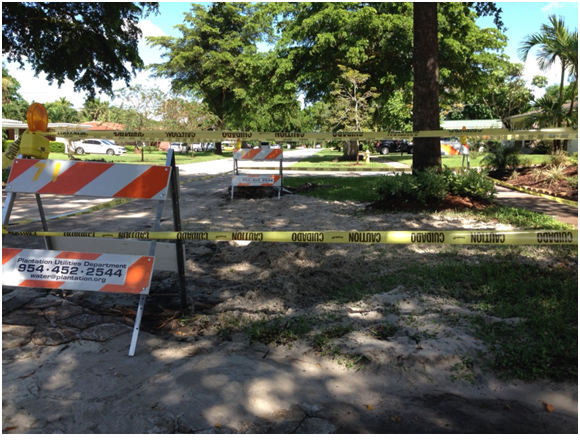
The doorbell rang and it was 1:30 am on a Saturday morning.  It was my neighbor telling me about a small problem on the street.  I looked out and the entire block was flooded.  Water was moving. It was dark, and while my street light was working, it shed little light in the blackness.  However I figured out the old AC pipeline in front of my house had sheared and the block’s leak was actually my problem.  We had no water.  Fortunately the water department was able to get the main repaired in a couple hours.

The next morning we were not as lucky.  Another break on the next street over had shut us down again.  AC water main, but this time under a tree.  They had to remove the tree before fixing the line.  We were out all day.  The water plant guys and the repair crew said that the lines were supposed to be replaced a couple years ago, but that the City had delayed the replacement for budget problems.  


SUSTAINABILITY OF UTILITIES – PART 2

Let’s take a look at some scenarios. Let’s assume you are a utility that serves 20,000 people (8000 customers), with 60 miles of water pipe, 60 miles of sewer pipe, 17 lift stations, and a water and wastewater plant.  Replacing this infrastructure might be valued at $90 million for pipe, $35 million for treatment plants, water supply and pumping equipment (current day dollars).  Let’s also assume that their annual budget is $11 million and the typical demands are 3 MGD yielding a monthly bill of $115/mo (water and sewer).

Let’s make some general assumptions like that the pipe infrastructure might last 100 years, but clearly the treatment and mechanical parts would mot.  They would need ongoing maintenance and replacement.  50 years is probably too long, but let’s go with it.  If the overall costs increase at 3% per year and money is set aside for repair and replacement. The utility will see fairly steady rates if the customer base grows 2-3% per year.  Ten years out, the budget will be $16 million.  Now for the scenarios.

If the customer base has grown at 3% per year, the customers will increase to almost 27,000.  More of an issue is what happens if that increase in demand (from 3 to over 3.4 MGD) needs to come from a new water source and requires new capacity.  Many utilities will use impact fees to offset this cost to current customers so as not to adversely impact current customers too severely .That’s the current assumption.  The result looks like this at 10 and 20 years:


Component


Value today

10 years

20 years

Customers


20000

26878

36122


Accounts


8000

10751

14449


Water  Pipe

60 mi

 $   45,000,000

 $     98,509,418

 $215,646,786

Sewer Pipe

60 mi

 $   45,000,000

 $     98,509,418

 $215,646,786

Treatment Plants and Pumping

3 MGD

 $   35,000,000

 $     76,618,436

 $167,725,278

Operations budget


 $     9,000,000

 $     16,255,001

 $  29,358,340

Capital Budget


 $     1,600,000

 $       3,502,557

 $    7,667,441

Debt


 $        400,000

 $         400,000

 $      400,000

Monthly Amount


 $              115

 $                156

 $             216

Increase per year


5%

5%


Assume 1% of pipe Replacement Costs +2% Plant


Assume operating budget inc 3%/yr but construction increases 5%/yr


But what if the new treatment and supply are 50% more costly and impact fees assume the lower investment (typical)?  The cost for the budget and for the infrastructure replacement increases (with the delta from debt).  Cost are 50% higher:


Component


Value today

10 years

20 years

Customers


20000

26878

36122

Accounts


8000

10751

14449

Water  Pipe

60 mi

 $   45,000,000

 $     98,509,418

 $215,646,786

Sewer Pipe

60 mi

 $   45,000,000

 $     98,509,418

 $215,646,786

Treatment Plants and Pumping

3 MGD

 $   35,000,000

 $     92,289,117

 $202,029,937

Operations budget


 $     9,000,000

 $     23,731,487

 $  42,861,706

Capital Budget


 $     1,600,000

 $       3,815,971

 $    8,353,534

Debt


 $        400,000

 $       1,325,000

 $    2,825,000

Monthly Amount


 $              115

 $                224

 $             312

Increase per year


8%

7%


The normal assumptions are that growth will continue, but what if it does not?


What can be gleaned as a result of a non-growth or net decrease scenario?  How does sustainability get affected?  Let’s look at the no growth scenario.  In this light, rates will need to increase at least 5% per year to insure that the utility remains rate neutral.  If there is significant deferred maintenance, which is typical of may utilities, that cost will be added to the bill.  There are examples of utilities in Florida who finally caught up with deferred obligations which doubled their customers’ bill.  This scenario is doable, but the only real assumption changes that can be made are related to the lack of growth.  Deferring maintenance will once exacerbate the problem as there is not guarantee that growth will return.  Rate neutrality becomes a public relations issue, but not insurmountable.


Component


Value today

10 years

20 years


Customers


20000

20000

20000

Accounts


8000

8000

8000

Water  Pipe

60 mi

 $   45,000,000

 $     73,300,258

 $119,398,397

Sewer Pipe

60 mi

 $   45,000,000

 $     73,300,258

 $119,398,397

Treatment Plants and Pumping

3 MGD

 $   35,000,000

 $     57,011,312

 $  92,865,420

Operations budget


 $     9,000,000

 $     12,095,247

 $  16,255,001

Capital Budget


 $     1,600,000

 $       2,606,231

 $    4,245,276

Debt


 $        400,000

 $         400,000

 $      400,000

Monthly Amount


 $              115

 $                157

 $             218

Increase per year


5%

5%


Now let’s look at the decline issue.  If the population decreases by 25% over the ten year horizon, what does this say?  The costs will remain relatively constant, but the number of customers and demands for water will drive the rates up significantly. In ten years the rates could double in a community that is likely economically disadvantaged.  The higher rates may begin to discourage economic development, rate neutrality exacerbate the problem and may increase in costs for regulatory or deferred maintenance obligation becomes a significant issue:


Component


Value today

10 years

20 years

Customers


20000

16341

13352


Accounts


8000

6537

5341


Water  Pipe

60 mi

 $   45,000,000

 $     73,300,258

 $119,398,397


Sewer Pipe

60 mi

 $   45,000,000

 $     73,300,258

 $119,398,397


Treatment Plants and Pumping

3 MGD

 $   35,000,000

 $     57,011,312

 $  92,865,420


Operations budget


 $     9,000,000

 $     12,095,247

 $  16,255,001


Capital Budget


 $     1,600,000

 $       2,606,231

 $    4,245,276


Debt


 $        400,000

 $         400,000

 $      400,000


Monthly Amount


 $              115

 $                193

 $             326


7%

7%


Assume 1% of pipe Replacement Costs +2% Plant


Assume operating budget inc 3%/yr but construction increases 5%/yr


 What can we glean from this?  Interestingly the failure to accumulate costs for growth, and the declining rate base end up with similar monthly costs.  Only by the no growth and collecting appropriate impact fees will costs be controlled, and even in that case, costs will double every 20 years or less.  The reality is that the failure to follow proper revenue collection protocols will severely limit the utility in future years.  High capital costs impact rates significantly.  Leaving it to some future commissioner to raise the rates is unfair to both the future decision-makers and customers.  It does not make you a leader either. 


Pipe wears out.  Concrete deteriorates, Steel rusts.  Aluminum pits. Mines play out.  Wells run dry.  But we strive for sustainability.  How do these disparate facts coexist simultaneously?  And if they don’t, how does this impact our long term prospects for our utility systems and communities.  And how do the decisions impact our understanding of sustainability.

An AWWA publication from 2010 was a compendium of thoughts on the meaning of sustainability form the perspective of water utilities.  One of the findings of the publication was that the understanding of sustainability had more to do with the perspective of the person being asked about sustainability than an overall comprehension of the inter-relationships of the concept of sustainability among different sectors.  For water supply entities, the economic sustainability of the community is not really their primary concern.  Instead they focus more on impacts to customers.  But water is a driver for economic development in a community. 

The message is that water utilities may need to look at the broader picture of sustainability in their community and extend the definitions to a wider range because no one else is and the community is looking for leadership.  The first paragraph focuses on infrastructure issues, which are commonly ignored in dealing with the concept of sustainability, but they are the ones traditionally focused on water supply issues.  The utility needs to look at infrastructure and financial outlook as a part of an overall sustainability strategy. 

There are certain assumptions that we make on many of our systems, and perhaps we need to revisit some of these assumptions in light of potential future realities.  For example, what happens to communities that do not grow?  Our current assumptions generally assume that there will be an ongoing increase in population or water use that will drive increases in revenues without specific increases on customers.  However what if you are Detroit where the populations has dropped in half in the past 50 years.  How do we deal with aging infrastructure and demands for increased water quality and reliability while maintaining fees at affordable levels for customers?  This is a particular problem when there are economic disruptions that create a large group of disenfranchised people who become more economically disadvantaged than they might otherwise already be.  The competition for sustaining water rates, infrastructure condition and water supplies can be a difficult conundrum.


In June, President Obama made a speech about the increase in renewable power that the United States had created in the last 4 years, and announced goals to double this amount in the next four.  Virtually all of this power was solar and wind power.  Little mention was made of hydroelectric or onsite sources.  But the latter have been around much longer than the former sources and there may be options to increase their contributions under the right circumstances. 


Hydroelectric power has been in use in the US for over 100 years.  By the 1930s, 40 percent of the nation’s power came from hydroelectric dams, including some fantastic accomplishments of the time like the Hoover Dam.  Today we have over 100,000 dams in the US, most of which provide power.  Today hydroelectric is only 6 percent of our total.   The reluctance to continue with hydroelectric power involved fisheries, land acquisition costs and legal issues.  Some hydropower options are excellent.  Hurting fisheries (which disrupt local economies dependent on those fisheries) may not be, and therein lies part of the dilemma.


But water and wastewater utilities are actively looking for means to reduce power costs.  Depending on the utility, pumping water can account for 80-90 percent of total power consumption, especially with high service pumps on water systems that require high pressures.  More efficient pumps is one obvious answer, but of fairly limited use unless your pumps are really old.  Variable speed drives can increase efficiency, and the cost is dropping.  But note that with all that high pressure, how do utilities recapture the energy?  We often don’t and the question is whether there is a means to do so that can benefit up.  The first step is looking at plant hydraulics.  Is there a way to recapture energy in the form a pressure.  For example of reverse osmosis systems, we can install a turbine to recapture the pressure on the concentrate side.  They are not very efficient at present, but the potential is there.  On long gravity pipe runs for water supply, a means to recapture pressure might also be available. 


Of course on-site generation of power is a potential solution. Water and sewer utilities have land, and on the wastewater side, methane, so producing power is possible.  This solution, however, may not be embraced by power utilities due to the potential revenue reduction potential and loss of embedded reserve capacity at water and wastewater plants.  As the water facility takes on on-site generation, their load profile may shift significantly placing them in under a different rate structure. This may greatly reduce the benefit to the facility.  There are, however, approaches to permit win-win solutions. The goal is to put willing power and water utilities together to permit local generation that will benefit both power and water utility systems to encourage public – private partnerships.  A medium to large wastewater plant can generate at least a third of its power needs.  Some even more if they take in grease, oils and other substances that should not be put into the sewer system.  The potential there is significant.  EBMUD has a plant that is a net seller of power.  We should look for opportunities.  But don’t forget, water utilities can create hydropower without impacting fish populations. We just need to seek out the right opportunities.


I love stories about sewage in print.  As a water/wastewater guy, it is amusing to see sewer stories in the local papers and national news when they are about the “oddities” of operations.  One recent article talked about the impact of “flushable items” that should not go down the toilet.  “Flushable” wipes was the offender this time, but past discussion involved tampons, diapers and paper towels.  The reality is that NONE of these items should ever go down the toilet.  Those paper toilet seat covers are questionable as well.  Let’s see why. 

Sewer agencies have a very different view of what is flushable that tampon manufacturers, diaper manufacturers, paper towel and now flushable wipe makers.  Sewer agencies are responsible to insure that waste moves down the gravity pipes and through the lift station pumps without creating backups in the system.  The majority of material in a sewer system is water.  Followed by chopped up solids.  The design of the toilet involved two separate concepts.  One is simply creating the opportunity for a syphon to move waste when flushed but holding water when not.  It is a gravity principle based on partial pressures.  Simple stuff.  But toilets also tend to “chop up” material when the flushing action occurs.  The flush is violent and thin toilet paper and the soft solids in the toilet are easily shredded and blended into the water.  Think about your blender.  Soft stuff gets chopped up.  Enough mixing, it is all liquid.  As a result there is very limited opportunity for either thin toilet paper or most solids to plug up a toilet. 

But people don’t like thin toilet paper.  So we have manufactures making toilet paper with cotton fibers in it to make the paper soft.  And people like the “high quality” paper towels that upscale restaurants use.  Unfortunately too many people use those high end paper towels on the toilet seat, so down they go.  Wipes are reinforced paper also.  Fibers make them strong enough to, well wipe.  Tampons are notorious as absorbant fibers.  The key in each case is the fibers.  Fibers are not chopped up during a flush because the toilet flush is not designed to shed cloth.  As a result two things happen.  First, the fibers then to stay together as a mass.  Grease and other materials in the sewer system will stick to eh fibers making an even larger glob of material.  A recent YouTube photos showed a 15 ton grease ball in a large sewer system.  Grease and fiberous materials in the sewer system – you don’t want that to plug up your interceptor.

The other problem is lift stations.  The pumps at lift stations are designed to pass a 2.5 in ball, but not a bunch of strings.  As a result the fibers get stretched out, and wind around the pump impeller rendering it useless.  Or the material may mat in the impeller preventing the pump from pumping water.  One of the most common lift station problems is fiberous material winding around impeller shafts that burn out pumps.  Pumps cost thousands of dollars to repair or replace, so this is money from the ratepayers’ pockets.  One of my clients had the restaurant problem.  The lift station impellers would completely clog every 3 days.  The lift station would nearly overflow before the pumps were removed, the guys would open up the pump, and dig out the material.  Obviously fiberous paper and there were only two connections to the lift station.  The City ended up installing a $160,000 grinder system to grind up this material because the restaurant was unwilling to change their practice.  The major offender was women using the paper towels as seat covers.  The lines inside were a mess as well. 

The moral of the story is that toilet paper, water and body waste goes down the sewer.  Not napkins, feminine hygiene products, baby wipes or any fiberous paper material that feels soft, but won’t deteriorate, regardless what the manufacturer claims on the box.  These material do not degrade, the only create costly repairs, inconvenient and costly backups and a host of other problems for downstream users and the utility.  Put this material in the proper trash can. 

And see where else can you talk about this stuff, except when talking about sewage?


Why are health care costs increasing so fast?  Did you ever wonder about that?  We keep hearing about how health care costs, Medicare, Medicare, Obamacare are going to bankrupt us, but why is that?  Why are the cots going up so fast?  It is an important challenge for local officials and utilities who generally pay the health insurance costs for their workers.  There is more to the story that we are not being told.

One problem that get identified quickly is that only 80% of the population is included in the health care system.  Many who are not are “healthy” young people who don’t demand the services.  The concept of the health care bill was to solve this problem by spreading the costs of health care across the entire population using private and public providers.  First, I think there are way more unhealthy  people included in the 20% than we realize because the political dialogue keeps focusing on the few that want to live off the grid – I feel great so I don’t need insurance.  That guy is part of the problem.  That guy gets into a car accident, gets taken to a public hospital, gets treated, gets a bill for $26,000 to fix his broken leg, refuses to pay anything, and the taxpayers get stuck with the bill.  My solution to that guy is if you don’t want to pay for health insurance, bring cash.  Otherwise, “no soup for you!” to paraphrase a famous Seinfeld episode.  Of course my doctor, nurse and therapy friends think that’s a little cold hearted. 

The next argument is the cost of doctors, therapists and nurses.  Okay, I know a bunch of them, and that’s not where the money goes.  These people have lost money in the past 10 years.  Many are going form full-time to part-time employments as Medicare, Medicaid and health insurance bureaucrats decide services are no longer needed.  They will tell you the major change in their lives is paperwork….hold that thought for a moment.

The cost of drugs comes up.  Medicare and Medicare are the largest purchasers of pharmaceuticals in the world.  So in other works, they set the lowest price by supposedly bidding the “contracts” for services. Only there is often only one provider, so exactly how does that work?   Sounds like we don’t get a good deal there, which is why the arguments for importing Canadian drugs or drugs from Mexico keeps popping up.  They get a better deal than we do and most of these are supposedly AMERICAN companies.  No home town discount (I guess I know where free agent baseball players get the idea).   And my medical friends confirm this as an issue.  Check out the comments from Mr. Falloon at Life Extension (www.lef.org) for discussion. 

So let’s go back to the paperwork discussion.  Once upon a time doctors simply sent a little paperwork to the health insurance company or the federal government and said you needed some service.  And the insurance company processed the bill for the services.  The cost was paid by insurance premiums collected by the insurance company.  Everyone was happy.  But then someone at an insurance company said, “wait we could make more money if we asked more questions and paid less for these services.  It would help our bottom line.”  So you hear the complaint that the folks at the insurance companies are deciding whether you need that procedure or not.  And contractors decide if someone needs Medicare or Medicaid services, not the government, not your doctor, your nurse or your therapist.  Not any person that knows you, but some unseen, private sector bureaucrat who’s goal is to minimize the amount of your premium spent on services so they can enhance their bottom line.  And apparently they are very effective because the health insurance industry is very lucrative.  So maybe we have stumbled onto something here.  Maybe the cost of medical coverage is more related to drugs and bureaucracy (and it is not government bureaucracy!!) than the actual cost of services.  Maybe the old system, even if there was some fraud in it, wasn’t nearly as bad as it was made out to be.  It reminds me of one of the 4 laws of City management I developed years ago:  Never give elected officials a bad alternative – it becomes a magnet.  It always worked (hence a law).  I didn’t learn why until years later when I realized, that the worst option was the one all the lobbyists lobbied for even at the local level.  It was the option where they could make the most money “fixing


Sequestration is the word we are all using to explain the failure of the Congress to put together a budget with appropriate revenues and expenditures.  Congress can’t figure out how to reach a budget agreement, so the federal government set itself up for mandatory cuts in services. I had a recent grant sequestered, then cancelled.  It really could have helped a local community with long-term water supply and quality problems identify adaptation and mitigation strategies fo rites future.  Minor money for Washington, but a big deal down here.  Likewise I have spent the last 6 months on a subcommittee for USGS that is focusing on what could be cut from USGS.  That means less testing water quality, water levels in groundwater, stream gauges and less evaluation of results.  Most of the water issues USGS looks at crosses local and even state lines.  Since we all rely on water, this is at national concern.  Precisely when we need the information most, we may be getting less.  Expect to start seeing more sequestration issues. 


The problem is that the biggest expenses, social security and debt, cannot be cut without major backlash in the financial and voter markets.  So the cuts come from the smaller accounts – things like the federal share of state revolving funds, water research and water/wastewater programs.  The community and tribal assistance account was slashed $210 million while the environmental program budget was cut $135 million. While some may be cheering EPA cutbacks, the reality for water and wastewater users is less federal assistance to our industry.  That means more of the onus is on us, and on our customers.  The  unintended consequences of the failure of Congress to act….


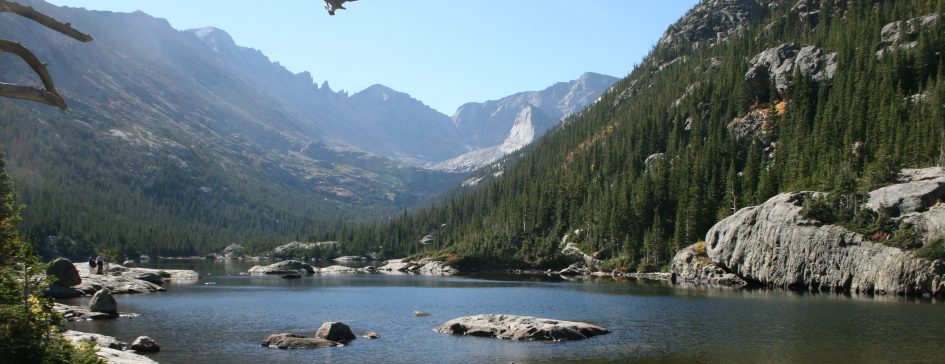
I went back to Colorado last week and it’s dry again out there.  Ok, maybe not this past week when it rained a bit, but despite late snow (March to May), the forests are dry.  The bark beetle problem has not made things easier, so lightning from thunderstorms can easily create fires, like the fire down in Colorado Springs or the Big Meadows fire that is ongoing in Rocky Mountain National Park.  The latter has been ongoing (although fortunately mostly out) for over a month, and has closed some trails in the park.  I hiked through the Fern Lake fire remnants (although virtually all the fire was around Cub Lake). That fire burned for a couple months last fall, only finally burned out in the winter after snowfall. 


The west is dry and “drier than in the past” is the new normal it seems in Colorado.  So now water managers are faced with three new challenges:  less water, faster runoff and more difficult water to treat.  The fires cause the loss of protective vegetation, which means less water is kept in the forest.  As a result, the tiny, light ash particles easily run off in the rain.  Ash is hard to remove without activated carbon or other advanced processes.  The loss of vegetation increases runoff, which means larger sediment content in otherwise pristine water supplies.  That can make a major impact on downstream water plants that may not have planned for such events.  The cost of fire suppression for the last 60 years confounds the current water supply and quality problems.  There are also ecological effects that may impact local economies. 


All this said, I am unsure what the solution is.  Clearly the climate in Colorado is changing.  It is unlikely we can alter the current course any time soon.  Instead we must adapt to the changes and attempt to mitigate the impacts on water supplies.  Creativity, innovation and likely more infrastructure will be required. Concepts like aquifer storage and recovery are coming back to the fore as a result of the current condition. It will be interesting to see how this all plays out.