Covid here in florida
Leave a comment
My Dad was a hunter. So was his. They hunted grouse and were successful. They ate them all. They hunted deer once. Got 2. Needed help eating the venison. They could not find takers to help eat the meat. Never went deer hunting again. Shot an old rabbit by accident. Grandma couldn’t tenderize it enough to eat it, so they stopped hunting.
I get people who hunt to eat and have no problem with that. I don’t understand hunting just to kill something. For example, Wisconsin held a wolf hunt. The goal was 199 wolves. In two days, over 200 reported. More were likely unreported. Wolf pups killed in their dens. Pregnant wolves shot. Wolves were baited, and dogs chased them to exhaustion. How is this hunting?
The Wildlife Service killed 62,000 coyotes in 2019. Tens of thousands were killed with cyanide bombs (M44s). Seriously we are bombing wildlife with cyanide? What could possibly go wrong with that? I do not believe this was intended when the 1931 Animal Damage Control Act was passed. We can far better manage wildlife than by bombs.
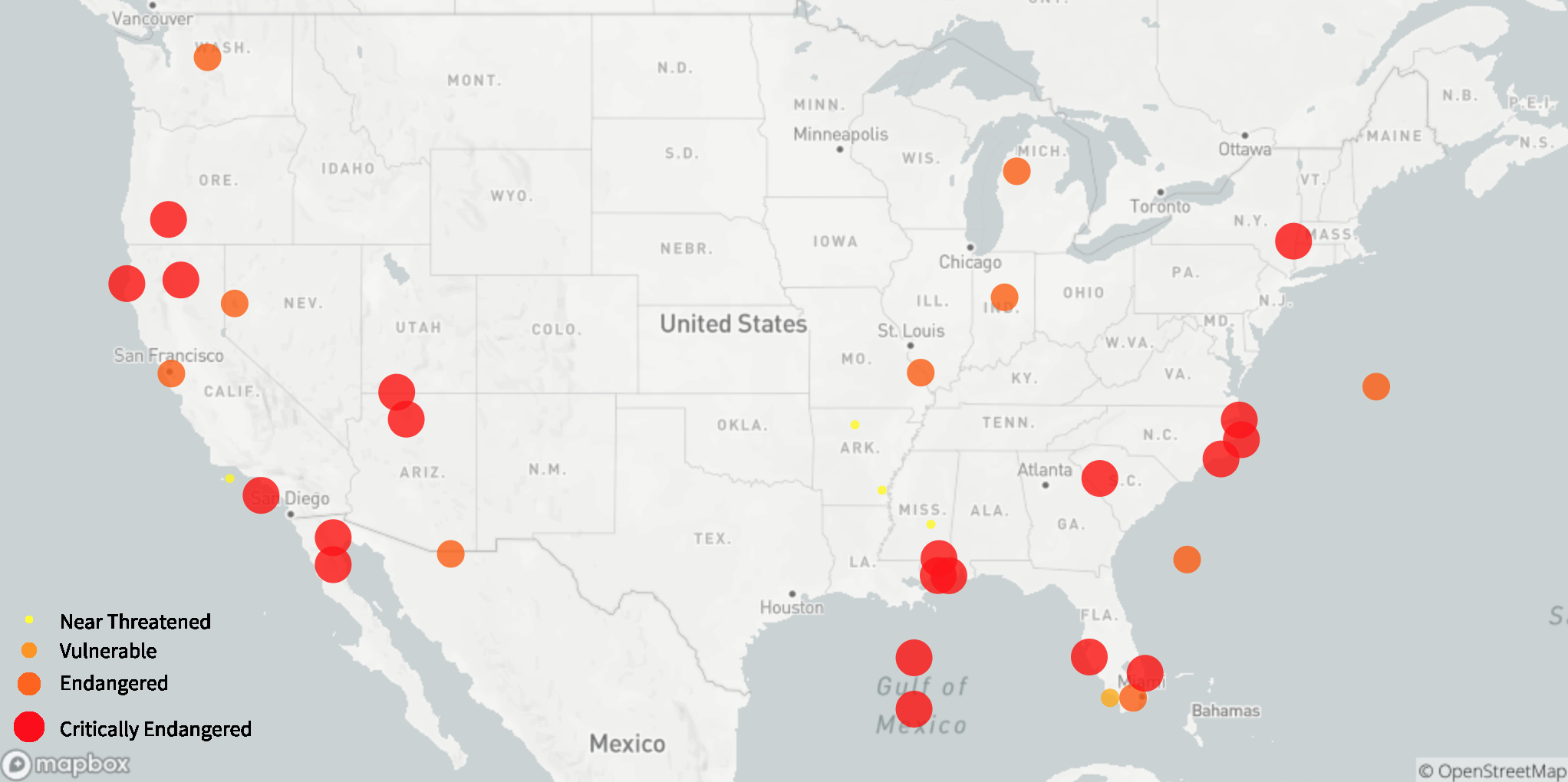
The weird view of hunting, along with changes in land use due to agriculture and development create severe risks for wildlife. The figure shows the circles that indicate the number to threatened wildlife in the US. Ok, I live in the worst state – Florida (or Floriduh). But there are risks all over. Some are trying to help. The St Vincent National Wildlife Refuge in North Carolina is the last stand for the red wolf. Colorado voted to introduce wolves to the state (they are already there but in tiny numbers).
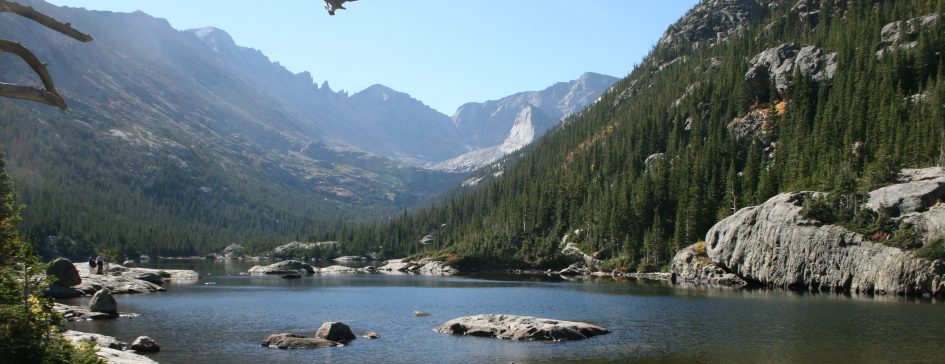
Let’s look at a different picture – how much are these wild resources worth (alive). Efforts to remove unneeded dames to restore salmon runs has gained strength out west. The Glines Canyon dam on Washington’s Elwha River is one that is gone. No one wants wild salmon to go extinct, and their value appears to be high. The Nisqualy Refuge in Puget Sound is valued at $3.2 billion per year (just under 800 ac). In Klamath Reservoir in Klamath Falls, minus the salmon – over $1 billion per year. The Everglades – billions in visitors, billions more in water supply benefits we cannot calculate. Four million visitors to Rocky Mountain National Park will be billions in local economic activity as well. We need to look at wild places as both a great environment to visit, but to protect them for the economic value they provide to local economies. Maybe that can flip the tide.
BTW – Colorado has wolf pups for the first time in nearly 100 years – and they were not introduced. Nature has a way if we just let her!!


My yard is a certified NWF nature areas – I have lots of butterfly plants to encourage them to come for the flowers and endlessly eat the milkweed and other plants. We spend hundreds each year feeding caterpillars to get butterflies, which he hope avoid the lizards. Its ok. I have ospreys, sparrow hawks, red shouldered hawks and a variety oof cool birds that frequent the lot. Ospreys eat fish, but the other two will eat small rodents. I am cool with that. I have not seen the owls, but I think I have heard them. Night-time rodent removal.
My land in Colorado, Wyoming and Michigan are just open – no one there. Nothing happens. Let nature do its thing. And that is ok. I could lease those lands for windmills, oil and gas, but money isn’t everything. Let it lay. Feel free coyotes. Ultimately nature will balance itself Huge change occurred in Yellowstone after the wolves were introduced. Hawks, eagles, beaver sand other wildlife that have been lost for nearly 100 years returned. La because the wolves do not let the elks eat everything in sight near the streams (they are like cows that way).
Protecting public lands is actually a benefit on other ways. It helps property values, lowers transportation costs, protects drinking water sources. Protected lands have huge value for tourism. Think about Zion National park – nearly 4 million people go there like I did in May. They stay 2 days – that is probably 3 to 4 million hotel nights, 8-10 million meals, and incidental shopping when they show up with the wrong equipment or need a souvenir. The economic engine of Zion in the middle of the desert is huge. We often forget the economic value of tourists.
Working with tribal nations, ranchers, and farmers to protect lands will benefit us long-term. It helps our water supplies. The Great Outdoors Act passed in August 2000 added $9.5 billion over 5 years to address the backlog of maintenance in our national parks. That is a huge start – thank you Congress. But more is needed.

 publicutilitymanagement