It has been over 50 years since the Cuyahoga river burned for the last time in 1969. The early 1970s saw a wave of environmental protection designed to avoid this kind of thing form happening in the future. The Cuyahoga has fish in it today. Bald eagles and wolves are more common. Drinking water is more reliable, our air is better and our rivers and lakes are cleaner. That is progress. But challenges still exist.
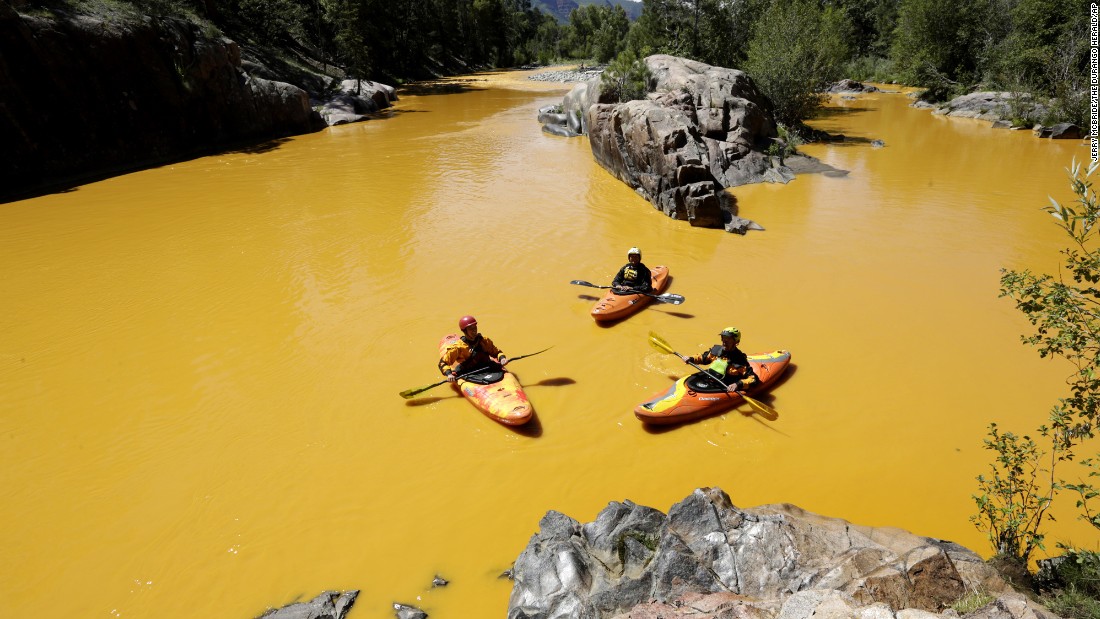
For reasons I still do not understand, the best place to store coal ash is next to rivers. What can possibly go wrong (every 4 years it seems). North Carolina is the only state I am aware of to address the problem and more this stuff. But this is a huge water quality liability. Ask the folks in West Virginia. Mining has the same issue. EPA cleaned up Leadville in the early 2000s before it contaminated the Arkansas and Rio Grande Rivers. Yet we keep seeing new mines proposed alone rivers. We learned mothering from the Animis River incident in 2015?
Animis River spill
Wild places are good for us. They provide clean air and clean water. They provide a place for wildlife to be wild as opposed to in your attic. The less the impact them the better those systems are. It is why there is so much fighting over roads in Utah – the Mining Act of 11866 (yes you read that right), granted rights of way across public lands to encourage homesteading. Problem is on deserts, those trails are still there (from 1 wagon). That is not a road. Opening these would bring a host of challenges – bikers, ATVs, trucks etc. that would impact those desert systems.
Oh, but the Biden infrastructure plan does have money to maybe address some of this…. Let’s see if t makes it through Congress. We all would benefit!
Discharges into surface waters is one of the oldest methods of disposing of waste because surface waters remove the waste from the point of generation. Downstream, reduction of the waste occurs due to dilution and natural degradation processes (due to bacteria in the water). Failure to treat adequately will overload the natural attenuation ability of the water body, resulting in noticeable pollution.
Other potential environmental impacts of surface discharge arise from the precipitation of metals and other heavy compounds on the bottom of the receiving water body, downstream of discharge. Heavy metal accumulation among benthic populations and the possible recycling of these metals through the food chain is a subject of current research. Industrial processes like mining are notorious for leaching metals. Old mining areas that have not been active for nearly 100 years are still out there, releasing bright red to the environment. That cannot be good right?
Historical records indicate that the regulations or standards required for water systems were generally not applied until late in the 19th century. Up until that point, the basic philosophy was that water should be free of any organisms that cause disease and high quantities of minerals and such other substances that could produce adverse physiological impacts. Even the ancient civilizations realized that certain waters were healthful while others were not, the latter being water that contained some unseen contaminant that caused death or disease. With the realization that numerous epidemics, typically typhoid and cholera, were caused by water-borne diseases, people came to realize that the quality of drinking water could not be discerned simply by looking at it, tasting it or smelling it. As a result, more stringent quality criteria were required to protect the public health.
The first formal set of standards was adopted in 1914. It focused on limitations on the number of fecal coliforms (chosen as an indicator microorganism), that were permissible within water system. The initial federal public health rule required that fecal coliform counts be below 2 per 100 milliliters. By the 1920s, chlorination had become routine in many water systems because of its ability to eliminate water-borne diseases. 1925 saw a reduction in the limit of coliforms to one per milliliter due to increasing use of chlorine and the ease with which most large utility systems were able to meet regulations
In the 1940’s, metallic contamination, primarily in the form of lead and chromium, were identified as creating problems with brain development in children. In 1942, a federal advisory committee presented a series of drinking water regulations that established the number of water samples to be taken each month, the procedures for examining those samples, the maximum permissible concentrations for lead, fluoride, arsenic and selenium (as well as heavy metals that had deleterious physiological effects) that became the primary drinking water standards. In 1946, a minor addition added hexavalent chromium and several other metals to the drinking water standards.
While the 1942 standards were primarily oriented toward lead paint, the fact that lead and chromium were in water supplies demanded that these issues be addressed. As of the early 1960’s, over 19,000 water systems had been identified. The public Health Service found that only 60 percent of the systems surveyed met all drinking water standards and that small systems had the most deficiencies (EPA, 2009a). The public was becoming aware of the chemical and industrial wastes that were polluting many of the surficial water sources for the systems. In addition, concerns about radioactive pollutants arose.
In 1962, maximum concentrations for a series of substances such as cyanide, nitrate, silver and some language on radioactivity were added to the regulations. The 1962 the U.S. Public Health Service standards set the stage for the Safe Drinking Water Act in 1974. But first it was starting the cleanup of surface water – fires on the Cuyahoga River seem crazy, but I have photos. The clean water act was passed first because surface waters are the source of many drinking water systems. Clean up the source waters – less treatment might be required.
As late as 1974, the major cause of polluted rivers and streams was wastewater/industrial pollution. Utilities and the federal and state governments have invested over $250 billion in the past 40 years to address this issue, and aside from certain nutrients, the effort that been successful. That was the focus of the clean water act, but it was not the only focus. Agriculture and stormwater were both issues that were identified in the law as pollution but not prioritized. Stormwater came next, but as the Mississippi river delta has demonstrates, farm runoff is a major source of nutrient pollution in America’s waterways, way more than wastewater today. The challenge however is while utilities had a pipe that could easily be sample and regulated, pipes are not typical for farms. Instead, overland flow, or non-point discharges are the norm.
The problem is which to address first (in the face of a fierce lobby to do nothing). Keep in mind, the Milwaukee and Walkerton incidents that we talk about were both agriculture driven. Agriculture can be split into two arena – crops and animal operations. Cropland floods and contaminates waterways. The large scale challenge must be dealt with by creating and enforcing a means to capture water quality, and limit water quantity from farm fields. That is a tall order, but with large scale agribusiness operations, should be obtainable aside from the heavy lobbying resistance that would occur in Congress.
The animal operations are actually easier, but will encounter the same lobbyist resistance. Many animal operations have centralized areas where manure and runoff are treated. This is not unlike wastewater treatment operations except the budgets are smaller and the waste concentrations are much higher. However, there is value in that manure. Gas, biosolids and nutrients are recoverable from animal operations, assuming there was a means to pay for the cost. Enter subsidies. If Congress wants to provide agri-business subsidies, a quid pro quo could be to require animal operations to secure a means via a wastewater operation to treat the waste. The solution is not cheap but would achieve two goal at once -improved stream quality and renewable power.
JCB has an all electric backhoe. Very cool. It will look like and operate like the 100 hp 310L backhoe. How cool is that. Electric construction equipment. Very cool.
Not very cool – Tesla’s exploding batteries. Elon, can you see what you can do about that please?
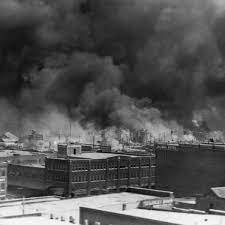
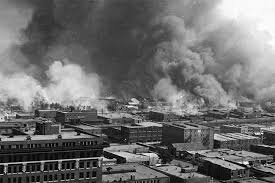
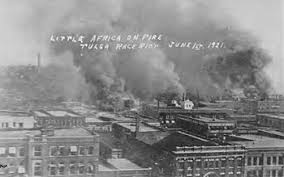
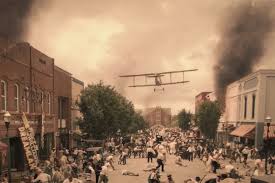
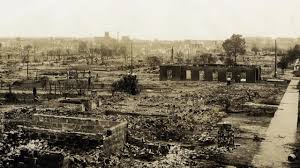
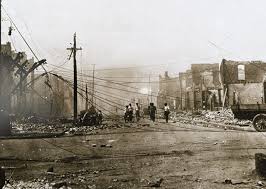
100 years ago today, thousands of homes and businesses in Tulsa Oklahoma were burned to the ground. Hundreds died, hundreds more rounded up and jailed, turpentine bombs were dropped by civilians on homes and businesses. Rioters, supported by the police inflicted this damage on other US citizens. Why? They were black, and successful. And that seems to have been a problem.
Until recently, I did not know this event happened. Did you? Probably not, as it was buried in the mists of time with the hope that it would never see the light of day. Even most people in Tulsa did not know that one of the ugliest chapters in American history happened in their own back yard. As shown on a recent 60 Minutes program, this was more than a riot, it was violence against innocent human beings that were “different.” No one was ever held accountable for this act.
Tulsa is but one example of the price of hate and the rhetoric that demonizes people because they are different. We have all seen Black, Hispanic, Asian, LGBTQ+, Democrats and Republicans demonized by the rhetoric in the past 5 years. It continues to get worse, is encouraged be enemies of America and results from not challenging hate. Words have meaning. Saying nothing “because it doesn’t affect you” is not the answer because inaction encourages their action. It is tasset approval of their views and actions, encourages more hate and divides us further. With very few exceptions, we/they are not the enemy.
The Constitution does permit us to have free speech, which means we can say all kinds of stupid hateful things. And we do. We have few limits. But that does not mean that there cannot be repercussions for being stupid or hateful. Many of those that participated in the January 6 storming of the Capitol have been arrested, fired form their jobs, ostracized from their friends, etc. Be stupid and there will be consequences, just as those who do not follow the rules for using services will have services cut off. Private industry does not have to tolerate hate and violent rhetoric, stupid or abuse of their services.
Germany during the Great Depression found out the hard way about unchecked rhetoric. A portion of Germans elected Hitler based on grievances and demonizing people. They installed the Nazi party. It was all rhetoric – back then the demons were the Romas, gypsies, people living in certain portions of Poland and Czechoslovakia, Jews, disabled, etc. Anyone that was not Hitler’s view of Aryan. People ignored what was happening because “it did not affect them.” Until it did.
The day after Memorial Day 2021, 100 years after Tulsa, we should remember that over 100,000 US soldiers lost their lives, and 500,000 were injured to defeat the Nazism and their ilk in Europe. We no not need them here. Yet free speech guarantees them a voice and they do not try to hide themselves. Their views are all over the internet. We need to hold them accountable for their words and deeds. And we need to tone down the all demonizing rhetoric – all of it. Society depends on it.
As we all awake from the Covid slumber we have been in for the past 15 months, we should stop, before the party begins, to remember all those who made the ultimate sacrifice for our freedoms, and how much their sacrifices have allowed us to build the country we have today. I was lucky. My Dad, his brother and my mother’s brother were all in World War II and all came back (Dad with a purple heart). My grandfather made it through the Ardennes in World War 1.
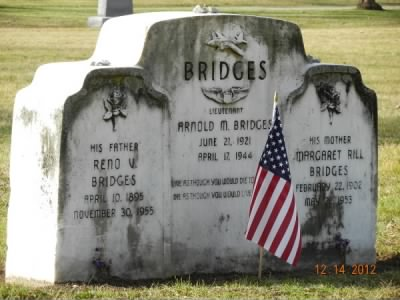
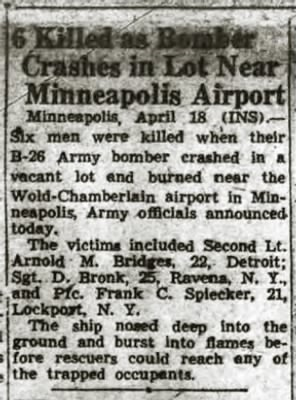
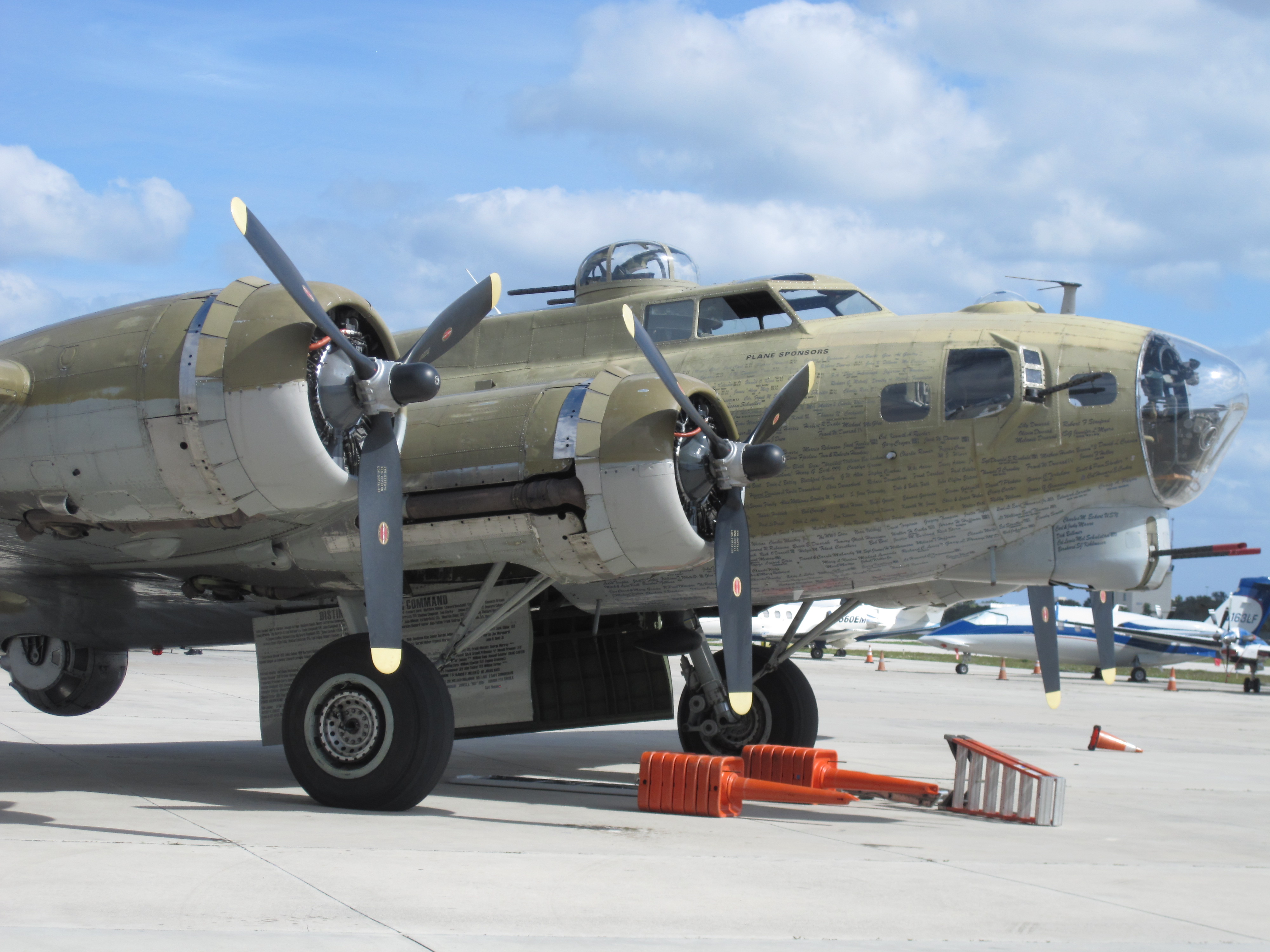
However, my Dad’s lifelong best friend, who went to school together with him at Cass Tech in Detroit, and volunteered with my Dad in 1943, did not return. Arnold Bridges and my Dad were very close, as was his older system Marge. They both were infatuated with airplanes and joined the Army Air Force. My Dad’s eyes were not quite as good as Bridges’, so he ended up in a B-17 for 25 missions. Arnold trained to be a P-38 fighter pilot. Unfortunately, a plane crash in Minneapolis on April 14, 1944 killed him and the others on board just as they had completed training and were headed to England. While confident in his P38, he never saw combat over Germany. He was given a Gold Star. My Dad and his sister felt that loss the rest of their lives.
This is day to remember those lost. Be happy their sacrifice lives on with you.
May i be actively working, doing what i love, and making a difference at 91. You are an inspiration to us all and sets a goal for me to strive for. Keep it up – be a model for the rest of us. And many more birthdays (and movies).
Tulsa, 1921. You will hear about this all weekend if you haven’t already. Tulsa happened and we need to acknowledge that it did. It was not one of our finer moments. In fact just the opposite. Tulsa is what hate can bring. It is what demonizing other people can cause. In a short span of time over 300 innocent people died, hundreds injured, hundreds rounded up like cattle. Why? Because they were black and successful. This is why we should not tolerate hate speech. And why there should be consequences for same. Remember the past so we can avoid it in the future.
ASCE complies a report card of the nation’s infrastructure every four years. They look at all infrastructure, from dams and airports to water and sewer. The newest release was March 2021. Table 1 shows a comparison over the past 20 years. The grades are bad. The new report shows slight improvements in water and sewer, but a D+ and C- still are not passing grades. It points to significant needs for infrastructure in our field as well as the accompanying fields for power, roads, drainage and more. It also suggests that as utilities have invested over the past 4 years, we can move the grades upward. It is just that more needs to be done. Washington has been talking about this problem for many years but little has come from. We got some money in 2009, but since then, very little other than WIFIA funds. Now its Biden’s chance.
Table 1 ASCE infrastructure grades
The reality is that our infrastructure condition probably peaked in the 1950s or early 1960s. The major roadway, water, and sewer piping and treatment expansions were well underway of nearing completion. Rural areas had running water and sewers, something that did not exist before the Great Depression. The construction of infrastructure has always been critical for economic development. Look no further than China to demonstrate this.
The Biden Plan started with $2.3 trillion dollars, about 15% of the total economy per year, and less than the value of private property in south Florida (which doesn’t sound quite as expensive as it initially seemed). The package would include investments fixing 10,000 bridges (there are over 600,000 bridges and nearly 50,000 that are inadequate), 20,000 miles of roads (there are 4.2 million miles of roads in the US), $120 billion for water and sewer (AWWA says the need exceeds $1 trillion in the next 20 years), $150 billion for transit and rail, $100 billion for broadband so rural and underprivileged areas have better access to the internet, and funds for the electrical grid which is woefully inadequate in many places.
The funds would be spent over 8 years. The payback is expected to exceed 2:1 in private sector economic activity. Most of the funds would be directed by government’s to the private sector for design and construction (and Engineer and contractor employment act), which translates to millions of jobs. People can easily see how this benefits them by increasing employment and likely increases wages due to tightening job markets. As a result, there is a lot of support for this in much of the country among the people.
There are contrarians in Congress who think it costs too much or for other reasons. But look at the statistics – one could easily argue that the proposed expenditures are 10% of what is really needed – the bill does not go nearly far enough. But if this is only a start to returning American infrastructure to its glory days, the economy appears to have taken notice. Bloomberg forecasts the economy to increate 5.5% this year. Goldman Sacs thinks that is conservative. The more federal dollars move to the private sector, the more fuel there is in the economy. Getting unemployment in the construction industry down from 9.6% is part of that plan. The Federal Reserve is keeping inflation in check which could wipe out this growth, but needs to ensure that secular stagnation does not appear (a stalled economy). Continued investments by both the pubic and private sector can prevent this.
But returning the infrastructure to the 1950s is not going to be enough in the 21st century. And no one can expect the federal government to foot the entire bill. Local communities will need to invest more as will the states. The US has permitted its infrastructure to decline under the premise that if it works fine, we do not need to worry about it. Until it fails. Then there is a big discussion to assign blame. The blame goes back to many people many years when actions could have been taken. Reactive maintenance is the expensive kind. Proactive replacement is easier to plan and develop. And less costly.
There is an argument that our lack of attention to infrastructure condition has weakened our economy. We invested heavily in automation in the 1990s and early 2000s to increase our productivity (through robotics which created massive job losses for factory workers), but not in the replacement jobs for those displaced. There is an argument that part of the Rust Belt’s problems is antiquated infrastructure (think Flint). There is an argument that rural dissatisfaction in the US, especially toward government, is directly related to the fact that little investment in infrastructure has taken place there, causing the economy to pass them by. Less jobs, lower pay, higher unemployment, poorer healthcare and less access to quality education are common rural complaints. And the complaints are not without merit because we know that relying on the private sector to construct the grid means that they will invest where the payback is highest, which is populated areas. That is why these differences between rural and urban areas exist and continue to widen. Hence the broadband cost in the Biden proposal. The situation is no different than the rural electrification efforts that started in the 1930s.
ASCE estimates that delays to infrastructure upgrades may cost US households $3400 per year, increasing with time. This includes water and sewer utilities. A study conducted 2 yea4rs ago indicated that only about 20% of Flroida utilities were spending the needed amount on infrastructure. Some of those who did, relied on larger periodic bond issues that come with rate increases, to accomplish their updates. Pay as you go can be demonstrated to be a cheaper, but too subject to trimming for political reasons. The question is how to get elected and appointed officials to buy into the long-term upgrade plans so we can make that C+ and D- into at least a B. At the same time, the costs will impact certain segments of the population that have not participated as yet in the economic growth. But that is a topic for another column.






 publicutilitymanagement