
Most water suppliers realize that the more natural their land is upstream of their water supplies, the less risk there likely is for their customers. Under the source water protection programs that state, local officials and water utilities implement, the concept is to keep people related activities out, and let the natural forests and landscapes remain. For the most part the natural areas support only a limited amount of wildlife (sustainable) and thereby there natural systems are attuned to compensate for the natural pollutant loads, sediment runoff, ash, detrital matter, etc., that might be created through natural processes. For thousands of years these systems operated sustainably. When people decide there needs to be changes, it seems like the unanticipated consequences of these actions create more problems. Now many of these same ecosystems do not work sustainably and water quality has diminished, increasing the need for treatment and the risks of contamination to the public. It would be better, but decidedly less popular on certain fronts, to provide more protection to natural systems that extend into watersheds (which is most of them), not less.
So this leads to a series of questions that go to the greater questions about natural environments:
Is it really necessary to cull the small Yellowstone bison herd by 1000? What do bison have to do with watersheds? Well, the bison create much less damage to grasslands and underlying soil than cattle due to the size of their hooves. An argument is that we need to cull the herd because they transmit disease to cattle, but Brucellosis has never been demonstrated to move from bison to cattle, so disease is not an answer. What is really happening is that there is competition between buffalo and cattle for grazing. Competition with cattle means that the cattle are on public property, not private ranch lands, and the cattle trample the public lands which creates the potential for soil erosion and sediment runoff. So I am thinking water folks should be siding with the bison. Of course without wolves, there is no natural predator for bison, which raises a different sustainability problem, so maybe instead of killing them, we move them to more of their native ranges – maybe some of those Indian reservation might want to restart the herds on their lands? That might be good for everyone, water folks included.
Part 2 – is it necessary to continue to protect wolves or should we continue to hunt them in their native ranges? Keep in mind wolf re-introduction efforts are responsible for most of the wolf populations in the US, specifically in the Yellowstone area. Without wolves, there is no control of large grazing animal populations (see bison above, but also elk and deer), and there is a loss of wetland habitat because the elk eat the small shoots used by beavers to build dams and trap sediment. Eliminating wolves has been proven to create imbalance. Wolves = sediment traps = better water quality downstream. Sounds like a win for everyone. (BTW there is a program in Oregon to protect wolves and help ranchers avoid periodic predation of calves by wolves so they win too).
Part 3 – Is it really necessary to kill off coyotes in droves? The federal government kills thousands of coyotes and hunters and others kill even more. This is a far more interesting question because it leads to one of those unintended consequences. !100+ years ago people decided wolves were bad (we still have this issue ongoing – see above). So we eradicated wolves. No wolves means more rodents, deer, elk, etc. which mean less grass, less aspens and less beavers, which means more runoff which does not help water suppliers. It also means more coyotes, because there is more food for the coyotes. Interesting that coyotes have pretty much covered the entire US, when their ranges were far more limited in the past. Coyotes are attracted to the rodents and rabbits. But the systems are generally not sustainable for coyotes because there is not enough prey and there is no natural control of the coyotes – again, see wolves above. A Recent Predator defense report indicates that culling coyotes actually increases coyote birth rate and pushes them toward developed areas where they find cats and small dogs, unnatural prey. Not the best solution – unintended consequences of hunting them on more distant land pushes them into your neighborhood. Not the consequence intended. So maybe we keep the small dogs and cat inside at daybreak and nightfall when the coyotes are out and let them eat the rats and mice that the cats chase and once consumed they go away. Coyotes need to eat grazers and rodents but you need the right mix or the grazers overgraze, which leads to sediment runoff issues – which is bad for us. That also seems like a win.
Everglades restoration is a big south Florida issue. The recharge area for the Biscayne aquifer is the Everglades. So water there seems like a win for water suppliers? So why aren’t we the biggest Everglades advocates out there? Still searching for that answer, but Everglades restoration is a win for us and a win for a lot of critters. Federal dollars and more federal leadership on restoration is needed. Which leads to ….
Do we need more, not less management of federal lands? Consider that the largest water manager in the west is the federal government, which has built entire irrigation systems to provide water to farmers who grow crops in places that are water deficient. Those farms then attract people to small towns that consume more of the deficient water. Then people lobby to let cattle graze on those public lands (see bison above), timber removal – which increases sediment erosion, or mining (what could possible go wrong there?). So since the federal government manages these lands, wouldn’t better regulations and control to keep the federal properties more protected benefit water users and suppliers? Contrary to the wishes of folks like the guys holed up in a federal monument in Oregon, or the people who have physically attacked federal employees in Utah and Nevada, more regulations and less freedom is probably better in this situation for the public good. If we are going to lease public lands (and most lands leased are leased to private parties for free or almost free), and there should be controls on the activities monitoring for compliance and requirements for damage control caused by those activities. There should be limits on grazing, timber and mining, and monitoring of same. Lots of monitoring. It is one of the things government really should do. And we need it to protect water users downstream. Again a win for water suppliers.
So as we look at this side issue, ecosystems, bison, wolves, coyotes and the Everglades seem very distant from our day-to-day water jobs. But in reality they are not. We should consider the impacts they might have on water supply, keeping in mind natural system decisions are often significantly linked to our outcomes, albeit the linkage is not always obvious.
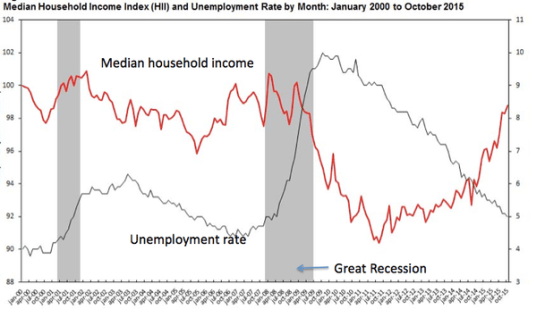
 One of the issues I always include in rate studies is a comparison of water rates with other basic services. Water always comes in at the bottom. But that works when everyone has access and uses those services. Several years ago a study indicated that cable tv was in 87-91 % of home. At the time I was one of the missing percentage, so I thought it was interesting. However, post the 2008 recession, and in certain communities, this may be a misplace comparison. A recent study by Emmanuel Saez and Gabriel Zucman notes that the top 0.1% have assets that are worth the same as the bottom 90% of the population! Yes, you read that correctly. Occupy Wall Street had it wrong. It’s not the 1% it is the 0.1%. This is what things were like in the 1920s, just before the Great Depression. The picture improved after the implementation of tax policies (the top tax rate until 1964 was 90% – yes you read that right – 90%). Then the tax rate was slowly reduced to deal with inflation. The picture continued to improve until supply side economics was introduced in the early 1980s when the disparity started to rise again (see their figure below), tripling since the late 1970s (you recall the idea was give wealthy people more money and they would invest it in jobs that would increase employment opportunities and good jobs for all, or something like that). Supply side economics did not/does not work (jobs went overseas), and easy credit borrowing and education costs have contributed to the loss of asset value for the middle class as they strove to meet job skills requirements for better jobs. In addition wages have stagnated or fallen while the 0.1% has seen their incomes rise. The problem has been exacerbated since 2008 as they report no recovery in the wealth of the middle class and the poor. So going back to my first observation – what gets cut from their budget, especially the poor and those of fixed pensions? Food? Medicine? Health care? My buddy Mario (86 year old), still works because he can’t pay his bills on social security. And he does not live extravagantly. So do they forego cable and cell phones? If so the comparison to these costs in rate studies does not comport any longer. It places at risk people more at risk. And since, rural communities have a lower income and education rate than urban areas, how much more at risk are they? This is sure to prove more interesting in the coming years. Hopefully with some tools we are developing, these smaller communities can be helped toward financial and asset sustainability. But it may require some tough decisions today.





 Over the holidays there were a couple articles that came out about groundwater issues in the US, mostly from the declining water level perspective. I also read a paper that suggested that rising sea level had a contribution from groundwater extraction, and of course USGS has maps of areas where the aquifer have collapsed as a result of overpumping. In 2009 USGS published a report that showed a large areas across the country with this issue. The problem is that of the 50,000 community water systems in the US, 500 serve over 50% of the population, and most of them are surface water plants. There are over 40,000 groundwater systems, but most are under 500 customers. Hence, groundwater is under represented at with the larger water associations because the large utilities are primarily surface water, while the small systems are groundwater. AWWA has difficulty reaching the small systems while RWA and NGWA reach out to them specifically. But the small utility seems more oriented to finding and producing water and operating/maintaining/drilling wells than the bigger impact of groundwater use. It is simply a matter of resources. I ran a system like that in North Carolina, and just getting things done is a huge issue. A couple of my medium size utility clients have the same problem.
 publicutilitymanagement