Archive

Tag Archives: climate


Many of you will remember in the 1980s there was a book called Megatrends by John Naisbett, and a later update called Megatrends 2000 and a host of other megatrend documents.  The concept was to look for global or national trends that might impact out future.  I recalled this while I was reading an article from Forbes and Public Works magazines recently talking about the future, and development of megaregions.  They project 11 megaregions in the US that will develop by 2050.  Most are in process already and are familiar:  1) Pacific Northwest (Vancouver to Portland), 2) Bay Delta, 3) Southern California, 4) Front range (Cheyenne to Albuquerque, 5) Phoenix/Tucson, 6) Texas Triangle (Houston-Dallas-San Antonio, 7)  Gulf Coast (Houston to Mobile), 8)  Florida (I-4/I95), 9)  Piedmont (Atlanta to Raleigh), 10)  Northeast (Washington DC to Boston), and 11) southern Great Lakes (the old “Rust Belt”).  If you are looking for economic growth, all signs point to these 11 region.  Most are located along interstates which makes transportation by truck easier.  Several have port access and most rail.  The projection is for more people to move from the rural areas to these regions, and for the influx of immigrants to likewise migrate here.  But an issue not noted as a part of these projection is that only three of them are not water limited, and those three include the two oldest regions:  Rust Belt stats and the northeast where there is water.  In addition, three of these areas are characterized by potential adverse climate impacts (Pacific Northwest, Texas, and Front Range) that will adversely impact their future water availability.  In all but the historical cases, embedded power availability is lacking, creating competing interests with the water industry.  So where is the planning and forecasting models for 2050 and beyond for these regions?  Some jurisdictions have seen attacks on traditional planning activities as unduly limiting development, implement specific agendas, and other nefarious reasons.  Florida scrapped most of its growth management/concurrency requirements in this vein.  After all, why should you insure there is water in order to issue development permits right?  That might limit development! Why not manage an aquifer for 100 years, to insure a 100 year supply, not to insure the supply remains available indefinitely.  Both short term goals conflict with the theory of constraints which says that any system is limited in achieving its goals by a very small number of constraints; kinda the old idiom “a chain is no stronger than its weakest link.”  The concept requires the application and investigation of the situation in enough detail to gain an understanding of the constraints and to construct an optimized solution.  Keep in mind that often maximizing certain goals, will cause others to suffer.  A familiar example, you can have construction occur fast and with high value, but not at a low price.  You can achieve certain reliability of water supplies, and improve economics, but you need to understand other impacts.  Too often planners focus on meeting the goals of the client, while ignoring competing goals, which ultimately leads to greater costs down the line.  As these megaregions are well on their way to development, we need to begin the process (a bit late, but better late than never) to understand the limitations each region will face with respect to water supplies and how those water supplies impact competing economies.  Failure to do so could create constraints within the regions that restrict their growth and economic potential.


The world population is expected to grow to over 9 billion by 2050, an exponential trend that has continued for several hundred years and see no end it site.  Megaregions as people flock to cities and industry will be commonplace.  The question is how will water supplies be impacted, or impact this trend.  Interestingly it varies everywhere.  For example, China and India are not expected to reap major benefits from climate changes, so their economies will grow as will populations.  They continue to construct coal fired power plants, and impact carbon dioxide and pollution levels, which does not help the climate issues.   Recall that Beijing was basically shut down for several days recent due to smog – seems like I recall the first air pollution regulations stemming from Henry the VIII decision to move the coal plants out of London during his reign 500 years ago because of pollution, but perhaps we need to relearn history J.  Of course China and India are expected to be less affected than the more historically developed countries in the northern latitudes that have been moving to renewable and less impactful power solutions with good reason.  Aside from these two economies, the rest of the northern latitudes are likely to see changes in temperature, variation in precipitation patterns and drought frequency changes.  That has major impacts for a billion people who will see water supply shortages occur much more often, and create a whole host of “winners” and “losers” in the water supply category.  Conflicts may result from the need to change increase water supplies as desperation kicks in.  Lawrence Smith, in his book 2050, suggests that while the far northern countries, the US, Russia, the Scandanavian countries, and Canada may see more land for agriculture and more water (at least in some areas), those warmer countries in the sub-Sahara, will become more desperate and dangerous to the world order.  Water will be the new oil, and the tipping point for sustainability, akin to peak oil, needs to be developed.  The cost will be significant, but the failure will be catastrophic to global economies.  This is part of why the global pursuit of renewable power, local solutions and green jobs.  It is why the definition of sustainable water supplies continues to evolve as we understand that the impacts, or the constraints of water supplies is far more reaching than most engineers and planners have traditionally dealt with.  AWWA published a Sustainable Water CD several years ago.  It was a series of papers of different aspects of sustainability as applied to water resources.  The last paper summarized the findings and compared it to the initial paper discussion.  The conclusion was the concept is evolving.  Climate, power, agriculture, natural systems, local economies, local economic contributions to regional and national economies and politics all impact pure science recommendations for water supply allocation.  The question is can we overcome the politics to create a optimized science solution to sustain water supplies and economies.  An old Native American proverb comes to mind:  We do not inherit the Earth from our grandparents, we borrow it from our grandchildren.

One of the major issues involved with climate changes is sea level rise. Florida has experienced 9 inches of sea level rise since 1900. Projections are 2-3 feet by 2100, perhaps more. Modeling done by my students and I at FAU has demonstrated that in low lying areas, sea level rise will also impact groundwater levels, and accelerate inland flooding. The graphs above compare the traditional bathtub model used by most investigators and our adjusted for groundwater level model. You wee added inland areas of flooding which complicated storm water flooding issues much faster than sea level rise might indicate.


Last week, the headline in the morning newspaper and on-line news outlets report the most recent suggestions from the House of Representatives to cut the federal budget deficit involves major cuts to domestic programs.  No surprise there.  Among those that are proposed to be cut significantly is infrastructure investments.  Infrastructure is what allows our country to thrive.  Without water, sewer, roads, airports, ports, etc, the economy could not be as robust as it has been, and will not achieve its greatest output.  The fact that our elected leaders don’t see infrastructure investment as a high priority is problematic.  More problematic is that this appears to be an ongoing position of some in Congress, meaning there is likely more of this view at other levels of government.  But it ignores that facts.  This country has always grown after investments in infrastructure, not before.  The federal government has been involved in infrastructure since the beginning of the country, and actually accelerated its involvement after WWII, including water and wastewater upgrades starting immediately after WWII.  The monies to improve water and sewer systems increased after the passage of the Clean Water and Safe Drinking Water Acts.  Recall that President Nixon, a conservative republican, sponsored the new federalism concept that greatly expanded the amount of federal block grants to local governments. In part this was due to the perceived need to help local governments catch up with improvements needed in connection with new federal rules, like the Clean Water Act and Safe Drinking Water act.  The high point in federal aid for infrastructure.

The trend was reversed in mid-1980s, when most of the grant programs were converted to loan programs, with the idea that the federal government would wean the utility industry off federal entitlements within 30 years.  The current concern over budget deficits and taxes further weakens the prospects of large scale federal flow –throughs to assist local governments with infrastructure upgrades, water and sewer included.  Given that the current water and sewer needs exceed over $1 billion in the next 30 years, and current funding levels are expected to derive half that amount, the infrastructure needs gaps will continue to widen, with potentially more common failures in piping systems, and impacts to local economies.  It is a viscous circle that needs to end, and one that can only have negative long-term effects for us.   In part the issue is political will, but also the failure of non-elected executives to fully grasp the issue, and adopting the way of the wolverine – to fight and scrap, climb, scramble and investigate new means to defend what is their’s.  The analogy is that utility personnel, and the upper management they report to, need to take “ownership” of their utilities infrastructure, and urge the decision-makers to do the same.  We need to defend our infrastructure, and we have the means to do it.  The time may be right to push this issue locally.  The economy is looking up.  Property values are starting to climb, and commercial activity is slowly creeping back.  The result will be more tax money available to general funds, many of which have been living large off the utility system.  Seems like this would be a good time to reverse that trend.

The failure to do so creates difficulties, not unlike those faced by wolverines today.  The wolverine suffers from effects placed on it by others.  There are only 500-1000 in the United States as opposed to the many that were here before hunting, farming and other development.  A second “way of the wolverine” is decline because they cannot fix the problems caused by others.  Unlike the wolverine, we have the power to prevent our decline.  We need to do so.


In our prior blog discussions the theme has been leadership.  Vision is needed from leaders.  In the water industry that vision has to do with sustainability in light of competing interests for water supplies, completion for funds, maintaining infrastructure and communicating the importance of water to customers.  The need to fully to optimize management of water resources has been identified.  The argument goes like this.  Changes to the terrestrial surface decrease available recharge to groundwater and increase runoff.  Urbanization increases runoff due to imperviousness from buildings, parking lots, and roads and highways that replace forest or grassland cover, leading to runoff at a faster rate (flooding) and the inability to capture the water as easily.  In rural areas, increased evapotranspiration (ET) is observed in areas with large-scale irrigation, which lowers runoff and alters regional precipitation patterns. At the same time there are four competing sectors for water:  agriculture (40% in the US), power (39% in the US), urban uses (12.7%) and other.  Note the ecosystem is not considered.

New water supplies often have lesser quality than existing supplies, simply because users try to pick the best water that minimizes treatment requirements. But where water supplies and/or water quality is limited, energy demands rise, often to treat that water as well as serve new customers. For many non-industrial communities, the local water and wastewater treatment facilities are among the largest power users in a community.  Confounding the situation is trying to site communities where there is not water because the power industry needs water and the residents will need water.  It is a viscous cycle.  When you have limited water supplies, that means your development should be limited.  Your population and commercial growth cannot exceed the carrying capacity of the water supply, or eventually, you will run out.  Drawing water from more distant place can work for a time, but what is the long-term impact.  Remember the Colorado River no longer meets the ocean.  Likewise the Rio Grande is a trickle when it hits the Gulf of Mexico  As engineers, we can be pretty creative in coming up with ways to transfer water, but few ask if it is a good idea.

Likewise we can come up with solutions to treat water that otherwise could not be drunk, but, that may not always be the best of ideas. Adding to the challenge is that planning by drinking water, wastewater, and electric utilities occurs separately and is not integrated. Both sectors need to manage supplies for changes in demands throughout the year, but because they are planned for and managed separately, their production and use are often at the expense of the natural environment.  Conflicts will inevitably occur because separate planning occurs (for a multitude of reasons, including tradition, regulatory limitations, ease, location, limited organizational resources, governance structure, and mandated requirements). However, as demands for limited water resources continue to grow in places that are water limited, and as pressures on financial resources increase, there are benefits and synergies that can be realized from integrated planning for both water and electric utilities and for their respective stakeholders and communities. The link between energy and water is important – water efficiency can provide a large savings for consumers and the utility.   As a result, there is a need to move toward long-term, integrated processes, in which these resources are recognized as all being interconnected .  Only then can the challenges to fully to optimize management of water resources for all purposes be identified.

Anybody have any good examples out there?


Water and energy systems constitute the foundation for modern civilization around the world.  Without water, societies never get started, and without power, it is difficult for economies to grow.  At the same time, modern power generating equipment needs water for cooling and processes, creating an interdependency between water and energy infrastructure and potential for conflict over water resources. As a result, the Energy-Water Nexus is a topic of great interest and discussion among federal policy-making and regulatory entities; private and public sector water and electric utilities; state and local governments, and many supporting technical, educational, professional associations. At the nexus of water and energy exists a host of societal issues, policy and regulatory debates, environmental concerns (local and global), technological challenges, and economic impacts that must be balanced or optimized to permit ongoing economic development for all (NETL, 2008).

Estimates indicate that from 1950 to 1980, demands for water increased steadily across all sectors, with 1980 being the peak water use year.  However, since 1980, withdrawals declined.  Despite the overall decline, the built environment demands continued increase. This of course ignore the natural environment demands, which may play a large part in the economic stability of some regions.  Unlike water demands, the total US power consumption continues to climb as a result of population increases.  The US Census Bureau (2004) projects that the national population will increase from 282 million people in 2000 to 420 million by 2050.  The Energy Information Administration (EIA) project, assuming the latest Census Bureau projections in its reference case, the U.S. population to grow by about 70 million in the next 25 years and electricity demand to grow by approximately 50 percent (EIA, 2006). More people, means more power.  More power means more water for cooling unless all new power is solar or wind, something highly unlikely.  On the current track, which suggests and expansion of fossil fuel plants, the power sector may be highly vulnerable to changes in water resources, especially those that are already occurring, and are likely to intensify, as result of climatic changes (Vorosmarty et al 2000, Bates et al 2008, Dai 2010, NETL 2010d).

Adding to the challenge is that planning by drinking water, wastewater, and electric utilities occurs separately and is not integrated. In the US, the energy sector uses 39% of the water withdrawals on an annual basis for cooling, immediately behind the 40% used by agriculture (Lisk et al, 2012; GAO, 2012).  Urban demands (12.6% of water use – Sanders and Webber, 2012) require clean water supplies to protect public health.  Both sectors need to manage supplies for changes in demands throughout the year, but because they are planned for and managed separately, their production and use are often at the expense of the environment (NREL, 2011). This separate planning occurs for a multitude of reasons, including tradition, regulatory limitations, ease, location, limited organizational resources, governance structure, and mandated requirements. However, as demands for limited water resources continue to grow among all sectors, and as pressures on financial resources increase, there are benefits and synergies that can be realized from integrated planning for both water and electric utilities and for their respective stakeholders and communities. The link between energy and water is important – water efficiency can provide a large savings for consumers and the utility.  Reduced energy consumptions benefits the consumer – but should always be considered as one of the first steps (Gould, 2011).  As a result, there is a need to move toward long-term, integrated processes, in which these resources are recognized as all being interconnected (NREL, 2011).  Only then can the challenges to fully to optimize management of water resources for all purposes be identified (Scanlon et al 2005).

The lack of planning creates the situation where competition for water between agriculture, power and urban uses will reach a tipping point (or beyond in many basins) as an expected increase in thermoelectric capacity by electric utilities, and an increasing prevalence of droughts could induce possible water shortages.  By 2025, Ciferno (2009) suggests the most vulnerable areas for water shortages are fast growing areas:  Charlotte, NC, Chicago, IL, Queens, NY, Atlanta, GA, Dallas, TX; Houston, TX, San Antonio, TX, and San Francisco.  Immediately behind these areas are Denver, CO; Las Vegas, NV; St Paul MN, and Portland OR (Ciferno,2009). Hightower (2009) notes that virtually all the states west of the Mississippi and many southeastern states will experience regional or statewide water shortages in the coming decade (2010-2020).  The South and the Southwest are particularly vulnerable (Glassman, et al, 2011) because they rely on air conditioning to provide a comfortable environment, which requires more power for a growing population, requiring more water for cooling power plants.

These projections come with recent experience that is likely to foretell the future.  The south, Texas and parts of the west have had repeated drought periods in recent history.  During the summer and fall of 2007, a serious drought affected the southeastern United States.  River flows decreased, and water levels in lakes and reservoirs dropped. In some cases, water levels were so low that power production at some power plants had to be stopped or reduced (Kimmel and Veil, 2009). The Tennessee Valley Authority (TVA) Gallatin Fossil Plant is not permitted to discharge water used for cooling back into the Cumberland River due to thermal pollution (water > 90 F) (WSMV Nashville 2007; Kimmel and Veil, 2009; NETL 2009c).  Nuclear and coal-fired plants within the TVA system were forced to shut down some reactors (e.g., the Browns Ferry facility in August 2007) and curtail operations at others. This problem has not been limited to the 2007 drought in the southeastern United States. A similar situation occurred in August 2006 along the Mississippi River (Exelon Quad Cities Illinois plant).  Other plants in Illinois and some in Minnesota were also affected (Union of Concerned Scientists 2007). The production of gas from oil shale and biofuels has exacerbated the issues in the Plains states (Kansas, Oklahoma, Texas), Upper Rocky Mountains, and the Ohio River Valley (Hightower, 2009; Kimmel and Veil, 2009).  DOE (2006) specifically identifies where new power plants have been opposed because of potential negative impacts on water supplies (Tucson Citizen, 2002; Reno-Gazette Journal, 2005; U.S. Water News Online, 2002 and 2003; Curlee, 2003). Recent droughts and emerging limitations of water resources have many states, including Texas, South Dakota, Wisconsin, and Tennessee, scrambling to develop water use priorities for different water use sectors (Clean Air Task Force, 2004a; Milwaukee Journal Sentinel, 2005; GAO, 2003; Curlee, 2003; Hoffman, 2004; U.S. Water News Online, 2003)

So what is currently happening?  Current legislation  is mostly silent on the power-water nexus.  This is not to say that little is being done. A number of federal agencies are actively involved with the power-water nexus, including DOE, via NETL, and NREL, NOAA, USEPA via water Wise and Energy Star, BLM though management of land and water resources in the west, USDA and Department of the Interior/USGS which inventories water supplies.  However, DOE (2006) noted that collaboration on energy and water resource planning is needed among federal, regional, and state agencies as well as with industry and other stakeholders.  GAO (2012a) notes that the growth in water and energy demands is occurring at a time when the nation’s supplies are stressed by a growing population, a variety of new and changing uses, and environmental challenges such as climate change, but none of the involved agencies consistently or strategically collaborate on to ensure a harmonized approach to energy and water resource planning.

Effective integrated energy and water policy planning will require identifying the individual and cumulative impacts that power plants have on water resources and the vulnerabilities of specific power plants to changes in water resources (Wilkinson 2007, Scott and Pasqualetti 2010;Stillwell et al 2011; Kenney and Wilkinson 2012). From a systems perspective, a sustainable society is one that has in place the institutional, social and informational mechanisms to keep in check the feedback loops that cause exponential population growth and natural capital depletion.  A sustainable world is not a rigid one, where population or productivity is held constant.  Yet sustainability does require rules, laws and social constraints that are recognized and adhered to by all (Meadows, 2005).   Integrated planning implies removing silos, working collaboratively, and using resources wisely. It implies using the combined intelligence of multiple parties in the planning and fulfillment of goals. It implies linking a vision, priorities, people, and institutions into a flexible system of evaluation and decision-making.  In other words, leadership.

Details on refrences available
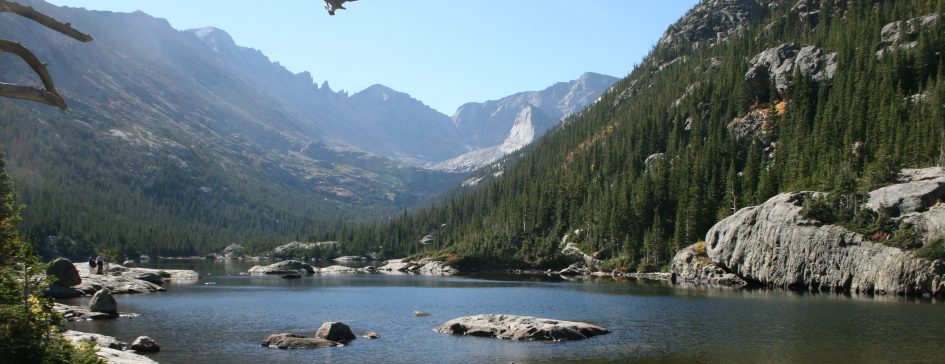

I was cruising through Glacier Bay National Park when I wrote this blog.  It was just one of those inspirational momentsl  If you have never seen it, you should, especially as a water professional.  The entire park is a testament to the power of water and the result of changes in climate cycles that affect the hydrologic cycle.  I will post video of the journey separately, but suffice it to say that the inherent beauty of the place is difficult to describe.  Needless to say with a large concentration of glaciers in the area (most retreating), there is copious amounts of water (for now).  The Pacific Glacier has retreated 65 miles, yes MILES, in 300 years in part because of changes in oceanic moisture and evaporation.  The native people, Tlingets, moved and survived based on glacier flows end ebbs.  But that’s not my point.  Seeing this much water leads to an entirely different perspective, one that is helped by Brian Fagan’s book, Elixir which outlines the history of civilizations as they were affected by harnessing of water, or the lack of ability to do so.  Same thing applies to the Tlingets here.

Historically the key was to rely on surface waters where they were consistent, to manage water locally and carefully for the benefit of all, and when surface waters were not consistent enough to be reliable year after year, quanats, shallow wells and other mechanisms were used to extract water from glacial till or adjacent to rivers (riverbank filtration or infiltration galleries in today’s vernacular).  Or people moved or died out. The ancient people did not have the ability to dig too deep, but were creative in means to manage available supplies.

Contrast this to today where over the last 50 years we have been able to extract water from ever expanding, generally deeper sources, but to what end?  Certainly we have “managed “ surface waters, by building dams, diversions and offstream reservoirs.  These supply half the potable water use in the United States and Canada as well as a lot of irrigation.  But groundwater has been an increasing component.  Fagan makes the point that deep groundwater sources are rarely sustainable for any period of time, and that many in the past have recognized this limitation.  But have we?

Maybe not so much.  A couple years ago I was at a conference out west.  The session I was speaking at involved sustainable groundwater, a major issue for AWWA, ASCE, NGWA and the utilities and agricultural folks around the world.  One of the speakers was a geologist with the State of Utah.  Her paper concerned the issues with decreasing groundwater levels in the St. George and Cedar City, areas in southwestern Utah, where population growth is a major issue.  Her point was that despite the State efforts, they had significant drawdowns across the area.  Keep in mind that the USGS (Reilly, et al, 2009) had identified southwestern Utah as one of many areas across the US where long term decreasing groundwater levels.  My paper was a similar issue for Florida, so I stopped partway into my paper and asked her a question:  has any hydrogeologist or engineer trying to permit water in the area ever said the water supply was not sustainable?”  The room got really quiet.  She looked at me and said, “well, no.”  In fact the audience chimed in that they had never heard this from their consultants either.  The discussion was informative and interesting.  Not sure I really finished my presentation because of the discussion.

To be fair, consultants are paid to solve problems, and for water supplies, this means finding groundwater and surface water limited areas like Utah when their clients request it.  So you don’t expect to pay your consultant to find “no water.”  But where does that lead us?  The concept of sustainable yield from confined aquifer systems is based on step drawdown tests.  Ignoring the details, what this constitutes is a series of short term tests of the amount of drawdown that occurs at different pumping levels. AWWA’s manual on Groundwater can give you the details, but the results are short-term and modeling long-term results requires a series of assumptions based on the step drawdown test.  This is that had been submitted in support of permits in Utah (and many other places).  As discussed in the conference session, clearly there is something wrong with this method of modeling and calculation because, well, the results did not match the reality.  The drawdowns increased despite modeling and step drawdown tests showing the demands were sustainable.  Clearly wrong.  Competing interests, the need to cast a wider net, and many other issues are often not considered.  The results play out throughout the world.  Confined aquifers are often not sustainable, a potential problem for much of agriculture in the farm belt of the US.  Are we headed the same direction as ancient people?

The good news is that these same hydrogeologists and engineers have the ability to help solve the sustainability problem.  We need a new definition for “safe yield.”  We need a better means to estimate leakance in aquifers.  A project I did with injection wells indicated that leakance was overestimated by a factor of 1000 to 10,000, which would drastically alter the results of any model.  More work needs to be undertaken here.  The overdraw of confined groundwater is a potential long-term catastrophe waiting to happen.  And the consequences are significant.  The question is can we adapt?

But when we start to look at resource limitations, who stands up and says, this type of withdrawal is not the right answer.  We need another one.  Where is that leadership moment?


Storms highlight the need to reduce infiltration and inflow into the collection system so as not to overwhelm the piping system causing plant damage or sewage overflows into streets, so much of the focus has been on dealing with removal of infiltration and inflow through televising the sewer system and sealing or lining sections where leaks are noted.  However, many miles of videotape show virtually nothing, so significant money is spent to find “nothing.”  Part of this is because “infiltration” and “inflow” are not the same, and storm events do not highlight infiltration nearly as much inflow.

The manholes and clean-outs are required for access and removal of material that may build up in the piping system and for changes in direction of the pipe.  Manholes are traditionally pre-cast concrete or brick, with brick being the method of choice until the 1960s.  Brick manholes suffer from the same problems as vitrified clay sewer lines – the grout is not waterproof so the grout can leak significant amounts of groundwater.  The manhole cover may not seal perfectly, becoming another source of infiltration.  Pre-cast concrete manholes resolve part this problem, but concrete is not impervious either.  While elastomeric or bituminous seals are placed between successive manhole rings, the concrete is still exposed.  Many utilities will require the exterior of the manholes to have a coal-tar or epoxy covering the exterior which helps to keep water out.

Inflow results form a direct connection between the sewer system and the surface.  The removal or accidental breaking of a cleanout, unsealed manhole covers, laterals on private property, connected gutters or storm ponds, damaged chimneys from paving roads, or cracking of the pipe may be a significant source of inflow to the system.  All are potential sources of inflow which can be identified easily during storm events.  The peaking that correlates with the rainfall is inflow, not infiltration since infiltration is part of the base flow that creeps upward with time.  When operators see peaks, this is not indicative of infiltration which is groundwater.  Think inflow.   Inflow causes peaks in run time on lift station pumps, and create potential overflows at the plant.  The good news is that simple, low tech methods can be used to detect inflow, which should be the precursor to any infiltration investigation.

The following outlines a basic program for inflow detection and correction for any utility system.  The order is important, and pursuing all steps will resolve the majority of issues.  The first step is inspection of all sanitary sewer manholes for damage, leakage or other problems, which while seeming obvious, usually surprises.  The manhole inspection should include documentation of condition, GPS location, and some form of numbering if not currently available.  Most manholes have limited condition issues, but where the bench or walls are in poor conditions, that should be repaired with an impregnating resin.

Next is repair/sealing of chimneys in all manholes to reduce inflow from the street during flooding events.  The chimney includes the ring, cement extensions, lift rings, brick or cement used to raise the manhole ring.  Manhole covers are often disturbed during paving or as a result of traffic.  The crack between the ring and cover can leak a lot of water.  The intent of the chimney seal is to prevent inflow from the area beneath the rim of the manhole, but above the cone.

The next step is to put dishes into the manholes.  One might think that only manholes in low lying areas get water into them, but surprisingly every manhole dish that is properly installed has water in it.  Hence assume that all manholes leak water between the rim and cover.  Most collection system workers are familiar with dishes at the bottom of the manhole where they are of limited use.  This is because the dish deforms when filled with water or is knocked in when the cover is flipped.  The solution is a deeper dish with reinforcing ribs.  No ribs, don’t use it.  A gasket is required.

Once the manholes are sealed, smoke testing can identify obvious surface connections.  The normal notifications, inspection and documentation will identify broken or missing cleanout caps, surface breaks on public and private property, connection of gutters to the sewer system, and stormwater connections.  All should be documented via photograph, by associated address and public or private location. The public openings at cleanouts can be corrected immediately.  However, if the cleanout is broken, it may indicate mower or vehicle damage, that can occur again.  If missing, the resident may be using the cleanout to drain the yard.  In either case the collection system needs to be protected.  USSI (http://www.elastaseal.com/about_us.html), located in Venice, FL developed a solution, called the LDL plug to correct those commonly broken or commonly opened cleanouts to reduce inflow.

Notices should then be sent to property owners with documentation of the inflow connections to their property.  This is sometimes the most difficult part of the program due to political will, but it is necessary.  This finishes the inflow correction portion of the project, but one more step will help focus efforts for the second “i”.

The final step is a low flow investigation, which is intended to focus on the infiltration piece of the problem.  Such an event will take several days and must be planned to determine priority manhole to start with and sequencing.

Based on a projected plan and route:

  • Open the manholes
  • Inspecting them for flow
  • Determining if flow is significant.  If investigation of basin will end and new basin will be started.  If flow exists, open consecutive manholes upstream to determine where flow is derived from.  Generally a 2 inch wide bead of water is a limit of “significant” infiltration.

Documentation of all problems and corrections in a report to utility that identifies problem, location and recommended repair.  Identification of sewer system leaks, including those on private property (via location of smoke on private property).

The example in Dania Beach, FL was that the last step indicated that only 15% of the sewer system needed to be televised.  This saved the City almost $1.2 million.  Their total costs is under $1.4 million for all parts of the project, spread over several years and contracts.  Overall the hope is that the inflow and infiltration programs together will save $400,000/yr, a five year payback.  But the key is to insure you get the inflow as well as the infiltration… Otherwise storms will continue to overwhelm plants, creating public health concerns and ruining your reuse program.


I had an interesting email exchange with a guy in north Florida who was trying to educate the Legislature on why planners are always wrong with their projections and their studies should be ignored as a result.  His specific issue was water supply, but it could have been any number of issues.  His argument was that the projections for water use made in 1976 were incorrect and in fact total water demands in the State had been basically flat over that period.  He’d be unhappy to know that Florida mimics the rest of the country.

Ok, I admit that in addition to being an engineer, I have a minor in planning and a degree in public administration.  I attempted to communicate with him about the purpose of planning, not that it helped.  Planners outline projections of what things will likely be IF not changes are made.  The reason is to prompt policy or behavioral changes prior to reaching critical tipping points.  The argument in 1976 was that Florida would run out of cheap water if current trends continued.  In the intervening years, there have been major efforts toward water conservation, low flow bathroom fixture and major changes to irrigation practices.  All of which made the water picture far better than the 1976 projection.  See the planners were not wrong – the projections indicated the problem if nothing was done, and acted in part as a catalyst for change.  This is what planners dealing with water supply needs, sea level rise and a host of other planning issues are supposed to do.  If we understand what the potential problems are, maybe we can take action to avoid tipping points.  This is not to say all projections are perfect or even correct, but the idea is to avoid reaching a point of no return.  Isn’t that what smart people should do?  Apparently not to the guy on the other end of the email.  Happy Halloween.  Er, no this was just scary because it was real!!