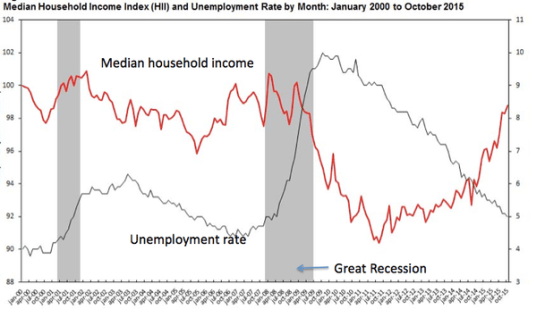
 One of the issues I always include in rate studies is a comparison of water rates with other basic services. Water always comes in at the bottom. But that works when everyone has access and uses those services. Several years ago a study indicated that cable tv was in 87-91 % of home. At the time I was one of the missing percentage, so I thought it was interesting. However, post the 2008 recession, and in certain communities, this may be a misplace comparison. A recent study by Emmanuel Saez and Gabriel Zucman notes that the top 0.1% have assets that are worth the same as the bottom 90% of the population! Yes, you read that correctly. Occupy Wall Street had it wrong. It’s not the 1% it is the 0.1%. This is what things were like in the 1920s, just before the Great Depression. The picture improved after the implementation of tax policies (the top tax rate until 1964 was 90% – yes you read that right – 90%). Then the tax rate was slowly reduced to deal with inflation. The picture continued to improve until supply side economics was introduced in the early 1980s when the disparity started to rise again (see their figure below), tripling since the late 1970s (you recall the idea was give wealthy people more money and they would invest it in jobs that would increase employment opportunities and good jobs for all, or something like that). Supply side economics did not/does not work (jobs went overseas), and easy credit borrowing and education costs have contributed to the loss of asset value for the middle class as they strove to meet job skills requirements for better jobs. In addition wages have stagnated or fallen while the 0.1% has seen their incomes rise. The problem has been exacerbated since 2008 as they report no recovery in the wealth of the middle class and the poor. So going back to my first observation – what gets cut from their budget, especially the poor and those of fixed pensions? Food? Medicine? Health care? My buddy Mario (86 year old), still works because he can’t pay his bills on social security. And he does not live extravagantly. So do they forego cable and cell phones? If so the comparison to these costs in rate studies does not comport any longer. It places at risk people more at risk. And since, rural communities have a lower income and education rate than urban areas, how much more at risk are they? This is sure to prove more interesting in the coming years. Hopefully with some tools we are developing, these smaller communities can be helped toward financial and asset sustainability. But it may require some tough decisions today.

 Over the holidays there were a couple articles that came out about groundwater issues in the US, mostly from the declining water level perspective. I also read a paper that suggested that rising sea level had a contribution from groundwater extraction, and of course USGS has maps of areas where the aquifer have collapsed as a result of overpumping. In 2009 USGS published a report that showed a large areas across the country with this issue. The problem is that of the 50,000 community water systems in the US, 500 serve over 50% of the population, and most of them are surface water plants. There are over 40,000 groundwater systems, but most are under 500 customers. Hence, groundwater is under represented at with the larger water associations because the large utilities are primarily surface water, while the small systems are groundwater. AWWA has difficulty reaching the small systems while RWA and NGWA reach out to them specifically. But the small utility seems more oriented to finding and producing water and operating/maintaining/drilling wells than the bigger impact of groundwater use. It is simply a matter of resources. I ran a system like that in North Carolina, and just getting things done is a huge issue. A couple of my medium size utility clients have the same problem.
 publicutilitymanagement