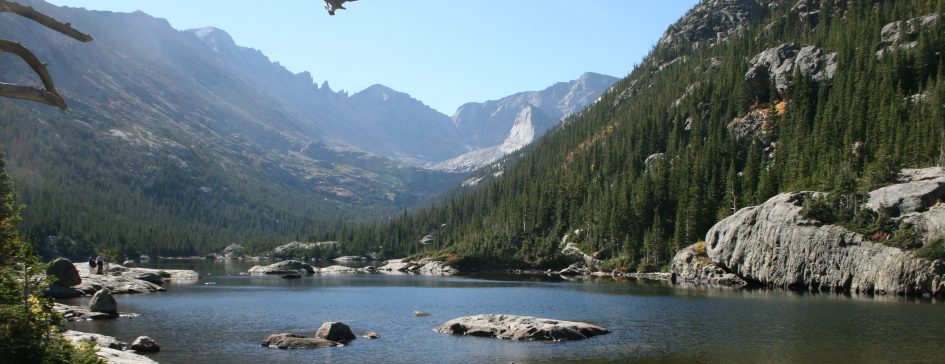
I was cruising through Glacier Bay National Park when I wrote this. Just an inspirational moment. If you have never seen it, you should, especially as a water professional. The entire park is a testament to the power of water and the result of changes in climate cycles that affect the hydrologic cycle. I will post video of the journey separately, but suffice it to say that the inherent beauty of the place is difficult to describe. Needless to say with a large concentration of glaciers in the area (most retreating), there is copious amounts of water (for now). The Pacific Glacier has retreated 65 miles, yes MILES, in 300 years in part because of changes in oceanic moisture and evaporation. The native people, Tlingets, moved and survived based on glacier flows end ebbs. But that’s not my point. Seeing this much water leads to an entirely different perspective, one that is helped by Brian Fagan’s book, Elixir which outlines the history of civilizations as they were affected by harnessing of water, or the lack of ability to do so. Same thing applies to the Tlingets here.
Historically the key was to rely on surface waters where they were consistent, to manage water locally and carefully for the benefit of all, and when surface waters were not consistent enough to be reliable year after year, quanats, shallow wells and other mechanisms were used to extract water from glacial till or adjacent to rivers (riverbank filtration or infiltration galleries in today’s vernacular). Or people moved or died out. The ancient people did not have the ability to dig too deep, but were creative in means to manage available supplies.
Contrast this to today where over the last 50 years we have been able to extract water from ever expanding, generally deeper sources, but to what end? Certainly we have “managed “ surface waters, by building dams, diversions and offstream reservoirs. These supply half the potable water use in the United States and Canada as well as a lot of irrigation. But groundwater has been an increasing component. Fagan makes the point that deep groundwater sources are rarely sustainable for any period of time, and that many in the past have recognized this limitation. But have we?
Maybe not so much. A couple years ago I was at a conference out west. The session I was speaking at involved sustainable groundwater, a major issue for AWWA, ASCE, NGWA and the utilities and agricultural folks around the world. One of the speakers was a geologist with the State of Utah. Her paper concerned the issues with decreasing groundwater levels in the St. George and Cedar City, areas in southwestern Utah, where population growth is a major issue. Her point was that despite the State efforts, they had significant drawdowns across the area. Keep in mind that the USGS (Reilly, et al, 2009) had identified southwestern Utah as one of many areas across the US where long term decreasing groundwater levels. My paper was a similar issue for Florida, so I stopped partway into my paper and asked her a question: has any hydrogeologist or engineer trying to permit water in the area ever said the water supply was not sustainable?” The room got really quiet. She looked at me and said, “well, no.” In fact the audience chimed in that they had never heard this from their consultants either. The discussion was informative and interesting. Not sure I really finished my presentation because of the discussion.
To be fair, consultants are paid to solve problems, and for water supplies, this means finding groundwater and surface water limited areas like Utah when their clients request it. So you don’t expect to pay your consultant to find “no water.” But where does that lead us? The concept of sustainable yield from confined aquifer systems is based on step drawdown tests. Ignoring the details, what this constitutes is a series of short term tests of the amount of drawdown that occurs at different pumping levels. AWWA’s manual on Groundwater can give you the details, but the results are short-term and modeling long-term results requires a series of assumptions based on the step drawdown test. This is that had been submitted in support of permits in Utah (and many other places). As discussed in the conference session, clearly there is something wrong with this method of modeling and calculation because, well, the results did not match the reality. The drawdowns increased despite modeling and step drawdown tests showing the demands were sustainable. Clearly wrong. Competing interests, the need to cast a wider net, and many other issues are often not considered. The results play out throughout the world. Confined aquifers are often not sustainable, a potential problem for much of agriculture in the farm belt of the US. Are we headed the same direction as ancient people?
The good news is that these same hydrogeologists and engineers have the ability to help solve the sustainability problem. We need a new definition for “safe yield.” We need a better means to estimate leakance in aquifers. A project I did with injection wells indicated that leakance was overestimated by a factor of 1000 to 10,000, which would drastically alter the results of any model. More work needs to be undertaken here. The overdraw of confined groundwater is a potential long-term catastrophe waiting to happen. And the consequences are significant. The question is can we adapt?
 publicutilitymanagement