Archive

Tag Archives: infrastructure


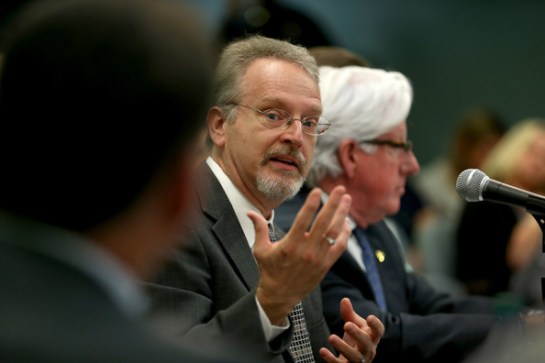
Fred+Bloetscher+Senate+Committee+Holds+Hearing+cQCSwINqgm3l

Water and wastewater utilities spend a lot of time dealing with current issues =- putting out “fires.”  But there are larger trends that will affect the industry.  Here are a couple recent topics that we should consider in our industry:

Will robots be doing all our repetitive jobs?  If so what does that mean for all the people doing those jobs now.  Most do not require a lot of skills, and many of those in the jobs that will be lost, do not have the skills for other jobs?  Does the $15 per hour minimum wage accelerate this transition?  How does this affect the water industry?  Meter readers might be replaced with AMR systems.  Customer service is already migrating to direct banking.  There is a change coming.

What does the driverless car mean for us?  I am thinking about an old Arnold Schwartzenegger movie.  For utilities the issue may be how we interact with unmanned vehicles, especially when what we do can be disruptive to traffic.  What happens if those cars get into an accident?  And Warren Buffett is thinking about the impact of this on the insurance industry.  He owns a lot of GEICO stock.  It is doubtful many utility vehicles will be unmanned, in the near-term, but do our manned vehicles and the potential disruption leave us open to greater risk of loss?

Speaking of Warren Buffett says the economy is far better than certain candidates suggest.  I tend to trust Mr. Buffett.  He’s been doing this a long time and has been fabulously successful.  But he notes structural changes to the economy like those noted above, are ongoing.  That will create conflict for certain professions that migrate to automation, much as manufacturing did in the 1970s.  He raises concern about what happens to those workers and suggests that we have not planned enough for those workers who get displaced as the economy undergoes continuing transitions.  In the late 1970s we had CETA and other jobs training programs as we moved from manufacturing to other jobs.  He does not see that in place now.  The at-risk – the poor, minorities, the less educated, rural citizens…. in other words, the usual groups will be hit harder than the rest of the population.  I don’t hear that discussion on the campaign trail but utilities may want to follow these trends is the hope that we can acquire some of the skillsets that we need.  Or provide that training.

Florida’s flood protection plan received a C- from a study called States at Risk.  It said Florida lacks a long term plan for rising seas, despite being vulnerable.  On an unrelated note, the state is expecting insurance premiums to increase 25% or more for flood insurance for homeowners.  And local officials are working busily on FEMA maps to exclude as many properties as possible from flood insurance requirements.  Maybe those things are all related, just at opposite purposes, but who is going to get the calls when flooding occurs?  Storm water utilities, and sewer systems where the manholes are opened to “facilitate drainage.”  The question is what the ratings are for other states as Florida was not the least prepared nor is it the only state with exposure.

A final current trend to think about is this:  Current sea level rise projections have increase the high end, but remained steady for the 50 percentile case.  By 2200 we may see seas at 10 ft higher. That would be a major problem for south Florida.  But the world population will be over 15 billion, which exceeds the carrying capacity of agriculture (at present projections and techniques).  It also places over half the world in water limited areas.  So sea level rise is going to be huge in south Florida, but will concern be localized because of more pressing issues?   Is the number of people going to be our biggest issue in 2200?  Note both will be critical for a large portion of those 15 billion people, but the solution to either is…..?


photo 2A week or so ago, on a Sunday afternoon, I flew across Middle America to Colorado for a meeting and was again struck by the crop circles that dominate the landscape west of the Mississippi River.  They are everywhere and are a clear sign of unsustainable groundwater use.  I recently participated in a fly in event for National Groundwater Association in Washington DC, where several speakers, including myself, talked about dwindling groundwater levels and the impact of agriculture, power and economies.  The impact is significant. Dr. Leonard Konikow, a recently retired USGS scientist, noted that he thinks a portion of sea level rise is caused by groundwater running off agriculture and from utilities and making its way to the ocean. He indicated that 5% of SLR each year was caused by groundwater runoff, and has upped his estimates in the past 10 years to 13%.  This is because it is far easier for water to runoff the land than seep into rocks, especially deep formations that may take many years to reach the aquifer.  And since ET can reach 4 ft below the surface, many of the western, dry, hot areas lose most of this water during the summer months.  Hence the impact to agriculture, and the accompanying local communities and their economies will be significant.
It should be noted that the US is a major exported of food to much of the world, including China, so the impact on our long-term economic trade may be significant.  Fortunately the power industry has historically preferred surface waters, but must as power demands increase, they have begun to explore groundwater in rural areas without access to surface waters.  Keep in mind that air-cooled power plants are 25% or more less efficient than water cooled systems and many of these communities lack sufficient reusable water supplied to substitute for cooling.  Hence the projection is a long term negative impact on all of us.

So the question is why isn’t the federal government talking more about this problem?  Is it fear of riling up local political officials that see growth at all costs as necessary?  It is private rights arguments that may spawn lawsuits?  Is it a lack of interest in long-term?  Or the idea that “we have always found a way”. Or is it just buried heads in the sand, leaving the next generation to deal with the problem?  A big issue, yet we do not talk enough about it.  Maybe this is not a surprise since we have not gotten very far with the discussion of limited oil, precious metals, phosphorous or other materials, and unlike them, water appears to be renewable globally.  But water is location specific.  If you have it, great.  If you lose it, a problem.  There are several recent journal articles that make the argument that much of the strife in the Middle East and Africa is water depletion related: water depletion kills local economies.  So we need to ask –what happens if we ignore the looming crisis?  Do we create more “Bundy-type” actions in the rural, dry west because they already lack water?  I suggest it is a cause for concern.


For those wondering what the big report was going yo say, interesting reading, and a lot like Walkerton – plenty of blame to go around.

Click to access FWATF_FINAL_REPORT_21March2016_517805_7.pdf

And some related articles:

http://www.fox2detroit.com/news/flint-water-crisis/112311306-story


How to Predict the next Flint?

IMG_4803In the last blog we talked about Flint’s water quality problem being brought on by a political/financial decision, not a public health decision.  Well, the news get worse.  Flint’s deteriorated water system is a money thing as well – the community has a lot of poverty and high water bills, so they can’t pay for improvements.  They are not alone.  Utilities all over the country have increasing incidents of breaks, and age related problems. So the real question then is who are the at risk utilities?  Who is the next Flint?  It would be an interesting exercise to see if a means could be developed to identify those utilities at risk for future crises, so we can monitor them in more detail as a means to avoid such crises.

So what would be the measures that might identify the future “Flint?”  These could be things like age of the system, materials used, economic activity trends, income, poverty rate, unemployment rate, utility size, reserves, utility rates, history of rate increases, etc.?  Could these be developed into a means to evaluate risk?  If so, who would use it and how would we address the high risk cases?  I suggest that lenders have means to evaluate this using many of these same measures, but from a risk of events, this method has not been applied.  So I think this would be a useful research project.  So if anyone has some ideas, time or ideas for funding, let me know.  Let’s get rolling!


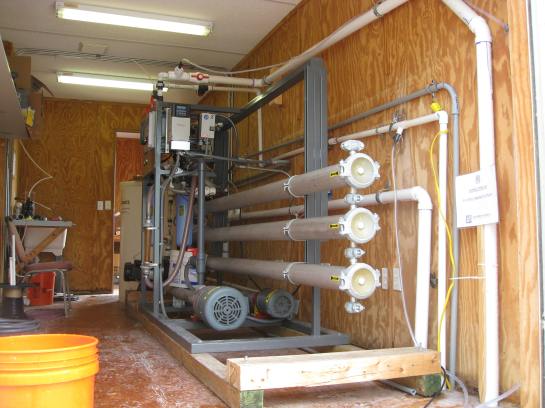
In the last blog I showed what reclaimed wastewater could do for an ecosystem.  Very cool.  But what about for drinking water.  I actually was involved in an indirect potable reuse project several years ago.  The concept was to take wastewater, filter it with sand filters, filter it with microfiltration, reverse osmosis and then hydrogen peroxide and ultraviolet light.  This is what they do in Orange County California when they recharge groundwater, and have been for over 30 years.  Epidemiological studies in the 1990s indicated no increased incidence of disease when that water was withdrawn from the aquifer, and then treated in a drinking water plant before distribution.  So our project was similar – recharge to the Biscayne aquifer in south Florida.   It worked for us.  Total phosphorous was below 10 ppb, TDS was less than 3 mg/L (<1 after RO), and we were able to show 3 log removal of endocrine disruption compounds an d pharmaceuticals.  It worked well.  This is a concept in practice in California.  And will be at some point in south Florida since only the Biscayne aquifer provides sustainable water supplies.  Here is what our system looked like.

IMG_3100

sand filters

IMG_3106

microfiltration

IMG_3085

Reverse osmosis

IMG_3152

ultraviolet/peroxide

This is also the same basic concept Big Springs Texas uses for their direct potable program, demonstrating that the technology is present to treat the water.  A means for continuous monitoring is lacking, but Orange County demonstrates that for indirect potable reuse projects, a well operated plant will not risk the public health.  This is how we do it safely.


Most states were doing pretty well before the 2008 recession hit, but that ended in 2009. Most states had to make extremely difficult cuts or raise taxes, which was politically unacceptable. Of course invested pension systems received a lot of attention as their value dropped and long term sufficiency deteriorated, which was fodder for many changes in pensions, albeit not how they were invested. The good news is a lot of them came back in the ensuing 5 years, but 2015 may be different. A number of states have reported low earnings in 2015 and whether this may be the start of another recession. The U.S. economy has averaged a recession every six years since WWII and it has been almost seven years since the last contraction. With China devaluing their currency, this may upset the economic engine. At present there are analysts on Wall Street who suggest that some stocks may be overvalued, just like in 1999. If so, that does not bode well states like Illinois, Kansas, New Jersey, Louisiana, Alaska and Pennsylvania that are dealing with significant imbalances between their expenses and incomes. Alaska has most of its revenue tied to oil, so when oil prices go down (good for most of us), it is a huge problem for Alaska that gives $2200 to every citizen in the state. An economic downturn portends poorly for the no tax, pro-business experiment in Kansas that has been unsuccessful in attracting the large influx of new businesses, or even expansion of current ones. California and next door Missouri, often chided by Kansas lawmakers as how not to do business, outperform Kansas.

Ultimately the issue that lawmakers must face at the state and as a result the local level is that tax rates may not be high enough to generate the funds needed to operate government and protect the states against economic down turns. There is a “sweet spot” where funds are enough, to deal with short and long term needs, but starving government come back to haunt these same policy makers when the economy dips.   It would be a difficult day for a state to declare bankruptcy because lawmakers refuse to raise taxes and fees.


Your grandma always told you to save money for a rainy day.  She wasn’t really talking about rainy days, but days when you had less or no income.  The press talks about the huge percentage of Americans that have little or no savings, and how compared to other countries, we are at a disadvantage during economic times.  A huge problem is that the same argument can be translated to governments, which must provide services, and often more services during economic downturns.  But if they have no savings, how are they to accomplish this?  They do not want to raise taxes and fees in down situations, so won’t the loss of services just make things worse?

A recent PEW reports suggests that states “had about half the reserves necessary to address budget gaps during the first year of the Great Recession.  The 50 states had about $60 billion set aside in the summer of 2008, but in fiscal 2009, budget gaps across the country totaled $117 billion, about twice what states had in reserve. The budget gaps continued to grow in 2010 and many states struggled with shortfalls for years afterward.  Bad news, but the news really does not improve.  They report that 37 states have legal caps that prevent them from saving enough to weather recessions or even enough to substantially offset revenue losses, and most of those are based on some percentage of the prior year’s revenues.  Why?  Short-term views?  Most governments figure on keeping enough cash on hand to pay bills during tax seasons. That accounts for 60-90 days of funds.  Far too little for dealing with economic impacts.  Far too few state governments recognize the importance of saving, figuring that cutting taxes during time of plenty and giving back to taxpayers is a better use of funds.  Then it is someone else’s issue when the next economic hiccup occurs – and it will.  Unless you raise your cap now as Minnesota and Virginia have recently done.

But the issue is not just a state issue.  It is a local and a utility issue as well.  Local governments are closer to the ground, have less leeway in their budgets and often have far too little funding as a result of resistance to raising property taxes, user fees and over-dependence on state shared sales tax, which often drops precipitously during a recession.  Same goes for sin and gas tax dependence.  When people slow smoking, or as oil prices drop, so do revenues.  Ask Alaska, Louisiana, Kansas, Texas, North Dakota and others that are oil rich states about their budget this past year.  The legislatures were begging Grover Norquist to let them out of their no tax increase pledges.  He said no of course, because he doesn’t want government to function properly.  So those legislators were stuck in the either “do the right thing” or “get whacked by Grover in the next election” conundrum.  You know what they did because they want to get re-elected  That doesn’t help the citizens of those states.  Standard & Poor’s revised its outlook on Alaska’s general obligation and appropriation-backed debt from stable to negative. That will cost them in the future. St. Louis, Moody’s downgraded the city’s credit rating one step to A1, citing “the city’s weak socioeconomic profile; reliance on earnings taxes which are due for voter reauthorization in 2016.”  Diversity in industry and taxes is beneficial.  Too often this gets lost in the desire to do more with less, but doing more means you need more funding!  And you need to collect those savings as grandma counselled!


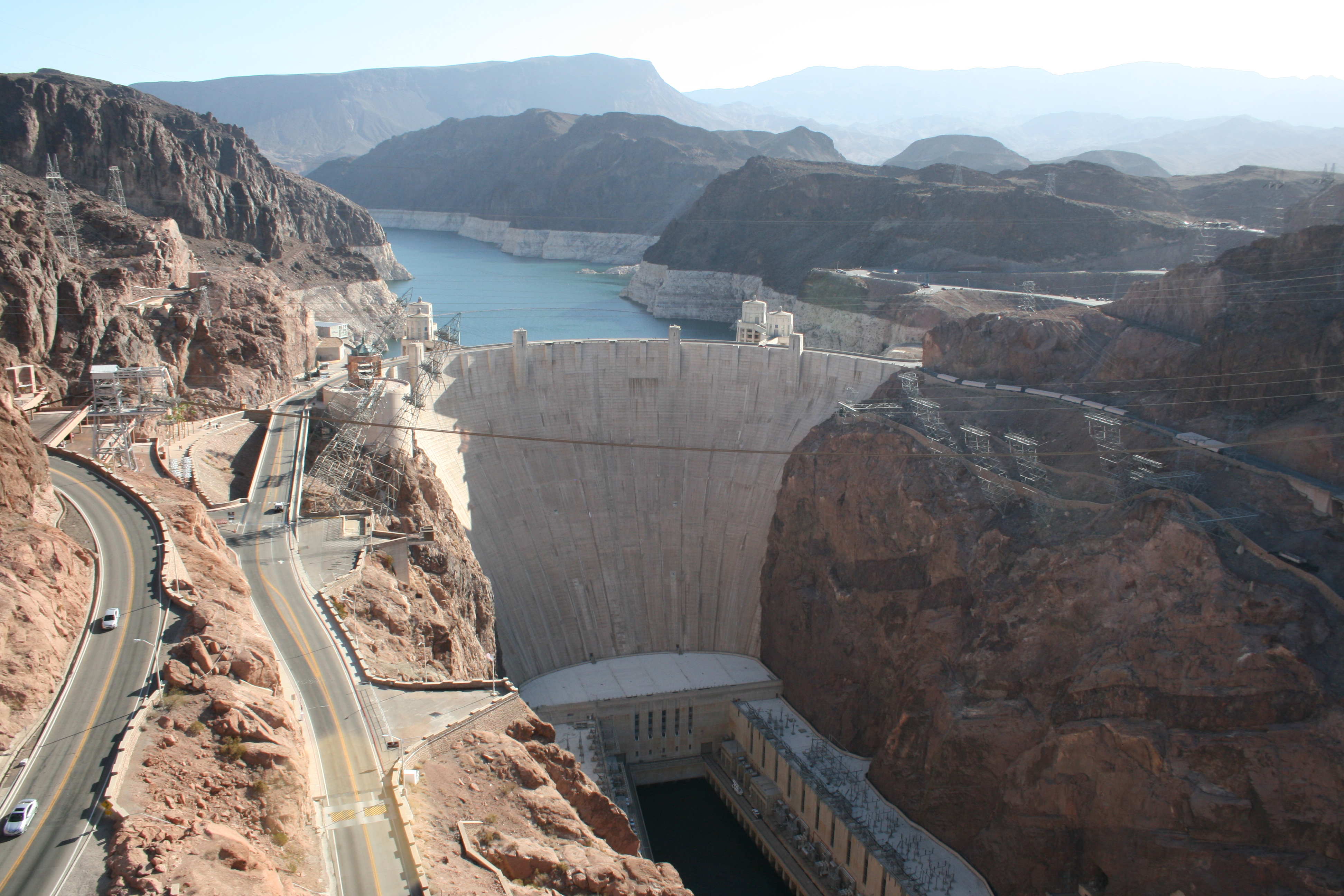
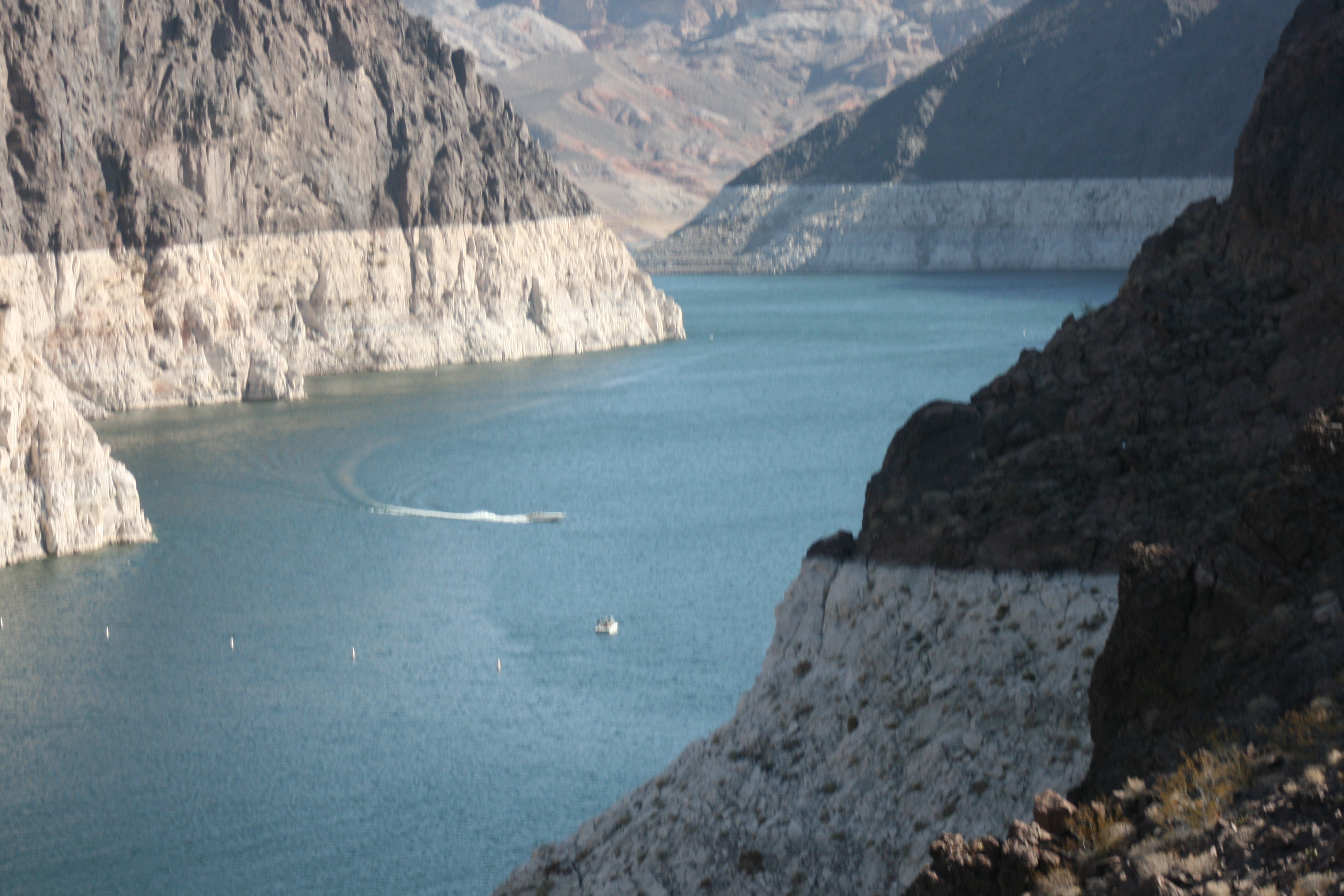
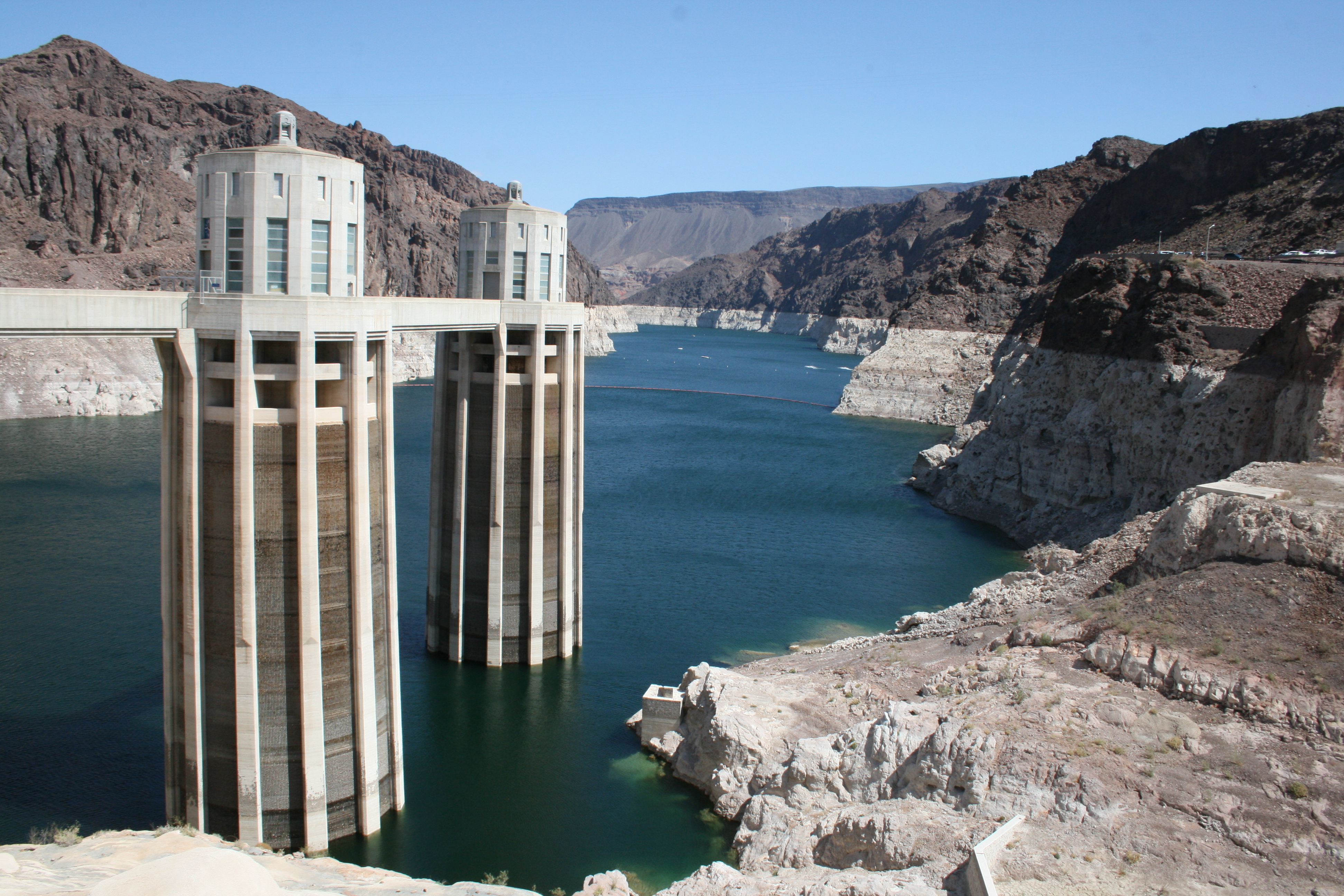
Over Labor Day I took my wife to Las Vegas for her birthday to see the Cirque du Soliel show “O”, the Hoover dam and experience Vegas.  She’d never been before.  And it is a milestone birthday.  We had a nice trip.  The “O” show is all it is said to be.  Another spectacular event!  The hoover dam is an amazing 80 year old structure, designed to hold water for Arizona, California and Nevada, as well as make some power.  Of course all three have long outgrown the reservoir.  And the level drops each year to where it is 300 feet below its height less than 15 years back.  A colossal feat of engineering that led to huge development in the arid west.  The nearby Boulder City was created to build the dam.  Las Vegas would not exist without its water. Water in the desert!  The Anasazi’s would be amazed.

IMG_7487 IMG_7510 IMG_7540 IMG_7570 IMG_7588 IMG_7596 IMG_7572


We are all aware of the major drought issues in California this year – it has been building for a couple years.  The situation is difficult and of course the hope is rain, but California was a desert before the big water projects on the 1920s and 30s. Los Angeles gets 12 inches of rain, seasonally, so could never support 20 million people without those projects.  The central valley floor has fallen over 8 feet in places due to groundwater withdrawals. Those will never come back to levels of 100 years ago because the change in land surface has collapsed the aquifer. But the warm weather and groundwater has permitted us to develop the Central Valley to feed the nation and world with produce grown in the desert.  The development in the desert reminds me of a comment I saw in an interview with Floyd Dominy (I think), BOR Commissioner who said his vision was to open the west for more people and farming, and oversaw lots of projects to bring water to where there was none (Arizona, Utah). The problem is that the west never head much agriculture or population because it was hot, dry and unpredictable – hence periodic droughts should be no surprise – the reason they are a surprise is that we have developed the deserts far beyond their capacity through imported water and groundwater.  Neither may be reliable in the long run and disruptions are, well, disruptive.  Archaeologist Bryan Fagan traced the fall of Native American tribes in Arizona to water deficits 1000 years ago.

Yet policymakers have realized that civil engineers have the ability to change the course of nature, at least temporarily, as we have in the west, south, Florida. I often say that the 8th and 9th wonders of the world are getting water to LA over the mountains and draining the southern half the state of Florida. I have lived in S. Florida for 25+ years and am very familiar with our system. The difference though is that we have the surficial Biscayne aquifer and a rainy season that dumps 40 inches of rain on us and LA doesn’t (as a note of caution, for the moment we are 14 inches below normal in South Florida – expect the next drought discussion to ensue down here in the fall). The biggest problems with the Everglades re-plumbing are that 1) no one asked about unintended consequences – the assumption was all swamps are bad, neglecting impacts of the ecosystem, water storage, water purification in the swamp, control of feedwater to Florida Bay fisheries, ….. 2) one of those unintended consequences is that the recharge area for the Biscayne aquifer is the Everglades. So less water out there = less water supply along the coast for 6 million people 3) we lowered the aquifer 4-6 ft along the coastal ridge, meaning we let saltwater migrate inland and contaminate coastal wellfields 4) we still have not figured out how to store any of that clean water – billions o gallons go offshore every day because managing Lake Okeechobee and the upper Everglades was made much more difficult when the Everglades Agricultural Area was established on the south side of Lake Okeechobee, which means lots of nutrients in the upper Everglades, and a lack of place for the lake to overflow, which meant dikes, more canals, etc. to deal with lake levels.

The good news is that people only use 11% of the water in California and Florida, and that Orange County, CA and others have shown a path to some degree of sustainability (minus desal), but the real problem is water for crops and the belief that communities need to grow. When we do water intensive activities like agriculture or housing, in places where it should not be, it should be obvious that we are at risk. Ultimately the big issue it this – no policy makers are willing to say there is “no more water. You cannot grow anymore and we are not going to send all that water to Ag.”  Otherwise, the temporary part of changing nature will come back to haunt us.


So I am training a group of public officials about utilities. Many have limited experience; others much more so. The interesting question that came up is how these officials should communicate with their customers. Interesting question and one that often receives little thoughts. So I thought their thoughts might be enlightening, keeping in mind that I have abbreviated some of them, and this was a discussion. Here are the thoughts they provided, in no particular order:

“Not the newspaper, most residents do not receive the newspaper anymore”

“Who are our customers and how do they communicate? Until you can answer that, you will not reach them. Ask them.”

“If 37% percent of your customers are direct deposit – should we send them direct mailings?” Response: “Yes! They will not think it is a bill and they might read it.”

“Most people discard bill stuffers without reading them . That wastes a lot of time and money.”

“We have a Facebook page, but we don’t just talk utilities. We talk about things that might interst them like strawberry shortcake recipes and current community events.”

“We use twitter and Facebook”

“We have a website, but we found the website was useless if we did not keep it current constantly. It takes effort and someone with that responsibility to accomplish that.”

“We use Facebook to get people interested, then use it to direct them to our website.”

“Every utility should have a public relations person that deals with media, and can brand your utility to the public.”

“Understand your demographics and then figure out how they communicate – phone, twitter, Facebook, on line, etc. Maybe all of these, interconnected. You can find local people who will do this for your professionally. The results are worth the investment.”

“Radio is useless, just like the paper. Avoid the television because they really only want to report the bad stuff.”

“Blogs tied to websites and Facebook are helpful.”

“Many venues are needed – make the message the same.”

“Ask the young people in your community – they will know how the reach the residents.”

“Don’t focus just on utility issues, add content on topics they might be interested in.”

“Public relations is as important as providing good service.   It is part of your job.”

“worth every dollar spent.”

Interesting isn’t it. I wonder if the mainstream media will take note? And I wonder how many utilities do not have these things and will consider it as a part of the coming budget cycle?