Archive

Tag Archives: innovation


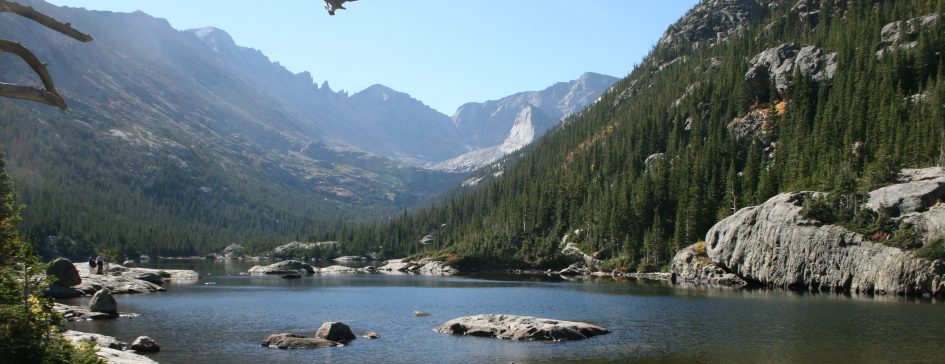
I went to Colorado in July, and it was bone dry like I noted in a prior blog.  The trend was expected to continue, but then something happened.  It rained.  A lot. It’s been raining for almost a month.  Last week it was wet out there, really wet, devastatingly wet on the east side of Rocky Mountain National Park (Boulder, Estes Park, Longmont, Lyons). The rain has not really let up so mountain streams are over-running their banks, flooding streets, washing away bridges, damaging property and businesses.  Helicopter evaluation of the damage indicates that miles of roadways are badly damaged. Route 34/36, the primary eastern entrance to Rocky Mountain National Park may have 17 miles (of 20) damage pavement and foundation needing immediate repair.  Estes Park is cut off from the world and there was mud in the streets.  Rocky Mountain National Park is closed to allow access from Grand Lake for emergency vehicles, residents and supplies.  And eastern emergency route from Nederland is also available.  Tourism has halted in the peak of Fall tourist season.

How fortunes have changed, and continue to change.  Three years ago it was the west side of Colorado with 300 inches of snow that flooded downstream communities.  Three months ago was drought. Are these changes part of a larger issue, or a continuation of the status quo?  Hard to know, but certainly both events were far above any prior events experienced in the area.  The local infrastructure was not constructed to meet these conditions, so either the climate is changing, our models are wrong, or both.  We see the same issue playing out regularly around the world when the 100 year or 500 year storm event occurs and wreaks havoc on a community which does not have infrastructure planned for events like this.

 Expect NE Colorado to be a federal disaster area.  Expect billions to be spent on reconstruction of roadways.   But the larger question is whether the new, replacement infrastructure will survive a similar, or larger climate event in the future.  Will our infrastructure planning be short sighted or will it be adjusted accordingly?  The potential for us to protect infrastructure, and property is completely related to our ability to adjust to infrastructure needs and to minimize exposure to weather events.  Keep in mind our economy and way of life is directly related to our infrastructure condition.  But people want to live near rivers and streams, but rarely consider the real risk and consequences. 

How do we address these risks?  FEMA evaluates the probability of flooding to set flood insurance, but FEMA does not prevent construction in flood zones.  Where construction can occur is a state or local issue.  Of course, few local entities want to limit development in any way, so we keep putting people at risk.  Local officials, like those in Florida, keep pushing FEMA officials to reduce flood risks, despite evidence of increasing rainfall intensity that would increase flooding.  Florida is not alone.  No doubt Colorado officials have the same views.  We need to impress upon local officials the risks and encourage them to reduce risks to citizens.  It’s our tax money and insurance premiums they are raising.  But they are rarely held accountable.  Nor are non-elected officials.  Somehow, this needs to change.  We need leaders to stand up and draw the  line in the sand.


School is back in session.  It is a great opportunity to see what kind of great things we can learn this year.  We can learn from the students as much as they learn from us.  Working with college students, in bridging that connection between my real world clients and my students keeps me engaged and allows me to act as a conduit of information between the two sectors.  That conduit potentially includes jobs for students and technology for clients.  It is remarkable how much the skills sets of the students have changes and increased in certain areas in five years, let alone 10.  I remind them that 5 years after they graduate, the skill set of the next group will be far ahead of theirs. Get your license and keep learning and staying up to date with technology.  It is far too easy to get behind and it is surprising how many graduates figure they are done with learning when the graduate.  Far from it.  The advances and changes in the industry move so quickly.  All my students are doing 3 dimensional projects versus cad drawings 5 years ago.  And those cad drawings were so far above the cad drawings of ten years ago.  All three groups are ahead of a lot of engineering firms with respect to technology.  And there accompanying utilities as well.  My students make great interns for GIS – it comes naturally to them.  My older friends?  Well, let’s say there is a bit of a learning curve.  As we try to be more efficient, training and skill development become continuous exercises.  It is obvious when you compare skill sets of recent, current or older graduates.  Of course skill sets may not translate to knowledge, for there is no substitute for field experience, especially in the water and engineering fields.  The reality is often much different than you expect, for a variety of reasons.  How you adapt means experience.  It is why the older crowd and the younger crowd need each other and need those communication avenues.  I find that my teaching keeps you engaged in the changes in technology, viewpoints and the new generation while maintaining the relationships with the real world


A recent Manhatten Institute for Policy Research report titled “America’s Growth Corridor: The Key to National Revisal” noted that the future economy in the US will tend to growth in certain corridors, which echos a prior report that identified “super-regions” where population, manufacturing, education and economic growth were likely to be concentrated. Both reports suggest that the super-regions will prosper, with the rest of the country lagging behind. The seven high growth areas in the Mnahatten Institute report are the Pacific Coast, the Northeast, the Front Range, Great Lakes, the southeast/piedmont, Florida/Gulf Coast, and Texas/southern plains. This new report focuses more on the politics of the region, noting that each region is politically fairly consistent internally, indicating there is more than one way to do business. The current business climate, driven primarily by energy favors the Plains, with the southeast starting to import jobs from Japan and Korean as a result of low wage rates. The report goes on to draw a series of political conclusions about business climates and the politics of why growth is occurring in certain areas. But let’s look at a different view of the report. Each of these regions has had “ it’s day in the sun” so to speak, and some a couple of days, like California. Business cycles are cyclical so shifts in growth corridors is not unexpected. However there are some potential limiting issues that are not addressed in the report that are of significant interest or concern.

First, where is the water? Texas and the Plains have significant water limitations, as does much of the southeast. Trying to build an economy when you lack a major resource becomes difficult. That is why the Northeast, Great Lakes and later the Pacific grew earlier than the south, mountain and Gulf states. The Northeast and Great Lakes had water for industrial use and transport of goods, a real key historically for industry. Those regions also had (and still have) better embedded transportation facilities (rail, roads, airports).

The next question is where is the power coming from? The answer that will be given is that the Plains states and Texas have created 40 % of the jobs in the energy sector in the past 4 years so that is where the energy comes from, but having energy and being able to convert it efficiently to power that is useful to people or industry is a different issue. You need water to cool natural gas plants, unless you want to sacrifice a lot of efficiency. Back to water again. Moving the gas to other parts of the country to convert coal or oil plants to natural gas would work, but getting the electricity back does not come without 6% losses and a real need to make major improvements to the electrical grid. Not a small job.

So while the Manhatten Institute reprort suggest that all seven corridors will grow, but that the southern corridors are growing faster, the sustainability of this growth is at question. I recall a similar prediction when I graduated from college in the early 1980s, when the jobs for engineers were limited to the energy fields in Texas and Louisiana and the prediction was that al the industrial growth would be in the south. And then Silicon Valley happened, and then the housing boom in California, Nevada and Florida happened, and a few things in between. Oh and that energy economy collapsed in the late 1980s …. You get the picture. This is not to say that some marketing the power, water and transportation benefits of the historical industrial areas of the north are not needed – they are, but the fact is that there is significant available water, power, transportation and people capacity that is unused. If I am an industry, I may want to look at the power/water issue a little more closely.


In the past week I have had the opportunity to experience the extremes with water – heavy rains/tropical weather in SE Florida, and dry weather in Denver at America Water Works Association’s Annual Conferences and Exposition. Two months ago with was snowing in Denver and there had been limited rain in SE Florida. Six months ago we were both dry and there was significant concern about drought in both places. How quickly fortunes change and the associated attitudes as well. It is part of a perception problem – looking at the near term – instant gratification, as opposed the long-term consequences. In truth neither set of conditions is historically different or should have created major panic or much shift in attitudes, but it is the potential to predict conditions that require the water manager’s scrutiny. We have all become risk managers.

Managing risk is not in the job description of most water and sewer personnel (risk managers aside, and they are focused on liability risks from incidents caused by or incurred by the utility like accidents, not water supply risks). We spend a lot of effort on the engineering, operation and business side, but less on planning or risk/vulnerability assessments. EPA has required vulnerability assessments in the past, but having seen some of those exercises, most are fairly superficial and many put on a shelf and forgotten. I have had clients ask me if I still had copies because they did not. Clearly we need a renewed commitment to vulnerability assessment.

Vulnerability starts with water supplies. Groundwater is particularly tricky. A new USGS study reports significant decreases in water levels in many aquifers across the US, especially confined aquifers in the west. That situation is not improving, and the situation will not correct itself. Loss of your water supply is a huge vulnerability for a community. Finding a new supply is not nearly as simple as it sounds or as many are led to believe. Confined aquifers do not recharge quickly and therefore have finite amounts of water in them. Remove too much water and all too often land subsidence occurs, which means the aquifer collapses and will never hold the same amount of water. USGS has mapped this and it matches up well with the drawn down aquifers. More data needs to be collected, but Congress is looking to cut USGS funds for such purposes, just when conditions suggest the data is needed most.

Many watershed basins and many aquifers are over allocated and overdrawn, and not just in the west. New England and the Carolinas have examples. Overallocation means competition for water will increase with time and it will be utilities that everyone will look at to solve the problem. Afterall the utilities have money as opposed to agriculture and other users, right? To protect themselves, water utility managers will need to look beyond their “slice of the pie” to start discussions on the holistic benefits to water users throughout the watershed, which will extend to understanding economic and social impacts of water use decisions. It is not just about us, and paradigm shift that is coming and one that we as an industry need to be the leading edge for. Our use impacts others and vice versa. Every basin wants to grow and prosper, but decisions today may reduce our future potential. Klamath River is a great example of misallocated water priorities. The biggest potential economy in the basin is Salmon ($5B/yr), followed by tourism ($750 M and growing), which relies on fishing and hiking. But agriculture ($0.2 B/yr) get the water first. Then power, which warms the water (salmon like cold water). Then a few people (a few 100,000 at the most in the basin). The result, the salmon industry gets reduced to $50 M/yr. Now how could we create more jobs, which would result in more income and a bigger economy? The easy answer is encourage the salmon industry, but that doesn’t sit well with the other, smaller users that will become more vulnerable to losses.

I suggest that to harden our water future in any given basin, we need to start looking a little more holistically at the future. This type of analysis is clearly not in the job description of the utility or its managers, utility managers may have the best access to technical expertise and information. As a result to protect their interests and manage risk, we may need to shift that paradigm and become holistic water managers.


The concept of horizontal wells arises from riverbank filtration concepts.  Riverbank filtration has been practiced for nearly 200 year in Europe, where the concept was to remove debris form polluted waters by drawing through the banks of rivers.  Much of the concepts for groundwater flow are related to the filtration ability of water to move through a porous media.  The concept was to dig trenches along the river and draw water from the trenches as opposed to the polluted rivers.  The concept worked relatively well.  The result is an abundant, dependable supply of high-quality water with a constant temperature, low turbidity, and low levels of undesirable constituents such as viruses and bacteria. Riverbank filtration also provides an additional barrier to reduce precursors that might form disinfection byproducts during treatment.

Now let’s look at this from another perspective, and we’ll pick on southeast Florida as is provides a great case study.  Sea level rise will inundate coastal property, both via coastal flooding and from a rise in groundwater. Since most stormwater drainage depends on gravity flow, drainage capacity will suffer as sea level rises reducing the head differential between interior surface waters and tide. Saltwater intrusion will be exacerbated. Furthermore, reduced soil storage capacity, groundwater flow and stormwater drainage capacity will contribute to increased flooding during heavy rain events in low-lying areas.  In low lying areas, current practices like exfiltration trenches will become impractical, as will dry retention will become wet retention.

Stormwater utilities will be faced with dramatic, currently unanticipated increases in capital expenditures and operating costs, and time will be needed for planning, design, securing permits and compliance. Additional local pumping stations on secondary canals will be needed to supplant the storm drainage system in order to prevent unacceptable ponding. Design capacities of these stations will depend on local rain patterns, drainage basin size and secondary canal system design.  Many will operate continuously, which means ongoing operations will increase substantially. Hundreds of pumping stations may be needed in some communities.

Permits will be a major challenge due to contaminants in the runoff as regulated by MS 4 Stormwater permits, and the inability to treat this water under the current structure. The cost and energy required for stormwater treatment would be a major concern going forward. But what if we sent this continuous flow to water plants as raw water?  All of a sudden we have a solution to two problems – stormwater and raw water supplies.  How often do you see a 2 for 1 solution?


In the last blog we discussed the three issues were associated with risk tolerance in the public sector which stifles innovation, application of business principles to public sector efforts, and the lack of vision and understanding of consequences.  In this blog we will explore the second issue – application of business issue into the public sector.  The public and private sectors are different.  We need to recognize this.  For the most part, the public sector does those things that the private sector deems to be averse toward profits.  Clearly everyone needs water, but if you can’t get people to pay for it, you can’t make a business out of it.  Enter government, which has the ability to lein and condemn houses for failure to be connected.  A bit more incentive.

Or take fire service.  Fire service in New York was once a private affair.  You paid and the fire company would respond.  If your house caught fire and you had not paid, then what.  No one shows.  This was illustrated nicely in the movie “Gangs of New York” and was the catalyst for creating the NYC fire department.  And many others.  It simply is not acceptable to have some people but not all, because of the risk to everyone.  Vaccinations are the same way.  Much easier to implement by government.  And historically this is what has happened.

But we often hear the commentary about how we should be “running government like a business.” However I suggest this is an oversimplified argument that ignores true differences in the objectives of the public and private sector.   The two sectors are different and let’s look at an example.  If you were in charge of Ford Motor Company and let’s say you had only two vehicles, the F150 pickup (largest selling vehicle in the US) which has a high profit margin, or a passenger vehicle which does not have a high profit margin and does not sell nearly as well.  If you determine that your revenues are likely to decrease as a result of the economy, where do you make cuts?  There is an easy metric – cutting costs and reducing production of the passenger vehicle might actually maintain or improve your profit margin.  So that manager looks like a brilliant leader.

He (generic) now gets hired to run a City because of his success at Ford.  The City of course has a revenue shortfall, so what does he do? Much more difficult.  He has police, fire, parks and recreation, planning, etc. so where do you cut.  None of them are profit centers; they are all services, the value of which cannot easily be measured.  He could evaluate the risk of higher losses if he cuts the fire department, but that likely has other issues.  Hence there is a distinct different in the metrics between the sectors.  So he cuts all services the same amount – sharing the pain because there is no means to measure the impact of success of cutting costs. Every government employee recognizes this method to reduce the budget.  So how would that have worked at Ford?  Well, cutting back on the F150 and the passenger vehicle the same percent would likely make the overall situation worse, not better.  A Ford executive making that type of decision would be roundly criticized and likely dismissed, but that same person is viewed as a successful manager in the public sector.  Nonesense.  He’s still an idiot and deserves to be fired.  Ditto the other officials that go along with such simplistic decision-making.

The public and private sectors are different, and while there are commonalities, the inability to directly measure impacts on the public sector make private sector applications suspect in many situations.  Curtaining services that have much larger, unanticipated consequences, a risk that dissuades innovation because of the inherent risks and the risk of impacting some powerful constituency. Simplistic solutions that are commonly offered up simply mean that these “leaders” simply do not understand what their “products” are nor which ones are a priority.  And hence they abdicate their decision-making for simplistic solutions that seem “fair.”  Successful leaders in business and government will tell you lesson #1 is life is not fair. We need leadership to help us make better decisions.


One of the issues that arises in the public water utility sector is where are the leaders?  A recent online discussion of the issue identified a number of barriers to public sector leadership, which differentiates the public sector from the private sector.  The three issues were associated with risk tolerance in the public sector which stifles innovation, application of business principles to public sector efforts, and the lack of vision and understanding of consequences.  Related to the latter is the understanding of the various types and perspectives of expertise within the industry.  Over the next three blogs, we will talk about each.  Comments welcome of course.

So the first one.  For the most part, public officials, city managers, finance directors and elected officials, are particularly risk averse individuals as a group.  For one thing, their tenure in any given job is relatively short (city manager are aground 2-3 years).  Elected officials spend much of their time trying to stay in office, so clearly their leadership is guided by public opinion, never a strong point for leadership. Regulatory agencies can only be criticized, so why be innovative? For all three, plus the employees working beneath these folks, their performance is in the public eye and the public is rarely forgiving of continued or significant failures.  However, innovation is often correlated with risk, which suggests that the risk associated with failure may limit the pursuit or acceptance of innovation – instead keep doing what you have been doing because that creates no waves.  Nevermind that the same old way may be inefficient or outdated, the concern is the risk if a new idea fails.  The reality is to “stick with what works,” a mantra that has existed in the industry for many yeas, does not accept innovation easily.  Particularly of issue is organizations where many mid- and often upper division managers avoid decision-making, but may be particularly poignant in pointing out decision failures of others as a means to improve their own stock – “I’ve never made a bad decision.”  But as in baseball, sitting on the bench 0 for 0, means you have never had an at bat, so you have accomplished nothing, while the person who is 6/10 may have accomplished a lot.  It is successful risk taking that may lead to changes in the organization, changes in doing business, improvements in efficiency and new means to accomplish tasks or deliver services.  You need to think “outside the box,” to use an overused euphemism.

So the question is how do we get the public and the public officials to accept risk taking, and to relax their risk averseness?  For innovation to grow, we need leadership, which means risk tolerance.  After all doing the same thing over and over, and expecting different results is the definition of insanity isn’t it?