Tag Archives: water leadership
Wastewater Reuse Part 2
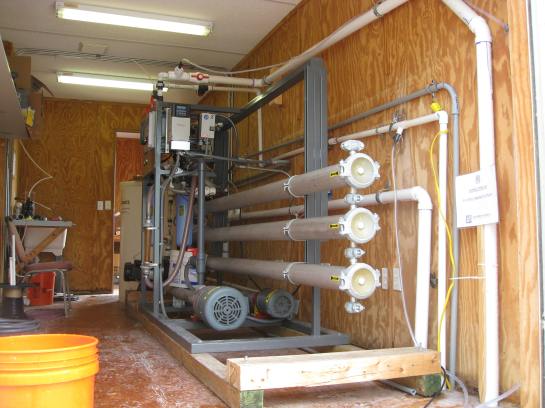
In the last blog I showed what reclaimed wastewater could do for an ecosystem. Very cool. But what about for drinking water. I actually was involved in an indirect potable reuse project several years ago. The concept was to take wastewater, filter it with sand filters, filter it with microfiltration, reverse osmosis and then hydrogen peroxide and ultraviolet light. This is what they do in Orange County California when they recharge groundwater, and have been for over 30 years. Epidemiological studies in the 1990s indicated no increased incidence of disease when that water was withdrawn from the aquifer, and then treated in a drinking water plant before distribution. So our project was similar – recharge to the Biscayne aquifer in south Florida. It worked for us. Total phosphorous was below 10 ppb, TDS was less than 3 mg/L (<1 after RO), and we were able to show 3 log removal of endocrine disruption compounds an d pharmaceuticals. It worked well. This is a concept in practice in California. And will be at some point in south Florida since only the Biscayne aquifer provides sustainable water supplies. Here is what our system looked like.

sand filters

microfiltration

Reverse osmosis

ultraviolet/peroxide
This is also the same basic concept Big Springs Texas uses for their direct potable program, demonstrating that the technology is present to treat the water. A means for continuous monitoring is lacking, but Orange County demonstrates that for indirect potable reuse projects, a well operated plant will not risk the public health. This is how we do it safely.
Ethics of Lobbying?

In my last blog I introduced our ethics project we hope to make progress on. But here is one of the interesting questions, especially in Florida. I could not find any actual laws or rules issues here, but it is increasingly common for big engineering contracts to have lawyers, lobbyists, etc. get involved in what is intended to be a qualifications based selection process? There is an interesting issue raised in 287.055 FS (CCNA) where the legal intent is that governmental agencies “shall negotiate a contract with the most qualified firm for professional services at compensation which the agency determines is fair, competitive, and reasonable.” Most states use credentials and qualifications for selection as opposed to cost, because the lowest cost may not get you the best job. You want people doing engineering that have experience with the type of project you are doing. This has come up to me with storage tanks, membrane plans, deep wells, etc. You want someone that has done it before, not someone who is cheaper but hasn’t. There is too much at risk.
In addition the statute is fairly specific about contingent fees (as are most states):
Ch 287.055 (6) PROHIBITION AGAINST CONTINGENT FEES.—
(a) Each contract entered into by the agency for professional services must contain a prohibition against contingent fees as follows: “The architect (or registered surveyor and mapper or professional engineer, as applicable) warrants that he or she has not employed or retained any company or person, other than a bona fide employee working solely for the architect (or registered surveyor and mapper, or professional engineer, as applicable) to solicit or secure this agreement and that he or she has not paid or agreed to pay any person, company, corporation, individual, or firm, other than a bona fide employee working solely for the architect (or registered surveyor and mapper or professional engineer, as applicable) any fee, commission, percentage, gift, or other consideration contingent upon or resulting from the award or making of this agreement.” For the breach or violation of this provision, the agency shall have the right to terminate the agreement without liability and, at its discretion, to deduct from the contract price, or otherwise recover, the full amount of such fee, commission, percentage, gift, or consideration.
So here is the question: As the public becomes more aware of these types of political lobbying activities, does it move the perception of engineers away from a profession and more towards profession toward developers, lawyers and others who are often seen as less ethical than perhaps engineer, doctors, educators, and scientists? And if so, is this good for either the engineering profession or the local governments (and their utilities) involved in the selection process? The comment that “that’s how business get done” is not an acceptable argument when the priority purpose of engineers, and utility operators is the protection of the HEALTH, SAFETY AND WELFARE OF THE PUBLIC. Somehow I think the politicizing of engineering contracts does not help our profession. Looking forward to your thoughts.
Projects for 2016 – Project 1 Ethics for Engineers
So as 2016 starts, it is time to look at goals for the coming year. I have several project in mind that I would like to make progress on this year. The first is interesting. We have embarked on a project that looks at engineering ethics. The study have several parts:
- Historical context
- Engineering societies
- Laws and rules by the state
- Perceptions
- Future directions
One of my reference points is an old publication from ASCE by Murray Mantell, who I got to know about 15 years ago. He wrote such a book in 1964 when he was char of the University of Miami’s Department of Civil Engineering. I believe he has since passed on, but I have used his book in some of my courses.
Other references come from contact with the Board of Professional Engineers in each state and various society’s code of ethics, and historical versions of same. However a “hole” in our project is the perceptions piece. Views change with time and with technology. Things like competition, lobbying, risk and costs create added pressures on engineers and a need to react to those pressures. So what we would like to do is create a survey monkey survey for engineers, professional and not to respond to as a means to evaluate perceptions.
I do not have ready access to a database for this purpose. Gathering data form many states would be difficult as well and duplicative as many engineers have multiple licenses. However, your organization does not have this constraint. So I am reaching out to several societies to see if there is a means to collaborate on this endeavor. The program is as follows:
- Complete the questionnaire (I have a draft but if anyone has thoughts on what we should ask, I would love to hear them)
- Make any final changes and launch it
- Send notices to members.
I am hoping that some of these organizations will find benefit and will agree to participate by emailing the survey link to their members. I will compile the data and we expect to publish it. Most of the work so far is being done via email, and thanks to some prior students for gathering information on it. I have a ways to go here though. So what are your thoughts? If anyone can help with ASCE, NSPE, ACEC, etc, I would appreciate it. And if you get that email with a link, I would appreciate your input and comments.
On Taxes and Fees – Is starving Government the Answer?
Most states were doing pretty well before the 2008 recession hit, but that ended in 2009. Most states had to make extremely difficult cuts or raise taxes, which was politically unacceptable. Of course invested pension systems received a lot of attention as their value dropped and long term sufficiency deteriorated, which was fodder for many changes in pensions, albeit not how they were invested. The good news is a lot of them came back in the ensuing 5 years, but 2015 may be different. A number of states have reported low earnings in 2015 and whether this may be the start of another recession. The U.S. economy has averaged a recession every six years since WWII and it has been almost seven years since the last contraction. With China devaluing their currency, this may upset the economic engine. At present there are analysts on Wall Street who suggest that some stocks may be overvalued, just like in 1999. If so, that does not bode well states like Illinois, Kansas, New Jersey, Louisiana, Alaska and Pennsylvania that are dealing with significant imbalances between their expenses and incomes. Alaska has most of its revenue tied to oil, so when oil prices go down (good for most of us), it is a huge problem for Alaska that gives $2200 to every citizen in the state. An economic downturn portends poorly for the no tax, pro-business experiment in Kansas that has been unsuccessful in attracting the large influx of new businesses, or even expansion of current ones. California and next door Missouri, often chided by Kansas lawmakers as how not to do business, outperform Kansas.
Ultimately the issue that lawmakers must face at the state and as a result the local level is that tax rates may not be high enough to generate the funds needed to operate government and protect the states against economic down turns. There is a “sweet spot” where funds are enough, to deal with short and long term needs, but starving government come back to haunt these same policy makers when the economy dips. It would be a difficult day for a state to declare bankruptcy because lawmakers refuse to raise taxes and fees.
Is this a good idea?
In the vein of more growth is always better mentality, the following struck me as I was in Colorado last month. Front Range politics are a big deal in Colorado because virtually all the people in the state live within 60 miles of Denver. The following table outlines the populations of the Front Range counties and their growth trends over the past three years. Big growth. So the local politicians are happy. Growth is good.
| The Front Range Urban Corridor | |||
| County | 2012 Estimate | 2010 Census | Change |
| Larimer County | 310,487 | 299,630 | +3.62% |
| Weld County | 263,691 | 252,825 | +4.30% |
| Boulder County | 305,318 | 294,567 | +3.65% |
| City and County of Denver | 634,265 | 600,158 | +5.68% |
| Arapahoe County | 595,546 | 572,003 | +4.12% |
| Jefferson County | 545,358 | 534,543 | +2.02% |
| Adams County | 459,598 | 441,603 | +4.07% |
| Douglas County | 298,215 | 285,465 | +4.47% |
| City and County of Broomfield | 58,298 | 55,889 | +4.31% |
| Elbert County | 23,383 | 23,086 | +1.29% |
| Park County | 16,029 | 16,206 | −1.09% |
| Clear Creek County | 9,026 | 9,088 | −0.68% |
| Gilpin County | 5,491 | 5,441 | +0.92% |
| El Paso County | 644,964 | 622,263 | +3.65% |
| Teller County | 23,389 | 23,350 | +0.17% |
Then I read an article by Bruce Finley of the The Denver Post entitled “Colorado shies from big fix as proliferating people seek more water.’ The concept is to continue the state’s tradition of moving water from the wetter west side of the Rockies to the drier east side. The current fix is to build a huge reservoir by Dinosaur National Monument (in the middle of the west Colorado desert), then divert 97 billion gallons a year from the Yampa River through a 250-mile pipeline across the Continental Divide to the Front Range to defray Colorado’s projected 2050 water shortfall of 163 billion gallons. The Yampa Pumpback would be the 31st cross divide diversion Colorado has built since the 1930s.
Now the plan has hit a snag, whereby the EIS for the project indicates to meet needs, it would be the Front Range that bears the risks of not enough water in dry years as a part of negotiations for water entitlements under the interstate treaty that divvies the Colorado River. Once that is resolved, the project would cost billions and take years to construct. Ok, the Front Range is water limited. And we all know it. The problem is people like Northern Water manager Eric Wilkinson who the article quotes as saying. “With the number of people coming here, we’re going to have to look at all alternatives. Conservation isn’t the silver bullet; it’s also going to take additional infrastructure…. These people need water, and they’re willing to pay for that water.” In other words, we need more growth! So in the meantime, development competes with agriculture or replaces agriculture on the semi-arid high plains. The article suggests that cities and industries seeking more water would absorb hundreds of thousands of acres of agricultural land water rights if unable to divert more across mountains, something the governor is a little concerned about. They would just buy them out. So less agriculture when we probably will need that land later.
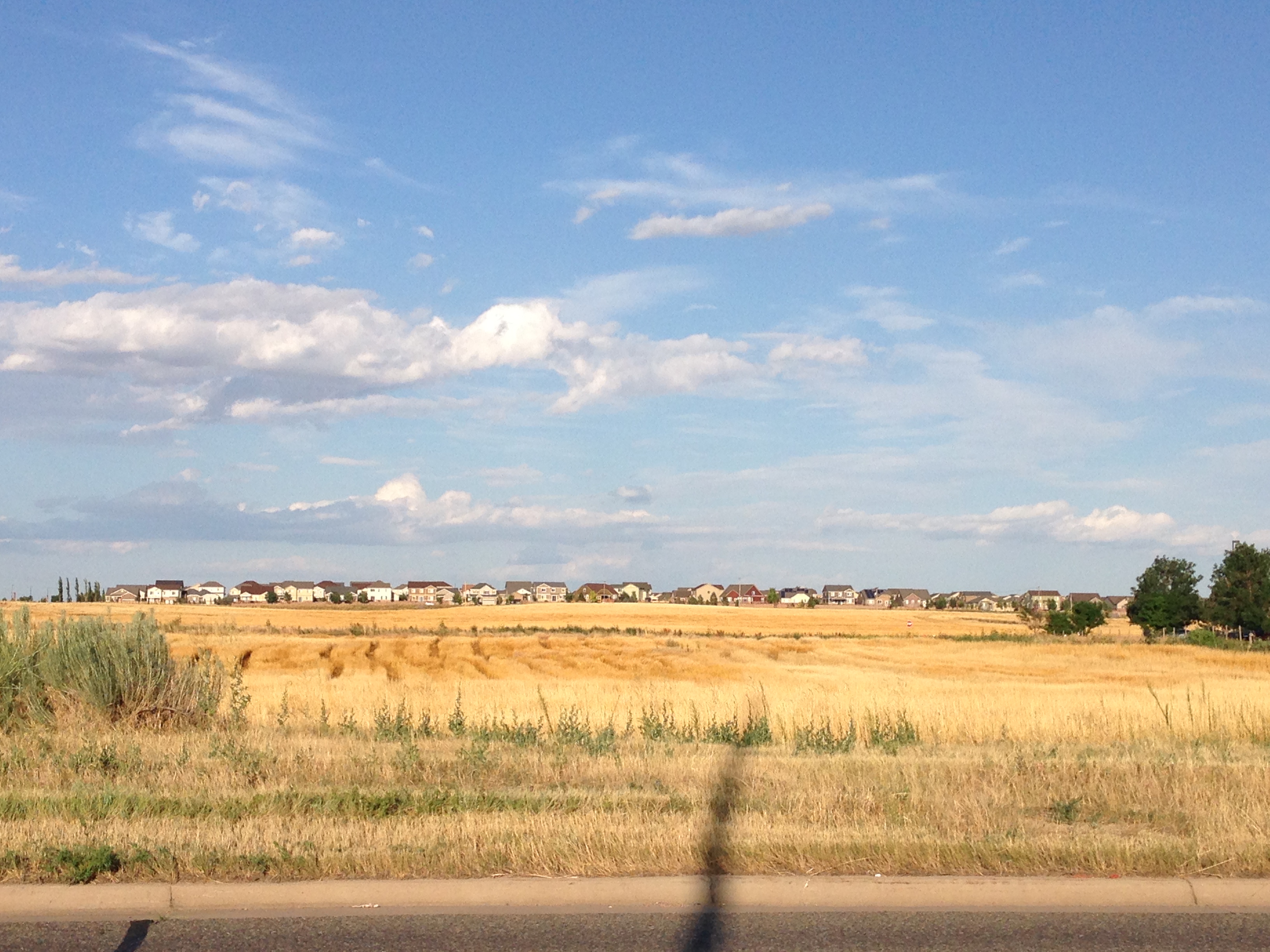
So in that vein, I noted the following at the airport. One is a nice field of grain. Golden in the summer sun. Across the street, the golden field is being converted to 300 houses. You can see the pipe and the equipment. And my question is – Is this really a good idea?
Don’t Put this in the sewer!
The other thing we learned was that we need to be far more careful about what goes in the sewer system. Paper towels, baby wipes and hand towels do not deteriorate in the sewers. No matter what manufacturers claim, you find them everywhere and they look just like they did when flushed. They clog lift station pumps and pipelines. Do not put these down the toilet for any reason? Likewise there are no feminine hygiene products that should be flushed, ever! Again regardless what the manufacturers claim, you can find there ubiquitously in the sewer system and they look, well just like they did when flushed. No biodegradation. I have included some figures. They show up in pump clogging and at plants as well. They are not biodegradable. Again do not put these down the toilet! Put all these products in the trashcan in the bathroom.
Worse, do not put grease down the drain. One photo is a greaseball in a manhole. It fills the whole manhole up! Of course the feminine hygiene products, towels, wipes, etc. plus grease make almost impenetrable obstacles that block the sewer system. So we need to remove the inflow and we need to keep grease and the reset of these products out to reduce the costs of operating the wastewater utility. We all contribute, and we all can help. We want systems to operate properly and dependably, so let’s do our part.
Colorado Spill
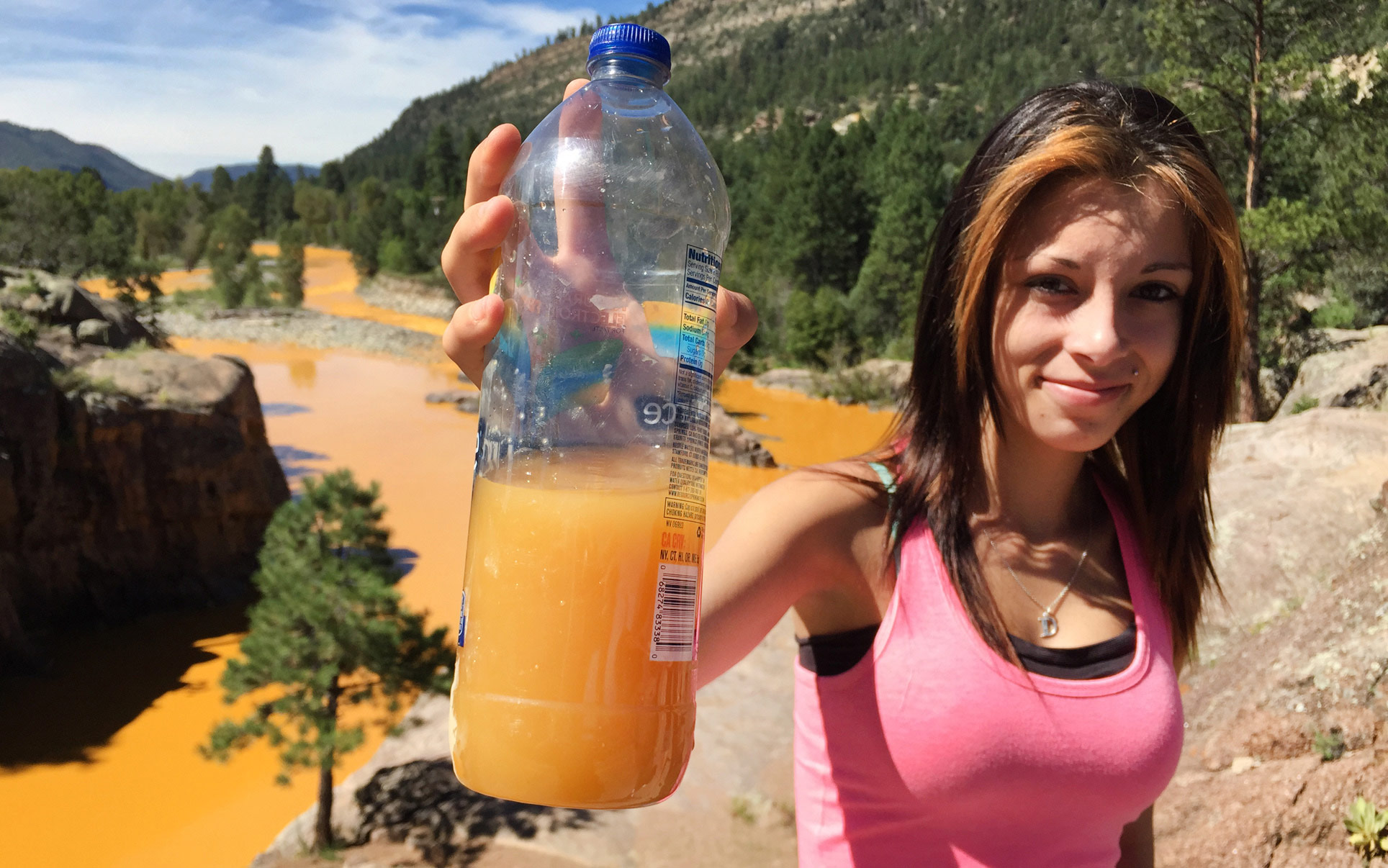
In an interesting twist of fate, USEPA caused a spill on the Animas River when a staffer accidently breached a dike holding back a solution of heavy metals at the Gold King mine because the misjudged the pressure behind the dike. Pressure? The spill flowed at 500 gpm (0.7 MGD), spilling yellow water spilled into the river. Downstream, the plume has travelled through parts of Colorado, New Mexico and Utah, and will ultimately hit Lake Mead. Officials, residents, and farmers are outraged. People were told not to drink the water because the yellow water carried at least 200 times more arsenic and 3,500 times more lead than is considered safe for drinking. The conspiracy theorists are out. The pictures are otherworldly.
But they are all missing the point, and the problem. This is one of hundreds of “legacy disasters” waiting to happen. We are just surprised when they actually do. A legacy disaster is one that is predicated on events that have happened in the past, that can impact the future. In some cases the far past. There are two big ones that linger over communities all over the west and the southeast – mines and coal. Now don’t get me wrong, we have used coal and needed metals form mines. That’s ok. But the problem is no one has dealt with the effects of mining or coal ash for many years. And then people are upset. Why? We can expect these issues to happen.
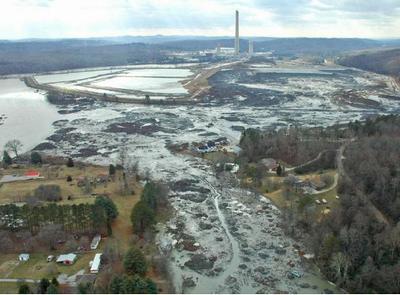
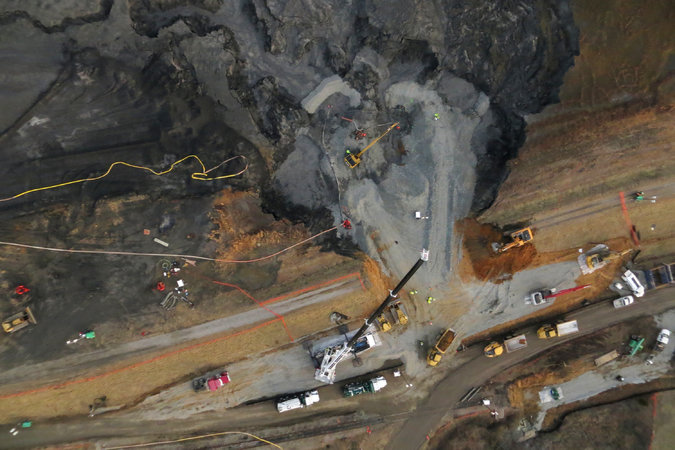
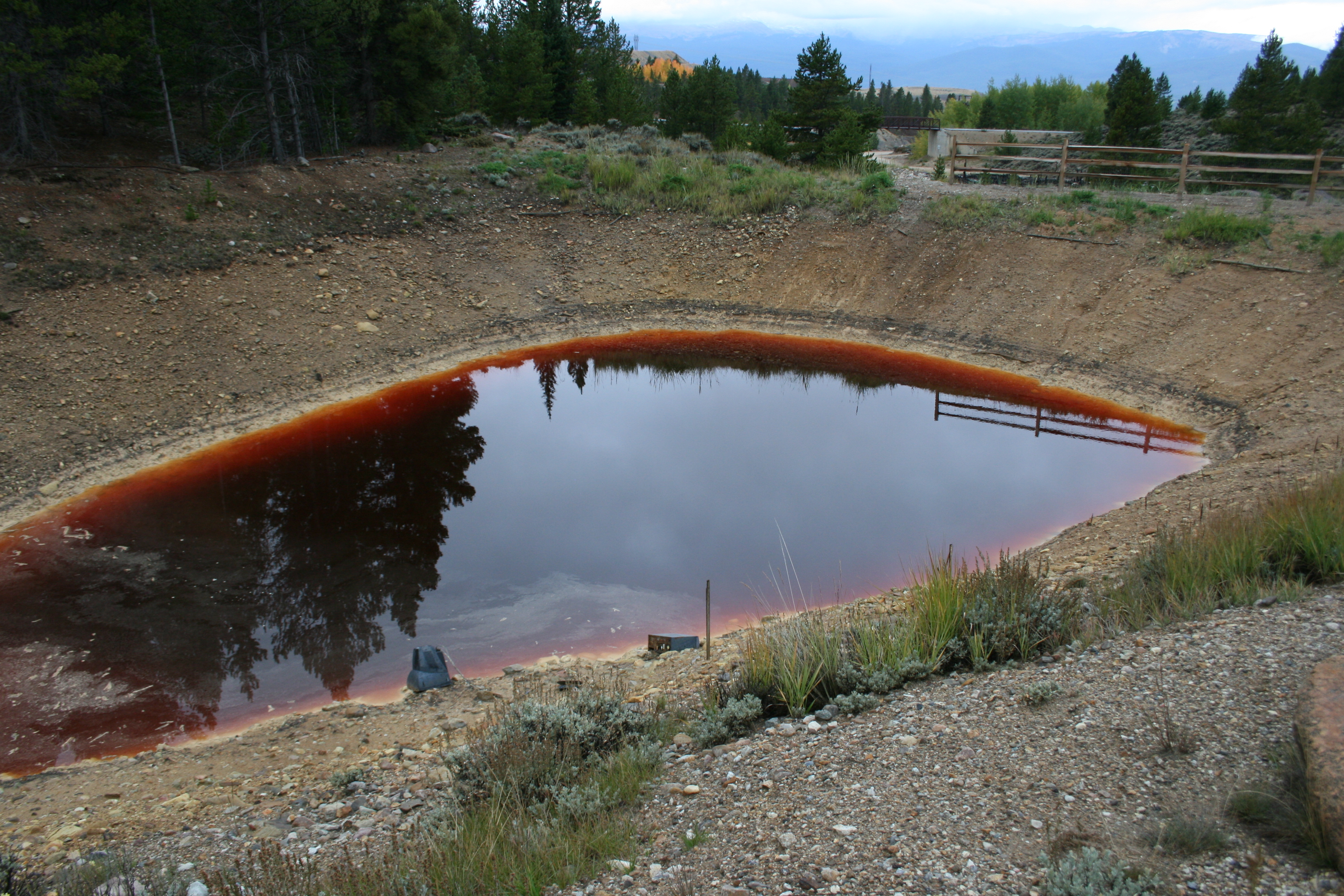
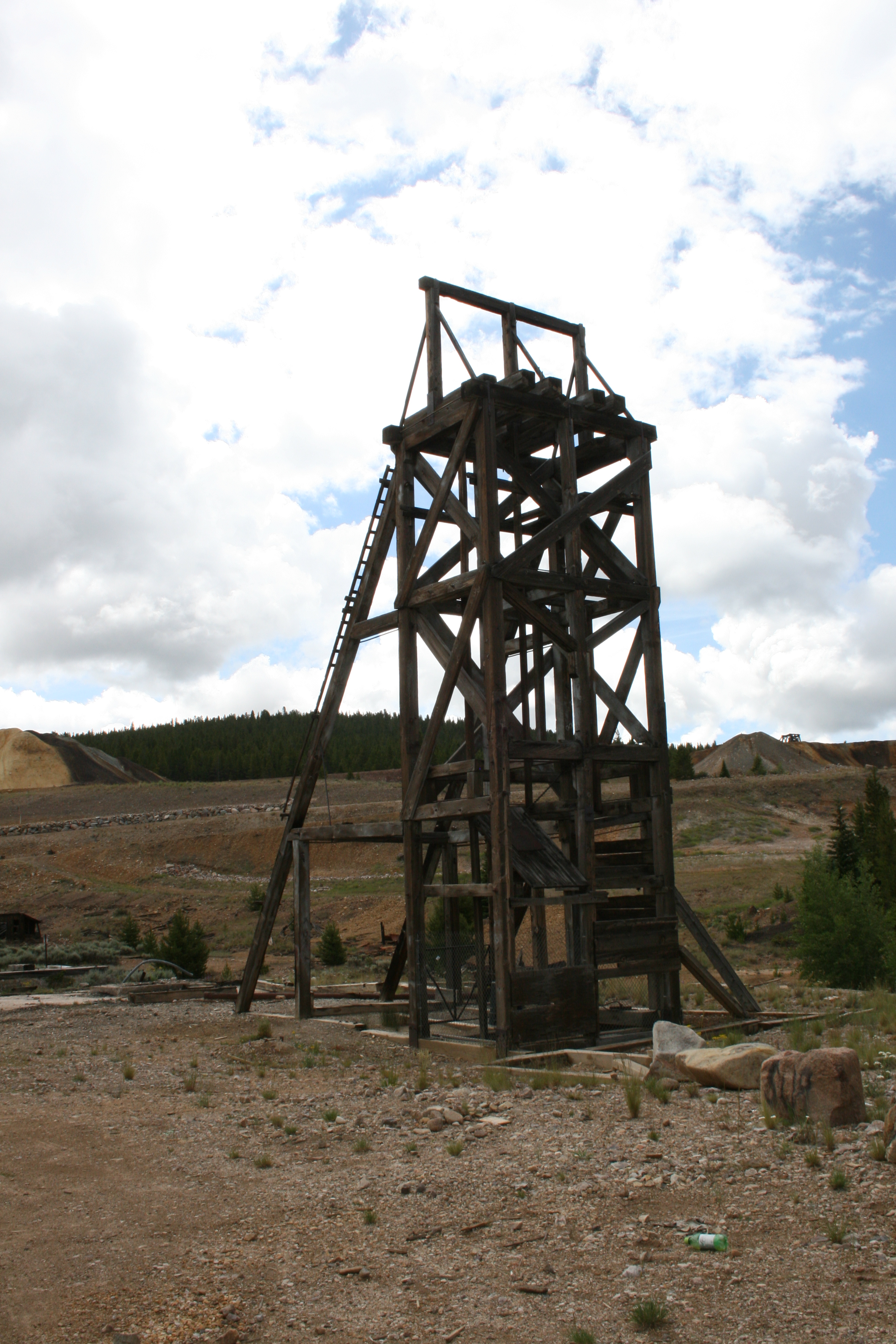
One major problem is that both are often located adjacent to or uphill from rivers. That’s a disaster waiting to happen. The King Gold mine is just the latest. We had recent coal ash spills in Kingston, Tennessee (TVA, 2008) and the Dan River in 2014 (Duke Power). The Dan River spill was 30-40,000 tons. Kingston cleanup has exceeded a billion dollars. Coal ash is still stored at both places. Next to rivers. We had the federal government build ion exchange facilities in Leadville, CO and Idaho Springs, CO to deal with leaking water from mine tailings from the mountains. Examples are in the hundreds. The photos are of the two coal spills, mine tailings that have been sitting the ground for 140 years in Leadville and one of the stormwater ponds – water is red in Leadville, not yellow.
When the disaster does occur, the federal government ends up fixing it, as opposed those responsible who are usually long gone or suddenly bankrupt, so it is no surprise that EPA and other regulatory folks are often very skeptical of mining operations, especially when large amounts of water are involved. We can predict that a problem will happen, so expensive measures are often required to treat the waste and minimize the potential for damage from spills. That costs money, but creates jobs.
For those long gone or bankrupt problems, Congress passed the Superfund legislation 40 years ago to provide cleanup funds. But Congress deleted funding for the program in the early 2000s because they did not want to continue taxing the business community (mines, power plants, etc.). So EPA uses ARRA funds from 2009. And funding is down from historical levels, which makes some businesses and local communities happy. The spectre of Superfund often impacts potential developers and buyers who are concerned about impacts to future residents. We all remember Love Canals and Erin Brockovich. Lack of development is “bad.” They ignore the thousands or jobs and $31 billion in annual economic activity that cleanup creates, but it all about perception.
But squabbling about Superfund ignores the problem. We continue to stockpile coal ash near rivers and have legacy mine problems. Instead we should be asking different questions:
WHY are these sites permitted to store ash, tailings, and liquids near water bodies in the first place? EPA would not be inspecting them if the wastes were not there.
WHY aren’t the current operators of these mines and power plants required to treat and remove the wastes immediately like wastewater operators do? You cannot have millions of gallons of water, or tons of coal ash appear overnight on a site, which means these potential disasters are allowed to fester for long periods of time. Coal ash is years. Mine tailings… well, sometimes hundreds of years.
One resident on the news was reported to have said “Something should be done, something should be done to those who are responsible!” Let’s start with not storing materials on site, next to rivers. Let’s get the waste off site immediately and disposed of in a safe manner. Let’s recover the metals. Let’s start with Gold King mine. Or Duke Power. Or TVA.
Gulf Power Grids
As storm season arrives, I found an interesting figure which comes from Power magazine and shows all the power stations that are at risk from storms. That’s a lot of power. The question is how do we address this? Water and wastewater utilities are actively looking for means to reduce power costs. Pumping water can account for 80-90 percent of total power consumption, especially with high service pumps.
Water and wastewater power plants tend to have backup power. Or at least we hope they do. In Florida we created FLAWarn after the hurricanes in 2005. The concept was to put utilities together to allow them to share generators and other assets in case of emergency. Many utilities here have generators at pump stations, tanks and on trailers. The goal is to insure service can be provided regardless of the damage. And that did come in handy after Wilma in 2006. FLAWarn serves as a model for other states.
There are also renewable power which some utilities have invested in. Renewable power on plant sites is a means to address the potential grid interruptions. This solution, however, may not be embraced by power utilities due to the potential revenue reduction. As the water facility takes on on-site generation, the utility load profile may shift significantly placing them in under a different rate structure which may greatly reduce the benefit to the utility. One problem.
Also there are some at work to derail green power solutions, trying to reduce the attractiveness and subsidies on renewable power. Interesting that many power providers are not in that group because all power in the US is subsidized – oil, gas and renewables. The oil and gas sector is much larger and while many renewable power solutions are used by large power entities. In some states, the states have taken action to encourage these investments because of the potential benefits to the population. Local entities have gotten involved also. It just makes sense if you are in the right region and the price/risk ratio is right. A number of water and sewer utilities have pursued this option successfully. That will help as well during outages.
Now if we can keep the trees from being planted above the pipelines ….
More Direct Potable Reuse?
This month’s Journal for AWWA has several articles devoted to direct potable reuse (DPR). Total Water Solutions is the moniker that AWWA has tapped lately as the organization has moved to the message that water sources cannot be separated. California believes that 40% of its urban water use can be recycled to direct potable reuse, which can address a lot of the drought concerns for urban users (11% of California’s water use). The technology is available to make DPR a reality. The concerns involve insuring system reliability (i.e. redundancy in processes), and public perception of DPR. As I noted in a prior blog, there are two cities in Texas already doing DPR. There are several places in California doing indirect potable reuse (IPR) which basically involves injected the water into an aquifer or releasing it in an upstream reservoir. The treatment is basically the same for both but the separation is creates a different public opinion. One that is not so different than discharging wastewater to rivers that serve as water supplies downstream. Both IPR and DPR were unheard of as ideas outside southern California until more recently. But in the past several years, both have seen a significant change in Texas, California and Florida. Water-logged south Florida has looked at 5 IPR projects in the past 7 years, and has a couple reuse ASR systems. Should drought conditions return, these projects may not be so far-out (note we are at 25% normal rainfall in southeast Florida – but water use is 10% below 2005 levels).