Archive

Tag Archives: water leadership


I love stories about sewage in print.  As a water/wastewater guy, it is amusing to see sewer stories in the local papers and national news when they are about the “oddities” of operations.  One recent article talked about the impact of “flushable items” that should not go down the toilet.  “Flushable” wipes was the offender this time, but past discussion involved tampons, diapers and paper towels.  The reality is that NONE of these items should ever go down the toilet.  Those paper toilet seat covers are questionable as well.  Let’s see why. 

Sewer agencies have a very different view of what is flushable that tampon manufacturers, diaper manufacturers, paper towel and now flushable wipe makers.  Sewer agencies are responsible to insure that waste moves down the gravity pipes and through the lift station pumps without creating backups in the system.  The majority of material in a sewer system is water.  Followed by chopped up solids.  The design of the toilet involved two separate concepts.  One is simply creating the opportunity for a syphon to move waste when flushed but holding water when not.  It is a gravity principle based on partial pressures.  Simple stuff.  But toilets also tend to “chop up” material when the flushing action occurs.  The flush is violent and thin toilet paper and the soft solids in the toilet are easily shredded and blended into the water.  Think about your blender.  Soft stuff gets chopped up.  Enough mixing, it is all liquid.  As a result there is very limited opportunity for either thin toilet paper or most solids to plug up a toilet. 

But people don’t like thin toilet paper.  So we have manufactures making toilet paper with cotton fibers in it to make the paper soft.  And people like the “high quality” paper towels that upscale restaurants use.  Unfortunately too many people use those high end paper towels on the toilet seat, so down they go.  Wipes are reinforced paper also.  Fibers make them strong enough to, well wipe.  Tampons are notorious as absorbant fibers.  The key in each case is the fibers.  Fibers are not chopped up during a flush because the toilet flush is not designed to shed cloth.  As a result two things happen.  First, the fibers then to stay together as a mass.  Grease and other materials in the sewer system will stick to eh fibers making an even larger glob of material.  A recent YouTube photos showed a 15 ton grease ball in a large sewer system.  Grease and fiberous materials in the sewer system – you don’t want that to plug up your interceptor.

The other problem is lift stations.  The pumps at lift stations are designed to pass a 2.5 in ball, but not a bunch of strings.  As a result the fibers get stretched out, and wind around the pump impeller rendering it useless.  Or the material may mat in the impeller preventing the pump from pumping water.  One of the most common lift station problems is fiberous material winding around impeller shafts that burn out pumps.  Pumps cost thousands of dollars to repair or replace, so this is money from the ratepayers’ pockets.  One of my clients had the restaurant problem.  The lift station impellers would completely clog every 3 days.  The lift station would nearly overflow before the pumps were removed, the guys would open up the pump, and dig out the material.  Obviously fiberous paper and there were only two connections to the lift station.  The City ended up installing a $160,000 grinder system to grind up this material because the restaurant was unwilling to change their practice.  The major offender was women using the paper towels as seat covers.  The lines inside were a mess as well. 

The moral of the story is that toilet paper, water and body waste goes down the sewer.  Not napkins, feminine hygiene products, baby wipes or any fiberous paper material that feels soft, but won’t deteriorate, regardless what the manufacturer claims on the box.  These material do not degrade, the only create costly repairs, inconvenient and costly backups and a host of other problems for downstream users and the utility.  Put this material in the proper trash can. 

And see where else can you talk about this stuff, except when talking about sewage?


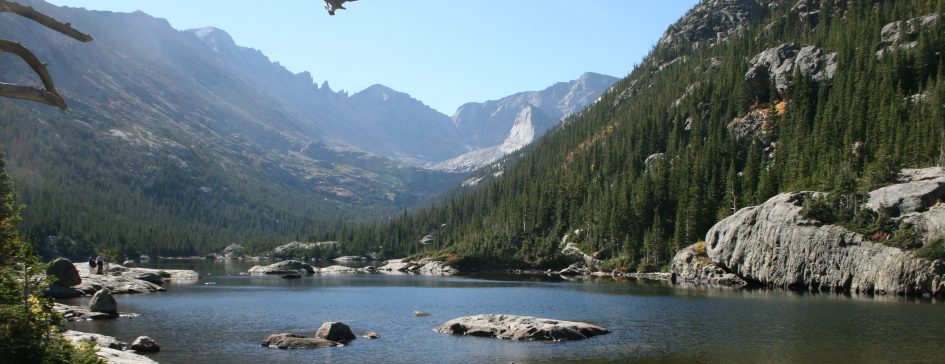
I went to Colorado in July, and it was bone dry like I noted in a prior blog.  The trend was expected to continue, but then something happened.  It rained.  A lot. It’s been raining for almost a month.  Last week it was wet out there, really wet, devastatingly wet on the east side of Rocky Mountain National Park (Boulder, Estes Park, Longmont, Lyons). The rain has not really let up so mountain streams are over-running their banks, flooding streets, washing away bridges, damaging property and businesses.  Helicopter evaluation of the damage indicates that miles of roadways are badly damaged. Route 34/36, the primary eastern entrance to Rocky Mountain National Park may have 17 miles (of 20) damage pavement and foundation needing immediate repair.  Estes Park is cut off from the world and there was mud in the streets.  Rocky Mountain National Park is closed to allow access from Grand Lake for emergency vehicles, residents and supplies.  And eastern emergency route from Nederland is also available.  Tourism has halted in the peak of Fall tourist season.

How fortunes have changed, and continue to change.  Three years ago it was the west side of Colorado with 300 inches of snow that flooded downstream communities.  Three months ago was drought. Are these changes part of a larger issue, or a continuation of the status quo?  Hard to know, but certainly both events were far above any prior events experienced in the area.  The local infrastructure was not constructed to meet these conditions, so either the climate is changing, our models are wrong, or both.  We see the same issue playing out regularly around the world when the 100 year or 500 year storm event occurs and wreaks havoc on a community which does not have infrastructure planned for events like this.

 Expect NE Colorado to be a federal disaster area.  Expect billions to be spent on reconstruction of roadways.   But the larger question is whether the new, replacement infrastructure will survive a similar, or larger climate event in the future.  Will our infrastructure planning be short sighted or will it be adjusted accordingly?  The potential for us to protect infrastructure, and property is completely related to our ability to adjust to infrastructure needs and to minimize exposure to weather events.  Keep in mind our economy and way of life is directly related to our infrastructure condition.  But people want to live near rivers and streams, but rarely consider the real risk and consequences. 

How do we address these risks?  FEMA evaluates the probability of flooding to set flood insurance, but FEMA does not prevent construction in flood zones.  Where construction can occur is a state or local issue.  Of course, few local entities want to limit development in any way, so we keep putting people at risk.  Local officials, like those in Florida, keep pushing FEMA officials to reduce flood risks, despite evidence of increasing rainfall intensity that would increase flooding.  Florida is not alone.  No doubt Colorado officials have the same views.  We need to impress upon local officials the risks and encourage them to reduce risks to citizens.  It’s our tax money and insurance premiums they are raising.  But they are rarely held accountable.  Nor are non-elected officials.  Somehow, this needs to change.  We need leaders to stand up and draw the  line in the sand.


Why are health care costs increasing so fast?  Did you ever wonder about that?  We keep hearing about how health care costs, Medicare, Medicare, Obamacare are going to bankrupt us, but why is that?  Why are the cots going up so fast?  It is an important challenge for local officials and utilities who generally pay the health insurance costs for their workers.  There is more to the story that we are not being told.

One problem that get identified quickly is that only 80% of the population is included in the health care system.  Many who are not are “healthy” young people who don’t demand the services.  The concept of the health care bill was to solve this problem by spreading the costs of health care across the entire population using private and public providers.  First, I think there are way more unhealthy  people included in the 20% than we realize because the political dialogue keeps focusing on the few that want to live off the grid – I feel great so I don’t need insurance.  That guy is part of the problem.  That guy gets into a car accident, gets taken to a public hospital, gets treated, gets a bill for $26,000 to fix his broken leg, refuses to pay anything, and the taxpayers get stuck with the bill.  My solution to that guy is if you don’t want to pay for health insurance, bring cash.  Otherwise, “no soup for you!” to paraphrase a famous Seinfeld episode.  Of course my doctor, nurse and therapy friends think that’s a little cold hearted. 

The next argument is the cost of doctors, therapists and nurses.  Okay, I know a bunch of them, and that’s not where the money goes.  These people have lost money in the past 10 years.  Many are going form full-time to part-time employments as Medicare, Medicaid and health insurance bureaucrats decide services are no longer needed.  They will tell you the major change in their lives is paperwork….hold that thought for a moment.

The cost of drugs comes up.  Medicare and Medicare are the largest purchasers of pharmaceuticals in the world.  So in other works, they set the lowest price by supposedly bidding the “contracts” for services. Only there is often only one provider, so exactly how does that work?   Sounds like we don’t get a good deal there, which is why the arguments for importing Canadian drugs or drugs from Mexico keeps popping up.  They get a better deal than we do and most of these are supposedly AMERICAN companies.  No home town discount (I guess I know where free agent baseball players get the idea).   And my medical friends confirm this as an issue.  Check out the comments from Mr. Falloon at Life Extension (www.lef.org) for discussion. 

So let’s go back to the paperwork discussion.  Once upon a time doctors simply sent a little paperwork to the health insurance company or the federal government and said you needed some service.  And the insurance company processed the bill for the services.  The cost was paid by insurance premiums collected by the insurance company.  Everyone was happy.  But then someone at an insurance company said, “wait we could make more money if we asked more questions and paid less for these services.  It would help our bottom line.”  So you hear the complaint that the folks at the insurance companies are deciding whether you need that procedure or not.  And contractors decide if someone needs Medicare or Medicaid services, not the government, not your doctor, your nurse or your therapist.  Not any person that knows you, but some unseen, private sector bureaucrat who’s goal is to minimize the amount of your premium spent on services so they can enhance their bottom line.  And apparently they are very effective because the health insurance industry is very lucrative.  So maybe we have stumbled onto something here.  Maybe the cost of medical coverage is more related to drugs and bureaucracy (and it is not government bureaucracy!!) than the actual cost of services.  Maybe the old system, even if there was some fraud in it, wasn’t nearly as bad as it was made out to be.  It reminds me of one of the 4 laws of City management I developed years ago:  Never give elected officials a bad alternative – it becomes a magnet.  It always worked (hence a law).  I didn’t learn why until years later when I realized, that the worst option was the one all the lobbyists lobbied for even at the local level.  It was the option where they could make the most money “fixing


School is back in session.  It is a great opportunity to see what kind of great things we can learn this year.  We can learn from the students as much as they learn from us.  Working with college students, in bridging that connection between my real world clients and my students keeps me engaged and allows me to act as a conduit of information between the two sectors.  That conduit potentially includes jobs for students and technology for clients.  It is remarkable how much the skills sets of the students have changes and increased in certain areas in five years, let alone 10.  I remind them that 5 years after they graduate, the skill set of the next group will be far ahead of theirs. Get your license and keep learning and staying up to date with technology.  It is far too easy to get behind and it is surprising how many graduates figure they are done with learning when the graduate.  Far from it.  The advances and changes in the industry move so quickly.  All my students are doing 3 dimensional projects versus cad drawings 5 years ago.  And those cad drawings were so far above the cad drawings of ten years ago.  All three groups are ahead of a lot of engineering firms with respect to technology.  And there accompanying utilities as well.  My students make great interns for GIS – it comes naturally to them.  My older friends?  Well, let’s say there is a bit of a learning curve.  As we try to be more efficient, training and skill development become continuous exercises.  It is obvious when you compare skill sets of recent, current or older graduates.  Of course skill sets may not translate to knowledge, for there is no substitute for field experience, especially in the water and engineering fields.  The reality is often much different than you expect, for a variety of reasons.  How you adapt means experience.  It is why the older crowd and the younger crowd need each other and need those communication avenues.  I find that my teaching keeps you engaged in the changes in technology, viewpoints and the new generation while maintaining the relationships with the real world


A new GAO report suggests that the short and long-term future for state and local revenues may be more difficult that currently anticipated, despite the economy recovering in many places.  My last blog outlined a number of the problems including that many public entities chose to reduce tax rates to balance the budget as opposed to restocking reserve funds.  When property values plummented and tourism and consumer buying diminished, the taxes related to all three plummented as well.  None have yet returned to their pre-2008 levels.  The failure to stockpile reserves caused many governments to spend down what limited reserves they had in the past 5 years as a means to avoid the hard and unpopular decision – raising taxes to collect the same revenues as before the mid-2000s cuts.  Now the lack of reserves creates an issue going forward – as costs increase faster than revenues, there are no reserves to tap into.  It is a problem that just keeps on giving. –

As I noted, I never like Chicken Little, because he never had a solution for the problem. There are solutions for local governments, some good and some bad.  Clearly local governments need to revisit the revenue production tools.  Taxes and fees will go up.  Taking more money from the utility, an all too popular decision in the past 5 or more years IS NOT THE ANSWER!  That just transfers the problem to the utility system and we already know that there are huge amounts of deferred maintenance and capital projects with utilities – $300 billion and counting at last count. The utility should be run as an enterprise, not as a cash cow to avoid hard political decisions.  Solutions for replacing those ARRA funds and federal grants for police are needed.  Just saying “We ran out of money so lay those people off” is not a solution.  What that is, is poor leadership and planning – a failure to develop the investment made by the feds to better the fiscal position of the community.  A lost opportunity.

There are many options.  And we can lay blame at the feet of elected officials, but it does not all belong there.  The citizens who elect those officials, are to blame.  Most elected officials react to citizenry, not the other way around.  And don’t forget the managers who bring bottom line business practice to local government management who recommend options. We’ve lost a generation of good government managers who understood the service aspect of government who have been banished in favor of the bottom line approach.  We need to change this as well. 

A more entrepreneurial spirit is needed.  I recall a prior entity I worked for where we proposed doing lab work in our certified water lab for other utilities.  That got shot down because it was “unfair to compete with the private sector for this work.”  Really?  That sounds like a private sector red herring.  They know they will lose business, and they can’t compete.  How is that in the spirit of capitalism? It cost less for other entities to have us do it?  A huge missed opportunity.  There are many.  If we want government to operate more like a business, we need accept the opportunities that come with it, not quash them. 

We need to market the community.  Not just give money away hoping to attract businesses that will locate for a short while.  That certainly has been a fiasco in Florida.  Other places as well I am sure.  No, we need to “sell ourselves.”  We need to marketing program to distinguish the community, its assets, its water and sewer reliability and quality, its people, education and opportunities.  It means spending money to invest in the community, not just spending money to fix a few roads and install some pavers, although they are good.  It’s also not just fixing up the distressed neighborhoods, but investing in the better ones as well. The most distressed City in America is quietly encouraging new artists and startup businesses to relocate to Detroit to take advantage of the availability of warehouses, cheap rents and a talented workforce.

We need to avoid the pitfalls of falling victim to reinforcing the past.  Florida’s economy is based on tourism, agriculture and building housing to attract retirees.  Weird business model.  Two of the three are highly susceptible to economic disruptions.  We are still recovering from 2008.  The economy also produces mostly minimum wage jobs, not the way to build a better tax base of encourage investment in education.  The state manufactures nothing, yet fails to take full advantage of what assets it might have to create industry.  As Sun-Sentinel writer Stephen Goldstein noted recently, why is it that south Florida has yet to take advantage of the private sector interest in investing in understanding age –related diseases?  Much of the local economy and the two local public universities are not positioned to take a leadership role?  Yet it is an easily marketed issue given the current population, assuming funds can be secured.  Public investment is needed, and of course that’s the rub.

We can market ourselves.  May communities have.  And most deserve better than their current lot in life.  Alexis de Tocqueville,” you get the government you deserve.”  I think we deserve better, and I think we can do better.  I think we can develop a better future and I think we can overcome challenges.  So maybe it is time for to us to change the perspective!


A new GAO report suggests that the short and long-term future for state and local revenues may be more difficult that currently anticipated, despite the economy recovering in many places.  For most of the 1990s and the mid 2000s, many states and local governments operated with surpluses, or could have.  Many elected officials, like those in Florida (or Congress in 2001), chose to reduce tax rates to balance the budget as opposed to restocking reserve funds.  When property values plummented and tourism and consumer buying diminished, the taxes related to all three plummented as well.  None have yet returned to their pre-2008 levels.  In fact, the property values lag so badly, it may be 10-20 years in many jurisdictions before they return to their former selves.  In South Florida’s suddenly “hot” real estate market, local officials are raving about the 28% increase in property values in 2012/2013.  Sounds great until you realize that they need to increase 100% to return to pre-2008 levels.  Even in a hot market it may be over 5 years to recover.  So property values are not a short-term problem.  Some communities may never recover.  So much for saving for that rainy day.

It should be plain to all of us that the failure of those in power to stockpile reserves caused many governments to spend down what limited reserves they had in the past 5 years as a means to avoid the hard and unpopular decision – raising taxes to collect the same revenues as before the mid-2000s cuts.  Now the lack of reserves creates an issue going forward – as costs increase faster than revenues, there are no reserves to tap into.  It is a problem that just keeps on giving.  The failure to address the root cause – the failure to set revenues collections at an appropriate level and accumulate surpluses when you are lucky enough to get them.  Unfortunately the political discussion keeps going back to keeping costs down, but cuts in costs means cuts in services.  Sounds great to cut the Plantation trolley because of budget needs, but what about those citizens that rely on the trolley?  Or the businesses it serves.  Cutting Meals on Wheels which primarily serves shut-ins is a great idea in Broward County with a hue population of elderly that find it difficult to get out of the condo?  And does it really make much impact on the overall budget?  Not really.  There are cosmetic issues.  There a more symptomatic issue here?

GAO points to health care as a cost increasing faster than the rate of increase in revenues, but the latest data seems to indicate that the rate of growth may be less than projected by those opposed to the new Health Care laws.  Underfunded pensions are also a potential area of concern, but cutting employees is not the solution for that as outlined in a prior blog.  Cutting employees cuts the funding for pensions which guarantees future problems.  So that idea actually works against the goal of shoring up the problem.  So, no that is not the answer.  We are clearly paying for the sins of 15 years ago when we were awash with funds, but decided to cut or public “income.”  Who does that anyway?!?!

I never like Chicken Little, because he never had a solution for the problem.  Part 2 will outline some thoughts…


Jim DeMint is a smart guy.  He parlayed a short stint as a Tea-Party Senator from South Carolina into a million dollar a year executive position with a conservative think tank.  Then he sends out surveys to figure out where the “public” stands on certain issues.  For example: 

Because of uncontrolled spending, the federal government ran a $4 trillion budget deficit for 232012 and our national debt is not a staggering #16 billion.  Do you want Congress to take serious action to rein in out-of-control spending?  Yes or no. 

Ok, first the deficit was not $4 trillion in 2012.  So that’s a lie.  But what are the other options?  Reining in spending is not the only option, but it is the only one given.  Certainly the question is most likely to get a “yes” answer which is exactly what DeMint’s organization is looking for. 

Let’s look at another one.  

How would you consider yourself politically:  Very conservative, somewhat conservative, Independent, but lean conservative, independent, but lean liberal, somewhat liberal and very liberal.  

Clearly a “you are either with us or against us” question, but one that tells you everything you need to know about Congress and politics in general.  You can’t be in the middle.  You can’t draw the best ideas from both sides of the aisle.  Precisely the problem gripping Washington and many State capitols.  No one can compromise, so we get sequestered.  This type of polarization does not help America move forward nor does it help use solve problems. It increases the burden on local governments to address the problems that the failure to compromise at higher levels allow to persist, or may even create.


I have been inundated by articles recently about the issues with integration of Gen X and Millennials workers into the workplace.  Not sure why, but this is a hot issue in trade journals and newspapers.  The recent articles seem to focus in on the potential conflict between older, and younger workers who seem to have different perspectives on how work gets done and protocols.  These folks would do well to read Dan Pink’s book Drive, which discusses the differences in motivation and how supervisors can carefully cultivate innovation and efficiently by recognizing the differences. 

 Since I teach at a university, I deal with Gen X and Millennials all the time.  There are huge differences in their use and comfort with technology versus older workers.  It is truly second nature for the younger workers, while the older generations had to learn these technologies.  Many, if they had access to computers, they wrote programs by using punch cards and wrote their own compute programs in FORTRAN.  The younger workers don’t know even know what a mainframe computer is let alone punch cards.  Technology accelerates exponentially with time, which is why people feel left behind. 

Funny how technology works though.  While the kids I teach today are far more savvy than their predecessors 5 years ago (and those five years before that), they have to keep up of get left behind.  That’s the older worker problem – the older guys cannot compete with the use of technology, but not to worry, in five years, same for these kids.  As a result the older crowd may resist helpful technology.  It surprises me how many engineering firms resist 3 dimensional design programs, despite my students knowing how to do it.  By the way, the contractors hire my students because the contractors see the value in profits (and change orders). Younger workers know how to integrate the technology into the workplace.

 While comfort with technology is the big difference you notice, it is not the driving issue as Dan Pink points out.  Most of them make a decent wage so they are looking for more than salary to motivate them.  Interestingly money is not the primarily motivation like it can be for older workers.  The younger folk avoiding the rigid looks for flexibility, especially as it relates to family and friends.  They are comfortable with working at home and at times throughout the day.  It’s not that they work less, it’s they work differently.  We should focus on productivity, versus conventions.  Maybe we’d spend time appreciating each other more!


Go back to Drive and you realize that the Gen X and Millennials want to pursue these new technologies and integrate them into their jobs.  They are motivated by responsibility, flexibility and independence, much because that’s what their baby boomer parents taught them.  They are comfortable with flexible schedules and working when needed.  Baby boomers need to help them use these concepts to innovate and create in the workplace.  We need to learn to use this to our advantage in the workplace, not fight it.


A recent Wall Street Journal article noted that 50 % or people have paid their utility (water, sewer, electric) bills late, but only 24.8% have paid the internet late, 39.5% the cable late and 44% the phone bill. Really? We are willing to pay water, sewer and electric late, but not the internet bill? This should be a wake-up call to water and sewer utility leaders nation-wide that we have a problem. Combined water and sewer bills across the United States average something around $50. True they are often higher in California, SE Florida, and some other areas, but they are also lower in many areas. Most of the time even in those high cost areas, the bill is under $100.

I have done a number of rate studies and I find that the cable bill, and the cell phone bills are almost always higher than the water+sewer bill locally, so why are people willing to pay our bill late, but not the others? Is it the perceived benevolence of local utilities, most of which are public entities? Is it a perception that water should be free so it is not important to pay the bill? Or is it the lack of marketing of an essential product by waterutilities? I have heard all these arguments, but I am thinking the latter may be more important. Most people know they need to pay the bill, and I don’t really know anyone who thinks water should be free in the US. People are used to cheap water, and costs are going up. Complaining to local elected officials often keeps rates artificially low, which means maintenance and replacement programs get deferred. That makes the utility more at risk to failure. EPA, GAO and others report regularly that we have been keeping rates low and deferring capital and maintenance for years to the tune of hundreds of billions of dollars. So what is wrong?

I suggest that as an industry, we have failed in marketing water. Treatment plants, piping and pump stations are out of the way, pipes are buried. No one sees them and people assume these faciliaites will work, but rarely ask how they work or how long they will work. They do not understand the complexity or the regulatory stringency of operating a utility. They do not understand that the number one priority is public health, and protecting the public health costs money. We have not made people understand this because we do not market our product. I have taught elected official classes where the elected officials tell me public dollars should not be spent on marketing, but they never say why when pressed. Rarely is marketing included in a budget. But if water and sewer is a business, isn’t marketing an important strategy to maintain that business?

Meanwhile we have a host of celebrities marketing cellphones, which are not required to survive. We have a host of glitzy cool advertisements for cable service options, but we don’t need cable to survive. The power companies send out glitzy stuffers in their bills that no one reads, but they do end up in the papers regularly. And power really helps us survive, but we could do without it (although it would be unpleasant). Our forefathers did. But no one ever survived without water. Maybe it is just too obvious. But maybe because it is so obvious, people are less conscious of it. We need to market better. As a private sector marketing manager would say – we have lost our market share!! We need to get it back.


If you live on an island, and your groundwater table is tidal, what should your datum be for storm water planning purposes?  Average tide?  High tide?  Seasonal high tide?  If you are the local official with this problem, what do you do, realizing that the difference from mean tide and seasonal high tide (when most flooding occurs) is 1.5 feet?  Realizing that property and infrastructure is at much higher risk for periodic inundation, does the failure to address the problem indicate a lack of willingness, understanding, hope or leadership?  We see all four responses among local officials, but the “head in the sand” mode is the most curious.  It’s tough challenges that often define leaders.  With sea level rise, there is time to plan, construct infrastructure in stages, arrange funding, and lengthen the life of infrastructure and property.  Meanwhile, those insurers, banks and the public we talked about in a prior blog wait and watch.