As technology advances I have an observation, and a question that needs to be asked and answered. And this could be a pretty interesting question. Back in the day, say 100 or 150 years ago, there were not so many people. Many activities occurred where there were few people and impacts on others were minimal. In some cases ecological damage was significant, but we were not so worried about that because few people were impacted by that ecological damage. In the 20th century, in urban locations, the impact of one’s activities on others became the basis for zoning laws – limiting what you could do with your property because certain activities negatively impacted others. And we certainly had examples of this – Cuyahoga River burning for one. Of course this phenomenon of zoning and similar restrictions was mostly an urban issue because there potential to impact others was more relevant in urban areas. We also know that major advances in technology and human development tend to occur in population centers (think Detroit for cars, Pittsburgh and Cleveland for steel, Silicon Valley, etc.). People with ideas tend to migrate to urban areas, increasing the number of people and the proximity to each other. Universities, research institutions, and the like tend to grow up around these industries, further increasing the draw of talent to urban areas. The observation is that urban areas tend to have more restrictions on what people do than rural areas. So the question – do people consciously make the migration to urban areas realizing that the migration for the potential financial gain occur with the quid pro quo of curbing certain freedoms to do as you please? Of does this artifact occur once they locate to the urban areas? And is there a lack of understanding of the need to adjust certain activities understood by the rural community, or does it become yet another point of philosophical or political contention? I have blogged previously about the difference between rural and urban populations and how that may affect the approach of utilities, but read a recent article that suggests that maybe urban citizens accept that financial gains potential of urban areas outweighs the need to limit certain abilities to do as you please to better the entire community. They are motivated by potential financial opportunities that will increase their standing and options in the future. So does that mean urban dwellers understand the financial tradeoff differently than rural users? Or is it a preference issue. And how does this translate to providing services like water to rural customers, who often appear to be more resistant to spending funds for improvements? While in part their resistance may be that their incomes tend to be lower, but is their community benefit concern less – i.e. they value their ability to do as they please more than financial opportunities or the community good? I have no answer, but suggest that this needs some further study since the implications may be significant as rural water systems start to approach their life cycle end.
Tag Archives: Water supplies
Some hot topics/discussions of interest – more to come
Big week – water and otherwise. Here are a couple discussion boards/blogs that might be of interest to follow as they evolve:
https://www.linkedin.com/grp/post/733277-6020246563895390212
And an ethical consideration to contemplate:
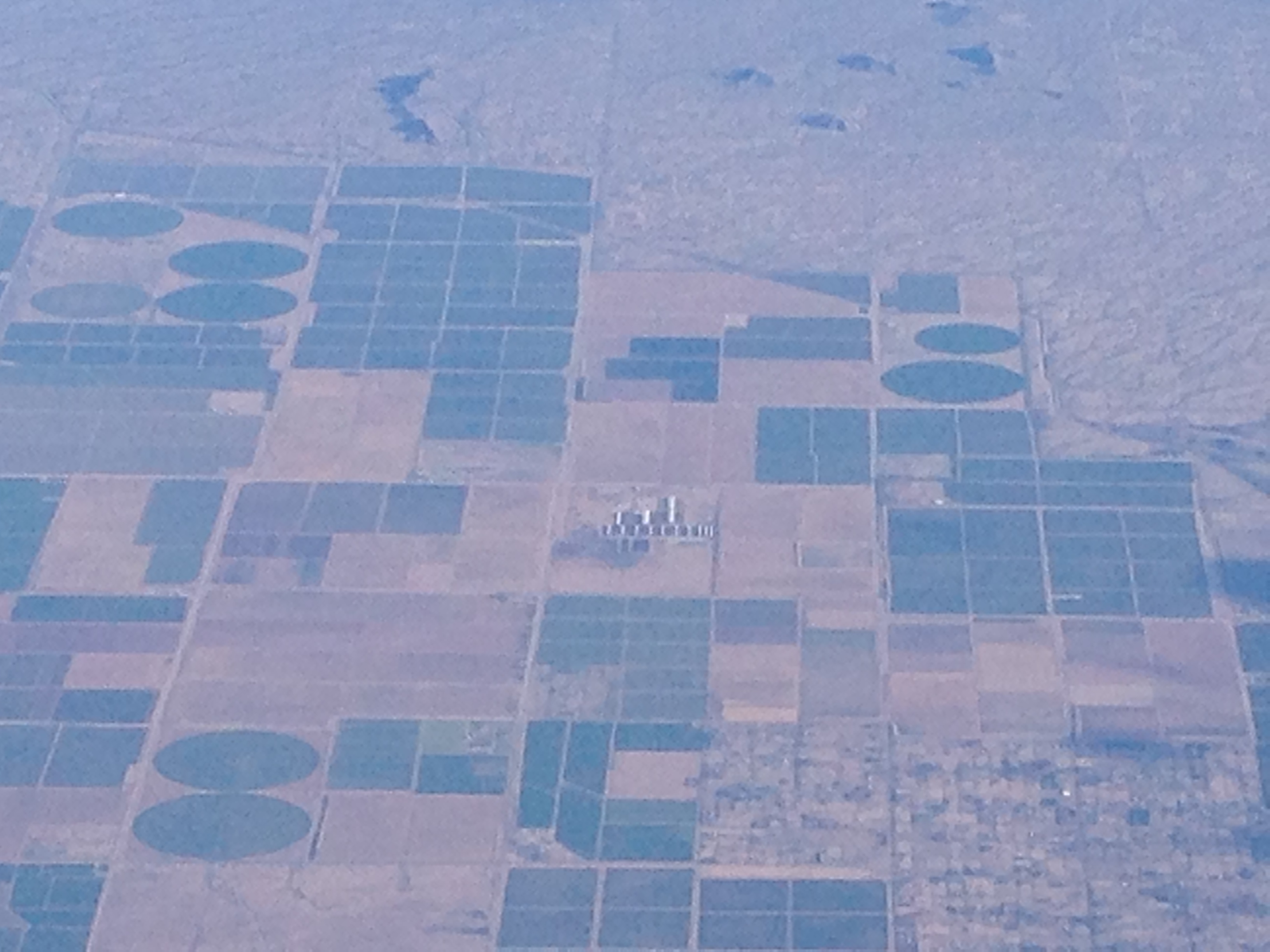
If you were wondering what Unsustainable Groundwater Use looks like
here you go..
In the vein of “What could possibly go wrong ….”
check this out – http://www.laboratoryequipment.com/news/2015/05/home-range-new-wyoming-law-makes-science-open-land-illegal#.VVNg-x-tFlk.linkedin
This could be really serious. For example, your water system gets contaminated by something. People get sick. We figure out the problem is in the raw water. Someone is responsible. But exactly how does one figure out where and who is responsible for impacting the water systems and downstream users? How does one comply with Safe Drinking Water Act provisions for watersheds, or better what does this mean for utilities? And what could possibly occur on land that cannot be “tested?”
What could possible go wrong?!
Part 2 Financing Infrastructure
The true risk to the community of pipe damage is underestimated and the potential for economic disruption increases. The question is how do we lead our customers to investing in their/our future? That is the question as the next 20 years play out. Making useful assumptions about increases in demands, prices, inflation rates etc. are key to useful projections and long-term sustainability. Building too much or too little capacity for example can have disastrous consequences (to the ratepayers on the former, to the local economy for the latter).
Getting funding relies on economic strength, a problem of you are in a depressed area (Detroit) or a boom that could crash at any time (North Dakota). P3 opportunities are available for cash strapped communities but they come with a cost. Risk must be allocated fairly – the private community will not take on too much risk without increasing costs significantly. Loss of control is one of those risk conversion issues. Extensive planning and feasibility analyses should be expected – far more scrutiny than most utilities are used to. The economic strength of the community is important to private investors.
In a prior blog we talked about the boom towns of North Dakota. Things were booming in 2013 but the downturn in oil prices may get ugly. The need for more fracking wells may have decreased (at least temporarily) and the decrease in the oil and gas costs has cut into local revenues, so is this is the time to keep planning for the boom? South Florida did this in the early 2000s – and well, that real estate boom put quite a dent in the economy and population estimates for 2020 and 2030. The balloon popped and so did the economy. South Florida had the resiliency to bounce back because of weather and proximity to South America. We have seen the result to an industrial economy – where a community relies on industry, well industry can be fickle. Ask Detroit. Or Cleveland. Or any number of other Rust Belt cities. Now they have infrastructure, but much of it is underused.
So while the Plains states plan for the boom, the boom has settled in some places. Already the oil and gas industry has shed 100,000 jobs (many high salary). Texas, Kansas, North Dakota and Oklahoma are facing financial challenges in 2015 due to funding losses. Alaska is dipping into reserves. But that doesn’t mean the results of the 2010-2014 boom are not continuing, or at least portions of them. Frack water continues to be discharged to local wastewater systems, but the revenues to pay for the needed upgrades is lacking. Effluent limits for nitrogen and TOC for some rivers have decreased as a result of constant increased loading to the streams (more flow increases total loads, so if flows remain the same, the concentrations must decrease to maintain total loading). The costs to reduce ammonia, for example from 10 mg/l to 2 or 3 mg/L can be $1-2/1000 gallon – over 50% or more of the current cost for treatment.
So is it a surprise that some communities fight the boom times? Booms create disruption and uncertainly, and a need for technology (and costs). Maybe stability does matter, as it can contain costs and treatment requirements. However the boom can help communities in financial distress. Detroit and Flint would love a boom – both have the infrastructure in place to support it as opposed to rural communities in the Plains. But that’s is a key – they already HAVE the infrastructure in place. The Plains, well, do not.
There is a lot of older, underutilized infrastructure out there. Detroit, Flint, Cleveland, Akron, Toledo and Philadelphia are among the older industrial cities that have stable populations – people that live there most of their lives, have a trained and educated workforce, and normally have lots of water and infrastructure, and lots of potential employees, all of which are underutilized and at risk due to economic losses. But the booms rarely go to older cities. How that is? Is this a leadership issue? Convenience? Quick profits? And how long will the boom last? Is it a matter of lack of understanding or regulations that creates the boom? A combination of factors? A better PR program?
Remember we all play defense. Industry does not. Industry plays offense all the time. The private sector mode is play offense. Get the message out. Frame the message. Win the game. Is winning the game at any cost the right answer? For boomers it is. What about the rest of us?
Climate and Health
A project I am currently involved with looks at the impacts of climate change on public health in southeast Florida. The initial grant focused on looking at socially vulnerable populations and the impact on chronic diseases these groups from climate change. The question was whether climate change, which in southeast Florida is basically sea level rise, would have an impact on health issues. On the face of it, the correlation between chronic health conditions and climate seems tenuous although the statistics support the link between chronic health impacts and socially vulnerable populations. But what is interesting is that in general, the climate vulnerable topography and the socially vulnerable people do not correlate. This may be a southeast Florida issue, but it is the less socially vulnerable who live in the climate vulnerable topography.
Those familiar with the history of southeast Florida know that makes sense because of the beaches. The beaches are topographically vulnerable but eh wealthy want to live there anyway. But the problem is more pervasive. The data actually can be mined further to reveal that the older homes (1940s-1960s), generally smaller and of lower value, were traditionally built on the high ground. Turns out our ancestors were a little smarter than we thought – they actually thought this out. Aside from Henry Flagler building the railroad on the high ground, most of the cities were located similarly – on the coastal ridge. Drainage of the Everglades permitted the western migration of residences – newer and larger, but at lower elevation and mostly reliant on drainage across the ridge to the ocean via canals. But as sea level rises, the water moves more slowly.
The question that must be asked then is what happens as this housing stock ages? We already see some newer communities, primarily built for retirees, moving to relieve themselves of the 55+ designations to allow the housing stock to be sold – the children of the retirees don’t want the property and desire to sell it – often quickly. To increase speed of sales (and ultimately retaining some value), eliminating the 55+ opens younger families to move in. However the lower value of the properties makes them conducive to migration of people who are social vulnerability, so migration may be toward social vulnerable people moving to topographically challenged property. That portends poorly for the link between climate and health in the future.
Two issues arise from the research. First future health vulnerability from climate may be more related to vectors and waterborne disease than chronic health effects. That expands the health vulnerability to all populations. The second issue is that storm water, sewer roadway and water infrastructure may relieve some pressure on these topographically vulnerable properties, but the people who are moving to then will have significantly less ability to pay for those improvements, creating a political conundrum that will that a significant amount of leadership to overcome. That means that resiliency must be built into infrastructure and redevelopment projects now, to address future conditions. Building in resiliency is not currently being considered by local planners and engineers because the situation is not well understood and a 50 year planning horizon is not the norm. Also, it would likely create a firestorm of fuss from developers who would pay the costs, which discourages good planning.
Finally, if things accelerate, wealthier parties may begin to see a retreat from vulnerable eastern beaches to higher ground as being a reasonable concept. However the high ground is currently occupied by socially vulnerable people, creating a potential area of conflict over the fate of displaced residents who’s social status may force them toward the vacant, topographically vulnerable properties. This is a future problem for planners, developers and officials approving new development with an eye to displacement a concept not in the current thought process. Thinking about vulnerability means a lot of infrastructure must not only be constructed, but maintained meaning local public works and utility budgets will need to increase in kind. That means higher rates and charges to populations that may have limits to their ability to pay Stay tuned…..
Water Use – does drought really tell us anything – or do we miss just the message?
Spring is in the air, at least in some places, so it gives us a chance to take stock of where we are after the winter. Boston actually is seeing the ground after record snow. The west is seeing lots of ground, even though some areas should not be seeing ground at this point. I recall the Colorado Rockies having snow at 8000 ft a couple years ago, but not this year. Some ski resorts in western Colorado never opened. Not a good sign. Snow was 10% of normal in parts of California which means the drought will continue. 12% in Oregon and Washington is some part – not good for places that rely on snow for water supplies. So the question is whether the current drought is the start of a longer climate driven issues and/or the result of where demands have permanently exceeded supplies? And if the latter is true, conservation is one option, but has obvious financial and supply limitations since urban use is less than 12% of water total use (agriculture is 40% and power plant cooling water is 39%).
Better management is part of a toolbox, but when the supply is finite, the economics says that costs will increase, shutting out certain sectors of the economy. This is where the “market system” theory of economics fails large sectors of the population – at some point finite supplies become available only to those who can afford to pay, but water is not one of those commodities that is a luxury – we need it to survive. Certainly the argument can be made that water is underpriced, but like energy, low water prices have helped fuel economic development while improving public health. It is a chicken/egg conundrum where the argument that conservation will solve all problems is not realistic, nor is using the market or curtailing economic activity. This is where the market fails and therefore governments have a role in insuring that all sectors are treated fairly and the commodity can be provided to all those in need of it – serving the public good. The public good or public welfare argument is often lost in the political dogma of today, but our forefathers had this figured out and designed regulations to insure distribution after seeing the problems that arose in the late 19th and early 20th centuries. We have forgotten many of those lessons.
The public good or welfare does not mean unlimited distribution to areas that would otherwise be bereft of the commodity. The early engineers in Los Angeles realized that development could only continue if water was brought in. So massive water movement projects were developed. The economic benefit was the only consideration – the impacts of these changes were not considered. Likewise the Corps of Engineers was directed to drain the Everglades, but no one asked if this was a good idea or would have negative impacts. Loss of the Everglades permitted economic development that is southeast Florida – 40% of the economy of the state, but it impacted water supply and places millions are risk for future sea level rise impacts. Worse, agriculture was fostered in the upper Everglades as the federal government sold off the acreage to private interests cheaply to encourage sugar cane and winter vegetables. That agriculture is now planning to develop the Everglades if the property is not purchased by the state. But purchasing the property rights a prior error in consequences – it is likely in the public interest as an effort to restore water supplies in the Biscayne acquire that feed southeast Florida, and to increase water flows to retard saltwater migration in the southern Everglades. These are both ”sins” of the past, made with good intentions but with very little thought of consequences beyond the economic benefits. Both have resulted in water shortages in the areas they were meant to serve as climate patterns have changed.
The question is whether we continue to make these mistakes. Development in desert areas, areas known to be water poor, and deepening wells to get groundwater supplies who’s levels continue to decline are all poor long-term decision, despite the short-term potential gains. California farmers continue to deepening wells but those aquifers have a limit in depth. Deepening wells means those wells do not recharge (otherwise the aquifer levels would not continually decline). What happens when the wells run dry permanently? Clearly the sustainability criteria is not met.
Meanwhile lower aquifer can divert surface waters into the ground – not enough for full recharge, but perhaps enough to impact surface water flows to other farmers, potable water users, and ecosystems. Droughts are climate driven- and we have persevered droughts before, and will again. However in light of the California drought, perhaps we should all assess more closely the long-term trends – lowering groundwater, increasing demands, lessening availability and make better decisions on water use – not only in California but in many parts of the US and the world. Changing water use patterns is great, but it is just part of a larger issue — do we need to change our current behaviors – in this case water use – in certain areas? Are there just places we should not develop? Is there a limit to water withdrawals? And how do we deal with the economic losses that will come? All great question – but do we have the leadership in place to make the hard decisions?
Indirect and Potable Reuse Future?
2014 is almost over. Hard to believe. I have been attending or annual Florida Section AWWA conference, meeting up with old friends, making new ones and learning new things. Conferences and connections allow us to do our jobs more efficiently because as we learn how to solve problems or where we can find a means to solve whatever problem we encounter. It is a valuable experience that I encourage everyone to get involved with, especially young people who need to make connections to improve their careers. The technical sessions seemed to be well received and popular. That means that there are issues that people want to hear about. Things we focused on were alternative water supplies, water distribution piping issues, disinfection byproducts, ASR and reuse projects.
The reuse projects focused on Florida efforts to deal with 40 years of reuse practice and a movement toward indirect potable reuse. This is the concept where we treat wastewater to a standard whereby it can be put into a waterway upstream of a water supply intake or into the aquifer upstream of wells. The discussion was extended to a number of discussions about water shortages and solutions for water limited areas. Florida averages 50-60 inches of rain per year as opposed to the 6-10 inches in areas of the southwest or even 15-20 inches in the Rockies which makes the concept of water limitations seem a bit ludicrous for many, but we rely on groundwater that is recharged by this rainfall for most of our supplies, a lack of topography for storage and definitive wet and dry seasons that do not coincide with use.
The situation is distinctly different in much of the US that relies on surface waters or is just plain water limited. We have a severe multi-year drought going on in California and huge amounts of groundwater being used for irrigation in many rain-challenged areas. That is what all those crop-circles are as you fly over the Plains states and the wet. Where you see crop circles, think unsustainable water supplies. They are unsustainable because there is no surface water and the recharge for these aquifers is very limited. Most leakance factors in aquifers is over estimated and hence water levels decline year after year. Water limited places need answers because agriculture often out-competes water utilities, so in the worst of those areas, there are discussions about direct potable reuse (which occurs in Texas).
Direct and indirect potable reuse are offered as answers which is why this topic was popular at our conference. A recent 60 Minutes presentation included a tour and discussion of the Orange County Groundwater Replenishment program, where wastewater is treated and injected into the ground for recovery by wells nearer to the coast. They discussed the process (reverse osmosis, ultraviolet light and peroxide) and they took a drink. “Tastes like water” was Leslie Stahl’s comment – not sure what she expected it to taste like, but it provides a glimpse into the challenge faced by water utilities in expanding water supplies. Orange County has been injecting water for many years into this indirect potable reuse project. The West Coast Basin Barrier Project and several others in California have similar projects. South Florida has tested this concept 5 times, including one by my university, but no projects have yet been installed.
But until recently, there were no direct potable reuse projects where wastewater is directly connected to the water plant. But now we have two – both in Texas with a number of potential new projects in the pipeline. Drought, growth, water competition have all aligned to verify that there many are areas that really do not have water, and what water they do have is over allocated. A 50 year plan to manage an aquifer (i.e.. to drain it) is not a sustainable plan because there may not be other options. But Texas is not alone. Arizona, Nevada, New Mexico, Utah, Colorado, The Dakotas, Kansas Oklahoma and I am sure others have verified water limitations and realize that sustainable economic activity is intrinsically linked to sustainable water supplies. Conservation only goes so far and in many of these places, conservation may be hitting its limits. Where your rainfall is limited and/or your aquifer is deep, replenishable resource is not always in the quantities necessary for economic sustainability. Water supplies and economic activity are clearly linked.
So the unimaginable, has become the imaginable, and we now have direct potable reuse of wastewater. Fortunately we have the technology – it is not cheap, but we have demonstrated that the reverse osmosis/ultraviolet light/advanced oxidation (RO/UV/AOP) process will resolve the critical contaminant issues (for more information we have a paper we published on this). From an operational perspective, RO membranes, UV and chemical feeds for AOP are easy to operate, but there are questions about how we insure that the quality is maintained. The technical issues for treatment are well established. Monitoring is a bit more challenging – the question is what to monitor and how often, but even this can be overcome with redundancy and overdosing UV.
But drinking poop-water? The sell to the public is much more difficult. It is far easier to sell communities without water on the idea, but the reality we need to plan ahead. There are no rules. There are no monitoring requirements, but we MUST insure the public that the DPR water they are drinking is safe. WE are gaining data in Texas. California and Texas are talking about regulations. The University of Miami has been working of a project where they have created a portion of a dorm that makes its own water from wastewater. Results to come, but the endeavor shows promise.
1/4 the semester is Gone!
The first month of the fall semester has slammed me, which accounts for a little less blog activity on my part. But as fall rolls in many local governments are dealing with final budgets, new projects and dealing with taxes and fees. Students are back to school and industries are looking to the end of the year and 2015. How fast time flies. Our students that graduated last spring all have jobs and half of our seniors that will graduate in December do as well. With engineers or contractors.
The good news is that the economy continues to tick up, construction and construction jobs are back to 2005 levels (which if you recall was a lot), and the stock markets are making money for somebody because they are up as well. Alan Greenspan can complain that housing maybe lagging, but that is more a lack of people having funds or being able to move. Meanwhile construction of projects that were deferred might be addressed? Time will tell but it raises an interesting question – can we plan on growth forever? We assume a continuous growth rate (like 1 or 2% per year), but is that reasonable since it means more people come to an area each year than they did the year before? Works for bacteria, maybe not so much for people. Ask Detroit. Or Cleveland. And does this type of growth create unintended consequences for us? I think this is a good question for a future blog and of course a question that economists and politicians do not want to answer. It would be highly disruptive to our plans. So since it is election season again, we all need to be prepared for the inundation of campaign sales pitches that try to convince us to vote for someone, or more likely to vote against someone. That’s probably not the way it was intended to go, but it’s what politics has degenerated to in so many places. Ideology and adherence to it under any circumstances often prevents us from looking objectively at issues and reaching real solutions, some of which may have winners and losers, but may be necessary to improve long-range forecasts. Listen to the political patter and decide where the plan is.
For example, ignoring the evidence that the climate is changing, places constituents in perilous positions…..in the future. Not now and few climate impacts need drastic immediate action. But longer term, storm sewer will be inadequate, there will be less water stored in glaciers, less rainfall in places (like the southwestern US), more frequent flooding in coastal areas, etc. The problem may be 50 years from now, but wholesale infrastructure programs take that long. It took the US 50 years to build the interstate system. Nearly 40 years to dig canals in south Florida, 20 year to acquire property for a reservoir in North Carolina, etc. Things take time and meanwhile if we need to alter current practice, such as elevating roadways and building to avoid flooding, the time to start is now, not in 50 years when solving that problem is overwhelming. Find those water sources now, so development and competitors can be controlled. Finding water that may take 20 years to secure and construct is an unmanageable issue the year before you need it. You need a plan. Where do you hear that planning?
What about that failing infrastructure? We tend to ignore it until it fails. But if it fails, that can be catastrophic. Engineers and operations personnel know deterioration occurs, and know that it will take time to plan, design and refurbish of replace infrastructure. But projects continue to get deferred for lack of funds. Aggressively planning repair and replacement may actually save money in the long-run, but our planning tends only to be short-term. So how do we change that? Perhaps the state agencies that require local planning to be submitted and approved will push for better evaluation of infrastructure. GASB 34 clearly did not go far enough. Too many communities do not track their work and even fewer document the conditions when they make repairs. Too little data is collected on what fails, when and why. WE can collect huge amounts of data with work orders that track work. Perhaps a regulatory frontier. Or maybe, just maybe, some enlightened managers will decide tracking information is actually fairly easy. The question is the platform. Stay tuned… we are working on that…
POWER PLAYS Part 2 Water and Power
Water limitations are a problem in many areas of the US and the world. Without water, the efficiency of power plants diminishes as the folks in Washington and California have found out when converting to air cooling their facilities. Losses can be 30% of output which makes that investment in upgrading to 40% efficiency, drop back to 30. Not a good investment, unless you have no option. In water limited places in the world, cooling water will limit the ability to use water-intensive coal, nuclear and oil facilities.
Nuclear power has been argued as a green option, but it is green only with respect to carbon production. Nuclear needs copious amount of water to cool the reactor. An while it remains an ongoing option, many are wary after the Japanese experience. There are 6 licenses in the US for nuclear facilities that expire by 2020, and 27 more by 2030. That means over a third of facilities are at their useful life. Creating second generation nuclear plants is a major, challenge at a financial and political level. For the most part China, Russia and India are leading the way with the US a distant 5th in proposed next generation reactors. We just don’t see a lot of nuclear reactors on the US horizon. Why? Renewable and gas.
The power generation picture has changed significantly in 10 years with respect to large increases in wind and gas. Renewables have increased from 2.4 to 6.5% of the market in 10 years (to 266 TWh). Wind has been the largest growth area (to 167 TWh) despite ongoing environmental issues associated with migratory birds, minimum wind speeds, and lobbying against wind projects (like Bill Koch did in Cape Cod) or the tax incentives used for renewables (like the Koch brothers continue to do along with Tea Party members in Texas). Wind energy costs have dropped by 40% in 10 years and today the majority of wind energy components are built in the US as opposed to overseas. The subsidies have made this possible by limited private capital risk. Nolan County, Texas alone produced more wind than the state of California, despite the ongoing lobbying against it in Texas. Texas has the largest “wind” reserves in the US and many in the public see the need to take advantage of the high wind areas like Texas ($25 billion to date, $13 billion proposed), the Rocky Mountains and coastal areas that do not conflict with migratory birds routes, landscape views or property rights issues. The Blackfeet Nation in Montana has long known that wind is a valuable resource on the reservation. Overall the state of Montana has the second largest wind potential behind Texas. But like Texas there is conflict – in Montana from the fracking industry. Note that the upper Rocky Mountains is where NextEra installs many of its wind fields. California has also gotten into the wind market with projects proposed in the Mojave Desert, although eagle conflicts impact those permits. However, uncertainty about the ongoing tax break , caused by inaction in the House, caused new wind projects to drop 92%, with a loss of 30,000 jobs in one year which creates questions about wind power expansion in the near future.
At the smaller level, combined heat and power (CHP) generation is located at 4200 commercial and industrial facilities today. States are interested. The demand is expected to rise to 40 GW by 2020. Solar markets are often local. Some communities provide incentives for residents to put panels on the roofs. Germany did this and now 25% of their power comes from these solar projects. 2% of houses in Arizona have solar on their roofs. In Hawaii, solar power is half the cost of generated power. However local solar has run into the same issue as wind power – this time the Koch brothers-funded American Legislative Exchange Council has encouraged local power utilities in 21 states to challenge laws that permit solar installations of houses as reducing profitability of power investments by those utilities. Others, like FPL still fund such installations creating and interesting conflict in the market.
Gas has replaced coal as the dominant source, both because of less greenhouse gases and because of much higher efficiency in source-power ratios. California, Texas, Florida and New York, among the four largest power demanding states, have seen natural gas use increase significantly in the past 20 years, virtually all at the expense of coal. Fracking has been the primary reason for the expansion of gas. High quality gas can be recovered from areas through horizontal drilling, but only 3-5% of the gas in the foundation is actually removed from the initial frack. Then the returns diminish to about 10-15% of initial withdrawal within 1-3 years, and refracking must occur to increase production. 100% of the gas is unlikely to ever be achievable. Still gas reserves are likely to be producers for some time, although industry experts expect the peak of current fracking technology in 2025, much sooner than some would hope. Despite there being over 2.4 million miles of gas pipelines in the US, the biggest issue with frack gas is pipeline absence in the big fields in Pennsylvania, Ohio and North Dakota. Refineries are starting to crop up in the Midwest and Pennsylvania to address the gas needs – which may reduce the need for longer pipelines and reduce loss (currently 6%).
Fracking is also a boon to the oil industry and the ability to recovery oil from tar sands in Alberta has increased the potential supply. Like gas, the problem is pipelines, but the lack of pipelines is a boon to the railroad industry, particularly in the Bakken Fields in North Dakota where abundant rail is available via BNSF (hence Warren Buffett bought it). Tank car demands are up to meet the 400,000 tank car loads of crude oil transported in 2013. Demands are expected to climb as new generation tank cars are built to minimize risks of hauling crude oil and coal tar sand products. Tight oil recovery is expected to rise through 2019, while a slow decrease is expected thereafter based on current technology. But note the lack of pipelines create a problem in getting the gas from North Dakota to useful markets. It is estimated that $1 billion per year in gas is flared in the Bakken fields alone. Pipelines and rail are needed, but both are controversial
The pipeline solution is varied and many. North American Oil and Gas Pipelines magazine sees a high investment in pipelines by 2020, with decreasing investments through 2035 as gas recovery drops. XL pipeline has dominated smaller pipeline projects designed to bring tar sands oil to refineries in Texas and Louisiana, but there are other spurs and different pipes are planned for different purposes. The obstacles are many – political, environmental, economic through a host of forces that either benefit directly from the pipelines or that benefit from not having the pipelines (think railroads). Of course a couple of recent rail accidents have created more controversy there, but rail is the current solution for many of these remote fields.
 publicutilitymanagement
There is an interesting ethical issues that arises in this discussion also. Engineers are entrusted to protect the public health, safety and welfare. When there were few people, projects did not impact many so little thought was given to the “what could possible happen” question. We are still paying for that. Now that there are more people, conflicts become more likely and more frequent. Most times engineers are not asked to evaluate the unintended consequences of the projects they build. Only to build them to protect the public health safety and welfare while doing so, but from a specific vantage point. So if you know a project will create a long-term consequence, what action should you take? There are many water supply examples, where we have engineered solutions that have brought water or treated water to allow development. South Florida is a great example – we drained half a state. But no one asked if that development was good or appropriate – we drained off a lot of our water supply in the process and messed up the ecological system that provided a lot of the recharge. No one asked in the 1930 if this was a good idea. Designing/building cities in the desert, designing systems that pump groundwater that does not recharge, or design systems that cannot be paid for by the community – we know what will happen at some point. So the question is whether there is a conflict between engineers meeting their obligations to the public and economic interests in such cases?
And finally, when considering the ethical issue:
http://bizlifes.net/discovery/855-27-images-that-prove-that-we-are-in-danger-7-left-my-mouth-open.html