Archive

Tag Archives: Water supplies


This question has been asked a couple times on on-line discussion groups.  It usually results in a short list of answers.  The number one answer is usually getting a handle on failing infrastructure.  The US built fantastic infrastructure systems that allowed our economy to grow and use to be productive, but like all tools and equipment, it degrades, or wears out with time.  In addition, newer infrastructure is more efficient and works better. In many ways we are victims of our own success. People have grown used to the fact that water is abundant, cheap, and safe. Open the tap and here it comes. Flush the toilet and there it goes, without a thought as to what is involved to produce, treat and distribute potable water as well as to collect, treat, and discharge wastewater. Looking to the future, we should take education as one of our challenges.  Our economy and out way of life requires access to high quality water and waste water. So this will continue to be critical.  But utilities have not been proactive in explaining the condition of buried infrastructure in particular, and need more data. The same goes for roadways and many buildings.

Cities are sitting on crumbling systems that have suffered from lack of adequate funding to consistently maintain and upgrade.  In part this is because some believe that clean drinking water is a right instead of a privilege to be paid for. We gladly pay hundreds of dollars per month for cable television and cell phones, but scream at the costs for water delivered to out tap. The discussion usually continues along the lines of utilities are funding at less than half the level needed to meet the 30 year demands while relying on the federal government, which is trying to get out of funding for infrastructure for local utilities. Utilities are a local issue which is some ways makes this easier. Our local leaders to send help with the education (after we educate them), send less money going to the general funds and more retained by utilities.

Perhaps where we have failed is in educating the public. Public agencies are almost always reactive, as opposed to pro-active, which is why we continuously end up in defensive positions and at the lower end of the spending priorities. So we keep deferring needed maintenance. The life cycle analysis concepts used in business would help. A 20 year old truck, pump, backhoe, etc just aren’t cost effective to operate and maintain. We are not very successful at getting this point across.

Money is an issue, and will always be, but the fact that local officials are not stressed about infrastructure is in part because utility personnel are very good at our jobs, minimizing disruptions and keeping the public safe. We are not “squeaky wheels” and we don’t market our product at all. Afterall, is cable or your phone really more valuable that water and sewer?


Last week, the headline in the morning newspaper and on-line news outlets report the most recent suggestions from the House of Representatives to cut the federal budget deficit involves major cuts to domestic programs.  No surprise there.  Among those that are proposed to be cut significantly is infrastructure investments.  Infrastructure is what allows our country to thrive.  Without water, sewer, roads, airports, ports, etc, the economy could not be as robust as it has been, and will not achieve its greatest output.  The fact that our elected leaders don’t see infrastructure investment as a high priority is problematic.  More problematic is that this appears to be an ongoing position of some in Congress, meaning there is likely more of this view at other levels of government.  But it ignores that facts.  This country has always grown after investments in infrastructure, not before.  The federal government has been involved in infrastructure since the beginning of the country, and actually accelerated its involvement after WWII, including water and wastewater upgrades starting immediately after WWII.  The monies to improve water and sewer systems increased after the passage of the Clean Water and Safe Drinking Water Acts.  Recall that President Nixon, a conservative republican, sponsored the new federalism concept that greatly expanded the amount of federal block grants to local governments. In part this was due to the perceived need to help local governments catch up with improvements needed in connection with new federal rules, like the Clean Water Act and Safe Drinking Water act.  The high point in federal aid for infrastructure.

The trend was reversed in mid-1980s, when most of the grant programs were converted to loan programs, with the idea that the federal government would wean the utility industry off federal entitlements within 30 years.  The current concern over budget deficits and taxes further weakens the prospects of large scale federal flow –throughs to assist local governments with infrastructure upgrades, water and sewer included.  Given that the current water and sewer needs exceed over $1 billion in the next 30 years, and current funding levels are expected to derive half that amount, the infrastructure needs gaps will continue to widen, with potentially more common failures in piping systems, and impacts to local economies.  It is a viscous circle that needs to end, and one that can only have negative long-term effects for us.   In part the issue is political will, but also the failure of non-elected executives to fully grasp the issue, and adopting the way of the wolverine – to fight and scrap, climb, scramble and investigate new means to defend what is their’s.  The analogy is that utility personnel, and the upper management they report to, need to take “ownership” of their utilities infrastructure, and urge the decision-makers to do the same.  We need to defend our infrastructure, and we have the means to do it.  The time may be right to push this issue locally.  The economy is looking up.  Property values are starting to climb, and commercial activity is slowly creeping back.  The result will be more tax money available to general funds, many of which have been living large off the utility system.  Seems like this would be a good time to reverse that trend.

The failure to do so creates difficulties, not unlike those faced by wolverines today.  The wolverine suffers from effects placed on it by others.  There are only 500-1000 in the United States as opposed to the many that were here before hunting, farming and other development.  A second “way of the wolverine” is decline because they cannot fix the problems caused by others.  Unlike the wolverine, we have the power to prevent our decline.  We need to do so.


In our prior blog discussions the theme has been leadership.  Vision is needed from leaders.  In the water industry that vision has to do with sustainability in light of competing interests for water supplies, completion for funds, maintaining infrastructure and communicating the importance of water to customers.  The need to fully to optimize management of water resources has been identified.  The argument goes like this.  Changes to the terrestrial surface decrease available recharge to groundwater and increase runoff.  Urbanization increases runoff due to imperviousness from buildings, parking lots, and roads and highways that replace forest or grassland cover, leading to runoff at a faster rate (flooding) and the inability to capture the water as easily.  In rural areas, increased evapotranspiration (ET) is observed in areas with large-scale irrigation, which lowers runoff and alters regional precipitation patterns. At the same time there are four competing sectors for water:  agriculture (40% in the US), power (39% in the US), urban uses (12.7%) and other.  Note the ecosystem is not considered.

New water supplies often have lesser quality than existing supplies, simply because users try to pick the best water that minimizes treatment requirements. But where water supplies and/or water quality is limited, energy demands rise, often to treat that water as well as serve new customers. For many non-industrial communities, the local water and wastewater treatment facilities are among the largest power users in a community.  Confounding the situation is trying to site communities where there is not water because the power industry needs water and the residents will need water.  It is a viscous cycle.  When you have limited water supplies, that means your development should be limited.  Your population and commercial growth cannot exceed the carrying capacity of the water supply, or eventually, you will run out.  Drawing water from more distant place can work for a time, but what is the long-term impact.  Remember the Colorado River no longer meets the ocean.  Likewise the Rio Grande is a trickle when it hits the Gulf of Mexico  As engineers, we can be pretty creative in coming up with ways to transfer water, but few ask if it is a good idea.

Likewise we can come up with solutions to treat water that otherwise could not be drunk, but, that may not always be the best of ideas. Adding to the challenge is that planning by drinking water, wastewater, and electric utilities occurs separately and is not integrated. Both sectors need to manage supplies for changes in demands throughout the year, but because they are planned for and managed separately, their production and use are often at the expense of the natural environment.  Conflicts will inevitably occur because separate planning occurs (for a multitude of reasons, including tradition, regulatory limitations, ease, location, limited organizational resources, governance structure, and mandated requirements). However, as demands for limited water resources continue to grow in places that are water limited, and as pressures on financial resources increase, there are benefits and synergies that can be realized from integrated planning for both water and electric utilities and for their respective stakeholders and communities. The link between energy and water is important – water efficiency can provide a large savings for consumers and the utility.   As a result, there is a need to move toward long-term, integrated processes, in which these resources are recognized as all being interconnected .  Only then can the challenges to fully to optimize management of water resources for all purposes be identified.

Anybody have any good examples out there?


Water and energy systems constitute the foundation for modern civilization around the world.  Without water, societies never get started, and without power, it is difficult for economies to grow.  At the same time, modern power generating equipment needs water for cooling and processes, creating an interdependency between water and energy infrastructure and potential for conflict over water resources. As a result, the Energy-Water Nexus is a topic of great interest and discussion among federal policy-making and regulatory entities; private and public sector water and electric utilities; state and local governments, and many supporting technical, educational, professional associations. At the nexus of water and energy exists a host of societal issues, policy and regulatory debates, environmental concerns (local and global), technological challenges, and economic impacts that must be balanced or optimized to permit ongoing economic development for all (NETL, 2008).

Estimates indicate that from 1950 to 1980, demands for water increased steadily across all sectors, with 1980 being the peak water use year.  However, since 1980, withdrawals declined.  Despite the overall decline, the built environment demands continued increase. This of course ignore the natural environment demands, which may play a large part in the economic stability of some regions.  Unlike water demands, the total US power consumption continues to climb as a result of population increases.  The US Census Bureau (2004) projects that the national population will increase from 282 million people in 2000 to 420 million by 2050.  The Energy Information Administration (EIA) project, assuming the latest Census Bureau projections in its reference case, the U.S. population to grow by about 70 million in the next 25 years and electricity demand to grow by approximately 50 percent (EIA, 2006). More people, means more power.  More power means more water for cooling unless all new power is solar or wind, something highly unlikely.  On the current track, which suggests and expansion of fossil fuel plants, the power sector may be highly vulnerable to changes in water resources, especially those that are already occurring, and are likely to intensify, as result of climatic changes (Vorosmarty et al 2000, Bates et al 2008, Dai 2010, NETL 2010d).

Adding to the challenge is that planning by drinking water, wastewater, and electric utilities occurs separately and is not integrated. In the US, the energy sector uses 39% of the water withdrawals on an annual basis for cooling, immediately behind the 40% used by agriculture (Lisk et al, 2012; GAO, 2012).  Urban demands (12.6% of water use – Sanders and Webber, 2012) require clean water supplies to protect public health.  Both sectors need to manage supplies for changes in demands throughout the year, but because they are planned for and managed separately, their production and use are often at the expense of the environment (NREL, 2011). This separate planning occurs for a multitude of reasons, including tradition, regulatory limitations, ease, location, limited organizational resources, governance structure, and mandated requirements. However, as demands for limited water resources continue to grow among all sectors, and as pressures on financial resources increase, there are benefits and synergies that can be realized from integrated planning for both water and electric utilities and for their respective stakeholders and communities. The link between energy and water is important – water efficiency can provide a large savings for consumers and the utility.  Reduced energy consumptions benefits the consumer – but should always be considered as one of the first steps (Gould, 2011).  As a result, there is a need to move toward long-term, integrated processes, in which these resources are recognized as all being interconnected (NREL, 2011).  Only then can the challenges to fully to optimize management of water resources for all purposes be identified (Scanlon et al 2005).

The lack of planning creates the situation where competition for water between agriculture, power and urban uses will reach a tipping point (or beyond in many basins) as an expected increase in thermoelectric capacity by electric utilities, and an increasing prevalence of droughts could induce possible water shortages.  By 2025, Ciferno (2009) suggests the most vulnerable areas for water shortages are fast growing areas:  Charlotte, NC, Chicago, IL, Queens, NY, Atlanta, GA, Dallas, TX; Houston, TX, San Antonio, TX, and San Francisco.  Immediately behind these areas are Denver, CO; Las Vegas, NV; St Paul MN, and Portland OR (Ciferno,2009). Hightower (2009) notes that virtually all the states west of the Mississippi and many southeastern states will experience regional or statewide water shortages in the coming decade (2010-2020).  The South and the Southwest are particularly vulnerable (Glassman, et al, 2011) because they rely on air conditioning to provide a comfortable environment, which requires more power for a growing population, requiring more water for cooling power plants.

These projections come with recent experience that is likely to foretell the future.  The south, Texas and parts of the west have had repeated drought periods in recent history.  During the summer and fall of 2007, a serious drought affected the southeastern United States.  River flows decreased, and water levels in lakes and reservoirs dropped. In some cases, water levels were so low that power production at some power plants had to be stopped or reduced (Kimmel and Veil, 2009). The Tennessee Valley Authority (TVA) Gallatin Fossil Plant is not permitted to discharge water used for cooling back into the Cumberland River due to thermal pollution (water > 90 F) (WSMV Nashville 2007; Kimmel and Veil, 2009; NETL 2009c).  Nuclear and coal-fired plants within the TVA system were forced to shut down some reactors (e.g., the Browns Ferry facility in August 2007) and curtail operations at others. This problem has not been limited to the 2007 drought in the southeastern United States. A similar situation occurred in August 2006 along the Mississippi River (Exelon Quad Cities Illinois plant).  Other plants in Illinois and some in Minnesota were also affected (Union of Concerned Scientists 2007). The production of gas from oil shale and biofuels has exacerbated the issues in the Plains states (Kansas, Oklahoma, Texas), Upper Rocky Mountains, and the Ohio River Valley (Hightower, 2009; Kimmel and Veil, 2009).  DOE (2006) specifically identifies where new power plants have been opposed because of potential negative impacts on water supplies (Tucson Citizen, 2002; Reno-Gazette Journal, 2005; U.S. Water News Online, 2002 and 2003; Curlee, 2003). Recent droughts and emerging limitations of water resources have many states, including Texas, South Dakota, Wisconsin, and Tennessee, scrambling to develop water use priorities for different water use sectors (Clean Air Task Force, 2004a; Milwaukee Journal Sentinel, 2005; GAO, 2003; Curlee, 2003; Hoffman, 2004; U.S. Water News Online, 2003)

So what is currently happening?  Current legislation  is mostly silent on the power-water nexus.  This is not to say that little is being done. A number of federal agencies are actively involved with the power-water nexus, including DOE, via NETL, and NREL, NOAA, USEPA via water Wise and Energy Star, BLM though management of land and water resources in the west, USDA and Department of the Interior/USGS which inventories water supplies.  However, DOE (2006) noted that collaboration on energy and water resource planning is needed among federal, regional, and state agencies as well as with industry and other stakeholders.  GAO (2012a) notes that the growth in water and energy demands is occurring at a time when the nation’s supplies are stressed by a growing population, a variety of new and changing uses, and environmental challenges such as climate change, but none of the involved agencies consistently or strategically collaborate on to ensure a harmonized approach to energy and water resource planning.

Effective integrated energy and water policy planning will require identifying the individual and cumulative impacts that power plants have on water resources and the vulnerabilities of specific power plants to changes in water resources (Wilkinson 2007, Scott and Pasqualetti 2010;Stillwell et al 2011; Kenney and Wilkinson 2012). From a systems perspective, a sustainable society is one that has in place the institutional, social and informational mechanisms to keep in check the feedback loops that cause exponential population growth and natural capital depletion.  A sustainable world is not a rigid one, where population or productivity is held constant.  Yet sustainability does require rules, laws and social constraints that are recognized and adhered to by all (Meadows, 2005).   Integrated planning implies removing silos, working collaboratively, and using resources wisely. It implies using the combined intelligence of multiple parties in the planning and fulfillment of goals. It implies linking a vision, priorities, people, and institutions into a flexible system of evaluation and decision-making.  In other words, leadership.

Details on refrences available

The magazine Utility Contractor suggests that 2013 may be much better than 2012 from a utility construction perspective.  In Fact they suggest a 13% increase in utility construction, although the bulk of that is in the power industry, not the water industry.  Their projections are for water utility infrastructure spending to remain roughly constant from 2012, a slight uptick from the recession years.  At the same time, the US water infrastructure bill was suggested by Public Works magazine to exceed $1 trillion over the next 30 years, requiring over $30 billion to be spend annually on upgrades.  This is more than double their estimates of current funding..  Many of these upgrades are pipe.  Much of the piping infrastructure in America is over 50 years old, and the condition may be unclear (unless you dig it up, you don’t know much).  But piping projects are hard to fund, because no one sees the pipe, only the failures.  As time goes on, the condition continues to deteriorate.

Much of the reason that water utility infrastructure is not expected to increase is that revenues are not expected to climb significantly to allow for the expansion of capital funding despite historically low borrowing rates and lowered costs of construction.  The reason:  many public sector utilities, which accounts for many of the larger systems, have been caught in one or more of several traps:  deferring capital to pay current expenses without raising rates, revenue losses from defaults on housing, use of utility fees to overcome ad valorem tax losses in the general fund, or political pressure to reduce rates.  All four cases can be crippling to the utility because it not only removes revenues today, but likely will result in a continuing practice in the future.

The good news in the revenues are rising, and that unemployment is down nationally despite the loss of 276,000 state and local jobs in 2011.  But since governments tend to lag the private sector in recovery, and we now have 34 straight months the private sector adding jobs, governments should start to see improved conditions in 2013.  Salaries are up, revenues are up a little and jobs are being filled, but what does this mean to infrastructure? The question is why the projections are for no increase in spending.  Water and sewer utilities owned by governments, are caught in the middle of the political process which lacks leadership.  These utilities are set up as enterprise funds, whereby revenues are gained from provision of a measurable service.  As a result they are designed to be operated more like a business, than a government.  But if your utility funds are altered through the political process, this can frustrate the efforts to run an efficient and effective business-like organization, which may mean the status quo, which is not investments in infrastructure beyond absolutely essential and emergency measures.  The question is where is the leadership to reverse this trend?  Unfortunately the political leadership focus is on elections, 2 to 4 years out, not the 20 or 30 year life of the utility’s assets.  As a result, short term benefits sacrifice long-term needs.

I

If you are a person who wants to be a leader, you also need to think about the long-term impacts of your plans/policies and actions.  How will they be perceived 10 or 20 years out?  How will your decisions impact the course of the organization?  For utilities how has your tenure added value to the utility, whether that value is treatment capacity, public health protection or reliability of the system.  And how is it measure, since monetary value is not the only means to add value. Keep in mind no one remembers the guy who did not raise rates, only the person who did not plan to replace the infrastructure that failed. That’s a legacy leadership issue.  One thing many people do not understand is that while we live in the moment, it is how people view our actions afterwards.  It is why it is so easy to see leadership after the fact, but sometimes very difficult during the event.  The question is, how to we overcome the restrictions caused by the 2008 recession?  That’s where leadership comes to play.


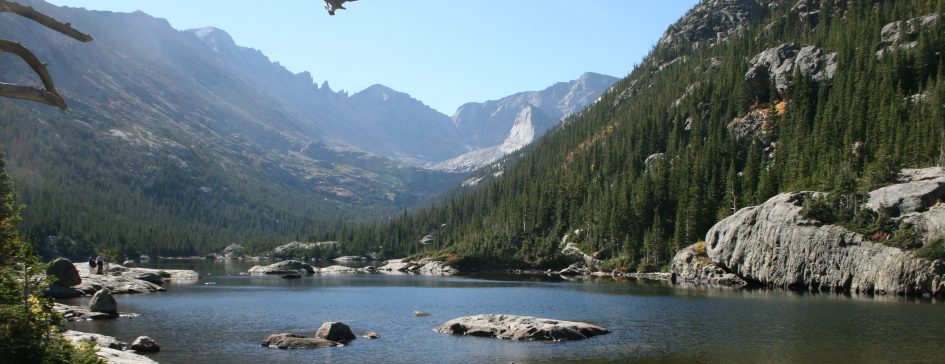
I was cruising through Glacier Bay National Park when I wrote this blog.  It was just one of those inspirational momentsl  If you have never seen it, you should, especially as a water professional.  The entire park is a testament to the power of water and the result of changes in climate cycles that affect the hydrologic cycle.  I will post video of the journey separately, but suffice it to say that the inherent beauty of the place is difficult to describe.  Needless to say with a large concentration of glaciers in the area (most retreating), there is copious amounts of water (for now).  The Pacific Glacier has retreated 65 miles, yes MILES, in 300 years in part because of changes in oceanic moisture and evaporation.  The native people, Tlingets, moved and survived based on glacier flows end ebbs.  But that’s not my point.  Seeing this much water leads to an entirely different perspective, one that is helped by Brian Fagan’s book, Elixir which outlines the history of civilizations as they were affected by harnessing of water, or the lack of ability to do so.  Same thing applies to the Tlingets here.

Historically the key was to rely on surface waters where they were consistent, to manage water locally and carefully for the benefit of all, and when surface waters were not consistent enough to be reliable year after year, quanats, shallow wells and other mechanisms were used to extract water from glacial till or adjacent to rivers (riverbank filtration or infiltration galleries in today’s vernacular).  Or people moved or died out. The ancient people did not have the ability to dig too deep, but were creative in means to manage available supplies.

Contrast this to today where over the last 50 years we have been able to extract water from ever expanding, generally deeper sources, but to what end?  Certainly we have “managed “ surface waters, by building dams, diversions and offstream reservoirs.  These supply half the potable water use in the United States and Canada as well as a lot of irrigation.  But groundwater has been an increasing component.  Fagan makes the point that deep groundwater sources are rarely sustainable for any period of time, and that many in the past have recognized this limitation.  But have we?

Maybe not so much.  A couple years ago I was at a conference out west.  The session I was speaking at involved sustainable groundwater, a major issue for AWWA, ASCE, NGWA and the utilities and agricultural folks around the world.  One of the speakers was a geologist with the State of Utah.  Her paper concerned the issues with decreasing groundwater levels in the St. George and Cedar City, areas in southwestern Utah, where population growth is a major issue.  Her point was that despite the State efforts, they had significant drawdowns across the area.  Keep in mind that the USGS (Reilly, et al, 2009) had identified southwestern Utah as one of many areas across the US where long term decreasing groundwater levels.  My paper was a similar issue for Florida, so I stopped partway into my paper and asked her a question:  has any hydrogeologist or engineer trying to permit water in the area ever said the water supply was not sustainable?”  The room got really quiet.  She looked at me and said, “well, no.”  In fact the audience chimed in that they had never heard this from their consultants either.  The discussion was informative and interesting.  Not sure I really finished my presentation because of the discussion.

To be fair, consultants are paid to solve problems, and for water supplies, this means finding groundwater and surface water limited areas like Utah when their clients request it.  So you don’t expect to pay your consultant to find “no water.”  But where does that lead us?  The concept of sustainable yield from confined aquifer systems is based on step drawdown tests.  Ignoring the details, what this constitutes is a series of short term tests of the amount of drawdown that occurs at different pumping levels. AWWA’s manual on Groundwater can give you the details, but the results are short-term and modeling long-term results requires a series of assumptions based on the step drawdown test.  This is that had been submitted in support of permits in Utah (and many other places).  As discussed in the conference session, clearly there is something wrong with this method of modeling and calculation because, well, the results did not match the reality.  The drawdowns increased despite modeling and step drawdown tests showing the demands were sustainable.  Clearly wrong.  Competing interests, the need to cast a wider net, and many other issues are often not considered.  The results play out throughout the world.  Confined aquifers are often not sustainable, a potential problem for much of agriculture in the farm belt of the US.  Are we headed the same direction as ancient people?

The good news is that these same hydrogeologists and engineers have the ability to help solve the sustainability problem.  We need a new definition for “safe yield.”  We need a better means to estimate leakance in aquifers.  A project I did with injection wells indicated that leakance was overestimated by a factor of 1000 to 10,000, which would drastically alter the results of any model.  More work needs to be undertaken here.  The overdraw of confined groundwater is a potential long-term catastrophe waiting to happen.  And the consequences are significant.  The question is can we adapt?

But when we start to look at resource limitations, who stands up and says, this type of withdrawal is not the right answer.  We need another one.  Where is that leadership moment?


One of the conundrums with leadership is actually trying to define what it is.  An analogy is ethics.  We know when we don’t see it.  The reverse is a little more of a challenge.  But trying to define ethics is quite a challenge.

I teach a class on ethics to professional engineers and to undergraduate students.  One of the more interesting exercises is trying to define ethical behavior.  Ethics is an issue that comes up on an ongoing basis, affecting politicians, engineers, consultants, and utility staff members.  But what are ethics?  To answer this question, or begin to, we can turn to philosophy to attempt to define ethics.  A cursory review indicates three potential definitions of ethical people:

  • A set of values and lives by them.
  • Any set of values which are shared by a group of people.
  • A set of values that are universally accepted.

Let’s take a look at each of these.  First is a person with a set of values and lives by them.  What do we make of this definition?  Do we accept it?  Or a person like this?  The first definition is pretty easy to explain away.  Few people buy into this as an ethical person because the values can vary and may include individuals with individual sets of ideals (Robin Hood) or people with frequently unaccepted behaviors (anti-social, etc.).

So obviously, a person with any set of values which are shared by a group of people set of values and lives by them must be better.  What do we make of this definition?  Do we accept it?  Or a person like this?  Seems ok.  These people share many of the same beliefs and conform to an accepted set of “rules” and acceptable behavior.  Engineers are among the groups with common values.  But alas, this definition is also pretty easy to explain away.  Few people buy into this as an ethical person because the values can vary and may include individuals with individual sets of ideals. Suggestions brought up by class members were:  cult members, terrorists, certain political regimes. etc.

So obviously, a person with a set of values that are universally accepted must be perfect? What do we make of this definition?  Do we accept it?  Or a person like this?  Name one example of a universally accepted value.  There are times when killing is ok.  Honesty sounds great, but honesty isn’t when it hurts someone deeply.  So actually none of these definitions is useful.

Another tactic is to look at professions to see if there are commonalities among our perception of ethical and unethical professions (ignoring whether or not the perception reflects reality or not).  There are some common examples that come up (sorry car salesmen, mechanics, lawyers and politicians).  The commonality with the professions perceived to be unethical is money – they perform a service for someone specific and expect to be paid for it.  There is limited quality control.

On the other hand, those professions viewed as ethical by most are things like public safety, education and technical people.  Generally speaking the perception is that these people serve the public.  There is a clear delineation in people’s minds about professions, money and public service that shape their view about ethics.  That makes it a lot easier to see who is and who is not ethical.

Ethics provides an analogy for leadership.  It is hard to define leadership, because it comes in many forms and is often specific to the approach to a situation.  A quarterback who is a great leader of the field, might not be the best choice to leader the reorganization of a major corporation.  Both positions require leadership, but the skill sets required for the positions is situational.  Because we cannot define the skill set for every situation, we tend to look at examples of people who are leaders or who have exhibited leadership in the past and try to draw from their experience, what made them a leader.

A problem is that we often don’t recognize leadership at the time it is occurring. It is so much easier to identify people who are not exhibiting good leadership, or who’s idea of leadership clearly is self-serving or narrowly focused; people will not follow these types of people for long because there is no shared benefit.  A person is not a leader if they do not display a consistent vision of where they want to take the organization. Changing direction constantly disrupts the efficient flow of work efforts and frustrates followers/employees.  People who do not add value to the organization, can only ”lead” by coercion, which is the antithesis of leadership.  Leadership requires no coercion.  We often come across people who cannot communicate their ideas clearly, another hallmark of a leadership failure. If people do not follow, the leader is failing to lead.

So perhaps, like ethics, we can find leadership by looking at the opposite of what we view as the failure to lead.  That means leaders should be able to communicate clearly, their vision.  And they need that vision or direction that people buy into.  We can evaluate leadership by those who follow, and their willingness to follow.  Leaders must bring value to the organization, as well as skills and knowledge.  Because leaders tend to know their limitations, they will bring in people to fill those gaps.  That means leaders will hire the best people they can, without worrying about whether they are vying for some future position. Leaders have confidence in their abilities, and strive to make everyone better in the organization.  Keep in mind, if you set someone up to fail, they will.  It is a failure of management and leadership to put people in the position to fail.  When provided a challenge, it is how the leader attacks it, and how they marshal resources to succeed.  As a result, leaders may exist at every level of the organization.  The challenge is seeking them out, and putting them in position to succeed.

If all this sound vaguely like football or the battlefield, well it should.  In the NFL, the skill sets are similar, it is the mental aspects, the vision, the ability to work together, the willingness to do the little things that do not always get noticed, and the ability to cover someone’s weaknesses by exploiting your strengths that wins football games.  You need talent, but you need leadership to be successful.  The teams with lots of great players that never win are legion.  Teams change coaches, and players, trying to find that tri9ght mix.  When the team finds the mix, success follows.  Lincoln found this during the Civil War.  He spent time with the troops.  He communicated his vision to them, expressed his appreciation for their efforts, supported them and they were enthusiastic supporters.  HIs generals, well another matter.  So Lincoln kept changing generals until he found Grant who would fight and end the war, his vision of the end game – to win.

Now the question is where are our water leaders.  Who are they and what is their vision…


One of the ongoing discussions at all levels of government is the lack of funding for many programs as a result of economic difficulties in 2008.  Economic difficulties are nothing new.  We had economic downturns in late 1970s/early 1980s, 1991-1992, 1999-2000, and 2008-2009 as examples, and we have often incurred the same issues.  Unfortunately it appears to the general public that we make many of the same mistakes over and over.  From a federal level we hear the argument about the need for tax cuts to spur spending in the private sector, while Keynesian economists who suggest greater expenditures by government to pull us out of economic difficulty.  Both arguments have their points, but how opposites can solve the same problem is difficult for the public to see.  Perhaps a little understanding of the economic sector and analogies to our personal lives and the water industry would help us.

From the perspective of an ongoing growing economy, the goal would be to have the consistently increased gross product, growing at a reasonable rate, just as it seems reasonable for our salaries to rise at or above inflation rates and our ability to “bank” water for those growth spurts are common pursuits.  From a national perspective, you know you are doing well when your economy grows just over the rate of population growth.  When it grows a lot faster, economists worry about overheating.  These high growth rates have occurred as recently as 1996-1999 and 2002-2007, but are often associated with economic “bubbles” which means that a specific sector seems to be growing really faster, creating a demand for investments that further drive up the perceived value.  The benefit to utilities and governments for these growth spurts was that revenues generally grew faster than the costs.


Of course bubbles are speculative, and at some point investors realize the value is not there and stop investing.  The sector collapses wreaking havoc on the economy, resulting in the economy not growing at a rate exceeding the population growth.  In these cases, the revenues to fund those services people expect, grow slower than population or may even decline as they did in 2008-2009.  Government has not been able to deal with these changes well, but from a personal perspective, these ups and downs are common in peoples’ lives, and we try to deal with them by putting money away in the proverbial “savings for a rainy day.”  Businesses have historically tried to do this as well and utilities try to secure water sources for the same reasons.  However, many governments have not, and it is worth trying to understand why not, the impact it has today and how to resolve the issue going forward.

Two things appear to drive the issue, and they are related to the two schools of thoughts on economics.  First there is a tendency to spend at the level of your revenues.  People, companies and governments all do this.  So in good times, our expenses often rise to match revenues, partly for catch-up purposes, but partly simply because there is more disposable income.  When revenues greatly exceed expenditures, there can be a tendency by utilities and governments to reduce their revenues by cutting rates reducing taxes and the proverbial thought that “people can better manage money than government.” We saw this in 2001 after the federal government finally balanced the budget and started creating surpluses (that could have been used to pay off some of the accumulated debt, but that’s an entirely different story).  Many states saw the same phenomenon (Florida is an excellent example).  However this thought process is akin to a person who goes to his or her boss and asks them to reduce their salary because they are accumulating too much money.  No person ever does this.  Instead we bank that money for the “rainy” day.   So does it make sense for government to cut their revenues in the surplus times?

Consider that down times follow surplus times.  If revenues are reduced during times of plenty, there is no savings for that “rainy” day.  As a result the current path leads to a tendency to suggest cuts in expenses in down times, but this actually exacerbates the economic problem.  Income decreases and because demand is down, prices fall (basic supply and demand).  As expenses decrease, the economy contracts, which means even more people are affected – it can be a vicious circle.  Economic disruption creates a negative impact on government revenues, sometimes disproportionately.  So by reducing revenues in the surplus times, actually compounds the impact of economic downturns, by eliminating the potential for expenditures from savings, requiring spending from borrowing.

At the federal level, we hear the tax cuts versus more spending argument, but neither addresses what individuals have long known – we need to bank surpluses, not ask for pay cuts or extensively borrow in lean times.  The concept of Keynesians is that government should make up the difference between the private and public sector spending to maintain the level of spending in the total economy, but Keynes did not say that is should all come from borrowing.  There is an implicit assumption that some of this should come from savings, just like it does for individuals.  Heavy borrowing can complicate future revenues by increasing future revenues needs, the other side of the argument.  Trying to make up for revenue shortfalls increasing rates and fees when the funds of people and corporations are limited, compounds their problem.  The economy may grow to make up for those cuts, but that is a speculative argument.  The results of austerity is evident in Spain, Greece, Italy and Ireland where their economies continue to contract, not improve.  That solution clearly does not work.  That’s like asking for a pay cut and reducing your expenses significantly – you don’t live better and those depending on you  don’t either. Cutting revenues while increasing expenses creates the worst of both worlds and makes future concerns even more of a problem.  The federal conundrum is, well, a conundrum.  Not sure what the solutions are there, but there are no easy choices and few of us have much control of input.

But locally ourselves and our utility systems, are completely under our control.  A modification to the paradigm of economic needs or our utilities for the future of our system is needed.  We should rethink our economic vision for the next cycle to mimic what many people attempt to do.  We need to figure out what our revenues need to be, and plan long-term for maintaining a given revenue flow.  There will be up and down times, but we can plan for these.  We should create policies that denote that revenues in excess of expenditures should be banked for that “rainy day.”  We should control the urge to expand expenses in the good times.  We should then use those banked revenues for the future.  Then when the next economic downturn hits, we have banked revenues that can be used to maintain the level of service to our customers.  We should have a policy on this as well.   The benefit to utilities is that the investment in lean times often comes at a reduced cost (demand is down so prices fall), while providing an economic stimulus locally (more jobs).  The City of Dania Beach’s nanofiltration plant had this benefit – 70 cents on the dollar costs, plus a grant.  100 jobs created.  Policies on generating surpluses and spending them in lean times on projects like this would seem to make things easier for everyone in the future, but to follow such a trek requires leadership, policies, and self control within the organization.

The question is where is that leadership coming from to make these decisions and to resist political expediency?


While many of us enjoyed being with friends and family, enjoying good food and drink,, how many of us thought about being connected to water and sewer systems that provide safe water supplies and safe wastewater disposal? We should be thankful for this as well. The other option makes life so much harder. We should not water and wastewater for granted, but unfortunately we do.