Archive

Tag Archives: Water supplies


I had an interesting email exchange with a guy in north Florida who was trying to educate the Legislature on why planners are always wrong with their projections and their studies should be ignored as a result.  His specific issue was water supply, but it could have been any number of issues.  His argument was that the projections for water use made in 1976 were incorrect and in fact total water demands in the State had been basically flat over that period.  He’d be unhappy to know that Florida mimics the rest of the country.

Ok, I admit that in addition to being an engineer, I have a minor in planning and a degree in public administration.  I attempted to communicate with him about the purpose of planning, not that it helped.  Planners outline projections of what things will likely be IF not changes are made.  The reason is to prompt policy or behavioral changes prior to reaching critical tipping points.  The argument in 1976 was that Florida would run out of cheap water if current trends continued.  In the intervening years, there have been major efforts toward water conservation, low flow bathroom fixture and major changes to irrigation practices.  All of which made the water picture far better than the 1976 projection.  See the planners were not wrong – the projections indicated the problem if nothing was done, and acted in part as a catalyst for change.  This is what planners dealing with water supply needs, sea level rise and a host of other planning issues are supposed to do.  If we understand what the potential problems are, maybe we can take action to avoid tipping points.  This is not to say all projections are perfect or even correct, but the idea is to avoid reaching a point of no return.  Isn’t that what smart people should do?  Apparently not to the guy on the other end of the email.  Happy Halloween.  Er, no this was just scary because it was real!!


October is the month that brings us the astronomical tides, or locally to the coasts, the annual high, high tide.  The position of the moon relative the Earth creates a slight alteration in the gravitational pull of the moon on the oceans so high tide, is, well high!  If you lived in a coastal areas, what did you see?  Or experience?  Southeast Florida was rife with email chatter and photographs of flooded streets, yards, and canals.  The City of Fort Lauderdale sent notices to residents warning them about the tides.  We had no rain, just the tide coming in.  These are low lying areas that 20 years ago did not flood except during storms.  This is just a phenomenon that has been monitored in coastal areas over the past 5-10 years, depending on the complaints that have come into local officials.

One of the more interesting complaints I received in my career was in Hollywood Florida where a resident complained about the “fish in the street.”  Sure enough, the storm drain in front of his house was connected directly to the Intracoastal waterway and the October tides had pushed the saltwater up through the catch basin into the street.  Now these weren’t snook or redfish, they were little fish escaping the snook and redfish, about 3-5 inches long.  Pretty funny stuff if you think about it.  Realizing the problem, I called him 3 hours later and asked if the problem had been solved.  He said told me I was a genius to fix that so fast.  My boss told me to take advantage of luck and drop the explanation, but to design a solution (which we did).  My boss was right, but the call made me more cognizant of the issue.

15 years later, I have a student developing models of what happens during the annual high and average tides, especially with respect to the potential for flooding in low lying areas where groundwater is just below the surface.  His work is impressive.  A lot more land, especially inland, may flood as a result of the annual tides, which are a precursor to the long term trend of rising seas.  See the groundwater has a slight upward gradient as you move inland.  As a result, you cannot use the tide levels to predict inland flooding, you need to add the tides on top of historical groundwater levels.  Of course the wet season is the summer in Florida, so the October tides come just at the time groundwater levels are highest.  But at least we can determine where the stormwater pumping improvements need to go.

Determining where stormwater pumping is needed is only part of the problem.  As sea levels rise, more stormwater management will be needed and a place to put the water will become a problem.  Discharging nutrient laden stormwater to tide is not a good answer when you have fragile reefs offshore.  NOAA’s Florida Area Coastal Environment  (FACE) Initiative outline this (see intensives study – http://www.aoml.noaa.gov/themes/CoastalRegional/projects/FACE/Publications.htm).  Instead, perhaps at some point we may develop infiltration systems to capture this high water table “problem” and convert it to water supplies, solving two issues for southeast Florida.  Might be 2030, but we probably should be doing some planning….


In a prior blog, I raised the question about marketing your water to your community.  The issue resulted from a comment that public dollars should not be spent on advertising.  There were several comments about this and we perhaps need to explore that option further.  One question raised was “how do we engage our community?”  There are a variety of ways to engage the community, but most utilities pursue only superficial, and inexpensive solutions, if pursued at all.  The typical solutions include speaker’s bureaus, mailers, flyers, notes on water bills, the consumer confidence report, press releases, presentations at commission meetings and water conservation efforts.  But how well do these work?  Certainly every utility should pursue many if not all of these options.  Getting positive information out to the community is needed, but does it change the perception of the community toward the utility?  Hard to say, but if that is the goal, you may be surprised how limited the impact of these efforts may be.  For one thing, most mailers, etc are viewed as junk mail so are not read by the customers.  Likewise most people do not pay attention to commission meetings, or read the paper (assuming the paper publishes the press release).  So many of these well intended, and time consuming efforts may be create limited engagement.  More proactive and maybe time consuming efforts are often needed to create an impact.

So what might work better?  If trying to change perception of the utility, more hands-on engagement may be needed.  It may mean reaching targeted audiences that can change current or long-term perceptions.  This can occur in a number of ways.  Here are a few:

  • School competitions for water conservation, hydrant painting, model water tanks – the concept here is to provide fun to elementary and middle school kids while encouraging them to learn about a given topic.  Normally involves teachers and parents, which enhances the message and spreads the “word.”  There are state and national competitions that students can participate in as well.  Utility management support is required, as and some resources and some devotion of time from staff to coordinate efforts among students and teachers.  But it puts the utility in front of an impressionable audience and provides a learning opportunity very different from the normal classroom.  How would that not be memorable?
  • Middle school programs with utility staff – the concept here is to encourage utility staff to communicate directly with middle school kids about what they do.  The key is to get younger kids interested in pursuing jobs in the field.  One of the ongoing issues in the utility industry is “graying,” and the potential for almost 50% of the workforce to retire in the near future.  Getting students to change their careers in college is too late.  Often high school is as well.  Middle school kids have rarely given much thought to their careers.  What better way to recruit that to put the utility in front of kids and get them thinking about going into the water field.?
  • Tours of facilities for school kids – most students learn visually, so tours of the facility are useful to create interest and enhance learning. Security is an issue, but they are kids.  It is always useful to know what goes on with water and wastewater. And it’s normally a positive, out of the classroom experience.  What kid doesn’t like a field trip?
  • Summer internships for high school students – this is another effort to engage and educate students, while perhaps setting the stage for a future employee who understands what win needed to do the work.  Teachers and parents are required to be part of the process – otherwise who recommends the students ad how do they get to work?  It helps if this is coupled with earlier introductions to the utility, so kids have become interested in the career prior to the job opportunities.  Think about the kid who learns about and tours the utility in middle school, knowing internships might be available in a couple years.
  • Partner with local universities on research issues – The focus is universities, not trade schools or community colleges, because universities do research and this capacity is often underutilized in the business work.  In part this is because their mission is misunderstood – they teach students to think as opposed to technical skills, which means things might take a little longer.  But universities have lots of technical resources, literature and skills that can be useful to utility systems.  Often the cost is less than consultants, and the access to data and knowledge is usually beyond that of consultants as well.  The utility needs to find the right person to connect with for small projects as some university folks avoid small projects, but many engineering professors welcome the opportunities.  Also many universities are public entities, which means bid laws may not apply for public agencies.  That makes it easier….
  • Sponsoring research projects for graduate students – graduate students need projects to complete their thesis.  They need real data and utility projects and research are generally beneficial.  And they need jobs so research is like an extended interview.  Professors are looking for research to collaborate on.  Utilities often need testing of pilot projects before design is initiated or completed.  As a result, utility sponsored research is a win-win for everyone.
  • Offering paid internships for undergraduate students – college students need money to pay tuition and experience to get a job.  The utility can engage and educate students, while perhaps setting the stage for a future employee if they do the job well.  Internships are extended interviews to gauge student skills.  And universities can help recommend good students.  Another win-win.
  • College scholarships – scholarships recognize good students, while creating the potential to attract future talent.  AWWA has found that most students who receive scholarships in from the water industry, stay in the field.
  • Co-hosting conferences – many conferences are looking for sponsors, money and locations.  Local conferences normally get some press, which helps the water profession.  Another win-win.
  • Hosting training programs- like conference, training is something all engineers, finance people, and operations and field personnel need.  Like conferences, many training programs are looking for sponsors, money and locations.
  • Participation in activities like Habitat for Humanity – utilities have tools and skilled labor.  They can help with community based activities.  Management needs to be engaged and show leadership for such projects to be successful, but there can be no losers in activities like this.
  • Awards – Apply for them.  They are noteworthy, and publishable!
  • Newspaper advertisements about events or accolades – some elected officials are opposed to self-laudatory commentary or marketing.  But in the competitive environment we operate in, we need to maximize revenue opportunities.

There are more, how many utilities actually engage in these efforts.  Money is often used as a reason not to, but if long-term engagement is what is desired, perhaps spending limited dollars to pursued these options could present a positive benefit:cost ratio to the utility.  That would make it worthwhile.


Across the United States, we hear the regulatory discussions about managing groundwater supplies.  There are 20 year plans (which many think is the long-term perspective), 50 year plans and 100 year plans; no doubt a myriad of others.  The concept of managing groundwater seems reasonable, but the query here is whether or not managing for a finite period demonstrates good leadership.

In most cases, the concept of managing aquifers for finite periods is associated with the need or desire by local and state officials to develop a certain region, and obtaining the necessary water to meet development projections.  “Sustainability” for elected officials and developers is distinctly different than that of water resource professionals. The whole intent of elected officials and developers is to continue to build more, attract more people and business and, well, to use more water.  This is in contrast to the fact that water supplies in most basins is relatively finite or fixed, which means that inevitably the supply will be exceeded by local demands, the opposite of “sustainability” from a water resource perspective.  Compounding the problem is that water resource professionals are normally pretty creative in stretching finite supplies with reuse, conservation, use policies, restrictions and augmentation with other supplies, actions and programs which actually may work against their long-term goal of sustainability – there is a finite number of reasonable solutions that may work, each with increasing cost to the customers, which works against the goals for the elected officials to limit costs to customers.  As a result, a conflict over the differing views of “sustainability” are inevitable.  As solution requires leadership.

Leadership is understanding that there are constraints to the resources.  Leadership is understanding that there is a limit to the reasonable solutions and a limit to development, or the type of development that can be accommodated.  For example in Colorado, Denver Water, going back 100 years, built tunnels and reservoirs to transfer water from the west side of the Rockies to the east.  This worked for 70 years or so, until the Denver area started to explode, exceeding the capacity of those transfer systems.  As this occurred, groundwater was far less costly than tunnels, reservoirs and acquiring access to water supplies west of the Rockies (and the downstream water delivery contracts impacted this as well).  A 100 year management plan was developed and approved by the State Legislature in 1985 to allow water to be withdrawn from the Denver Basin, despite very limited recharge.  This is not to say that the plan for management was not a good leadership start (certainly it is an improvement over doing nothing), but what happens in 70 years?  We assume some up with a solution to extend the life of the aquifer, but when will that occur and who will lead that charge?   What will be the political backlash when the initial rumblings begin?  The good news is that the major users are utilities, which have resources to pay for treatment, aquifer storage, indirect potable reuse, direct potable reuse and a host of other potential options, but not every basin is so lucky.  If the major users are agriculture or ecosystems, who pays that bill?  If the answer is no one, what happens to the industry?  The jobs?  Communities?  People?

The query begs the question, how do we align competing definitions for sustainability, as defined by local officials, developers, water resource professional and others?  And how do we educate the local officials and the populace of the perils of over-allocation of water supplies?  This is a legacy leadership issue, and it requires hard and sometimes unpopular decisions that can change the course of history.

Legacy leadership is defined by what is left behind not by the current condition.  It’s how we change our thinking and actions to adapt to the changed conditions.  We look back as great water projects of the 20th century – Hoover Dam, the channels carrying water to Los Angeles from the Colorado River and central California that allowed southern California to develop, or the numerous dams across the west that permitted crops to grow in arid regions.  You can search out who led those projects.  That is their legacy.  Those that came afterward reaps the rewards created from the efforts of these leaders.  Now we face a changing condition in the 21st century.  Who will take the 21st century leadership mantle?  And how will we change our viewpoint to protect our resources?  We can start by trying to change the perception of deeper groundwater, especially confined systems, as primary water sources, when they may better serve us in the long-term as back-up or emergency sources in many regions, with surface water as the primary sources.  Where surface waters and surficial aquifers do not exist, perhaps development as desired by local officials is not the sustainable way to go?  So who takes the lead in those areas where there are insufficient resources and tells the developers, no you can’t develop here?  That will be leadership….


The demand for more food crops to feed a hungry world has expanded the need for irrigable lands.  Few want to risk the 1930s dust bowl or the droughts of the 1950s, especially with ongoing recurrent drought periods across much of North America on a regular basis.  The access to electricity and modern submersible pumps over the past 80 years has permitted a huge expansion in the amount of irrigation performed with groundwater.  Fly over the western United States and look for “crop-circles” where center wells act as the spoke for rotating irrigation systems.  They are obvious.  But virtually all of them are located in areas where surface water is not available and groundwater is the only source of water available for irrigation.  This might work where the groundwater is surficial, but if the groundwater were surficial and found in large quantities, wouldn’t there be surface waters that intercept the groundwater?  The groundwater would feed rivers, lakes and streams.  But in most places with center pivot irrigation, the groundwater is located well below the surface, and low rainfall means that recharge to these deeper aquifer systems is limited.

Irrigation use accounts for 40% of total water use in the United States.  USGS reports that in Arkansas and Nebraska, 90% of irrigation is groundwater.  These states are two largest groundwater users in the country.  California and Texas are right behind them in total use, with groundwater accounting for 80% of irrigation use.  Idaho, Oregon, South Dakota and Washington are among the states with irrigation accounting for in excess of 90%+ of total groundwater use, although their total use is much less than that of the other four states.  The areas irrigating with groundwater in all of these states competes directly with rural potable users, both individual and small cities, and with ecosystems that may support tourism, fishing, hunting and other outdoor activities.  Unfortunately USGS also reports that in all of these states, there are areas with severe declines in aquifer levels.  For example in South Dakota, USGS estimates that 70% of the water has been withdrawn in 30 years.  So the answer in 20 years will be……  There is no answer at the moment.  Some think we should just drill deeper, but this normally comes with added costs, assuming aquifers actually exist at these deeper levels.  But agriculture can’t afford to pay for treatment, meaning they it will be difficult for them participate in a solution.  Too few people in cities means alternative supplies like reclaimed water are not available.

The irrigation from deeper aquifer that do not recharge readily is indicative of a resource management paradigm that suggests we manage water supplies for a certain period of time (usually our lifetime or work period).  The consequences beyond that timeline are not considered because it is “beyond our lifetime” or planning periods, or we assume “someone will come up with something…”  Non-surficial groundwater supplies throughout the United States and probably the world should be viewed like a scratch-off lottery card.  Once in a while you have a winner, but it’s never enough to sustain you for the long-term, let alone pass it to your kids. And once it is spent, it’s gone.  Likewise once deeper aquifers are drained….  Bryan Fagan suggests most civilizations ultimately failed as a result of water woes.   If we want our civilization to survive well beyond our time, perhaps we should revisit history.

The long-term civilization model suggests we should consider a paradigm shift with respect to non-surficial groundwater.   Non-surficial groundwater is a resource that is finite – water that is stored, but once depleted, cannot be readily replaced.  That is not a sustainable solution and suggests that these types of groundwater sources should not be looked at as primary water supplies for irrigation, or for power or urban or domestic use for that matter – they should be considered back-up sources to protect us from surficial droughts that occur periodically.  The dust bowl impacts would have been lessened if we had back-up irrigation supplies from wells.  But in the future, if the aquifers are dry, and surficial droughts occur, the impact directly affects our food supplies and our economy.  We are often caught in defining the “long-term” as 20 years, but the US is 235 years old, but still considered young.  Our perspective of 20 years as long-term is only a quarter of a lifetime, which clearly falls short of long-term from the perspective of civilization.   Something to think about….


A comment I heard recently from an elected official was that it was inappropriate to use public dollars for their water agency to market their water product.  Interesting, and it suggests a major barrier to the development of local utility systems.  The cell phone companies, cable television, bottled water companies and security agencies all market constantly to our customers.  Virtually all of them charge more for their service than we do for water and wastewater.  The costs for all have increased faster than water and sewer.  But try surviving in the desert with only cable tv and no water.

Utilities compete with every other vendor for the same dollars.  They want our customers to value their products more.  They want our customers to divert dollars to them, so they need to increase the value of their products in the minds of our customers.  This is what marketing is all about.  If you cannot show the value of your product, the value diminishes in comparison to other products.  So while the needs for water and sewer systems increase, we see more of our customers’ dollars go elsewhere and the accompanying  demands to control our rates.

Water and wastewater systems must market their product.  Clean healthy water is available to virtually everyone.  People expect their faucet will turn on and provide good quality water, and that the toilet will flush.  They take it for granted, yet much of the world does not enjoy the same quality of consistency in service.  Water service is a commodity, and comes with a cost.

We say we want to operate the utility like a business, and many systems are run this way.  Most charge based on usage (or should).  But we fail to pursue one of the basic tenets of running a business:  marketing our product.  The annual CCR is not a marketing tool.  Water bills can convey messages, but they do not really function as marketing either.  Water conservation programs can help, but here the message is use less, not the benefit of the product.  We simply do not market water.  It is why the bottle water industry continues to grow, despite the fact that public water systems offer water at least as safe and healthy as bottled water, subject to more regulatory oversight, at a fraction of the cost.

So given that utilities, the majority of which are owned by local governments, are operated like a business, why shouldn’t we spend money on marketing the benefits of clean, safe water?  Why not market the benefits of 24/7 service?  Why not highlight the efforts of dedicated employees that ensure the system operates 24/7?  Why not raise consciousness of the water commodity to increase its value in the public’s eye?  The only reason not to market is the benefit competing services.  That does not benefit the public good, nor support the need to recover the costs of service and repair and replacement needs of the system.

Creating a marketing plan, or branding program for your utility is a major undertaking.  DC Water spent year re-branding their system to raise consciousness.  Creating marketing programs to engender success requires multi-media outlets, consistent messages, and vision.  It requires that employees and elected officials be on the same page with their customers.  We need to understand customer expectations of the service to raise value in their minds.  If marketing can sell pet rocks, we can market the value of water.  It is in our best interests to do so.


Water management is a fundamental need for the development of civilizations. Always has been.  If you have any question about this, ask yourself what differentiates the developed world from the undeveloped.  Water supply, sewage management and flood control rank 1-3 among the differences.  Safe drinking water and good sanitation go back beyond the Romans, and is a necessity to insure that the populace, and those performing work are productive as opposed to sick all the time.  At present there are agencies that operate to manage water supplies and drainage, and a few that do both.  Mostly these are regional agencies, which belies the need for local decision making to respond to local conditions.

An example – in 2007/2008 the State of Florida was in the midst of “sever drought.”  The water management agencies spent considerable time and political capital working on water conservation strategies, limiting utility withdrawals, cutting permit allocations and demanding conversions to alternative supplies in the future.  The southern half of the state was hard hit.  Utility customers cut their demands significantly.  Unfortunately the customers’ reward was surcharges to make up lost revenues to overcome large operating shortfalls and potential defaults on borrowing documents.  The short-term implementation was designed regionally, but had significant local consequences that were not considered.

But more interesting was the actual “drought” conditions.  It seems that the hard hit areas were in the central part of the state, not the southeastern coast.   The central part of the state, including the Everglades had received about 60% of the average rainfall, but along the coast, the two year shortage averaged less than 10%, and most residents realized that their rainfall accumulations were not as severe as inland.  Since most of the southeast coast’s water supplies were local, not based on the central part, the local question rose, “why were the water conservation measures required of these utilities and residents? and  Why was this not a locally driven issue?”

The case highlights the fact that while most water resource planning efforts are regional, the impacts occur locally, and often local impacts are not fully considered.   Credibility of the utilities is critical for emergencies or difficult situations.  During this condition, a survey of coastal utility customers found that the customers were better informed on rainfall totals than the regional information provided, which undercut the credibility the local utilities were trying to build with their customers, which impacts future needs for cooperation at the local level.  Something about crying wolf…


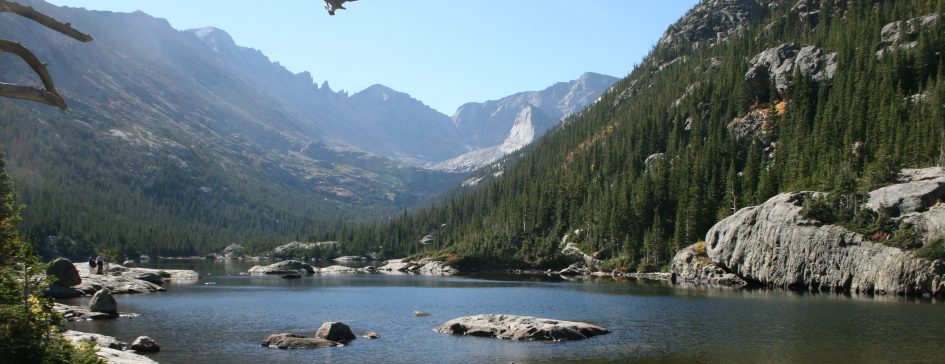
I was cruising through Glacier Bay National Park when I wrote this.  Just an inspirational moment.  If you have never seen it, you should, especially as a water professional.  The entire park is a testament to the power of water and the result of changes in climate cycles that affect the hydrologic cycle.  I will post video of the journey separately, but suffice it to say that the inherent beauty of the place is difficult to describe.  Needless to say with a large concentration of glaciers in the area (most retreating), there is copious amounts of water (for now).  The Pacific Glacier has retreated 65 miles, yes MILES, in 300 years in part because of changes in oceanic moisture and evaporation.  The native people, Tlingets, moved and survived based on glacier flows end ebbs.  But that’s not my point.  Seeing this much water leads to an entirely different perspective, one that is helped by Brian Fagan’s book, Elixir which outlines the history of civilizations as they were affected by harnessing of water, or the lack of ability to do so.  Same thing applies to the Tlingets here.

Historically the key was to rely on surface waters where they were consistent, to manage water locally and carefully for the benefit of all, and when surface waters were not consistent enough to be reliable year after year, quanats, shallow wells and other mechanisms were used to extract water from glacial till or adjacent to rivers (riverbank filtration or infiltration galleries in today’s vernacular).  Or people moved or died out. The ancient people did not have the ability to dig too deep, but were creative in means to manage available supplies.

Contrast this to today where over the last 50 years we have been able to extract water from ever expanding, generally deeper sources, but to what end?  Certainly we have “managed “ surface waters, by building dams, diversions and offstream reservoirs.  These supply half the potable water use in the United States and Canada as well as a lot of irrigation.  But groundwater has been an increasing component.  Fagan makes the point that deep groundwater sources are rarely sustainable for any period of time, and that many in the past have recognized this limitation.  But have we?

Maybe not so much.  A couple years ago I was at a conference out west.  The session I was speaking at involved sustainable groundwater, a major issue for AWWA, ASCE, NGWA and the utilities and agricultural folks around the world.  One of the speakers was a geologist with the State of Utah.  Her paper concerned the issues with decreasing groundwater levels in the St. George and Cedar City, areas in southwestern Utah, where population growth is a major issue.  Her point was that despite the State efforts, they had significant drawdowns across the area.  Keep in mind that the USGS (Reilly, et al, 2009) had identified southwestern Utah as one of many areas across the US where long term decreasing groundwater levels.  My paper was a similar issue for Florida, so I stopped partway into my paper and asked her a question:  has any hydrogeologist or engineer trying to permit water in the area ever said the water supply was not sustainable?”  The room got really quiet.  She looked at me and said, “well, no.”  In fact the audience chimed in that they had never heard this from their consultants either.  The discussion was informative and interesting.  Not sure I really finished my presentation because of the discussion.

To be fair, consultants are paid to solve problems, and for water supplies, this means finding groundwater and surface water limited areas like Utah when their clients request it.  So you don’t expect to pay your consultant to find “no water.”  But where does that lead us?  The concept of sustainable yield from confined aquifer systems is based on step drawdown tests.  Ignoring the details, what this constitutes is a series of short term tests of the amount of drawdown that occurs at different pumping levels. AWWA’s manual on Groundwater can give you the details, but the results are short-term and modeling long-term results requires a series of assumptions based on the step drawdown test.  This is that had been submitted in support of permits in Utah (and many other places).  As discussed in the conference session, clearly there is something wrong with this method of modeling and calculation because, well, the results did not match the reality.  The drawdowns increased despite modeling and step drawdown tests showing the demands were sustainable.  Clearly wrong.  Competing interests, the need to cast a wider net, and many other issues are often not considered.  The results play out throughout the world.  Confined aquifers are often not sustainable, a potential problem for much of agriculture in the farm belt of the US.  Are we headed the same direction as ancient people?

The good news is that these same hydrogeologists and engineers have the ability to help solve the sustainability problem.  We need a new definition for “safe yield.”  We need a better means to estimate leakance in aquifers.  A project I did with injection wells indicated that leakance was overestimated by a factor of 1000 to 10,000, which would drastically alter the results of any model.  More work needs to be undertaken here.  The overdraw of confined groundwater is a potential long-term catastrophe waiting to happen.  And the consequences are significant.  The question is can we adapt?


I recently spent time in Denali National Park and surrounding area.  60 in the day, 45 at night, and this time of year, rain.  Lots of rain.  Denali creates its own weather, so precipitation and clouds are common for much of the year.  But it was not all the water in the Denali area that interested me as much as some local discussions about methane release from the permafrost.  I was told that many of the native populations rely on storage below ground in the permafrost to freeze winter provisions.  But a curious thing has occurred in recent years – some of the provisions spoiled.  It seems the permafrost relied upon for generations as a natural freezer is no longer permanent in some areas and the soil, frozen for generations, is now suddenly soggy.  Once unfrozen, the soil appears to release copious amounts of methane that has been trapped for years (no smoking on the tunda!).  The issue is further complicated by the fact that some of the methane could potentially get into surface water supplies and without power, and with limited funds, the treatment becomes far more difficult.


Faced with continuing growth and re-development, an aging lime softening plant, and regulatory issues with disinfection by-products, the City of Dania Beach, FL pursued the construction of a new 2.0 mgd nanofiltration process to complement the City’s existing 3.0 mgd conventional lime softening water treatment plant. Efforts to develop a plant that would improve water quality, meet long term needs and raise community awareness involved CDM Smith engineering and construction teams, the City and FloridaAtlanticUniversity.  This paper presents the innovative membrane treatment plant design that was developed to maximize system recovery while providing a high degree of operating flexibility.  This design includes a two stage nanofiltration unit followed by a convertible third and fourth stage reverse osmosis unit to provide the City with the flexibility to meet their concentrate discharge limits when operating at recoveries up to 95 percent by operating in a four stage configuration.  Operating at this higher recovery was tested by FloridaAtlanticUniversity faculty and students, and preliminary design concepts were gained from student design projects, including meeting LEED certification goals.  This plant secured enough credits  to become the first LEED Gold certified water plant in the world.

So what does this mean to a community?  Is this work pursuing?  Why is this type of certification useful for local governments?  In  many cases it sets a public policy example.  It may cut long-term costs (something many utilities do not focus on), and it may improve sustainabilitiy?  What are your thoughts?  Read more in an upcoming JAWWA article.