Archive

economy


In a prior blog we talked about the difference between urban and rural counties and the impact of the differences between incomes and how that would affect utilities.  Keep in mind that the 40 largest urban counties in the US contain nearly half the US population as do the 50 largest utilities.  So in a recent article in Governing, the focus was on the few counties where income was higher than average.  In fact, in looking at counties, within the top 20 in per capita income are 10 counties in North and South Dakota.  Interesting until you review why.  All are in areas where fracking is ongoing and corporate farming is prevelant.  It is no surprise that the fracking boom has created wealth in rural areas that have limited populations, limited regulations and state and local officials who are desperate to reduce unemployment and stimulate laggard economies.  We noted before that rural counties are often desperate for jobs, so they often ignore what could possibly go wrong when jobs and development are the only priorities for a community.  Governing used the example of Wells County, ND where the per capita income has doubled since 1997 and is 75% above the national average.  Yet the local governments are looking at which roads they will allow to go back to gravel.  How is this possible? 

The issue is not relegated to just Wells, ND.  Despite the fact that many rural communities in areas with intensive farming or fracking have grown 10-15% since 2007, local officials are finding it difficult to raise taxes to pay for infrastructure.  Roads are the most obvious and pressing issue because of the impact from fracking traffic.  As new wells are constructed, the frackers build new dirt roads and use the existing roadways.  Some believe the need to fix many of the roads is temporary so why bother, but it neglects the need to infrastructure improvements in general.  The same argument could be used for water and sewer infrastructure as well, but these wealthy rural communities do not want to increase governmental spending to improve any infrastructure, so the opportunity to address the community needs is being lost.  

What is more interesting is that the states where these rural counties exist, including the Dakotas, along with Montana, Wyoming, New Mexico, and most of the southeastern states are among the states that rely most heavily on federal funding.  So when incomes increase, the dependency remains.  These are the same states that tax residents the least, spend the least on education, have the poorest health care (and the fewest people signed up for the Affordable Care Act and few have state exchanges) and have the most people in poverty.  The dichotomy between reality and the political perception is interesting in these states, which leads one to wonder if the residents of these states like their situation and keep electing representatives that reflect this desire, or they have fallen victim to political interests that cause them to vote consistently against their better interests, or for the interests of a limited few that deny them access to the education, infrastructure, medical care and other benefits their urban and wealthier neighbors enjoy. 

That is a tough question but the bigger question is how to infrastructure agencies like utilities attempt to overcome either of these perceptions?  Neglecting infrastructure, education, medical and the like does not promote local economies, does not create jobs and more likely causes the migration of the best and brightest young people out of the community in search of better prospects, which further imperils their rural situation.  Keep in mind that most cities are relatively permanent, but fracking, like mining, oil and timber before them, have been booms and busts.  The situation if far more dire after the boomtown than it was before.  After all, what could possibly go wrong when 50,000 miners, or frackers, descend upon a community of 1,500 people?  They will consume all the resources, then leave.  Locally those well paying jobs are imported due to the lack of skills and education, and then they leave with the bust.  This has played out many times in the past.  It is not sustainable.  We need to learn from the past – when the boom hits, make the investments you need in infrastructure, education, medicine, etc. so that the future is better after the bust. 


As you are aware, I have several hobbies and interest, and economics is one of them.  Economics has theorists from many different viewpoints, and the commonality among them is that there is no “school of thought” that explains everything.  So new schools get developed to explain the current events, or old ones that were discredits are resuscitated, but unfortunately we too often neglect the past, or at least the examples of the past.  Too often the obvious gets ignored.  For example, we cave money because we know there will be ups and downs.  Individual do it, so why don’t governments?  We know that we will pay for a product we need.  Demand drives the price.  If more people want it, the price goes up.  Been that way for…. ever maybe?  So in my recent reading I came across several musing that keep getting talked about by political pundits, but may be they are not what they appear to be.  So let’s take a look at a couple of these that might just affect us….


Is supply side economics is a myth developed by corporate economists to argue for lower taxes.  The concept is to give tax breaks to encourage manufacturers and businesses to produce more product which will reduce costs.  You know this is patently false.  Try selling your reclaimed water at a discount (or give it away) when it is raining.  Demand drives the economy, not supply.  Every economics student learns this in economics 101.  The supply side economics school developed as a means to explain stagflation in the 1970s. The idea what to give tax cuts to those who invested, so they would invest more to make new products, which would trickle down to the rest of us.  Still doesn’t work.  Why?  What they ignored was that the US industrial sector had saturated the US economy with goods and could not grow without new sectors to sell to.  Hence the push on Nixon to open up China to foreign trade and investment.  But opening foreign markets was great, except they could not afford our products.  So we had to make the products there, increase local wages so they could buy the products, and still shipped products back at a cheaper cost that to build them in America.  The idea is not new – recall Henry Ford set up the assembly line to cuts costs to allow him to increase wages so his workers could buy his cars.  The obvious question is when we saturate China, then what?  Africa?  Then what?  The economy cannot grow faster than the increase in population.  So why does supply side economics keep getting traction?  Did we mention those tax cuts….


To the big fashion in Germany and the EU is austerity.  Austerity is an economic idea that never seems to die despite very limited success and many, many failures.  It sounds great – cut costs and balance the budget while cutting revenues (income).  Ok, so let’s see how that works in your household – you quit your middle class job and take a minimum wage job.  You cut your expenses.  Except you can’t sell your house without a loss (and you do not have the cash to make up the difference) and you need your car to get to your new job.  But austerity says that if you eat rice, beans, cereal and Ramen noodles, you will soon be far better off than you are now.  No one will suffer.   Do you believe it?  Do you wonder why the Greeks and Irish are not doing so well today and why people are restless?  They used to devalue their currency, but the Euro prevents this.  They do not have away out.  Meanwhile Iceland devalued currency, let the banks fail, took over the bank assets, and are doing much better.  Austerity was not the option…. Just saying…  And who suffers the most?  Not the high income folks.


Tax cuts stimulate the economy.  Sounds great.  But, from 1944 to 1963, the income tax rate on the highest earning bracket in 1960 was 90% over $200,000.  Yes 90%!   The economy was great.  The middle class was born.  House ownerships jumped.  Education was up.  The economy in the 1970s stagnated after we cut tax rates.  We cut the income tax rate in the 1980s, but raised other taxes, and things improved, but then declined.  The economy improved after the Bush tax hike in 1991. It did not improve after the Bush tax cuts in 2001.  Interesting in their book Presimetrics, Mike Kimel and Mike Kanell noted that higher taxes seem to correlate with a better economy.  Is it because investors can’t sell stock so easily when they made a profit so corporations can count of investments longer?  Or is it that the increase in revenues allows the federal government to invest in more research and development that further stimulates the economy?  Did we mention the tax cuts favor the wealthy?


The moral of the story is that utility managers cannot ignore the economic realities around them.  We cannot be trapped by the musings of people who have hidden agendas, which means that our understanding of the way things are must extend beyond the utility itself.  The economy, economics, monetary policy, tax policy, demographics and change are areas that utility managers need to be current on.  Engineers and managers often understand these issues easily (most are mathematical) but we tend to focus only in out areas.  We need to become educated.  Recall the earlier blog where I noted the city manager who realized later that the reason elected officials tended to bad alternatives was they were being lobbied to approve the poorer options because their clients could make money from it.  You know many ideas that will be lobbied to elected officials and business people in the future.  You need to become educated on these ideas and how they affect your utility.  You know that rates that are too low will not increase revenues.  You know you need to expand sales when possible, perhaps serving new areas, and making the investments for same.  You know that not spending money will only increase the risk of failure in the system.  You know that not increasing pay will disenfranchise employees.  Prepare for these assaults so you can lead your utility down the proper path. 


In the last blog I commented on the Donald Sterling, Thomas Sowell and Clive Bundy comments the week before. I wonder if letting the hate out just a way to keep us from looking at the bigger picture from a political (and maybe business) perspective? And should utilities we concerned? The answers may be yes, and yes an dhere is why. An August 2012 Pew Research Center report noted that only half of American households are middle-income, down from 61 percent in the 1970s. The shift was downward, not upward as the very rich (0.1%) control 58% of the wealth in the US. In addition, median middle-class income decreased by 5 percent in the last decade, while total wealth dropped 28 percent. The need for social programs, despite cutbacks and revisions to the welfare programs in the Clinton era, have increased – since 2000 Medicaid has increased from 34 million people to 54 million in 2011 and the Supplemental Nutrition Assistance Program (SNAP, or food stamps) from 17 million to 45 million in 2011. Keep in mind that income drives qualification for these services so it means that incomes are down for millions in America. The increase in people needing help is no surprise since there is an ongoing increase in the number of lower-wage service jobs like food preparation, retail and service industry, but the number of middle-class occupations, like teaching and construction, have declined. Since 2010, the State of Florida has added 400,000 jobs, impressive except that the vast majority are service and retail jobs that pay just above minimum wage. The job growth in low wage jobs does not replace the loss of middle income jobs which is why 47% of households did not earn enough to pay income tax in 2103. It is not because they don’t want to, it’s because they don’t get paid enough. And we have tens of millions of these low wage jobs that don’t pay enough for the recipients to pay taxes. Just the opposite of what some of the political discussion would have you believe.

The loss of wages is felt locally more than nationally. It means that local officials hear about costs more because water, sewer, power, etc competes for an ever larger portion of the shrinking paycheck. So we see more attention paid to affordability indexes, the ability to pay. The concept of affordability is to take your annual water and sewer bill and divide it by the average or median local income. The goal is water plus wastewater is under 3.5% of the median income. Keeping the percent low is great and easy when people are making more money, but creates a lot of difficulty when the incomes are static or dropping. An our costs are rising due to the increasing need to maintain and upgrade infrastructure that has been neglected since 1980 (the annual investment is under 1.4% for most of the US infrastructure for the last 30 years. We need to invest above 2.3% to keep up according to GAO).

When income drop, costs become more important, and local water and sewer costs are often easier targets to limit than groceries, rent, power, telephone, cable or other services that are not subject to local official votes. So it is in all of our interests to work with local officials, colleges, vocational schools, public schools et al. to attract or build a economy that features higher income jobs, to get everyone employed, and to provide training, infrastructure, outreach, health care and other help to establish a competent, highly skilled workforce in a community. That means that utilities must support the local efforts to effect social change in the community, to help meet the needs of residents not just with water, but with respect to the local economy as well. Does that mean we are actually agents for social change?


A week ago the new National Climate Assessment came out.  It basically says things we already expected – temperatures are warmer, there will be more droughts, less rainfall, less available water, more intense storms and sea level rise.  What the study did in its 800+ pages was outline examples of climate change phenomena that are already occurring including flooded streets in coastal areas, severe weather (Colorado, New Jersey), and changes in the arctic air currents that may be affecting northeastern and Midwestern winter storm frequency.  All things that those who have been around for a while and have been even minimally observant have already noticed for themselves.  What was also not surprising was the vitriol on the internet about how this assessment was a “fascist plot” perpetrated by a variety of people to impose some yet undetermined regulations on “patriotic Americans.”  And then Senator Marco Rubio comes out this week and says he does not believe it is possible for people to cause climate change.  No facts, just belief.  In Florida.  In Miami.  Wow…

Those who live in coastal areas, earn their living in agriculture, manage water utilities relying on water supplies, and drought planners know the truth.  Denying that the climate is changing simply ignores reality and delays the ability to respond to its impacts.  I realize that those impacts might be 20 or 40 or more years out, but planning is needed because we expect our infrastructure, factories, hoses and economies to last longer than that.  Science says change is occurring.  We can argue why and how fast, but the reality is that there is change and there are many people that will confront he need to adapt to the situation sooner than later (like us the Fort Lauderdale/Miami area!).  So why deny climate change?

As we noted in a prior blog, there are several reasons, but many involved business issues.  So follow the money. Let’s start with the Koch brothers.  The Koch brothers manage Koch Industries, the second largest privately owned company in the United States revenues exceeding $100 billion/year.  Many Americans have no idea who they are but they are billionaires who have made their living in the oil business – their father Fred C. Koch developed a new the method for the refining of heavy oil into gasoline.  They rely on oil to maintain their wealth and are politically active with conservative organizations including the Heritage Foundation and the Cato Institute, FreedomWorks and Americans for Prosperity, all organizations the dismiss any impact of man on climate change.  Why?  Well one of the tenets of dealing with climate change is to reduce carbon dioxide emissions which means less reliance on fossil fuels – oil.  Whoops – that would be a problem for the Koch brothers because if they say “sure climate change is a problem,” well then that would mean that their entire business model and their wealth is a contributor to climate change, which means they are the “bad guys.”  Can’t have that.  So following the money tells you that we can’t make our money with oil and support climate change.

Let’s look at the other side.  Those acknowledging climate change are fully supportive of renewables, which in theory will help climate change by reducing carbon dioxide.  But the concept of renewables though is fraught with the problem that few of these technologies are ripe for wide-scale implementation.  For example natural gas vehicles or natural gas/hybrids are doable, but where do you buy the natural gas for the vehicle?  The technology and distribution networks is 10 or more years out at best and of course if you are in the oil business, why would you be interested in installing the natural gas fuel pumps?  So technology and need do not match when you follow the money.

How about the Keystone pipeline that would bring oil and gas from these remote areas to refineries in Texas and the Gulf of Mexico states.  You can guess the Koch brothers are in favor of the pipeline as they will benefit.  So are most oil and gas entities.  There are many environmentalists and other opposed to the pipeline because of impacts on water supplies (and other issues).  But the railroads are making money by hailing oil and gas from Canada and the Dakotas.  Guess which side the railroads are on?  The pipeline would take business away from the railroads.  Follow the money. 

Let’s look at our industry.  In the utility business, there is a lot of money with the telephone, power, cable and other utilities.  These private entities, although regulated, make huge sums of money for their investors.  You can follow that money. 

So who supports water and sewer utilities?  We do!  We supply over 85% of Americans.  But why do we have so much trouble getting funding when 85% of people would benefit.  One would think that given how many people we support, we have the money, but we are primarily not-for-profit entities, so we don’t make money for anyone.  You can’t follow that money because there is no money.  That tells us more about the difficulties we have in securing funding that anything.    

Fixing it is a little bigger challenge because our representatives and constituents do not understand the financial investment they have in our industry.  Their public health and economies are linked to water and sewer.  Our services make these other enterprises doable but there is no direct monetary connection to facilitate lobbying on our behalf.  I am not sure how to fix this, but we need a better marketing strategy for our services.  That’s one thing we know.


Last week was one heckuva week for societal problems related to race relations.  Seems like someone turned over a rock and the 1950s crawled out.  We started with Cliven Bundy, the Nevada rancher who has been using federal property (read our land) for grazing his cattle for 20 years without paying for it, said after the armed confrontation with federal officials, that “I wonder if Negros weren’t better off as slaves.”  But he says he is not a racist, but wow.  That’s right up there with Rush Limbaugh’s comments about Native Americans in his book 15 years ago. 

 Then we had newspaper columnist and right-wing wonk, Thomas Sowell, who is black, saying in a recent column that “you are poor because you don’t work.”  And it is your fault you don’t work.  In “higher income families, people work.”  So using that line of racist nonsense, given that minorities are disproportionately un- or under-employed, does Mr. Sowell really believe that it is really the choice of all of these people not to work?!  Could there be any other causal links like the lack of education, decaying infrastructure or the lack of local opportunities in their community that might just come into play? That’s like saying Detroit’s problem is not the lack of job opportunities, but the fact that no one wants to work in Detroit.  I think not.

The we have Donald Sterling, the owner of the Los Angeles Clippers NBA team, who was taped making racists comments, then received a lifetime ban and multi-million dollar fine for his comments about minorities, and then, instead of apologizing, states that he wishes he’d just paid the woman who taped him off.  Huh?   Of course it is not the first time for Mr. Sterling who lost a case several years ago over his practices of renting property in LA, so I guess we should have expected it.

Of course there are those who argue these folks were simply misunderstood.  Maybe Mr. Sowell was just pandering to his fan base, but what does that say about his fan base that he can write a column that purports that “you are poor because you don’t work” because you don’t want to work and no one says anything?  He clearly appears to be besmirching the inner city minority population, but as I noted in a prior blog, rural America is significantly worse off economically than urban America.  Rural America is where health care suffers, the lack of health insurance is pervasive, income are lower and unemployment higher.  There are poor across all races, and in all settings.  And given his fan base is includes a lot of poor, white, rural people who aren’t making a lot of money or who can’t find jobs, he’s talking about you!

The Bundy comments stem from his standoff with federal officials over many years of not paying for grazing (like the rest of us could get away with that!).  He and those that came armed to his defense are more indicative of a larger, far-right, anti-government sentiment around the country that has persisted for years.  The west has a number of these groups (recall Ruby Ridge, Waco, Black Hawk helicopter-ists, etc.) that are basically anarchists that disagree with America as it is today.    All white.  But of course as we have seen in the Sudan, Rwanda, the middle east and throughout history, hate can come from all races and religions. All harboring hatred of others not like them.  Understanding why is more difficult, but the commonality seems to be that they all have the perception that the others are somehow treated differently, which allows them to move up the economic ladder faster or allows them to “game the system.”  The perception, which may be completely false, persists because it somehow justifies the actions of these people.

So given the comments of the past week, are we back in the 1950s?  Or 1870s?  How are we here in 2014?  Prejudice and hate were not wiped away magically by civil rights legislation, integration, communication and education alone, but really, does this type of attitude have a place in today’s world? If so why?  Hate has created trouble in the world for thousands of years.  Hate is a problem because hate is a means to distract people from real problems or to force your problems on others.  But in truth, psychologists will tell you that in most cases, the Haters tend to hate themselves, which is something we all need to remember.  Hate is developed because you cannot control a situation or someone else gets something you want.  Therefore it is that someone else’s fault, not yours.  It is easier when race, sex, sexual orientation, religion or other factors represent the “somebody else,” but the reality is haters hate themselves first, then project their hate onto others.  They need help. Professional help. Counseling.  Many of them. Even whole societies. They need to go get help for themselves and the rest of us. 


There has been significant discussion about the potential impacts of climate change on the world:  more intense rainfall events, more severe thunderstorms and tropical cyclones, droughts, loss of glacial ice and storage, increased demand for crop irrigation.  However for much of the State of Florida, and for much of the coastal United States east of the Rio Grande River, the climate issue that is most likely to create significant risk to health and economic activity is sea-level rise.  Data gathered by NOAA from multiple sites indicates that sea level rise is occurring, and has been for over 100 years. About 8 inches since 1930.

The impact of climate change on Florida is two-fold – Florida often is water-supply limited as topography limits the ability to store excess precipitation for water use during the dry periods and sea level rise will exacerbate local flooding.  The highly engineered stormwater drainage system of canals and control structures has effectively enabled management of water tables and saltwater intrusion by gravity. The advent of sea-level rise will present new challenges, because the water table is currently maintained at the highest possible levels to counter saltwater intrusion, while limiting flood risk in southeast Florida’s low-lying terrain and providing for water supplies.  As sea level rises, the water will not flow by gravity, which disrupts that balance struck between flood risk and water supply availability in the canal system.

Occasional flooding is not new to Florida, but the increasing frequency we currently experience is related to sea level rise, not just along the coast, but for large expanses of developed property inland due to topography and groundwater levels.  As a result, the challenge for water managers in the state, especially in southeast Florida, is to control the groundwater table, because control of the water table is essential to prevent flooding of the low terrain.

The issue is not lost on local governments in south Florida nor on the educational institutions in the area.  Florida Universities are studying the impacts to the region to identify ways in which we can mitigate, respond to and adapt to these changes. My university, Florida Atlantic University, is located in this vulnerable part of the State has been proactive in partnership with the Four County Compact in addressing these issues and we have now joined with other Universities in the State to form the Florida Climate Institute, a consortium working with state and federal agencies to address the multiple challenges and opportunities facing this State. FAU in particular, has been proactive in developing tools to evaluate risk and identify adaptation strategies to protect local and regional infrastructure and property. 

Our efforts have included using high resolution NOAA data to map topography at the +/- 6 inch level, combined that topography with mapping of infrastructure and groundwater, to identify vulnerable areas throughout Broward, Miami-Dade and Monroe Counties, as well as initiated projects in Palm Beach County and other coastal regions throughout the state.  By identifying vulnerability based on sea level changes, the timing and tools for adaptation can be designed and funded to insure a “no-regrets” strategy that neither accelerates nor delays infrastructure beyond its need. 

While we have all heard the discussion of an estimated two to three feet if sea level rise is anticipated by 2100; sea level rise is a slow, albeit permanent change to our environment.  The slow part allows us to make informed decisions about adaptation strategies that may prove useful in the long term as well as the short term.  Of prime importance is the need to plan for these needs 50 or more years out so that we do not increase our exposure to risk.  Keeping development out of low lying areas, redeveloping pumping and piping systems with change in mind and reserving areas where major efforts will need to be undertaken, is important to the public interest and will affect private business, tourism and homeowners.  Sea level rise is already a problem for many low lying areas such as Miami Beach, Fort Lauderdale, Hollywood, and other coastal communities. It will be an incremental problem creeping up on us for the rest of the century and beyond.

The lowest lying areas are the roadways, which are also the location of electrical, water, sewer, phone and drainage infrastructure.  Fortunately given the current Federally funded special imagery and NOAA data systems we are able to predict pretty accurately where flooding will occur.  Linking that information with detailed projections of sea level rise impacts we can  map vulnerable areas and build adaptive measures into every action and plan we undertake.  But the impacts are not only on the coast. Sea level affects ground water table levels and with our intense rainfall areas far inland can be flooded, even subject to long term inundation.  Water levels are rising and will continue to rise as groundwater rises concurrently with sea level. Add the impact summer rains and dealing with water becomes a major priority. Figures 1 and 2 outline the roadway network degradation at present, 1, 2, and 3 ft of sea level rise.  The figures demonstrate that a major, underestimated amount of property is vulnerable on the western edge of the developed areas because the elevations are decreasing as one moves west from I95. 

Image

While time will impact our environment, there are three options to address the change:


  • Protect infrastructure from the impacts of climate change
  • Adapt to the changes, and
  • In the worst case retreat from the change.

 Retreat does not need to be considered in the short or medium term.  South Florida has developed in the last 100 years and there will be well over 100 years of life left.  As a result, the best option is adaptation.  Adaptation takes different forms depending on location.  I have developed a toolbox of options that can be applied to address these adaptation demands, resulting in an approach that will need a more managed integrated water system, more operations and inevitably more dollars.  For example we can install more coastal salinity structures, raise road beds, abandon some local roads, increase storm water pumping, add storm water retention etc. to address many of the problems.  The technology is available today.

Much of the actual needs are local, but the problem is regional and requires a concerted effort of federal, state and local agencies and the private sector to address the scales of the problem.  A community can address the local problems, but the regional canals, barriers, etc., are beyond the scope of individual agencies.  Collaboration and discussion are needed. 

The needs will be large – in the tens of billions.  But there are two things in south Florida’s favor – time and money.  The expenditures are over many, many years.  Most important in the near term need is the early planning and identification of critical components of infrastructure and policy needs and timing for same.  That is what FAU does best.  At risk are nearly 6 million of Floridians their economy and lifestyle, $3.7 trillion in property (2012) in south east Florida alone and a $260 billion annual economy.  All of these are expected to continue to increase assuming the appropriate plans are made to adapt to the changing sea level.  Protection of the area for the next 100-150 years is achievable as long as we have the science, the understanding and the will to do it.  Plan now, and over the rest of this century starting now we can raise those billions of dollars needed.


I had to share this, from a nonscientific survey of people adamantly opposed to any consideration of changes to our climate:

1. I can’t do anything about it so I don’t care about it
2. People can’t alter what is happening with the earth because it is too big
3. It’s natural, so we can’t do anything about it
4. It’s not an issue now, so it’s somebody else’s future problem
5. The science is inconclusive so why do anything yet. Let’s see what happens
6. Trying to address it will cut jobs
7. We won’t be competitive (i.e our profits will drop)
8. It requires changing our business model (energy)
9. If we talk about it no one will develop in our community
10. Costs too much

I had to post this as many of you will have comments. But before you do, these about this a minute……

The first five are based on no facts, but a desire to ignore the issue entirely. The second five are more poignant because aren’t these pretty much the same arguments to deny the need to correct water pollution concerns in the 1930s? Or 1950s? Or even 1970s? Or even today with hog farms, frack water, acid mine waste, coal dust slurries, etc.? Or actually pretty much every regulation? I seem to recall Tom Delay making this argument when he was in Congress before he was indicted.

Now think about the Clean Water Act, Clean Air Act, Safe Drinking Water Act, and others. These regulations are designed to correct ills of the past that were simply ignored due to the first five arguments above, ignoring the fact that prevention is always less costly than cleanup afterward. To we pass regulations to clean up problems and protect the public health going forward. Otherwise why have a regulation?

So let’s talk about that jobs impact. The reason is that after the passage of these regulations, didn’t the number of professional jobs (like civil and environmental engineers, environmental and other scientists – STEM jobs) increase? Isn’t increasing STEM jobs a priority? So won’t dealing with climate issue perhaps create a similar increase in STEM jobs? Yes, costs for water increased and the cost for the effects of climate changes will cost money, but don’t these challenges create opportunities? Isn’t this akin to dealing with problems with development from the past? Just asking…..


At a recent conference I was listening to a presentation by the Army Corps of Engineers explaining the investments made over the last 80 years.  Subsequent presentations discussed that the need to reinvest in infrastructure appears to be about 3.6% of infrastructure value per year, but that the US is spending about 2.4%.  The best condition of our infrastructure was in the 1980s, but decreases in reinvestment due to funding limitations has caused an ongoing decline in infrastructure value, which is why the ASCE report cards show most of our infrastructure at the D or D- level.  It is getting old and it needs repair and replacement.  You would rarely buy a house, never maintain it, and expect it to live in it without problems for 50 years.  Roofs leak, pipes need replacing, mechanical equipment, lights and appliances fail.  It is the cost of owning a home. You have to update.  Most times the new equipment is more efficient that the old stuff, saving money.  So why do we do this with infrastructure?

More interesting was the response to how some of these agencies may deal with this backlog of deferred maintenance.  So far I have heard the Corps, state transportation agencies, state land agencies and another federal government say that they are figuring out means to prioritize the assets and dispose of those not needed.  So let’s see how that would work and I kid you not, these are suggestions:

  •          Abandon state roadways and let local governments deal with them.  Of course these are roads that are challenged – like they flood constantly and the cost to raise them is cost prohibitive, but the city has development along the corridor
  •          The state has low value wetlands they will donate to the underlying county – not that you can do anything with this land- it is not developable, but needs to be monitored and maintained
  •          There is a waterway that has leaking dikes but serves very few people.  Let’s give it to the local community as they are the only ones who use it.
  •          We have monitoring equipment, but it really provides more information locally that regionally, so let’s give it to them 

Hey I like the idea of giving, but seriously, how does the “recipient” deal with this problem.  The low value assets are low value because they serve limited people and are deemed to have little economic or useful value or are too expensive to maintain.  So what does the recipient do with it?  They do not have nearly the resources that larger governmental entities have, and if the big guys cannot find the money, will locals?  Are we just kicking the problem to the next guy?  Sounds like used car sales to me.

It sounds suspiciously like the argument I have heard several times from a city manager who talked about cutting the size of local government, only what he did was contract with other entities to do the services, which means cuts in employees for his city, but the cost is just transferred to another entity.  The rate/taxpayers will foot the bill unless the service is completely discontinued.  In his case, they all paid more.

The State of Florida and the federal government have both cut employees and both contract heavily for services that never used to be contracted.  There is a whole industry of contracting for government work that used to be done in-house.  In other words, they privatized portions of the operations.  But did the cost of government decrease in either case?  No. 

So going back to the initial question – will governments abandon infrastructure?  The answer appears to be yes, but the problem is that that infrastructure IS being used by people so the reality of full abandonment is impossible.  The result will be that underlying local entities will be stuck with the bill.  Planning is needed.  “Fail to plan = Plan to fail” as my friend Albert says.  We need to identify where these “gifts” may occur and identify a means to deal with the inherent obligation that goes with them.  For water and sewer utilities, waterways and roadways are of particular concern, but so could watersheds and well sites. 


So Detroit defaulted on it’s debt obligations.  Do does that impact you?  Well, that depends on whether you are a utility looking revenue bonds, a city looking for general fund bonds or some combination.  The issue in Detroit with debt is that they pledged the full faith and credit of their taxing authority to repay the debt.  Their taxing ability was insufficient to accomplish this goal, which means that there could now be distrust in that promise for other cities.  So if you are a city and you are making this pledge, Detroit could impact you, or at least create more review on your balance sheets.  If you are a utility that is pledging revenues that have no limitations on amount, the concern is likely less.  Of course in either cases, the question is what the rest of your balance sheet looks like.  If you have no reserves, do not charge the full cost for service, have a heavy debt load, have high rates already, or send a lot of funds to the general fund, that could be a problem.  If you have avoided these pitfalls, the bond market will see much less of an issue. 

Keep in mind that Detroit is not the only default – another big one is the Birmingham and several other create questions about general fund uses of funds, which makes it of greater importance to keep our financial house in order.  IN part this can be done by creating the appropriate enterprise funds and remove those services from the general property tax fund.  That permits local focus on the true cost of general taxing users and creates a delineation between general fund and enterprise costs.  That can help elected officials focus on the true general fund issues:  police, fire, EMS, administration without hiding those costs with subsidies from other funds.


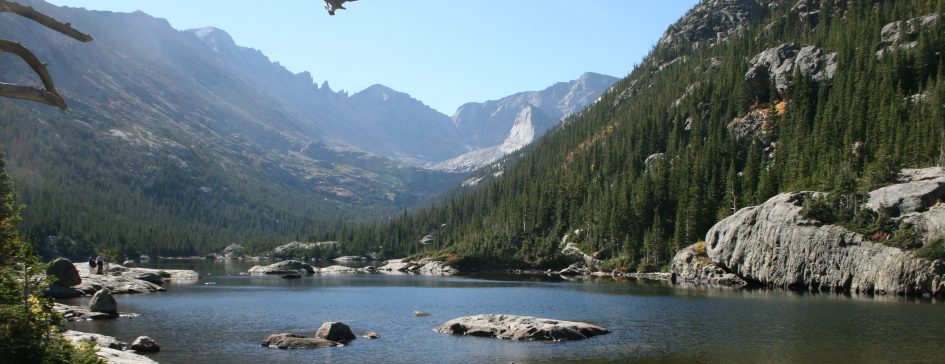
I read a recent article in Roads and Bridges on the reconstruction of the roadways to Estes Park.  An excellent effort by state officials and private contractors to rebuild over 20 miles of roads that were wiped away in mid-September when unprecedented rainstorms cut Estes Park off from the front range.  I actually had reservations in Estes Park as part of a plan to go hiking at Lawn Lake, among others.  Lawn Lake was one the harder hit areas in the park.  Went to Leadville.  If you have never been, go.  The early money in Colorado came out of Leadville – silver was the money-maker.   I did a 12 mile hike thought the mining district as it snowed – note it is the 2 mile high City.  Great hike in the am – the photos were fantastic as well.  

But the point is that people expect government to solve problems like the roadways in Colorado.  They expect we will solve water, sewer and storm water problems.  We have done a great job of it because people take these services for granted.  What we don’t want is to have a catastrophic failure, natural or otherwise.. ..