For the new year, my PUMPS website (not this site) will be undergoing reconstruction. It has been a few years and some things are out of date. Instead the focus will be more on rate studies, financial planning and asset management as opposed to all the other issues (like publications). I will have a separate website for me, with all that stuff since some folks have hit the website looking for it. My main goal is to partner with some folks and try to help smaller utilities with financial and management issues. I will be adding work products, including the asset management stuff we are doing in Dania Beach and Davie. My hope is I energize PUMPS a bit. At the same time via FAU, we will be developing a study of utility costs and revenues since 2005, with emphasis on the impact of the 2008-2009 Recession. This will be instructive – and be an update to the 1997 and 199 studies I did (hard to believe they were so long ago). We will be looking nationally, as well as at different types of treatment, location and size. The idea will be to develop some tools to help utilities benchmark where they are in the bigger picture, and to help with identifying trends and potential missing issues. COnncection rates and asset is improtant to insure hte timely renewal and repalcement of critical infrastrucutre. After all, the people who get fired when things go wrong with a utility are not the politicians – its us!. I will be solicitng (or my studnet will) data from over 300 utilities across the country. If you are interested, or have clients who might be, let me know. I have tnatively discussed publication with AWWA – but it won’t jsut be water. Resue, wastewater etc will be included. Should be fun! Look for the results next summer!!
finance
Federal money – just for giggles
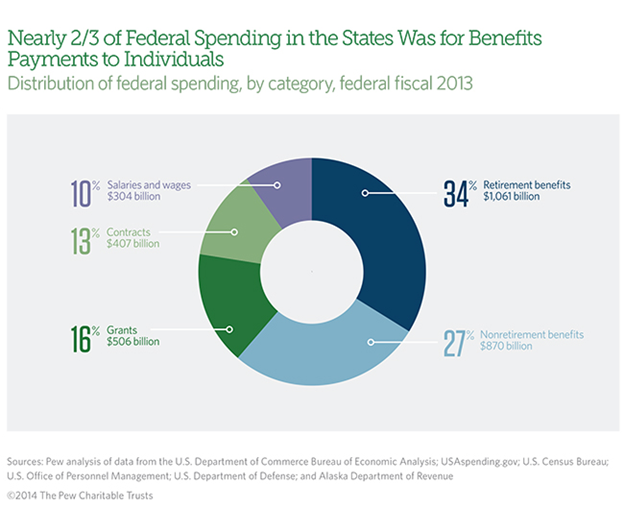
How much money goes to the states from the Federal government? Ever wonder about that? And how do we react? We talk about the need to tighten the federal spending so we keep cutting back on the Superfund cleanup monies ($1 billion/yr), the State Revolving Fund loan system ($2.35 billion/yr), and under $2 billion/yr for clean energy systems. We are concerned about the projected increase of $66 billion/yr for the Affordable Care Act. But these sums are just a tiny component for the federal budget, which is dwarfed by the $3.1 trillion sent to the states during its 2013 fiscal year. So what are these funds? Retirement benefits, including Social Security and disability payments, veteran’s benefits; and other federal retirement and disability payments account for over 34% of these payments. Medicare in another 18%. Food assistance, unemployment insurance payments, student financial aid, and other assistance payments account for another 9%. Another 16% is for grants to state and local governments for a variety of program areas such as health care (half the amount is Medicaid), transportation, education, and housing and research grants. All the SRF and grant monies are in this 16%. Those water programs are barely visible in this picture. Contracts for purchases of goods and services for military and medical equipment account for another 13%, while smallest amount – salaries and wages for federal employees is 10%. Keep in mind that federal employees have dropped from nearly 7 million to 4.4 million since 1967. No federal employment expansion going on there.
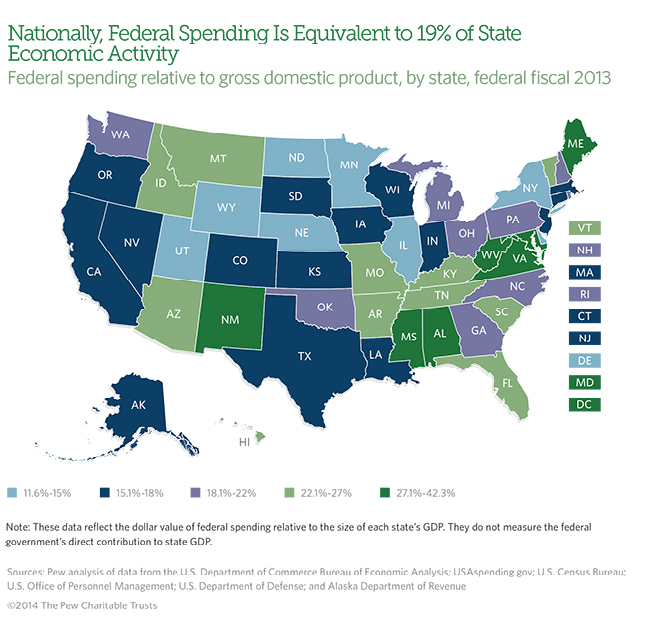
So how much does this affect the states? Federal funds account for about 19 of the total gross domestic product of the US, a number that has been relatively consistent (within a few percentage points) for years. That is below its all-time highs, and about typical over the past 30 years. Figure 1 from a PEW report shows that federal funds are greater than 22% of the GDP in most southern states (which interestingly enough have the people that complain the most about the federal government intrusion), while the Plains states, Midwest, northeast and the west coast are generally below average, and the two coasts, especially complain the least. Mississippi, Virginia and New Mexico all top 30%.
So let me see if I have this right – those that pay the least, but get the most, complain the most about their benefactors, and those that pay the most, but collect less, complain less. That is the message! What is WRONG with that picture? And those people? The problem is I see it every day at the local level and it is truly baffling. It means that somehow our politics gotten so out of whack that those in need the most, seem to continue to vote against their best interests? Marketing clearly is a problem but are we fooled that easily. A message that distracts from the reality is obvious, but this continuing trend is just truly weird. No wonder it is so hard to accomplish things.
On Taxes and Fees – Is starving Government the Answer?
Most states were doing pretty well before the 2008 recession hit, but that ended in 2009. Most states had to make extremely difficult cuts or raise taxes, which was politically unacceptable. Of course invested pension systems received a lot of attention as their value dropped and long term sufficiency deteriorated, which was fodder for many changes in pensions, albeit not how they were invested. The good news is a lot of them came back in the ensuing 5 years, but 2015 may be different. A number of states have reported low earnings in 2015 and whether this may be the start of another recession. The U.S. economy has averaged a recession every six years since WWII and it has been almost seven years since the last contraction. With China devaluing their currency, this may upset the economic engine. At present there are analysts on Wall Street who suggest that some stocks may be overvalued, just like in 1999. If so, that does not bode well states like Illinois, Kansas, New Jersey, Louisiana, Alaska and Pennsylvania that are dealing with significant imbalances between their expenses and incomes. Alaska has most of its revenue tied to oil, so when oil prices go down (good for most of us), it is a huge problem for Alaska that gives $2200 to every citizen in the state. An economic downturn portends poorly for the no tax, pro-business experiment in Kansas that has been unsuccessful in attracting the large influx of new businesses, or even expansion of current ones. California and next door Missouri, often chided by Kansas lawmakers as how not to do business, outperform Kansas.
Ultimately the issue that lawmakers must face at the state and as a result the local level is that tax rates may not be high enough to generate the funds needed to operate government and protect the states against economic down turns. There is a “sweet spot” where funds are enough, to deal with short and long term needs, but starving government come back to haunt these same policy makers when the economy dips. It would be a difficult day for a state to declare bankruptcy because lawmakers refuse to raise taxes and fees.
Reserves for Government
Your grandma always told you to save money for a rainy day. She wasn’t really talking about rainy days, but days when you had less or no income. The press talks about the huge percentage of Americans that have little or no savings, and how compared to other countries, we are at a disadvantage during economic times. A huge problem is that the same argument can be translated to governments, which must provide services, and often more services during economic downturns. But if they have no savings, how are they to accomplish this? They do not want to raise taxes and fees in down situations, so won’t the loss of services just make things worse?
A recent PEW reports suggests that states “had about half the reserves necessary to address budget gaps during the first year of the Great Recession. The 50 states had about $60 billion set aside in the summer of 2008, but in fiscal 2009, budget gaps across the country totaled $117 billion, about twice what states had in reserve. The budget gaps continued to grow in 2010 and many states struggled with shortfalls for years afterward. Bad news, but the news really does not improve. They report that 37 states have legal caps that prevent them from saving enough to weather recessions or even enough to substantially offset revenue losses, and most of those are based on some percentage of the prior year’s revenues. Why? Short-term views? Most governments figure on keeping enough cash on hand to pay bills during tax seasons. That accounts for 60-90 days of funds. Far too little for dealing with economic impacts. Far too few state governments recognize the importance of saving, figuring that cutting taxes during time of plenty and giving back to taxpayers is a better use of funds. Then it is someone else’s issue when the next economic hiccup occurs – and it will. Unless you raise your cap now as Minnesota and Virginia have recently done.
But the issue is not just a state issue. It is a local and a utility issue as well. Local governments are closer to the ground, have less leeway in their budgets and often have far too little funding as a result of resistance to raising property taxes, user fees and over-dependence on state shared sales tax, which often drops precipitously during a recession. Same goes for sin and gas tax dependence. When people slow smoking, or as oil prices drop, so do revenues. Ask Alaska, Louisiana, Kansas, Texas, North Dakota and others that are oil rich states about their budget this past year. The legislatures were begging Grover Norquist to let them out of their no tax increase pledges. He said no of course, because he doesn’t want government to function properly. So those legislators were stuck in the either “do the right thing” or “get whacked by Grover in the next election” conundrum. You know what they did because they want to get re-elected That doesn’t help the citizens of those states. Standard & Poor’s revised its outlook on Alaska’s general obligation and appropriation-backed debt from stable to negative. That will cost them in the future. St. Louis, Moody’s downgraded the city’s credit rating one step to A1, citing “the city’s weak socioeconomic profile; reliance on earnings taxes which are due for voter reauthorization in 2016.” Diversity in industry and taxes is beneficial. Too often this gets lost in the desire to do more with less, but doing more means you need more funding! And you need to collect those savings as grandma counselled!
Colorado Spill
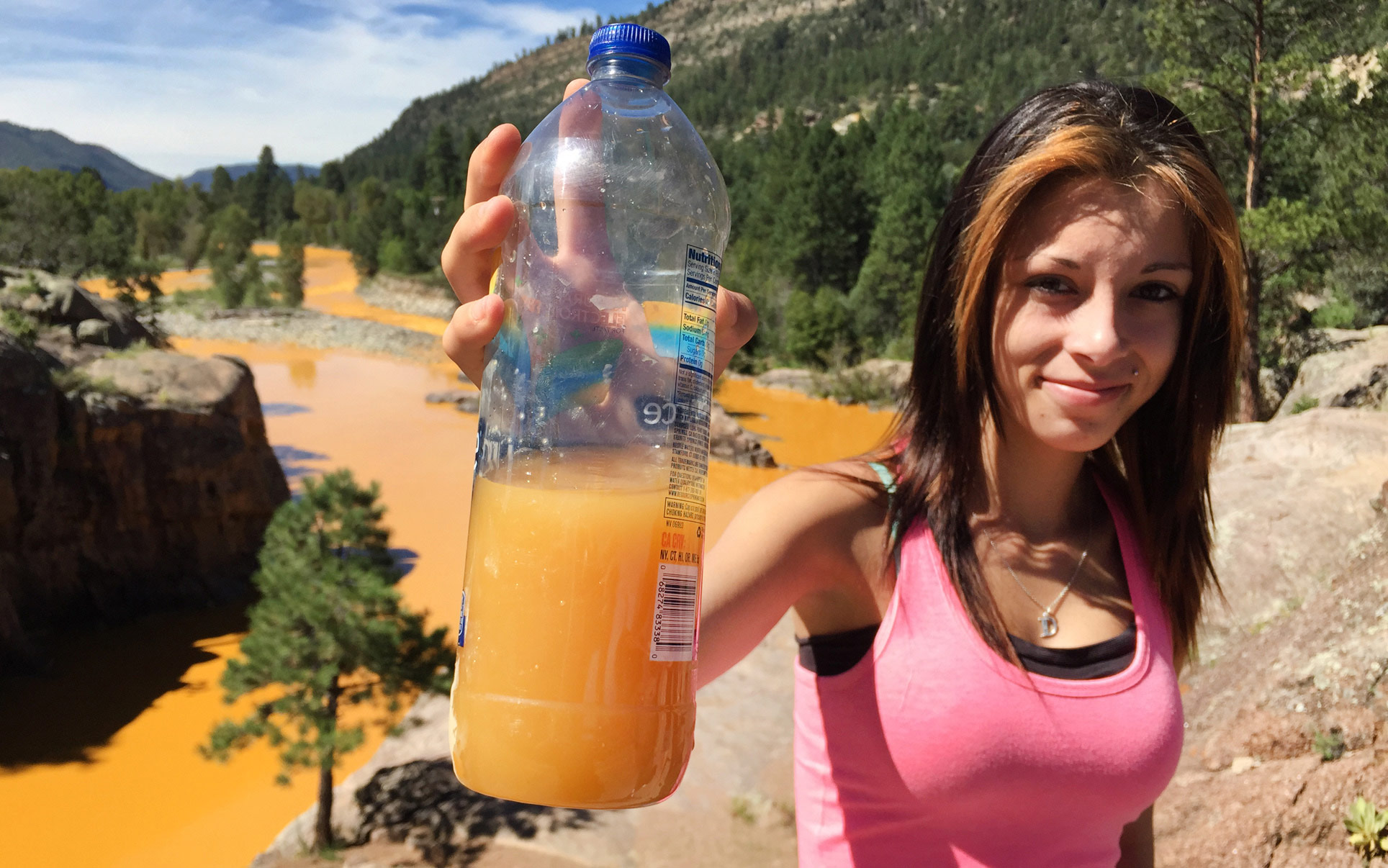
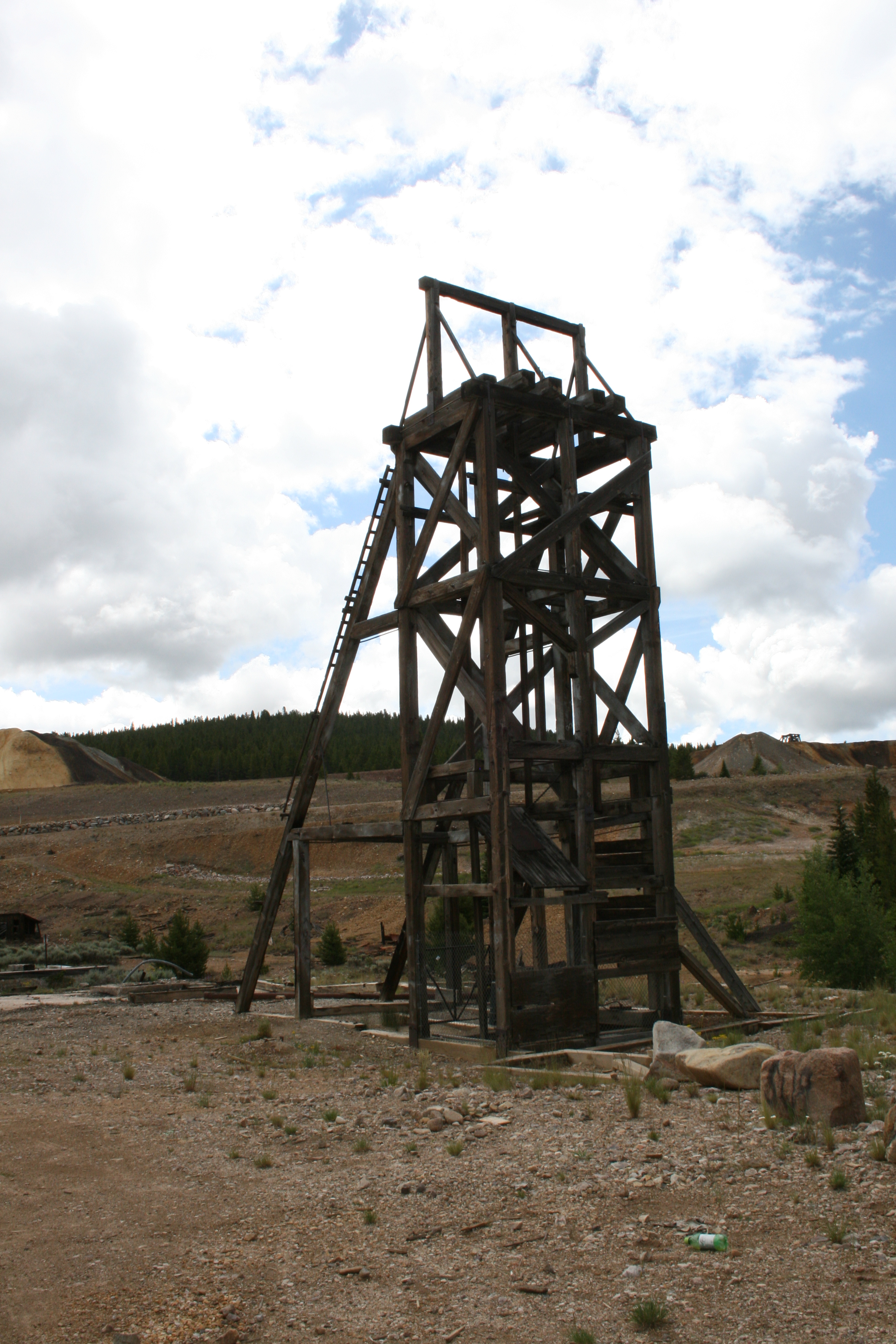
In an interesting twist of fate, USEPA caused a spill on the Animas River when a staffer accidently breached a dike holding back a solution of heavy metals at the Gold King mine because the misjudged the pressure behind the dike. Pressure? The spill flowed at 500 gpm (0.7 MGD), spilling yellow water spilled into the river. Downstream, the plume has travelled through parts of Colorado, New Mexico and Utah, and will ultimately hit Lake Mead. Officials, residents, and farmers are outraged. People were told not to drink the water because the yellow water carried at least 200 times more arsenic and 3,500 times more lead than is considered safe for drinking. The conspiracy theorists are out. The pictures are otherworldly.
But they are all missing the point, and the problem. This is one of hundreds of “legacy disasters” waiting to happen. We are just surprised when they actually do. A legacy disaster is one that is predicated on events that have happened in the past, that can impact the future. In some cases the far past. There are two big ones that linger over communities all over the west and the southeast – mines and coal. Now don’t get me wrong, we have used coal and needed metals form mines. That’s ok. But the problem is no one has dealt with the effects of mining or coal ash for many years. And then people are upset. Why? We can expect these issues to happen.
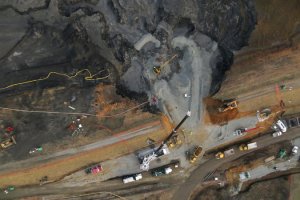
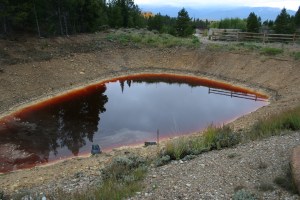
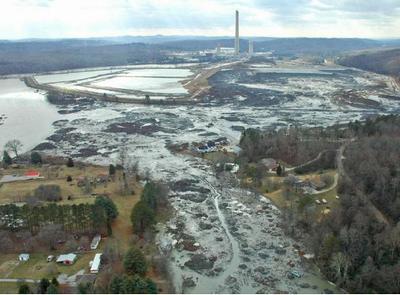
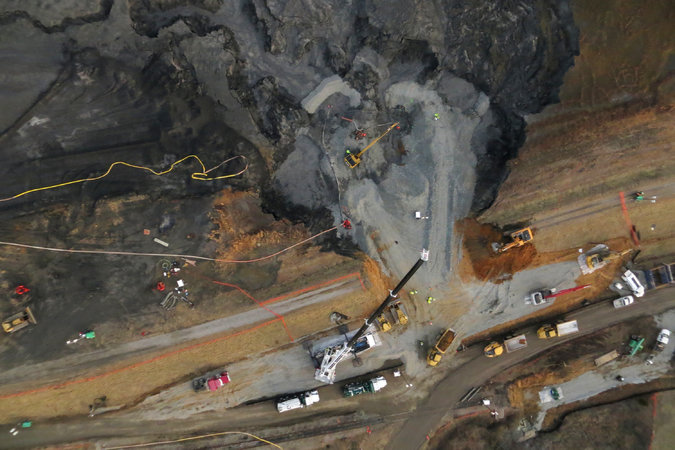
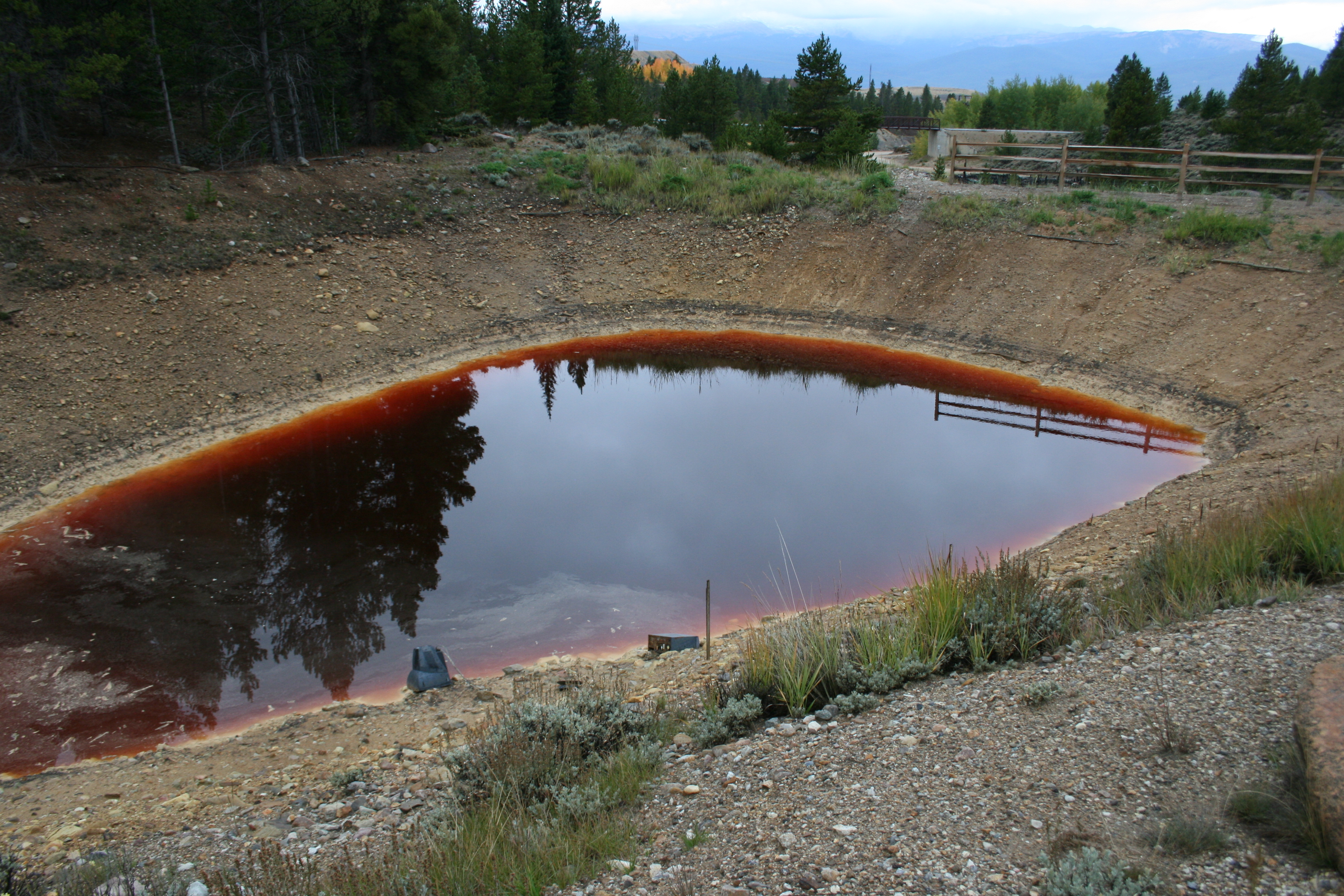
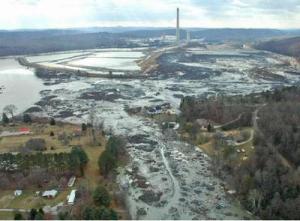
One major problem is that both are often located adjacent to or uphill from rivers. That’s a disaster waiting to happen. The King Gold mine is just the latest. We had recent coal ash spills in Kingston, Tennessee (TVA, 2008) and the Dan River in 2014 (Duke Power). The Dan River spill was 30-40,000 tons. Kingston cleanup has exceeded a billion dollars. Coal ash is still stored at both places. Next to rivers. We had the federal government build ion exchange facilities in Leadville, CO and Idaho Springs, CO to deal with leaking water from mine tailings from the mountains. Examples are in the hundreds. The photos are of the two coal spills, mine tailings that have been sitting the ground for 140 years in Leadville and one of the stormwater ponds – water is red in Leadville, not yellow.
When the disaster does occur, the federal government ends up fixing it, as opposed those responsible who are usually long gone or suddenly bankrupt, so it is no surprise that EPA and other regulatory folks are often very skeptical of mining operations, especially when large amounts of water are involved. We can predict that a problem will happen, so expensive measures are often required to treat the waste and minimize the potential for damage from spills. That costs money, but creates jobs.
For those long gone or bankrupt problems, Congress passed the Superfund legislation 40 years ago to provide cleanup funds. But Congress deleted funding for the program in the early 2000s because they did not want to continue taxing the business community (mines, power plants, etc.). So EPA uses ARRA funds from 2009. And funding is down from historical levels, which makes some businesses and local communities happy. The spectre of Superfund often impacts potential developers and buyers who are concerned about impacts to future residents. We all remember Love Canals and Erin Brockovich. Lack of development is “bad.” They ignore the thousands or jobs and $31 billion in annual economic activity that cleanup creates, but it all about perception.
But squabbling about Superfund ignores the problem. We continue to stockpile coal ash near rivers and have legacy mine problems. Instead we should be asking different questions:
WHY are these sites permitted to store ash, tailings, and liquids near water bodies in the first place? EPA would not be inspecting them if the wastes were not there.
WHY aren’t the current operators of these mines and power plants required to treat and remove the wastes immediately like wastewater operators do? You cannot have millions of gallons of water, or tons of coal ash appear overnight on a site, which means these potential disasters are allowed to fester for long periods of time. Coal ash is years. Mine tailings… well, sometimes hundreds of years.
One resident on the news was reported to have said “Something should be done, something should be done to those who are responsible!” Let’s start with not storing materials on site, next to rivers. Let’s get the waste off site immediately and disposed of in a safe manner. Let’s recover the metals. Let’s start with Gold King mine. Or Duke Power. Or TVA.
Drought Discussions on Line
We are all aware of the major drought issues in California this year – it has been building for a couple years. The situation is difficult and of course the hope is rain, but California was a desert before the big water projects on the 1920s and 30s. Los Angeles gets 12 inches of rain, seasonally, so could never support 20 million people without those projects. The central valley floor has fallen over 8 feet in places due to groundwater withdrawals. Those will never come back to levels of 100 years ago because the change in land surface has collapsed the aquifer. But the warm weather and groundwater has permitted us to develop the Central Valley to feed the nation and world with produce grown in the desert. The development in the desert reminds me of a comment I saw in an interview with Floyd Dominy (I think), BOR Commissioner who said his vision was to open the west for more people and farming, and oversaw lots of projects to bring water to where there was none (Arizona, Utah). The problem is that the west never head much agriculture or population because it was hot, dry and unpredictable – hence periodic droughts should be no surprise – the reason they are a surprise is that we have developed the deserts far beyond their capacity through imported water and groundwater. Neither may be reliable in the long run and disruptions are, well, disruptive. Archaeologist Bryan Fagan traced the fall of Native American tribes in Arizona to water deficits 1000 years ago.
Yet policymakers have realized that civil engineers have the ability to change the course of nature, at least temporarily, as we have in the west, south, Florida. I often say that the 8th and 9th wonders of the world are getting water to LA over the mountains and draining the southern half the state of Florida. I have lived in S. Florida for 25+ years and am very familiar with our system. The difference though is that we have the surficial Biscayne aquifer and a rainy season that dumps 40 inches of rain on us and LA doesn’t (as a note of caution, for the moment we are 14 inches below normal in South Florida – expect the next drought discussion to ensue down here in the fall). The biggest problems with the Everglades re-plumbing are that 1) no one asked about unintended consequences – the assumption was all swamps are bad, neglecting impacts of the ecosystem, water storage, water purification in the swamp, control of feedwater to Florida Bay fisheries, ….. 2) one of those unintended consequences is that the recharge area for the Biscayne aquifer is the Everglades. So less water out there = less water supply along the coast for 6 million people 3) we lowered the aquifer 4-6 ft along the coastal ridge, meaning we let saltwater migrate inland and contaminate coastal wellfields 4) we still have not figured out how to store any of that clean water – billions o gallons go offshore every day because managing Lake Okeechobee and the upper Everglades was made much more difficult when the Everglades Agricultural Area was established on the south side of Lake Okeechobee, which means lots of nutrients in the upper Everglades, and a lack of place for the lake to overflow, which meant dikes, more canals, etc. to deal with lake levels.
The good news is that people only use 11% of the water in California and Florida, and that Orange County, CA and others have shown a path to some degree of sustainability (minus desal), but the real problem is water for crops and the belief that communities need to grow. When we do water intensive activities like agriculture or housing, in places where it should not be, it should be obvious that we are at risk. Ultimately the big issue it this – no policy makers are willing to say there is “no more water. You cannot grow anymore and we are not going to send all that water to Ag.” Otherwise, the temporary part of changing nature will come back to haunt us.
An Urban vs Rural community Question
As technology advances I have an observation, and a question that needs to be asked and answered. And this could be a pretty interesting question. Back in the day, say 100 or 150 years ago, there were not so many people. Many activities occurred where there were few people and impacts on others were minimal. In some cases ecological damage was significant, but we were not so worried about that because few people were impacted by that ecological damage. In the 20th century, in urban locations, the impact of one’s activities on others became the basis for zoning laws – limiting what you could do with your property because certain activities negatively impacted others. And we certainly had examples of this – Cuyahoga River burning for one. Of course this phenomenon of zoning and similar restrictions was mostly an urban issue because there potential to impact others was more relevant in urban areas. We also know that major advances in technology and human development tend to occur in population centers (think Detroit for cars, Pittsburgh and Cleveland for steel, Silicon Valley, etc.). People with ideas tend to migrate to urban areas, increasing the number of people and the proximity to each other. Universities, research institutions, and the like tend to grow up around these industries, further increasing the draw of talent to urban areas. The observation is that urban areas tend to have more restrictions on what people do than rural areas. So the question – do people consciously make the migration to urban areas realizing that the migration for the potential financial gain occur with the quid pro quo of curbing certain freedoms to do as you please? Of does this artifact occur once they locate to the urban areas? And is there a lack of understanding of the need to adjust certain activities understood by the rural community, or does it become yet another point of philosophical or political contention? I have blogged previously about the difference between rural and urban populations and how that may affect the approach of utilities, but read a recent article that suggests that maybe urban citizens accept that financial gains potential of urban areas outweighs the need to limit certain abilities to do as you please to better the entire community. They are motivated by potential financial opportunities that will increase their standing and options in the future. So does that mean urban dwellers understand the financial tradeoff differently than rural users? Or is it a preference issue. And how does this translate to providing services like water to rural customers, who often appear to be more resistant to spending funds for improvements? While in part their resistance may be that their incomes tend to be lower, but is their community benefit concern less – i.e. they value their ability to do as they please more than financial opportunities or the community good? I have no answer, but suggest that this needs some further study since the implications may be significant as rural water systems start to approach their life cycle end.
Part 2 Financing Infrastructure
The true risk to the community of pipe damage is underestimated and the potential for economic disruption increases. The question is how do we lead our customers to investing in their/our future? That is the question as the next 20 years play out. Making useful assumptions about increases in demands, prices, inflation rates etc. are key to useful projections and long-term sustainability. Building too much or too little capacity for example can have disastrous consequences (to the ratepayers on the former, to the local economy for the latter).
Getting funding relies on economic strength, a problem of you are in a depressed area (Detroit) or a boom that could crash at any time (North Dakota). P3 opportunities are available for cash strapped communities but they come with a cost. Risk must be allocated fairly – the private community will not take on too much risk without increasing costs significantly. Loss of control is one of those risk conversion issues. Extensive planning and feasibility analyses should be expected – far more scrutiny than most utilities are used to. The economic strength of the community is important to private investors.
In a prior blog we talked about the boom towns of North Dakota. Things were booming in 2013 but the downturn in oil prices may get ugly. The need for more fracking wells may have decreased (at least temporarily) and the decrease in the oil and gas costs has cut into local revenues, so is this is the time to keep planning for the boom? South Florida did this in the early 2000s – and well, that real estate boom put quite a dent in the economy and population estimates for 2020 and 2030. The balloon popped and so did the economy. South Florida had the resiliency to bounce back because of weather and proximity to South America. We have seen the result to an industrial economy – where a community relies on industry, well industry can be fickle. Ask Detroit. Or Cleveland. Or any number of other Rust Belt cities. Now they have infrastructure, but much of it is underused.
So while the Plains states plan for the boom, the boom has settled in some places. Already the oil and gas industry has shed 100,000 jobs (many high salary). Texas, Kansas, North Dakota and Oklahoma are facing financial challenges in 2015 due to funding losses. Alaska is dipping into reserves. But that doesn’t mean the results of the 2010-2014 boom are not continuing, or at least portions of them. Frack water continues to be discharged to local wastewater systems, but the revenues to pay for the needed upgrades is lacking. Effluent limits for nitrogen and TOC for some rivers have decreased as a result of constant increased loading to the streams (more flow increases total loads, so if flows remain the same, the concentrations must decrease to maintain total loading). The costs to reduce ammonia, for example from 10 mg/l to 2 or 3 mg/L can be $1-2/1000 gallon – over 50% or more of the current cost for treatment.
So is it a surprise that some communities fight the boom times? Booms create disruption and uncertainly, and a need for technology (and costs). Maybe stability does matter, as it can contain costs and treatment requirements. However the boom can help communities in financial distress. Detroit and Flint would love a boom – both have the infrastructure in place to support it as opposed to rural communities in the Plains. But that’s is a key – they already HAVE the infrastructure in place. The Plains, well, do not.
There is a lot of older, underutilized infrastructure out there. Detroit, Flint, Cleveland, Akron, Toledo and Philadelphia are among the older industrial cities that have stable populations – people that live there most of their lives, have a trained and educated workforce, and normally have lots of water and infrastructure, and lots of potential employees, all of which are underutilized and at risk due to economic losses. But the booms rarely go to older cities. How that is? Is this a leadership issue? Convenience? Quick profits? And how long will the boom last? Is it a matter of lack of understanding or regulations that creates the boom? A combination of factors? A better PR program?
Remember we all play defense. Industry does not. Industry plays offense all the time. The private sector mode is play offense. Get the message out. Frame the message. Win the game. Is winning the game at any cost the right answer? For boomers it is. What about the rest of us?
Infrastructure Funding Options
The US EPA estimates that there is a $500 billion need for infrastructure investment by 2025. The American Water Works Association estimate $1 trillion. Congress recently passes the Water infrastructure Finance and Innovation Act (WIFIA) at $40 million/year, rising to $100 million in 5 years, which is a drop in the bucket. Peanuts. We have so many issues with infrastructure in the US and Congress tosses a few scheckles at the problem and thinks it is solved. The reality is that the federal government wants to get out of the water infrastructure funding business and shift all water infrastructure to the local level. This is a long-standing trend, going back to the conversion of the federal water and sewer grant programs to loan programs.
The reality is that local officials need to make their utility system self-sustaining and operating like a utility business whereby revenues are generated to cover needed maintenance and long-term system reliability. The adage that “we can’t afford it” simply ignores the fact that most communities cannot afford NOT to maintain their utility system since the economic and social health of the community relies on safe potable water and wastewater systems operating 24/7. Too often decision are made by elected officials who’s vision is limited by future elections as opposed to long-term viability and reliability of the utility system and community. This is why boom communities fall precipitously, often never recovering – the boom is simply not sustainable. Long-term planning is a minimum of 20 years, well beyond the next election and often beyond the reign of current managers. Decisions today absolutely affect tomorrow’s operators. Dependency on water rates may be a barrier, but this ignores the fact that power, telephone, cable television, gas, and internet access are generally more expensive hat either water or sewer in virtually all communities. We need water. Not so sure about cable tv or he internet. Great to have, but needed to survive?
The growth in costs can lead to mergers where a utility cannot afford to go it alone – as the economy of scale of larger operations continues to play out in communities. Several small plants cannot operate at the same cost as one larger plant. As a result larger projects will increase – from 87 to over 336 between 2005 and 2014.
But these costs are generally plant costs – treatment and storage, not piping. Distribution pipelines remain the least recognized issue for water utilities (collection pipelines for sewer are similarly situated). The initial Clean Water Act and Safe Drinking Water acts did not focus on piping systems – only treatment and supply. The national Council on Public Works concluded their first assessment grade for infrastructure in the 1980s – but piping was not discussed. ACSCE’s first report card in 1998 did not express concern about piping system. Yet piping continues to age, and expose communities to risk. In many communities greater than 50% of their assets are buried pipes. Tools for assessing the condition of buried pipes especially water distribution pipes is limited to breaks and taps. As a result the true risk to the community of pipe damage is underestimated and the potential for economic disruption increases. The question is how do we lead our customers to investing in their/our future? That is the question as the next 20 years play out. Many risk issues will be exposed. The fact that there are not more issues is completely related to the excellent work done by the utility employees. More to come….
Ability to pay?
So what does ability to pay really mean? We hear this discussed by political pundits and local officials but few really understand what this means. Likewise the “I’m on a fixed” budget argument pops up a lot, and it is hard to understand what this really means.
The ability to pay concept was developed many years ago by political scientists and economists looking at the allocation of costs to consumers for government services. Property taxes are a logical place to start – higher value homes have more potential for loss, so their taxes were more (the percent was the same but because of their value the amount was higher). For income taxes, those with higher incomes we deemed to have more disposable income and again more to lose, so the rates increased as income rose (we forget that until 1963 the highest income tax rate was 90%, and the economy was growing quickly!). People with lower incomes had little disposable income because all their money went to food and housing. Today the issue of affordability arises with water, sewer, taxes and storm water fees, as well as federal and state taxes. The SRF and bonding agencies often look at 3.5% or 4.5% and the maximum water or water/wastewater cost as a percent of income, but few utilities charge this much. Few water and sewer utilities (combined) approach the cost for power per household, let along the cost of cable or cell phone use for all but the cheapest carriers. Certainly water, sewer and storm water are essential service, but not so much cable, although there are those who will argue the point. So somehow the ability to pay issue does not apply to private sector services, but does to essential services, especially when we all know we do not collect enough money to cover significant infrastructure needs on those public works systems? That just does not make logical sense except in the political world.
Likewise the “fixed income” argument is often applied in tandem. Fixed income is generally applied to retirees, but let’s not forget that 10% of those in poverty are retirees, but 18% of millionaires are over 65. But don’t most people have a fixed income – their income is fixed by their employer. They can change jobs but the argument that younger folks should change jobs if they want to earn more is like telling retirees to go back to work. There is only so much we can do and only so much income to be earned because few control their income.
So on both counts, the ability to pay argument seems like an argument created to keep public service costs down and prevent the full cost application to many. The squeaky wheel gets coddled, at the expense of society. Somehow that is not fairness, and subjects us all to unnecessary risks. The question is who is going to be the person/group to stand up and say enough?