Archive

infrastructure


A new GAO report suggests that the short and long-term future for state and local revenues may be more difficult that currently anticipated, despite the economy recovering in many places.  My last blog outlined a number of the problems including that many public entities chose to reduce tax rates to balance the budget as opposed to restocking reserve funds.  When property values plummented and tourism and consumer buying diminished, the taxes related to all three plummented as well.  None have yet returned to their pre-2008 levels.  The failure to stockpile reserves caused many governments to spend down what limited reserves they had in the past 5 years as a means to avoid the hard and unpopular decision – raising taxes to collect the same revenues as before the mid-2000s cuts.  Now the lack of reserves creates an issue going forward – as costs increase faster than revenues, there are no reserves to tap into.  It is a problem that just keeps on giving. –

As I noted, I never like Chicken Little, because he never had a solution for the problem. There are solutions for local governments, some good and some bad.  Clearly local governments need to revisit the revenue production tools.  Taxes and fees will go up.  Taking more money from the utility, an all too popular decision in the past 5 or more years IS NOT THE ANSWER!  That just transfers the problem to the utility system and we already know that there are huge amounts of deferred maintenance and capital projects with utilities – $300 billion and counting at last count. The utility should be run as an enterprise, not as a cash cow to avoid hard political decisions.  Solutions for replacing those ARRA funds and federal grants for police are needed.  Just saying “We ran out of money so lay those people off” is not a solution.  What that is, is poor leadership and planning – a failure to develop the investment made by the feds to better the fiscal position of the community.  A lost opportunity.

There are many options.  And we can lay blame at the feet of elected officials, but it does not all belong there.  The citizens who elect those officials, are to blame.  Most elected officials react to citizenry, not the other way around.  And don’t forget the managers who bring bottom line business practice to local government management who recommend options. We’ve lost a generation of good government managers who understood the service aspect of government who have been banished in favor of the bottom line approach.  We need to change this as well. 

A more entrepreneurial spirit is needed.  I recall a prior entity I worked for where we proposed doing lab work in our certified water lab for other utilities.  That got shot down because it was “unfair to compete with the private sector for this work.”  Really?  That sounds like a private sector red herring.  They know they will lose business, and they can’t compete.  How is that in the spirit of capitalism? It cost less for other entities to have us do it?  A huge missed opportunity.  There are many.  If we want government to operate more like a business, we need accept the opportunities that come with it, not quash them. 

We need to market the community.  Not just give money away hoping to attract businesses that will locate for a short while.  That certainly has been a fiasco in Florida.  Other places as well I am sure.  No, we need to “sell ourselves.”  We need to marketing program to distinguish the community, its assets, its water and sewer reliability and quality, its people, education and opportunities.  It means spending money to invest in the community, not just spending money to fix a few roads and install some pavers, although they are good.  It’s also not just fixing up the distressed neighborhoods, but investing in the better ones as well. The most distressed City in America is quietly encouraging new artists and startup businesses to relocate to Detroit to take advantage of the availability of warehouses, cheap rents and a talented workforce.

We need to avoid the pitfalls of falling victim to reinforcing the past.  Florida’s economy is based on tourism, agriculture and building housing to attract retirees.  Weird business model.  Two of the three are highly susceptible to economic disruptions.  We are still recovering from 2008.  The economy also produces mostly minimum wage jobs, not the way to build a better tax base of encourage investment in education.  The state manufactures nothing, yet fails to take full advantage of what assets it might have to create industry.  As Sun-Sentinel writer Stephen Goldstein noted recently, why is it that south Florida has yet to take advantage of the private sector interest in investing in understanding age –related diseases?  Much of the local economy and the two local public universities are not positioned to take a leadership role?  Yet it is an easily marketed issue given the current population, assuming funds can be secured.  Public investment is needed, and of course that’s the rub.

We can market ourselves.  May communities have.  And most deserve better than their current lot in life.  Alexis de Tocqueville,” you get the government you deserve.”  I think we deserve better, and I think we can do better.  I think we can develop a better future and I think we can overcome challenges.  So maybe it is time for to us to change the perspective!


A new GAO report suggests that the short and long-term future for state and local revenues may be more difficult that currently anticipated, despite the economy recovering in many places.  For most of the 1990s and the mid 2000s, many states and local governments operated with surpluses, or could have.  Many elected officials, like those in Florida (or Congress in 2001), chose to reduce tax rates to balance the budget as opposed to restocking reserve funds.  When property values plummented and tourism and consumer buying diminished, the taxes related to all three plummented as well.  None have yet returned to their pre-2008 levels.  In fact, the property values lag so badly, it may be 10-20 years in many jurisdictions before they return to their former selves.  In South Florida’s suddenly “hot” real estate market, local officials are raving about the 28% increase in property values in 2012/2013.  Sounds great until you realize that they need to increase 100% to return to pre-2008 levels.  Even in a hot market it may be over 5 years to recover.  So property values are not a short-term problem.  Some communities may never recover.  So much for saving for that rainy day.

It should be plain to all of us that the failure of those in power to stockpile reserves caused many governments to spend down what limited reserves they had in the past 5 years as a means to avoid the hard and unpopular decision – raising taxes to collect the same revenues as before the mid-2000s cuts.  Now the lack of reserves creates an issue going forward – as costs increase faster than revenues, there are no reserves to tap into.  It is a problem that just keeps on giving.  The failure to address the root cause – the failure to set revenues collections at an appropriate level and accumulate surpluses when you are lucky enough to get them.  Unfortunately the political discussion keeps going back to keeping costs down, but cuts in costs means cuts in services.  Sounds great to cut the Plantation trolley because of budget needs, but what about those citizens that rely on the trolley?  Or the businesses it serves.  Cutting Meals on Wheels which primarily serves shut-ins is a great idea in Broward County with a hue population of elderly that find it difficult to get out of the condo?  And does it really make much impact on the overall budget?  Not really.  There are cosmetic issues.  There a more symptomatic issue here?

GAO points to health care as a cost increasing faster than the rate of increase in revenues, but the latest data seems to indicate that the rate of growth may be less than projected by those opposed to the new Health Care laws.  Underfunded pensions are also a potential area of concern, but cutting employees is not the solution for that as outlined in a prior blog.  Cutting employees cuts the funding for pensions which guarantees future problems.  So that idea actually works against the goal of shoring up the problem.  So, no that is not the answer.  We are clearly paying for the sins of 15 years ago when we were awash with funds, but decided to cut or public “income.”  Who does that anyway?!?!

I never like Chicken Little, because he never had a solution for the problem.  Part 2 will outline some thoughts…


Sequestration is the word we are all using to explain the failure of the Congress to put together a budget with appropriate revenues and expenditures.  Congress can’t figure out how to reach a budget agreement, so the federal government set itself up for mandatory cuts in services. I had a recent grant sequestered, then cancelled.  It really could have helped a local community with long-term water supply and quality problems identify adaptation and mitigation strategies fo rites future.  Minor money for Washington, but a big deal down here.  Likewise I have spent the last 6 months on a subcommittee for USGS that is focusing on what could be cut from USGS.  That means less testing water quality, water levels in groundwater, stream gauges and less evaluation of results.  Most of the water issues USGS looks at crosses local and even state lines.  Since we all rely on water, this is at national concern.  Precisely when we need the information most, we may be getting less.  Expect to start seeing more sequestration issues. 


The problem is that the biggest expenses, social security and debt, cannot be cut without major backlash in the financial and voter markets.  So the cuts come from the smaller accounts – things like the federal share of state revolving funds, water research and water/wastewater programs.  The community and tribal assistance account was slashed $210 million while the environmental program budget was cut $135 million. While some may be cheering EPA cutbacks, the reality for water and wastewater users is less federal assistance to our industry.  That means more of the onus is on us, and on our customers.  The  unintended consequences of the failure of Congress to act….


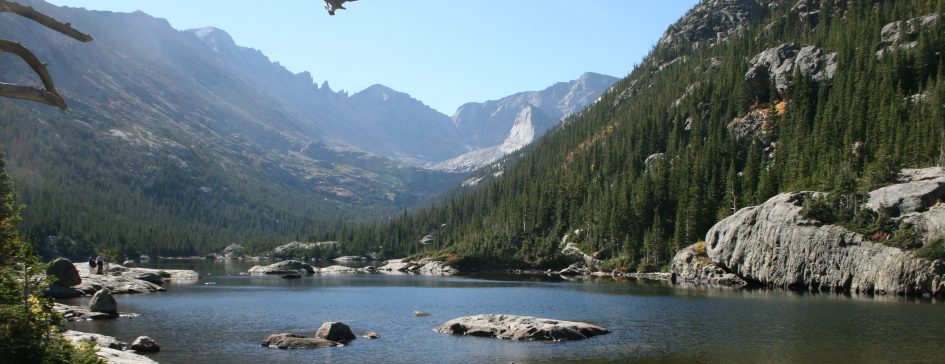
I went back to Colorado last week and it’s dry again out there.  Ok, maybe not this past week when it rained a bit, but despite late snow (March to May), the forests are dry.  The bark beetle problem has not made things easier, so lightning from thunderstorms can easily create fires, like the fire down in Colorado Springs or the Big Meadows fire that is ongoing in Rocky Mountain National Park.  The latter has been ongoing (although fortunately mostly out) for over a month, and has closed some trails in the park.  I hiked through the Fern Lake fire remnants (although virtually all the fire was around Cub Lake). That fire burned for a couple months last fall, only finally burned out in the winter after snowfall. 


The west is dry and “drier than in the past” is the new normal it seems in Colorado.  So now water managers are faced with three new challenges:  less water, faster runoff and more difficult water to treat.  The fires cause the loss of protective vegetation, which means less water is kept in the forest.  As a result, the tiny, light ash particles easily run off in the rain.  Ash is hard to remove without activated carbon or other advanced processes.  The loss of vegetation increases runoff, which means larger sediment content in otherwise pristine water supplies.  That can make a major impact on downstream water plants that may not have planned for such events.  The cost of fire suppression for the last 60 years confounds the current water supply and quality problems.  There are also ecological effects that may impact local economies. 


All this said, I am unsure what the solution is.  Clearly the climate in Colorado is changing.  It is unlikely we can alter the current course any time soon.  Instead we must adapt to the changes and attempt to mitigate the impacts on water supplies.  Creativity, innovation and likely more infrastructure will be required. Concepts like aquifer storage and recovery are coming back to the fore as a result of the current condition. It will be interesting to see how this all plays out. 


A recent Rolling Stone article outlines a potentially dismal future for south Florida.  I was quoted in the article and give the author a bunch of information.  It is hard to write articles that “pop” in the popular press while conveying facts and figures.  But I would suggest that the future is not quite as dismal as the article depicts.  The sea level rise has been ongoing for at least 140 years as indicated by the Key West tidal station, the longest running tidal gauge in the world, but the amount has been 9 inches since 1920.  True it appears that the sea level rise may be accelerating as a result of warming temperatures in the atmosphere that causes the oceans to expend, plus the loss of ice that runs off from glaciers, but 3 feet by 2100 seems the average or maybe the high average.  That is unlikely to inundate all of south Florida, but keeping the water table low will be a challenge.  I suggest that the challenge can be met and accomplish two goals.  In low lying areas the impact of sea level rise is really manifested as increasing groundwater tables.  An increased groundwater table means less soil storage capacity, which means smaller rainstorms will cause flooding.  The increased flooding is already creating a demand by residents for solutions from local public officials.  We have used exfiltration trenches (French drains) for many years, but increasing water tables will mean many of these systems will not function as they may be currently.  But what if we reverse the concept?  Instead of exfiltration, what if we allowed the water to infiltrate the pipe and go to a central wet well, and then pump the water out of the wet well?  I further suggest that the dumping large quantities of groundwater to the ocean or canals may not be permittable as a result of high nutrients, so what if this water is instead pumped to a water plant as a raw water supply?  Wouldn’t that solve two problems at once? Lots of excess fresh water supplies in an era where there are significant limitations in fresh water supplies?  Just thinking….. 


A recent Manhatten Institute for Policy Research report titled “America’s Growth Corridor: The Key to National Revisal” noted that the future economy in the US will tend to growth in certain corridors, which echos a prior report that identified “super-regions” where population, manufacturing, education and economic growth were likely to be concentrated. Both reports suggest that the super-regions will prosper, with the rest of the country lagging behind. The seven high growth areas in the Mnahatten Institute report are the Pacific Coast, the Northeast, the Front Range, Great Lakes, the southeast/piedmont, Florida/Gulf Coast, and Texas/southern plains. This new report focuses more on the politics of the region, noting that each region is politically fairly consistent internally, indicating there is more than one way to do business. The current business climate, driven primarily by energy favors the Plains, with the southeast starting to import jobs from Japan and Korean as a result of low wage rates. The report goes on to draw a series of political conclusions about business climates and the politics of why growth is occurring in certain areas. But let’s look at a different view of the report. Each of these regions has had “ it’s day in the sun” so to speak, and some a couple of days, like California. Business cycles are cyclical so shifts in growth corridors is not unexpected. However there are some potential limiting issues that are not addressed in the report that are of significant interest or concern.

First, where is the water? Texas and the Plains have significant water limitations, as does much of the southeast. Trying to build an economy when you lack a major resource becomes difficult. That is why the Northeast, Great Lakes and later the Pacific grew earlier than the south, mountain and Gulf states. The Northeast and Great Lakes had water for industrial use and transport of goods, a real key historically for industry. Those regions also had (and still have) better embedded transportation facilities (rail, roads, airports).

The next question is where is the power coming from? The answer that will be given is that the Plains states and Texas have created 40 % of the jobs in the energy sector in the past 4 years so that is where the energy comes from, but having energy and being able to convert it efficiently to power that is useful to people or industry is a different issue. You need water to cool natural gas plants, unless you want to sacrifice a lot of efficiency. Back to water again. Moving the gas to other parts of the country to convert coal or oil plants to natural gas would work, but getting the electricity back does not come without 6% losses and a real need to make major improvements to the electrical grid. Not a small job.

So while the Manhatten Institute reprort suggest that all seven corridors will grow, but that the southern corridors are growing faster, the sustainability of this growth is at question. I recall a similar prediction when I graduated from college in the early 1980s, when the jobs for engineers were limited to the energy fields in Texas and Louisiana and the prediction was that al the industrial growth would be in the south. And then Silicon Valley happened, and then the housing boom in California, Nevada and Florida happened, and a few things in between. Oh and that energy economy collapsed in the late 1980s …. You get the picture. This is not to say that some marketing the power, water and transportation benefits of the historical industrial areas of the north are not needed – they are, but the fact is that there is significant available water, power, transportation and people capacity that is unused. If I am an industry, I may want to look at the power/water issue a little more closely.


In the past week I have had the opportunity to experience the extremes with water – heavy rains/tropical weather in SE Florida, and dry weather in Denver at America Water Works Association’s Annual Conferences and Exposition. Two months ago with was snowing in Denver and there had been limited rain in SE Florida. Six months ago we were both dry and there was significant concern about drought in both places. How quickly fortunes change and the associated attitudes as well. It is part of a perception problem – looking at the near term – instant gratification, as opposed the long-term consequences. In truth neither set of conditions is historically different or should have created major panic or much shift in attitudes, but it is the potential to predict conditions that require the water manager’s scrutiny. We have all become risk managers.

Managing risk is not in the job description of most water and sewer personnel (risk managers aside, and they are focused on liability risks from incidents caused by or incurred by the utility like accidents, not water supply risks). We spend a lot of effort on the engineering, operation and business side, but less on planning or risk/vulnerability assessments. EPA has required vulnerability assessments in the past, but having seen some of those exercises, most are fairly superficial and many put on a shelf and forgotten. I have had clients ask me if I still had copies because they did not. Clearly we need a renewed commitment to vulnerability assessment.

Vulnerability starts with water supplies. Groundwater is particularly tricky. A new USGS study reports significant decreases in water levels in many aquifers across the US, especially confined aquifers in the west. That situation is not improving, and the situation will not correct itself. Loss of your water supply is a huge vulnerability for a community. Finding a new supply is not nearly as simple as it sounds or as many are led to believe. Confined aquifers do not recharge quickly and therefore have finite amounts of water in them. Remove too much water and all too often land subsidence occurs, which means the aquifer collapses and will never hold the same amount of water. USGS has mapped this and it matches up well with the drawn down aquifers. More data needs to be collected, but Congress is looking to cut USGS funds for such purposes, just when conditions suggest the data is needed most.

Many watershed basins and many aquifers are over allocated and overdrawn, and not just in the west. New England and the Carolinas have examples. Overallocation means competition for water will increase with time and it will be utilities that everyone will look at to solve the problem. Afterall the utilities have money as opposed to agriculture and other users, right? To protect themselves, water utility managers will need to look beyond their “slice of the pie” to start discussions on the holistic benefits to water users throughout the watershed, which will extend to understanding economic and social impacts of water use decisions. It is not just about us, and paradigm shift that is coming and one that we as an industry need to be the leading edge for. Our use impacts others and vice versa. Every basin wants to grow and prosper, but decisions today may reduce our future potential. Klamath River is a great example of misallocated water priorities. The biggest potential economy in the basin is Salmon ($5B/yr), followed by tourism ($750 M and growing), which relies on fishing and hiking. But agriculture ($0.2 B/yr) get the water first. Then power, which warms the water (salmon like cold water). Then a few people (a few 100,000 at the most in the basin). The result, the salmon industry gets reduced to $50 M/yr. Now how could we create more jobs, which would result in more income and a bigger economy? The easy answer is encourage the salmon industry, but that doesn’t sit well with the other, smaller users that will become more vulnerable to losses.

I suggest that to harden our water future in any given basin, we need to start looking a little more holistically at the future. This type of analysis is clearly not in the job description of the utility or its managers, utility managers may have the best access to technical expertise and information. As a result to protect their interests and manage risk, we may need to shift that paradigm and become holistic water managers.


Radio Program last week

Hi all.  Here is another radio show I did last week talking about  my company Public Utility Management and Planning Services Inc. and water sustainability. Take a listen. Let me know what you think.  Thanks

Fred


The concept of horizontal wells arises from riverbank filtration concepts.  Riverbank filtration has been practiced for nearly 200 year in Europe, where the concept was to remove debris form polluted waters by drawing through the banks of rivers.  Much of the concepts for groundwater flow are related to the filtration ability of water to move through a porous media.  The concept was to dig trenches along the river and draw water from the trenches as opposed to the polluted rivers.  The concept worked relatively well.  The result is an abundant, dependable supply of high-quality water with a constant temperature, low turbidity, and low levels of undesirable constituents such as viruses and bacteria. Riverbank filtration also provides an additional barrier to reduce precursors that might form disinfection byproducts during treatment.

Now let’s look at this from another perspective, and we’ll pick on southeast Florida as is provides a great case study.  Sea level rise will inundate coastal property, both via coastal flooding and from a rise in groundwater. Since most stormwater drainage depends on gravity flow, drainage capacity will suffer as sea level rises reducing the head differential between interior surface waters and tide. Saltwater intrusion will be exacerbated. Furthermore, reduced soil storage capacity, groundwater flow and stormwater drainage capacity will contribute to increased flooding during heavy rain events in low-lying areas.  In low lying areas, current practices like exfiltration trenches will become impractical, as will dry retention will become wet retention.

Stormwater utilities will be faced with dramatic, currently unanticipated increases in capital expenditures and operating costs, and time will be needed for planning, design, securing permits and compliance. Additional local pumping stations on secondary canals will be needed to supplant the storm drainage system in order to prevent unacceptable ponding. Design capacities of these stations will depend on local rain patterns, drainage basin size and secondary canal system design.  Many will operate continuously, which means ongoing operations will increase substantially. Hundreds of pumping stations may be needed in some communities.

Permits will be a major challenge due to contaminants in the runoff as regulated by MS 4 Stormwater permits, and the inability to treat this water under the current structure. The cost and energy required for stormwater treatment would be a major concern going forward. But what if we sent this continuous flow to water plants as raw water?  All of a sudden we have a solution to two problems – stormwater and raw water supplies.  How often do you see a 2 for 1 solution?