Archive

infrastructure


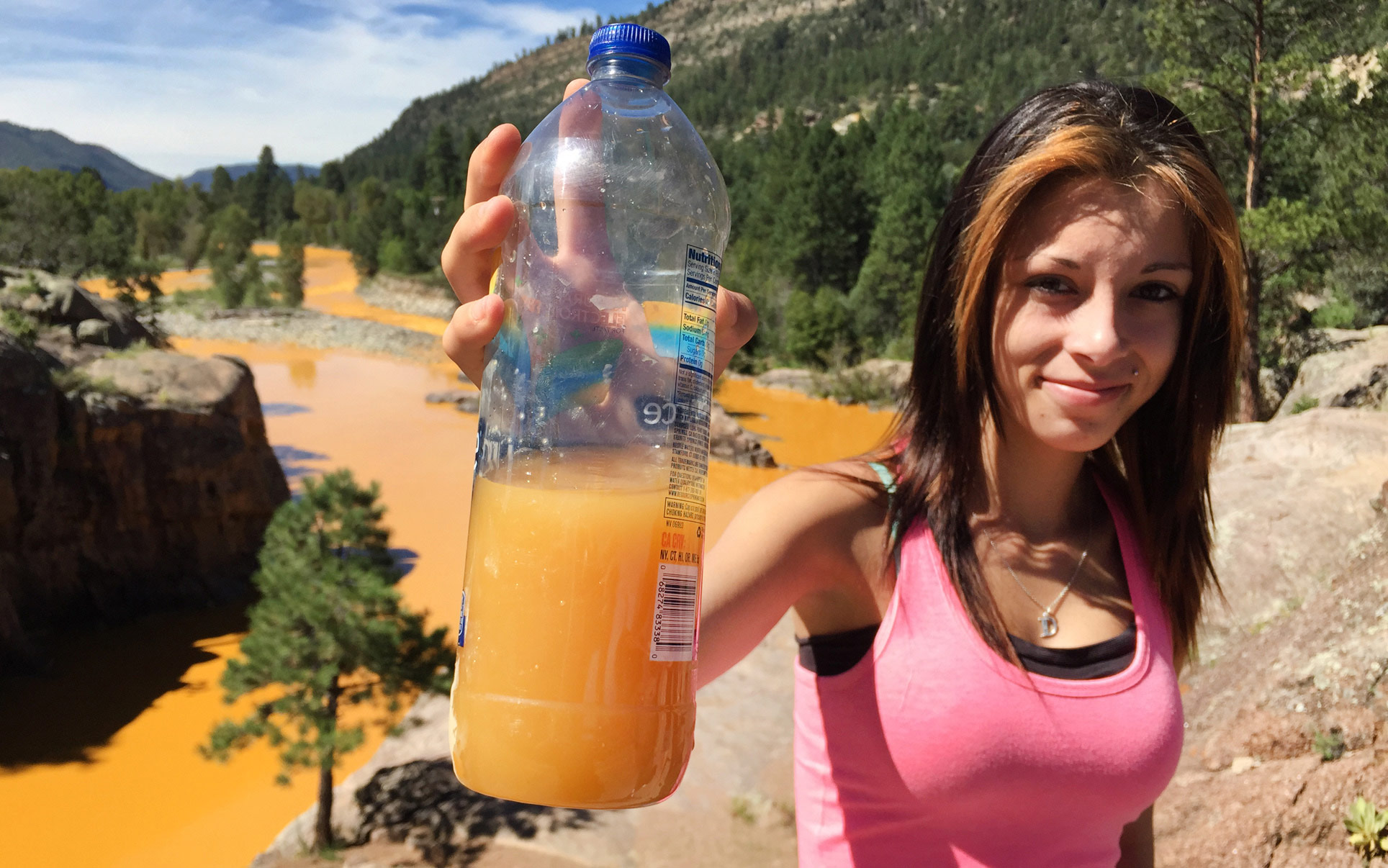
In an interesting twist of fate, USEPA caused a spill on the Animas River when a staffer accidently breached a dike holding back a solution of heavy metals at the Gold King mine because the misjudged the pressure behind the dike.  Pressure?  The spill flowed at 500 gpm (0.7 MGD), spilling yellow water spilled into the river.  Downstream, the plume has travelled through parts of Colorado, New Mexico and Utah, and will ultimately hit Lake Mead.  Officials, residents, and farmers are outraged.  People were told not to drink the water because the yellow water carried at least 200 times more arsenic and 3,500 times more lead than is considered safe for drinking. The conspiracy theorists are out.  The pictures are otherworldly.

colorado-mine-spillRayna Willhite holds a bottle of water she collected form the Animas River north of Durango Colo., on Thursday, August 6th, 2015. About a million gallons of toxic mine waste emptied out of the Gold King Mine north of Silverton that eventually made it into the Animas River. (Jerry McBride/Durango Herald via AP)

0807 colo spill epa-spill-

But they are all missing the point, and the problem.  This is one of hundreds of “legacy disasters” waiting to happen.  We are just surprised when they actually do.  A legacy disaster is one that is predicated on events that have happened in the past, that can impact the future.  In some cases the far past.  There are two big ones that linger over communities all over the west and the southeast – mines and coal.  Now don’t get me wrong, we have used coal and needed metals form mines.  That’s ok.  But the problem is no one has dealt with the effects of mining or coal ash for many years.  And then people are upset.  Why?  We can expect these issues to happen.

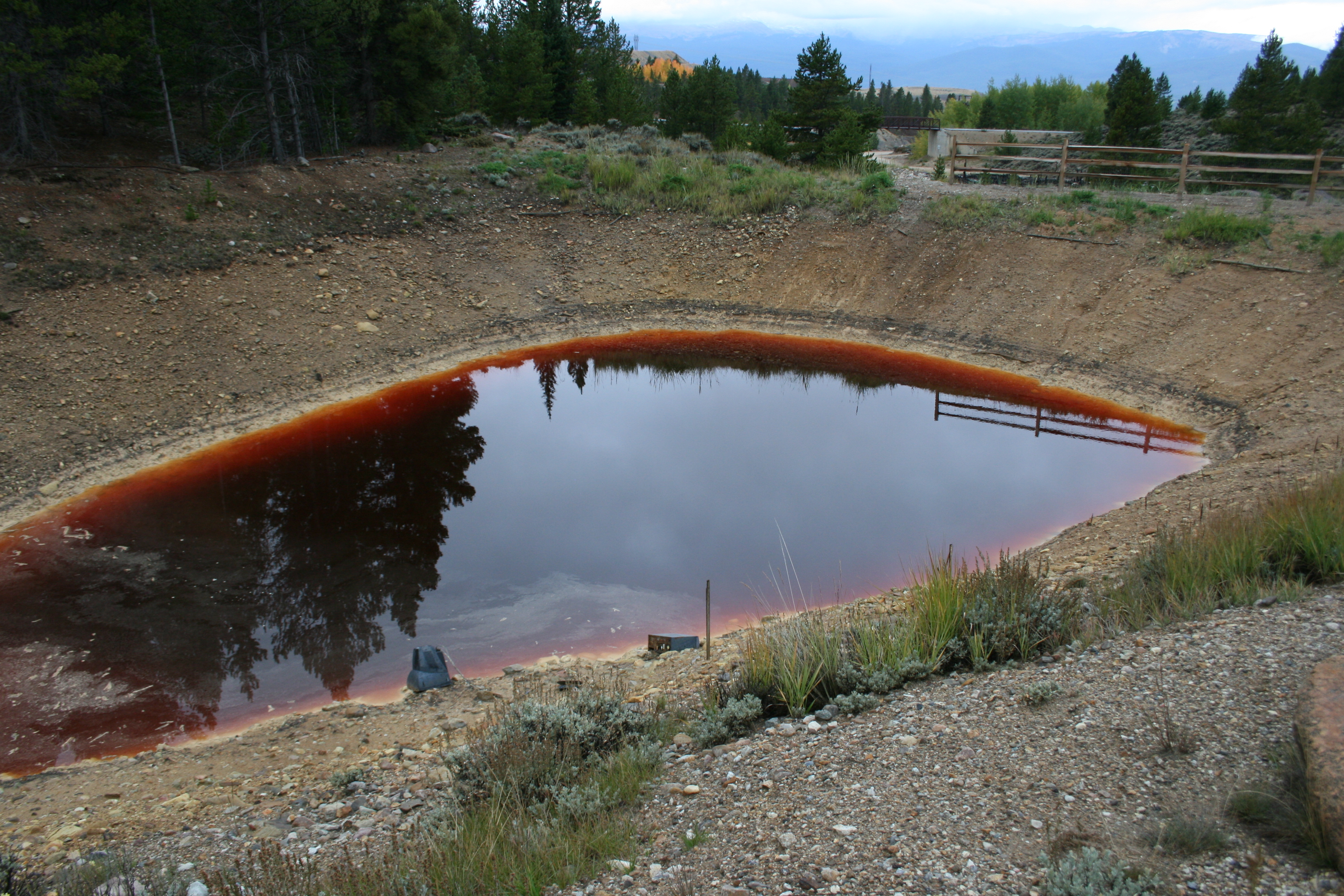
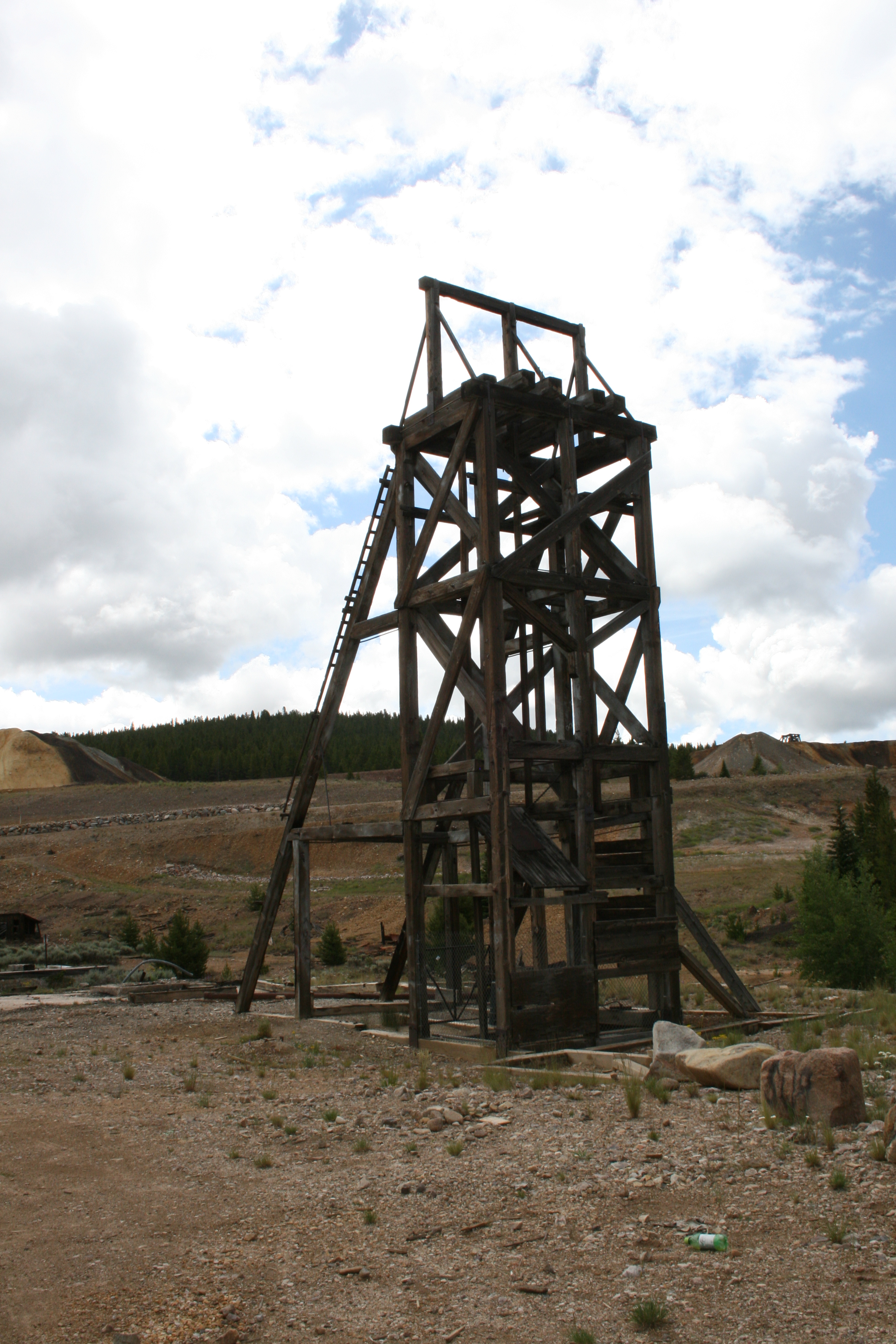
One major problem is that both are often located adjacent to or uphill from rivers.  That’s a disaster waiting to happen.  The King Gold mine is just the latest.  We had recent coal ash spills in Kingston, Tennessee (TVA, 2008) and the Dan River in 2014 (Duke Power). The Dan River spill was 30-40,000 tons.  Kingston cleanup has exceeded a billion dollars.  Coal ash is still stored at both places.  Next to rivers.  We had the federal government build ion exchange facilities in Leadville, CO and Idaho Springs, CO to deal with leaking water from mine tailings from the mountains. Examples are in the hundreds.  The photos are of the two coal spills, mine tailings that have been sitting the ground for 140 years in Leadville and one of the stormwater ponds – water is red in Leadville, not yellow.
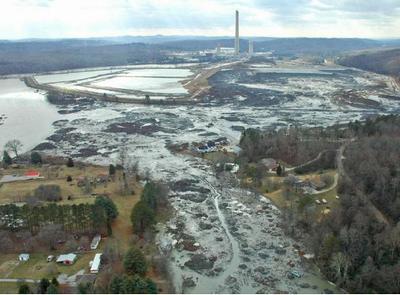
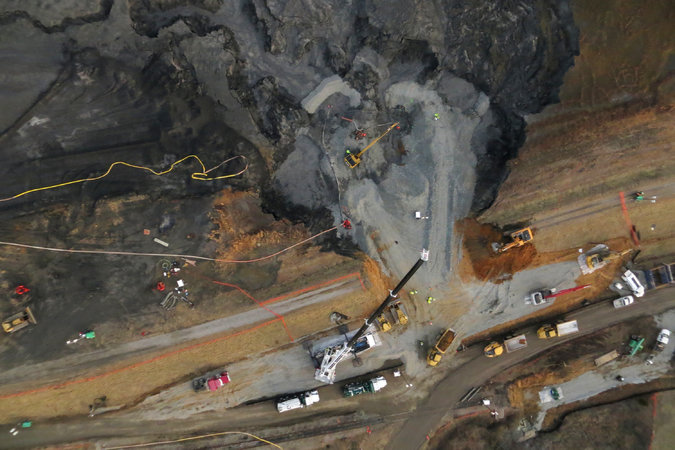
kingston_coalash POLLUTE-master675 IMG_4803 IMG_6527 (2015_03_08 17_53_48 UTC)

When the disaster does occur, the federal government ends up fixing it, as opposed those responsible who are usually long gone or suddenly bankrupt, so it is no surprise that EPA and other regulatory folks are often very skeptical of mining operations, especially when large amounts of water are involved.  We can predict that a problem will happen, so expensive measures are often required to treat the waste and minimize the potential for damage from spills.  That costs money, but creates jobs.

For those long gone or bankrupt problems, Congress passed the Superfund legislation 40 years ago to provide cleanup funds.  But Congress deleted funding for the program in the early 2000s because they did not want to continue taxing the business community (mines, power plants, etc.).  So EPA uses ARRA funds from 2009.  And funding is down from historical levels, which makes some businesses and local communities happy.  The spectre of Superfund often impacts potential developers and buyers who are concerned about impacts to future residents.  We all remember Love Canals and Erin Brockovich.  Lack of development is “bad.”  They ignore the thousands or jobs and $31 billion in annual economic activity that cleanup creates, but it all about perception.

But squabbling about Superfund ignores the problem.  We continue to stockpile coal ash near rivers and have legacy mine problems.  Instead we should be asking different questions:

WHY are these sites permitted to store ash, tailings, and liquids near water bodies in the first place?  EPA would not be inspecting them if the wastes were not there.

WHY aren’t the current operators of these mines and power plants required to treat and remove the wastes immediately like wastewater operators do?  You cannot have millions of gallons of water, or tons of coal ash appear overnight on a site, which means these potential disasters are allowed to fester for long periods of time.  Coal ash is years.  Mine tailings… well, sometimes hundreds of years.

One resident on the news was reported to have said “Something should be done, something should be done to those who are responsible!”  Let’s start with not storing materials on site, next to rivers.  Let’s get the waste off site immediately and disposed of in a safe manner.  Let’s recover the metals.  Let’s start with Gold King mine.  Or Duke Power.  Or TVA.


Interesting that while we all love low gas prices and the low cost of energy is fueling an expansion of our economy, including the first gains in middle income salaries since 2008, the states reliant on oil and gas may be facing real problems financially.  A year ago I read an article that noted the reluctance of North Dakota residents and politicians to invest in roads and other infrastructure despite the influx of oil money.  Keep taxes low was the mantra.  SO they did.  A recent Governing magazine article notes that a dollar drop in oil means $7.5 million decrease in revenues for the State of New Mexico.  Since oil has lost about $30 a barrel in the past year – that is $200 million loss.  Louisiana sees a $12 million cost/dollar drop so they have $171 billion less to work with.  Alaska, perhaps the most oil dependent budget (90 percent) has a $3.4 billion shortfall, but $14.7 billion in revenues.  Texas, North Dakota, Oklahoma and Kansas are other states facing losses.  Fast growing states like North Dakota and Wyoming now have hard decisions to make.  Growth in Texas, Oklahoma, Louisiana and Arkansas may be cut by 2/3 of prior estimates as a result.  A double hit on anticipated revenues.

The comparison is interesting financial straights experienced by the “property value” states like Florida, Nevada and Arizona before and after the economic collapse in 2008.  Florida politicians couldn’t wait to cut taxes and slow spending during boom years, then got caught badly after the 2008 recession when property values dropped in half and state sales tax revenues (tourism) dropped steeply.  They ran out of reserves and refused to raise taxes (after cutting them), so cut things like education and health care to balance the budget.  Not sure how either helped low and middle class Floridians get back on track since Florida has primarily create low wage jobs since that time, not high paying jobs.  We are paying the price still.  I am guessing Nevada and Arizona are similar.

We clearly have not learned the lessons of the many mill towns in the south or the rust belt cities of the Midwest that encountered difficulties when those economies collapsed. Everyone refused to believe the good times would end.  Now Detroit is half of its former self and Akron has the same population as it did on 1910.

The moral of the story is that booms great, but short term.  Diversity in the economy is a key.  Florida will continue to be subject to economic downturns more severe than other states when it relies primarily on tourism and retirees to fuel the economy.  Detroit relied on automobiles, Akron rubber and chemicals, Cleveland steel, etc.  Some day the Silicon Valley will suffer when the next generation of technology occurs that makes the current works obsolete.  It is what happens when you are a “one economy” town.  It is also what happens when you believe the booms are “normal” and fail to financially plan by putting money aside during the boom to soften the subsequent period.

An argument could be made that if the federal government had not enacted tax cuts in 2000 when the budget was finally balanced and surpluses were presumed to loom ahead, we could have banked that money (or bought down our debts), and the amount of borrowing would have been less in 2008.  Buying down debt when times are good is good business.  So is putting money in reserve.  The question is why the politicians do not understand it.  We can run government like a business financially, but takes leadership to do it.  It takes leadership to explain why reserves are good and tax cuts are a future problem.  It takes leadership to make hard decisions like raising taxes, spending more on infrastructure, requiring people to move out of flood plains, not rebuilding in vulnerable areas, and curtaining water use policies when they damage society.  Leadership is making decisions that help the needs of the many, versus the needs of the few.  Oh wait, I see the issue now.  We need Spock to lead us…


ASCE came out with more bad news about infrastructure.  60 Minutes did a piece about deterioration of bridges. The magazine American City and County has published a couple articles about the risks of aging infrastructure.  Asset management is practiced by few governments, and even fewer small ones.  The public doesn’t want to foot the bill and lobbyists want taxes cut further.  Where does it end?

The infrastructure crisis is a political and business leadership crisis.  Or vacuum.  The economy of America and much of the developed world was built on advanced (for their time) infrastructure systems constructed by governments with a vision to the future.  Some of this infrastructure was repurposed (federal interstate system for example), but much of it has addressed critical issues that hampered our development.  For example, the lack of water severely inhibits many third world nations.  Even when they have water, it is unsafe to drink or use.  In America, at the turn of the 20th century 1:100,000 people DIED each summer from typhoid.  Just typhoid, not all the other waterborne disease options.  Many more were sick.  And the population was much smaller.  Talk about reduced productivity.  Now we have advanced water systems, disinfection practices that protect people and pipes, and few event get sick from contaminated water.  Those that do, become headlines.  You don’t want to be a headline.  Productivity is up.  But we expect good water and can’t see the pipes.

Sewer is an even better example.  People just don’t want to know.  Flush and it’s gone.  But the equipment, treatment and materials may be even more complex than the water system.  But few people get sick from sewage because of the systems we have built.  Now think about third world examples.  Or conditions you have seen in documentaries, the news or movies.  Being in sewage is not a great place to be.  Even the manhole thriving cockroaches agree..

Stormwater is probably the laggard here, in part because changes in development patterns have overwhelmed the old systems.  Miami Beach experienced this when redevelopment replaced small houses on permeable lots with large housed with mostly impermeable property.  Oops.  Meanwhile road and bridges have received a lot of funding – with much to do (see bridge that collapsed on I-75 in Cincinnati a few weeks back).  Most states fund transportation at a magnitude more than water and sewer.

What is the problem?  Local officials do not convey an understanding of these complex system to the public very well.  In part this may be because understanding the maintenance needs is difficult and highly variable.  And many do not fully comprehend the assets they have, their condition, life expectancy or technological needs.  No one knows when things will fails, so maintenance or replacement of some equipment or pipeline is always the thing cut in the budget, with no real understanding of the consequences.

The public does not see the asset, assumes it will have a long life, so is unconcerned until they are affected.  Then it is personal.  The public does not understood the impact or value that these assets have to society – they tend to be personal focused, not societal.  That is a leadership issue.  That leadership starts with vision and communication from those that understand the issue to the elected officials that need to advocate for their infrastructure.  Elected officials need to take ownership of infrastructure.  It is like your house – you need to upgrade and protect it constantly.  You do not let that roof leak keep leaking!  Elected officials that do not invest in infrastructure, are letting the roof leak.  Making is someone else’s problem for political expediency is not leadership.

Despite the infrastructure crisis, the good news is that construction of piping is increasing – both new and replacement.  Every so many months, the magazine Utility Contractor will note current trends and pipe seems to be going up.  That’s good but there is a long way to go.  Better news – the construction of buildings is increasing.  That could lead to more revenues.  In Florida, all of a sudden finding experienced construction workers is a problem.  Things are definitely better economically, but are we taking advantage to improve the local infrastructure, or is you economy simply an infrastructure disruption away from another fault?


It’s February already!  Where has the year gone?  My apologies for a January without posts.  Things have been busy here and well, blogging got put on the back burner for me with the new semester starting and a new class to design.  But interesting kernels from January:

The World is Trying to Kill You – Dr. Neil deGrasse Tyson

If you have a 20% failure rate, does that make a speculative technology a waste of time?  Conversely if your success is 20% is it successful?   I think no and no.

Have you noticed that February is the month we have been getting the worst winter weather in the Midwest and northeast? Not December or January?  I used to shovel snow all January and wait for the February respite.

Killer whales are now a protected species.  What does that say about the killer whales as SeaWorld?

There is a honeybee crisis.  No really, a real one.  Not the Jerry Seinfeld movie.  But the lesson is the same.  No bees, no food.  We need to figure out how we are killing them.  No doubt when we find out it will come back on pesticides, herbicides, monocultures, some combination of the above.  Not a good thing for farming.

The bison are under attack again in Montana.  Maybe Mother Nature is trying to tell us something – buffalo want to roam to their winter grazing fields.   And no brucelliosis, the issue rancher bring up as to why the bison are bad, has still NEVER been transmitted from bison to cattle.  Bison are way better on the land since there hooves are much large and they do not compact the ground as much.  But they are not as stupid as cattle.  They know they can walk thought a barbed wire fence.  They are bison afterall!

A Utah rancher shot and killed Echo, the female wolf that made it to the Grand Canyon last summer and became a national story.  He thought she was a coyote.  Um, I think wolves are a little bit bigger than coyotes.  We have a man with a gun who can’t tell what he’s shooting.  What could possibly go wrong with that?

Then there is the bear hunt in Florida because people move closer to the woods and cannot figure out how to secure their garbage of close their garage doors.  Bears get killed.  People…..

IMG_6442

Miami Beach installed $40 million dollars in pumps last summer, with an expected $300 million for.  The nearshore nutrient concentrations increased dramatically (a factor of six), which could adversely impact beach quality, fishing and reefs.  Unintended consequences, but an issue was brought up as a potential concern.


2014 is almost over.  Hard to believe.  I have been attending or annual Florida Section AWWA conference, meeting up with old friends, making new ones and learning new things.  Conferences and connections allow us to do our jobs more efficiently because as we learn how to solve problems or where we can find a means to solve whatever problem we encounter.  It is a valuable experience that I encourage everyone to get involved with, especially young people who need to make connections to improve their careers.  The technical sessions seemed to be well received and popular.  That means that there are issues that people want to hear about.  Things we focused on were alternative water supplies, water distribution piping issues, disinfection byproducts, ASR and reuse projects.

The reuse projects focused on Florida efforts to deal with 40 years of reuse practice and a movement toward indirect potable reuse. This is the concept where we treat wastewater to a standard whereby it can be put into a waterway upstream of a water supply intake or into the aquifer upstream of wells.  The discussion was extended to a number of discussions about water shortages and solutions for water limited areas.  Florida averages 50-60 inches of rain per year as opposed to the 6-10 inches in areas of the southwest or even 15-20 inches in the Rockies which makes the concept of water limitations seem a bit ludicrous for many, but we rely on groundwater that is recharged by this rainfall for most of our supplies, a lack of topography for storage and definitive wet and dry seasons that do not coincide with use.

The situation is distinctly different in much of the US that relies on surface waters or is just plain water limited.  We have a severe multi-year drought going on in California and huge amounts of groundwater being used for irrigation in many rain-challenged areas.  That is what all those crop-circles are as you fly over the Plains states and the wet.  Where you see crop circles, think unsustainable water supplies.  They are unsustainable because there is no surface water and the recharge for these aquifers is very limited.  Most leakance factors in aquifers is over estimated and hence water levels decline year after year.   Water limited places need answers because agriculture often out-competes water utilities, so in the worst of those areas, there are discussions about direct potable reuse (which occurs in Texas).

Direct and indirect potable reuse are offered as answers which is why this topic was popular at our conference.  A recent 60 Minutes presentation included a tour and discussion of the Orange County Groundwater Replenishment program, where wastewater is treated and injected into the ground for recovery by wells nearer to the coast.  They discussed the process (reverse osmosis, ultraviolet light and peroxide) and they took a drink.  “Tastes like water” was Leslie Stahl’s comment – not sure what she expected it to taste like, but it provides a glimpse into the challenge faced by water utilities in expanding water supplies.   Orange County has been injecting water for many years into this indirect potable reuse project.  The West Coast Basin Barrier Project and several others in California have similar projects.  South Florida has tested this concept 5 times, including one by my university, but no projects have yet been installed.

But until recently, there were no direct potable reuse projects where wastewater is directly connected to the water plant.  But now we have two – both in Texas with a number of potential new projects in the pipeline.  Drought, growth, water competition have all aligned to verify that there many are areas that really do not have water, and what water they do have is over allocated.  A 50 year plan to manage an aquifer (i.e.. to drain it) is not a sustainable plan because there may not be other options.  But Texas is not alone.  Arizona, Nevada, New Mexico, Utah, Colorado, The Dakotas, Kansas Oklahoma and I am sure others have verified water limitations and realize that sustainable economic activity is intrinsically linked to sustainable water supplies.  Conservation only goes so far and in many of these places, conservation may be hitting its limits.  Where your rainfall is limited and/or your aquifer is deep, replenishable resource is not always in the quantities necessary for economic sustainability.  Water supplies and economic activity are clearly linked.

So the unimaginable, has become the imaginable, and we now have direct potable reuse of wastewater.  Fortunately we have the technology – it is not cheap, but we have demonstrated that the reverse osmosis/ultraviolet light/advanced oxidation (RO/UV/AOP) process will resolve the critical contaminant issues (for more information we have a paper we published on this). From an operational perspective, RO membranes, UV and chemical feeds for AOP are easy to operate, but there are questions about how we insure that the quality is maintained.  The technical issues for treatment are well established.  Monitoring is a bit more challenging – the question is what to monitor and how often, but even this can be overcome with redundancy and overdosing UV.

But drinking poop-water? The sell to the public is much more difficult.  It is far easier to sell communities without water on the idea, but the reality we need to plan ahead.  There are no rules.  There are no monitoring requirements, but we MUST insure the public that the DPR water they are drinking is safe.  WE are gaining data in Texas.  California and Texas are talking about regulations.  The University of Miami has been working of a project where they have created a portion of a dorm that makes its own water from wastewater.  Results to come, but the endeavor shows promise.


“If the assumption of all economists, government officials and investors is that the population must increase exponentially, what does that suggest for our future?” was a question asked a few days back.  Did you ponder this at all?  I suggest we should and here is why.  An exponential growth rate assumes a certain percent increase every year.  That means the increase in population is greater the farther out you go.  That doesn’t really make sense except perhaps at one point in Las Vegas (but not anymore).  The economy cannot really expand at a rate greater than the expansion of the population because there is no one to buy the goods or increase the demand, which is why increasing the US population is going to be viewed favorably by all politicians regardless what they say today.  House values do not increase faster than population increase unless they are in a bubble, nor does the stock market really (inflation adjusted).  Your water sales will not increase faster than your system’s population increase for any extended period of time either, so an assumption of ever increasing water sales is likely to be an overestimation sooner as opposed to later.  And then what – you have to raise rates, and keep raising rates to keep up because your demands are too low?

And what if your growth stagnates, or goes backwards as many did in 2009/2010?  That was a severe problem for most entities, causing layoffs and higher prices, pay cuts and deferral of needed improvements, mostly because no one had reserves because people thought the good times would roll on forever.  Layoffs, price hikes, pay cuts and deferral of needed improvements do help society (of course if you had lots of reserves, you weathered the recession without a problem, but too many did not).  Keep in mind the repair, replacement, and maintenance needs, along with ongoing deterioration, do not diminish with time or lack of new customers.  We have relied on new people to add money to solve old as well as new problems for many years.  What is the contingency if growth stops?

So a growth scenario makes us feel better and more confident when we borrow funds.  But if growth does not stop, where is the water to come from?  What are the resources that will be used faster?  Where does the power come from to treat the water or cool the houses?  And the cooling water to cool those power plants?  Even renewable resources are limited – most metals and oil have likely passed their peaks as far as production and water does not always fall consistently.  We have overstressed aquifers and over allocated surface waters, especially in the west.  So while growth makes us feel good financially, we need answers to the growth scenario despite the fact that we may have more funding.  Many resources are not limitless, but an exponential growth pattern ignores this.  Locally growth maybe less of an issue, but society wise?  Maybe a societal problem, or maybe we get into extreme completion with each other.  Some how that doesn’t look like a solution either


Since 2010, the Federal Reserve Bank indicates that the wealthiest 10 percent of American have seen their income rise by 2%.  The Bottom 20% have seen their income DECLINE by 4 percent and the average for all families DECLINED 5%.  That tells me that the majority in the middle income brackets, decreased at a rate greater than the bottom 20%.  In other words more of us are moving down in economic standing, not up.  To make matters worse, the Federal Reserve Bank indicates that the top 3% actually had their incomes increase by 27.7% since 2010, meaning that the upper middle class people are falling back with the rest of us.  Quite the opposite of what our parents had hope for us.

Wages have not rebounded as many people had to take pay cuts or find new a career at lesser pay, which places all kinds of issues at risk – retirement age, retirement goals, college for the kids, investments, home ownership, etc.  All play a role in the economy of the country.  People spend less on eating out, new clothes and other things – generally more frugal, which means less demand for goods and services, and therefore less employment.  A vicious cycle that doesn’t help the economy.  We have already started to see real estate cool off as wages have not rebounded and people figure it is time to defer or get out.  Places like Miami and Las Vegas may remain warmer than say Cleveland or Detroit, but the Miami market has cooled in the past year.

Real losses in purchasing power goes back to the 1980s form the lower half of earners in the US.  And we argue about the minimum wage – which is the very bottom of the pile.  The failed concept of the Great Society was to try to get enough money in everyone’s pocket that the total purchasing power of the population would increase.  Did not work out that way, but the concept of increasing purchasing power of all has appeal.  Inflation goes up.  Purchasing power goes down.  The economy will stagnate if wages for the bottom 90% do not increase.  That makes official less likely to raise water and sewer rates to pay for those needed infrastructure upgrades.  Which will put more assets at risk of failure and stress operations budgets further.


Earlier this year the Journal for AWWA had several articles about water use and infrastructure needs.  One of the major concerns that has arisen in older communities, especially in the Rust Belt and the West is that demands per person have decreased.  There are a number of reasons for this –the 1992 Energy Policy Act changes to plumbing codes that implemented low flush fixtures, the realization in the west that water supplies are finite and conservation is cheaper than new supplies, a decline in population, deindustrialization, and climate induced needs.  But all add up to the result that total water use has not really changed over the past 30 years and in many locales, water sales may have decreased.  Water utilities rely on water sales for revenues so any decrease in sales must be met with an increase in cost.  Price elasticity suggests the increase will be met with another decrease in sales, etc.  It is a difficult circle to deal with.  So less water, whether through deliberate water conservation or other means, creates a water revenue dilemma for utilities.  A concern about conserving to much and eliminating slack in the system also results.

Less water means less money for infrastructure.  Communities do not see a need for new infrastructure because there are fewer new people to serve.  Replacing old infrastructure has always been a more difficult sell because “I already have service, why should I be paying for more service” is a common cry, unless you are in my neighborhood where the water pipes keep breaking and we are begging the City to install new lines (they are on my street J)  Educating customers about the water (and sewer) system are needed to help resident understand the impacts, and risk they face as infrastructure ages.  They also want to understand that the solutions are “permanent” meaning that in 5 or 10 years we won’t be back to do more work.  Elected officials and projected elected officials (the tough one) should be engaged in this discussion because they should all be on the same page in selling the ideas to the public.  And the needs are big.  We are looking at $1 trillion just for water line replacement by 2050 and that is probably a low number(2010 dollars).  The biggest needs are in the south where infrastructure will start hitting its expected life.  The south want west will also be looking for about $700 billion in growth needs as well.  All this will cause a need for higher rates, especially with ¼ less low interest SRF funds avaialalbe this year from Congress.