Archive

Leadership


A new GAO report suggests that the short and long-term future for state and local revenues may be more difficult that currently anticipated, despite the economy recovering in many places.  My last blog outlined a number of the problems including that many public entities chose to reduce tax rates to balance the budget as opposed to restocking reserve funds.  When property values plummented and tourism and consumer buying diminished, the taxes related to all three plummented as well.  None have yet returned to their pre-2008 levels.  The failure to stockpile reserves caused many governments to spend down what limited reserves they had in the past 5 years as a means to avoid the hard and unpopular decision – raising taxes to collect the same revenues as before the mid-2000s cuts.  Now the lack of reserves creates an issue going forward – as costs increase faster than revenues, there are no reserves to tap into.  It is a problem that just keeps on giving. –

As I noted, I never like Chicken Little, because he never had a solution for the problem. There are solutions for local governments, some good and some bad.  Clearly local governments need to revisit the revenue production tools.  Taxes and fees will go up.  Taking more money from the utility, an all too popular decision in the past 5 or more years IS NOT THE ANSWER!  That just transfers the problem to the utility system and we already know that there are huge amounts of deferred maintenance and capital projects with utilities – $300 billion and counting at last count. The utility should be run as an enterprise, not as a cash cow to avoid hard political decisions.  Solutions for replacing those ARRA funds and federal grants for police are needed.  Just saying “We ran out of money so lay those people off” is not a solution.  What that is, is poor leadership and planning – a failure to develop the investment made by the feds to better the fiscal position of the community.  A lost opportunity.

There are many options.  And we can lay blame at the feet of elected officials, but it does not all belong there.  The citizens who elect those officials, are to blame.  Most elected officials react to citizenry, not the other way around.  And don’t forget the managers who bring bottom line business practice to local government management who recommend options. We’ve lost a generation of good government managers who understood the service aspect of government who have been banished in favor of the bottom line approach.  We need to change this as well. 

A more entrepreneurial spirit is needed.  I recall a prior entity I worked for where we proposed doing lab work in our certified water lab for other utilities.  That got shot down because it was “unfair to compete with the private sector for this work.”  Really?  That sounds like a private sector red herring.  They know they will lose business, and they can’t compete.  How is that in the spirit of capitalism? It cost less for other entities to have us do it?  A huge missed opportunity.  There are many.  If we want government to operate more like a business, we need accept the opportunities that come with it, not quash them. 

We need to market the community.  Not just give money away hoping to attract businesses that will locate for a short while.  That certainly has been a fiasco in Florida.  Other places as well I am sure.  No, we need to “sell ourselves.”  We need to marketing program to distinguish the community, its assets, its water and sewer reliability and quality, its people, education and opportunities.  It means spending money to invest in the community, not just spending money to fix a few roads and install some pavers, although they are good.  It’s also not just fixing up the distressed neighborhoods, but investing in the better ones as well. The most distressed City in America is quietly encouraging new artists and startup businesses to relocate to Detroit to take advantage of the availability of warehouses, cheap rents and a talented workforce.

We need to avoid the pitfalls of falling victim to reinforcing the past.  Florida’s economy is based on tourism, agriculture and building housing to attract retirees.  Weird business model.  Two of the three are highly susceptible to economic disruptions.  We are still recovering from 2008.  The economy also produces mostly minimum wage jobs, not the way to build a better tax base of encourage investment in education.  The state manufactures nothing, yet fails to take full advantage of what assets it might have to create industry.  As Sun-Sentinel writer Stephen Goldstein noted recently, why is it that south Florida has yet to take advantage of the private sector interest in investing in understanding age –related diseases?  Much of the local economy and the two local public universities are not positioned to take a leadership role?  Yet it is an easily marketed issue given the current population, assuming funds can be secured.  Public investment is needed, and of course that’s the rub.

We can market ourselves.  May communities have.  And most deserve better than their current lot in life.  Alexis de Tocqueville,” you get the government you deserve.”  I think we deserve better, and I think we can do better.  I think we can develop a better future and I think we can overcome challenges.  So maybe it is time for to us to change the perspective!


A new GAO report suggests that the short and long-term future for state and local revenues may be more difficult that currently anticipated, despite the economy recovering in many places.  For most of the 1990s and the mid 2000s, many states and local governments operated with surpluses, or could have.  Many elected officials, like those in Florida (or Congress in 2001), chose to reduce tax rates to balance the budget as opposed to restocking reserve funds.  When property values plummented and tourism and consumer buying diminished, the taxes related to all three plummented as well.  None have yet returned to their pre-2008 levels.  In fact, the property values lag so badly, it may be 10-20 years in many jurisdictions before they return to their former selves.  In South Florida’s suddenly “hot” real estate market, local officials are raving about the 28% increase in property values in 2012/2013.  Sounds great until you realize that they need to increase 100% to return to pre-2008 levels.  Even in a hot market it may be over 5 years to recover.  So property values are not a short-term problem.  Some communities may never recover.  So much for saving for that rainy day.

It should be plain to all of us that the failure of those in power to stockpile reserves caused many governments to spend down what limited reserves they had in the past 5 years as a means to avoid the hard and unpopular decision – raising taxes to collect the same revenues as before the mid-2000s cuts.  Now the lack of reserves creates an issue going forward – as costs increase faster than revenues, there are no reserves to tap into.  It is a problem that just keeps on giving.  The failure to address the root cause – the failure to set revenues collections at an appropriate level and accumulate surpluses when you are lucky enough to get them.  Unfortunately the political discussion keeps going back to keeping costs down, but cuts in costs means cuts in services.  Sounds great to cut the Plantation trolley because of budget needs, but what about those citizens that rely on the trolley?  Or the businesses it serves.  Cutting Meals on Wheels which primarily serves shut-ins is a great idea in Broward County with a hue population of elderly that find it difficult to get out of the condo?  And does it really make much impact on the overall budget?  Not really.  There are cosmetic issues.  There a more symptomatic issue here?

GAO points to health care as a cost increasing faster than the rate of increase in revenues, but the latest data seems to indicate that the rate of growth may be less than projected by those opposed to the new Health Care laws.  Underfunded pensions are also a potential area of concern, but cutting employees is not the solution for that as outlined in a prior blog.  Cutting employees cuts the funding for pensions which guarantees future problems.  So that idea actually works against the goal of shoring up the problem.  So, no that is not the answer.  We are clearly paying for the sins of 15 years ago when we were awash with funds, but decided to cut or public “income.”  Who does that anyway?!?!

I never like Chicken Little, because he never had a solution for the problem.  Part 2 will outline some thoughts…


Jim DeMint is a smart guy.  He parlayed a short stint as a Tea-Party Senator from South Carolina into a million dollar a year executive position with a conservative think tank.  Then he sends out surveys to figure out where the “public” stands on certain issues.  For example: 

Because of uncontrolled spending, the federal government ran a $4 trillion budget deficit for 232012 and our national debt is not a staggering #16 billion.  Do you want Congress to take serious action to rein in out-of-control spending?  Yes or no. 

Ok, first the deficit was not $4 trillion in 2012.  So that’s a lie.  But what are the other options?  Reining in spending is not the only option, but it is the only one given.  Certainly the question is most likely to get a “yes” answer which is exactly what DeMint’s organization is looking for. 

Let’s look at another one.  

How would you consider yourself politically:  Very conservative, somewhat conservative, Independent, but lean conservative, independent, but lean liberal, somewhat liberal and very liberal.  

Clearly a “you are either with us or against us” question, but one that tells you everything you need to know about Congress and politics in general.  You can’t be in the middle.  You can’t draw the best ideas from both sides of the aisle.  Precisely the problem gripping Washington and many State capitols.  No one can compromise, so we get sequestered.  This type of polarization does not help America move forward nor does it help use solve problems. It increases the burden on local governments to address the problems that the failure to compromise at higher levels allow to persist, or may even create.


It surprises me how many utilities ignore their meter stock.  Water meters are the “cash registers” of the utility – they are how we bill our customers.  Many utilities allow their meters to age without checking how much loss their may be.  I have a client who regularly has issues with high unaccounted for water, which is a permit condition.  Every time the issue arises, they ask me what to do.  Each time I ask the Finance Department, which is responsible to for meter reading and billing, to check the number of meters with 90 days of zero readings.  The past two times I had them do this the number of meters was about 10% of the system! Both times I have had them replace all 10% immediately.  The result each time was to decrease the unaccounted for water amount in half (15 to 7%).  In essence they received a 7% rate increase without raising rates.  Yet, the Finance department NEVER runs the zero read report unless I ask them to. 


This situation is all too common.  Meters lose accuracy with time.  Small meters lose accuracy slower than big meters, which may lose 50% of their accuracy (for low flows) within 2 years, but the small meters may not last the 15 to 20 years they are typically installed.  The easy way to monitor this is to run a zero read report monthly, and to run a report to compare the water billed 12 months apart to see if the billing amount decreases significantly from year to year.  Water utilities need regular meter maintenance to insure they are receiving the revenues for services delivered.  But it is often too easy, or too politically difficult to spend the dollars to insure meters run accurately and to bill people appropriately.  But we should ask if it is fair to bill others disproportionately to avoid fixing the meter problem?


Similarly utilities need to insure that everyone is being billed.  Some cities do not charge themselves for water, which means they cannot track it adequately.  Other potential users that are not metered or charged include churches, parks, and schools.  There is a fairness issues associated with not billing everyone.  Likewise, large losses that cannot be accounted for may be indicative of water theft.  A water audit program can help identify potential water theft.  Theft is an affront to all customers.


Utilities should also look at fees for services.  Sometimes these have not been adjusted for years.  Utilities should determine exactly what it costs to provide services like meter turn-ons, turn-offs and call outs.  A couple utility clients of mine have contracted to perform services for other utilities as a mean to raise revenues without big rate increases. 


Keep in mind though that rates need to increase because power, chemicals and capital needs are constantly increasing.  Power, cable, telephone and other utilities increase to insure they recoup their costs.  Water and sewer utilities should incorporate CPI-type increases in their rate structures to insure they can sustain ongoing operations and capital replacement programs.  Insuring everyone is billed properly and the meter inventory is up-to-date insures that rate increases are limited to what is actually needed.


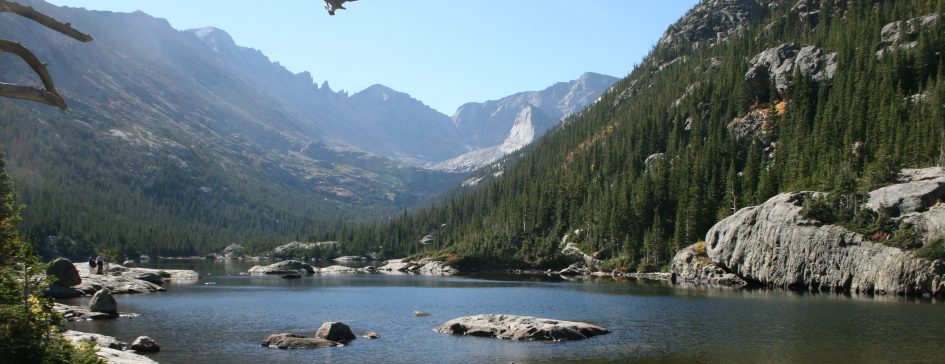
I went back to Colorado last week and it’s dry again out there.  Ok, maybe not this past week when it rained a bit, but despite late snow (March to May), the forests are dry.  The bark beetle problem has not made things easier, so lightning from thunderstorms can easily create fires, like the fire down in Colorado Springs or the Big Meadows fire that is ongoing in Rocky Mountain National Park.  The latter has been ongoing (although fortunately mostly out) for over a month, and has closed some trails in the park.  I hiked through the Fern Lake fire remnants (although virtually all the fire was around Cub Lake). That fire burned for a couple months last fall, only finally burned out in the winter after snowfall. 


The west is dry and “drier than in the past” is the new normal it seems in Colorado.  So now water managers are faced with three new challenges:  less water, faster runoff and more difficult water to treat.  The fires cause the loss of protective vegetation, which means less water is kept in the forest.  As a result, the tiny, light ash particles easily run off in the rain.  Ash is hard to remove without activated carbon or other advanced processes.  The loss of vegetation increases runoff, which means larger sediment content in otherwise pristine water supplies.  That can make a major impact on downstream water plants that may not have planned for such events.  The cost of fire suppression for the last 60 years confounds the current water supply and quality problems.  There are also ecological effects that may impact local economies. 


All this said, I am unsure what the solution is.  Clearly the climate in Colorado is changing.  It is unlikely we can alter the current course any time soon.  Instead we must adapt to the changes and attempt to mitigate the impacts on water supplies.  Creativity, innovation and likely more infrastructure will be required. Concepts like aquifer storage and recovery are coming back to the fore as a result of the current condition. It will be interesting to see how this all plays out. 


Close UP Radio # 4

Here’s the 4th in a series of radio shows I did on line.  These are topics discussed:

Desalination is often argued as a water supply option.  But the costs for power are significant.  Power requires water.  Water treatment requires power, we can’t make decisions in a vacuum.

We do have ongoing discussions about indirect and direct potable reuse of wastewater – ie toilet to tap.  There are regulatory and public perception barriers, but in truth we do this in rivers every day

It is hard to define that term  sustainability, and it depends on who you are and what your issues are.  But water is a medium of social change as well as economic development.  Too often we look at short term solutions, which frustrate long-term potential.  Klamath River OR is an example.  

Enjoy


A recent Rolling Stone article outlines a potentially dismal future for south Florida.  I was quoted in the article and give the author a bunch of information.  It is hard to write articles that “pop” in the popular press while conveying facts and figures.  But I would suggest that the future is not quite as dismal as the article depicts.  The sea level rise has been ongoing for at least 140 years as indicated by the Key West tidal station, the longest running tidal gauge in the world, but the amount has been 9 inches since 1920.  True it appears that the sea level rise may be accelerating as a result of warming temperatures in the atmosphere that causes the oceans to expend, plus the loss of ice that runs off from glaciers, but 3 feet by 2100 seems the average or maybe the high average.  That is unlikely to inundate all of south Florida, but keeping the water table low will be a challenge.  I suggest that the challenge can be met and accomplish two goals.  In low lying areas the impact of sea level rise is really manifested as increasing groundwater tables.  An increased groundwater table means less soil storage capacity, which means smaller rainstorms will cause flooding.  The increased flooding is already creating a demand by residents for solutions from local public officials.  We have used exfiltration trenches (French drains) for many years, but increasing water tables will mean many of these systems will not function as they may be currently.  But what if we reverse the concept?  Instead of exfiltration, what if we allowed the water to infiltrate the pipe and go to a central wet well, and then pump the water out of the wet well?  I further suggest that the dumping large quantities of groundwater to the ocean or canals may not be permittable as a result of high nutrients, so what if this water is instead pumped to a water plant as a raw water supply?  Wouldn’t that solve two problems at once? Lots of excess fresh water supplies in an era where there are significant limitations in fresh water supplies?  Just thinking….. 


I have been inundated by articles recently about the issues with integration of Gen X and Millennials workers into the workplace.  Not sure why, but this is a hot issue in trade journals and newspapers.  The recent articles seem to focus in on the potential conflict between older, and younger workers who seem to have different perspectives on how work gets done and protocols.  These folks would do well to read Dan Pink’s book Drive, which discusses the differences in motivation and how supervisors can carefully cultivate innovation and efficiently by recognizing the differences. 

 Since I teach at a university, I deal with Gen X and Millennials all the time.  There are huge differences in their use and comfort with technology versus older workers.  It is truly second nature for the younger workers, while the older generations had to learn these technologies.  Many, if they had access to computers, they wrote programs by using punch cards and wrote their own compute programs in FORTRAN.  The younger workers don’t know even know what a mainframe computer is let alone punch cards.  Technology accelerates exponentially with time, which is why people feel left behind. 

Funny how technology works though.  While the kids I teach today are far more savvy than their predecessors 5 years ago (and those five years before that), they have to keep up of get left behind.  That’s the older worker problem – the older guys cannot compete with the use of technology, but not to worry, in five years, same for these kids.  As a result the older crowd may resist helpful technology.  It surprises me how many engineering firms resist 3 dimensional design programs, despite my students knowing how to do it.  By the way, the contractors hire my students because the contractors see the value in profits (and change orders). Younger workers know how to integrate the technology into the workplace.

 While comfort with technology is the big difference you notice, it is not the driving issue as Dan Pink points out.  Most of them make a decent wage so they are looking for more than salary to motivate them.  Interestingly money is not the primarily motivation like it can be for older workers.  The younger folk avoiding the rigid looks for flexibility, especially as it relates to family and friends.  They are comfortable with working at home and at times throughout the day.  It’s not that they work less, it’s they work differently.  We should focus on productivity, versus conventions.  Maybe we’d spend time appreciating each other more!


Go back to Drive and you realize that the Gen X and Millennials want to pursue these new technologies and integrate them into their jobs.  They are motivated by responsibility, flexibility and independence, much because that’s what their baby boomer parents taught them.  They are comfortable with flexible schedules and working when needed.  Baby boomers need to help them use these concepts to innovate and create in the workplace.  We need to learn to use this to our advantage in the workplace, not fight it.


In the past week I have had the opportunity to experience the extremes with water – heavy rains/tropical weather in SE Florida, and dry weather in Denver at America Water Works Association’s Annual Conferences and Exposition. Two months ago with was snowing in Denver and there had been limited rain in SE Florida. Six months ago we were both dry and there was significant concern about drought in both places. How quickly fortunes change and the associated attitudes as well. It is part of a perception problem – looking at the near term – instant gratification, as opposed the long-term consequences. In truth neither set of conditions is historically different or should have created major panic or much shift in attitudes, but it is the potential to predict conditions that require the water manager’s scrutiny. We have all become risk managers.

Managing risk is not in the job description of most water and sewer personnel (risk managers aside, and they are focused on liability risks from incidents caused by or incurred by the utility like accidents, not water supply risks). We spend a lot of effort on the engineering, operation and business side, but less on planning or risk/vulnerability assessments. EPA has required vulnerability assessments in the past, but having seen some of those exercises, most are fairly superficial and many put on a shelf and forgotten. I have had clients ask me if I still had copies because they did not. Clearly we need a renewed commitment to vulnerability assessment.

Vulnerability starts with water supplies. Groundwater is particularly tricky. A new USGS study reports significant decreases in water levels in many aquifers across the US, especially confined aquifers in the west. That situation is not improving, and the situation will not correct itself. Loss of your water supply is a huge vulnerability for a community. Finding a new supply is not nearly as simple as it sounds or as many are led to believe. Confined aquifers do not recharge quickly and therefore have finite amounts of water in them. Remove too much water and all too often land subsidence occurs, which means the aquifer collapses and will never hold the same amount of water. USGS has mapped this and it matches up well with the drawn down aquifers. More data needs to be collected, but Congress is looking to cut USGS funds for such purposes, just when conditions suggest the data is needed most.

Many watershed basins and many aquifers are over allocated and overdrawn, and not just in the west. New England and the Carolinas have examples. Overallocation means competition for water will increase with time and it will be utilities that everyone will look at to solve the problem. Afterall the utilities have money as opposed to agriculture and other users, right? To protect themselves, water utility managers will need to look beyond their “slice of the pie” to start discussions on the holistic benefits to water users throughout the watershed, which will extend to understanding economic and social impacts of water use decisions. It is not just about us, and paradigm shift that is coming and one that we as an industry need to be the leading edge for. Our use impacts others and vice versa. Every basin wants to grow and prosper, but decisions today may reduce our future potential. Klamath River is a great example of misallocated water priorities. The biggest potential economy in the basin is Salmon ($5B/yr), followed by tourism ($750 M and growing), which relies on fishing and hiking. But agriculture ($0.2 B/yr) get the water first. Then power, which warms the water (salmon like cold water). Then a few people (a few 100,000 at the most in the basin). The result, the salmon industry gets reduced to $50 M/yr. Now how could we create more jobs, which would result in more income and a bigger economy? The easy answer is encourage the salmon industry, but that doesn’t sit well with the other, smaller users that will become more vulnerable to losses.

I suggest that to harden our water future in any given basin, we need to start looking a little more holistically at the future. This type of analysis is clearly not in the job description of the utility or its managers, utility managers may have the best access to technical expertise and information. As a result to protect their interests and manage risk, we may need to shift that paradigm and become holistic water managers.


A recent Wall Street Journal article noted that 50 % or people have paid their utility (water, sewer, electric) bills late, but only 24.8% have paid the internet late, 39.5% the cable late and 44% the phone bill. Really? We are willing to pay water, sewer and electric late, but not the internet bill? This should be a wake-up call to water and sewer utility leaders nation-wide that we have a problem. Combined water and sewer bills across the United States average something around $50. True they are often higher in California, SE Florida, and some other areas, but they are also lower in many areas. Most of the time even in those high cost areas, the bill is under $100.

I have done a number of rate studies and I find that the cable bill, and the cell phone bills are almost always higher than the water+sewer bill locally, so why are people willing to pay our bill late, but not the others? Is it the perceived benevolence of local utilities, most of which are public entities? Is it a perception that water should be free so it is not important to pay the bill? Or is it the lack of marketing of an essential product by waterutilities? I have heard all these arguments, but I am thinking the latter may be more important. Most people know they need to pay the bill, and I don’t really know anyone who thinks water should be free in the US. People are used to cheap water, and costs are going up. Complaining to local elected officials often keeps rates artificially low, which means maintenance and replacement programs get deferred. That makes the utility more at risk to failure. EPA, GAO and others report regularly that we have been keeping rates low and deferring capital and maintenance for years to the tune of hundreds of billions of dollars. So what is wrong?

I suggest that as an industry, we have failed in marketing water. Treatment plants, piping and pump stations are out of the way, pipes are buried. No one sees them and people assume these faciliaites will work, but rarely ask how they work or how long they will work. They do not understand the complexity or the regulatory stringency of operating a utility. They do not understand that the number one priority is public health, and protecting the public health costs money. We have not made people understand this because we do not market our product. I have taught elected official classes where the elected officials tell me public dollars should not be spent on marketing, but they never say why when pressed. Rarely is marketing included in a budget. But if water and sewer is a business, isn’t marketing an important strategy to maintain that business?

Meanwhile we have a host of celebrities marketing cellphones, which are not required to survive. We have a host of glitzy cool advertisements for cable service options, but we don’t need cable to survive. The power companies send out glitzy stuffers in their bills that no one reads, but they do end up in the papers regularly. And power really helps us survive, but we could do without it (although it would be unpleasant). Our forefathers did. But no one ever survived without water. Maybe it is just too obvious. But maybe because it is so obvious, people are less conscious of it. We need to market better. As a private sector marketing manager would say – we have lost our market share!! We need to get it back.