Archive

local government


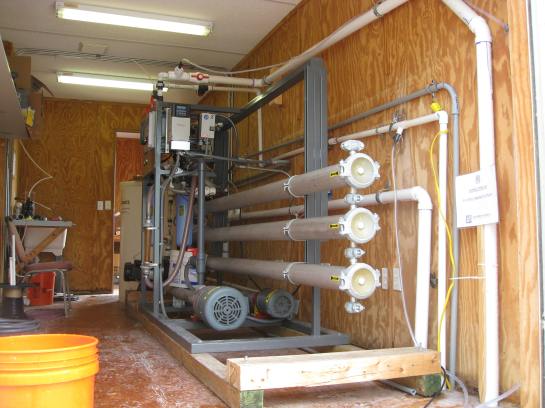
Collaboration between students, faculty and the real world is an excellent means to integrate students into real world situation and provide them valuable experience.  I have done this with several communities to date.  Below are the installed OASIS street improvements in Dania Beach.  Students did the drafting.  Also a stormwater pipe in Boynton Beach.  Excellent learning experience.  The campus mapping project is one that our Facilities Management Department needed.  Very cool 3D map.  We did stormwater assessments in Davie, plus flood mapping.  Of course the Dania Beach nanofiltration plant, the first LEED Gold water plant in the world.  Still.  Here is the cool thing with working with students – they have all kinds of ideas and have all kinds of tools that they can access – they just need guidance.   They will create tools (our app for asset management). to make the job easier.  Most collaborate well.  And most want to learn about the profession.  As an industry we should promote this more.  Go to the local universities, talk with faculty.  Find the right faculty mentor who is interested in local outreach.  Work with them.  But students should not work free.  Pay or pay in grades.  It’s only fair.


June was a tough month and looking back I realize I really didn’t post.  I was in Chicago, spent 2 weeks with middle schoolers, prepared my promotion package, god the doors completed on the house, etc. and suddenly it was the 4th of July.  Yikes time flies.  But it was interesting.  Here I want to talk a little about Chicago.

I went to Chicago to do a 3 day, 12 hour class with elected officials.  Most are board members for their local utility, but they went from a small South Carolina system to San Antonio and St. Paul.  A huge variety.  And we learned a lot.  Obviously the Flint crisis was on their minds.  But I thought the most interesting thing was that these folks understood what happened.  I asked what they thought the real issue was in Flint and the resounding answer was – politics.  Bad decision-making.  Poor preparation.  Notably, not lead service lines.  These people got it.  They read behind the headlines.  Of course these are the officials that wanted to learn more about their water and sewer systems, as opposed to the many that do not take the time to, but interesting nonetheless.

Another issue was talked about was finances.  I ask them to bring their budget, water use, pipelines, etc.  The goal is to do a quick comparison between systems and then discuss what it means (if anything).  I have started doing the exercise each year and we find the same thing – smaller systems cost more per thousand gallons to run than larger systems, so hence their rates must be higher or they are not doing repairs and replacements on a timely basis. This group got that as well and understood that comparisons of their system to others needed to be carefully vetted.  No two system are alike, but size, treatment, terrain can all affect costs to the customer.

We also talked about leadership.  I am applying for an AWWA project on leadership, but when asked, these folks had some great answers. They see leadership as a personal trait (inspiration, vision) as well as being driven by event (negotiating crisis or change), and having the ability to bring people along through the rough patches.  Leadership is an issue that needs more exploration, but I thought this was a good start to preface the larger survey I hope to do for AWWA’s members.

In the meantime, I learned a lot about the Chicago River bridges, enjoyed the planetarium, a Cubs night game, Millenium Park and a walk along the waterfront.  Very cool.


WTPspiractorI have a question – what was the impact of the 2008 economic crisis on water and sewer infrastructure funding?  I have a hypothesis – the amount of monies transferred to non-water and sewer operations increased.  Is the hypothesis true?

The next question to answer is that if transfer monies increased, did they decrease once property values started to come back?  My hypothesis is no.

Finally what impact does this have on water and sewer infrastructure going forward?  I suspect that the answer is that we underfund infrastructure or justify the lack of funding through actuarial means (I actually had a utility director tell me that his pipes were designed to last 250 years.  Seriously.  Of course that is nonsense, but it is a means to keep your need for replacement funding down).

I have a student and we are working on these issues now.  We are going to gather data from several hundred utilities over the next six months, crunch 11 years of data and let’s find out.  If you or your clients are interested in adding your data to the mix, please send it to me.  I need 2005 -2015 expenditure info.  Also some operational data like ADF, MDF, miles of pipe, customers, treatment type and CCR. We will be publishing the results.   Should be interesting……


FLInt 2

As you probably know, the continuing saga in Flint has two state regulatory folks and an operator with the City of Flint under indictment.  Where that goes remains to be seen, but the Attorney General Bill Schuette felt something needed to be done.  But are the right people under indictment?   The charges are “tampering with evidence, and misconduct in public office,” but these are employees that few know or see and they were the ones dealing with the symptoms since they did not create the problem.  That means the harder question still is not addressed – there are engineers, managers and local officials who agreed to the change in water source for financial reasons, not public health reasons that precipitated this tragedy.  Where is that responsibility since all indications are that the change in water sources created a situation that could not be managed easily?  The question that those in Flint are likely is asking is whether the local officials going to skate on this?  It is worth asking because these incidents occur every few years, and the reasons are similar – a decision gets made for financial reasons by public officials, a problem happens, and there is a series of events that is uncovered that precipitates the concern.  The utility or City gets sued, but that simply means that the public (you and your neighbors) pay (and in Flint everyone was impacted, who do you collect from?).  The local officials are rarely challenged about these decisions and often accountability is lacking.  So the question is:  is the Attorney General done, or are there bigger fish to fry in Flint? And who are those fish?  Mayor?  Council? Managers? Consultants?  Legislators who cut regulatory funding?


Fred+Bloetscher+Senate+Committee+Holds+Hearing+cQCSwINqgm3l

Water and wastewater utilities spend a lot of time dealing with current issues =- putting out “fires.”  But there are larger trends that will affect the industry.  Here are a couple recent topics that we should consider in our industry:

Will robots be doing all our repetitive jobs?  If so what does that mean for all the people doing those jobs now.  Most do not require a lot of skills, and many of those in the jobs that will be lost, do not have the skills for other jobs?  Does the $15 per hour minimum wage accelerate this transition?  How does this affect the water industry?  Meter readers might be replaced with AMR systems.  Customer service is already migrating to direct banking.  There is a change coming.

What does the driverless car mean for us?  I am thinking about an old Arnold Schwartzenegger movie.  For utilities the issue may be how we interact with unmanned vehicles, especially when what we do can be disruptive to traffic.  What happens if those cars get into an accident?  And Warren Buffett is thinking about the impact of this on the insurance industry.  He owns a lot of GEICO stock.  It is doubtful many utility vehicles will be unmanned, in the near-term, but do our manned vehicles and the potential disruption leave us open to greater risk of loss?

Speaking of Warren Buffett says the economy is far better than certain candidates suggest.  I tend to trust Mr. Buffett.  He’s been doing this a long time and has been fabulously successful.  But he notes structural changes to the economy like those noted above, are ongoing.  That will create conflict for certain professions that migrate to automation, much as manufacturing did in the 1970s.  He raises concern about what happens to those workers and suggests that we have not planned enough for those workers who get displaced as the economy undergoes continuing transitions.  In the late 1970s we had CETA and other jobs training programs as we moved from manufacturing to other jobs.  He does not see that in place now.  The at-risk – the poor, minorities, the less educated, rural citizens…. in other words, the usual groups will be hit harder than the rest of the population.  I don’t hear that discussion on the campaign trail but utilities may want to follow these trends is the hope that we can acquire some of the skillsets that we need.  Or provide that training.

Florida’s flood protection plan received a C- from a study called States at Risk.  It said Florida lacks a long term plan for rising seas, despite being vulnerable.  On an unrelated note, the state is expecting insurance premiums to increase 25% or more for flood insurance for homeowners.  And local officials are working busily on FEMA maps to exclude as many properties as possible from flood insurance requirements.  Maybe those things are all related, just at opposite purposes, but who is going to get the calls when flooding occurs?  Storm water utilities, and sewer systems where the manholes are opened to “facilitate drainage.”  The question is what the ratings are for other states as Florida was not the least prepared nor is it the only state with exposure.

A final current trend to think about is this:  Current sea level rise projections have increase the high end, but remained steady for the 50 percentile case.  By 2200 we may see seas at 10 ft higher. That would be a major problem for south Florida.  But the world population will be over 15 billion, which exceeds the carrying capacity of agriculture (at present projections and techniques).  It also places over half the world in water limited areas.  So sea level rise is going to be huge in south Florida, but will concern be localized because of more pressing issues?   Is the number of people going to be our biggest issue in 2200?  Note both will be critical for a large portion of those 15 billion people, but the solution to either is…..?


For your Reading Pleasure….


http://flintwaterstudy.org/

http://www.npr.org/2015/09/29/444497051/high-lead-levels-in-michigan-kids-after-city-switches-water-source

http://www.theatlantic.com/politics/archive/2016/03/flint-task-force-rick-snyder-blame/475182/

http://www.scientificamerican.com/article/flint-s-lead-tainted-water-may-not-cause-permanent-brain-damage/

http://www.floridatoday.com/story/news/local/environment/2016/03/19/solving-disinfection-byproducts-led-unintended-consequences/81447884/

http://www.vindy.com/news/2016/mar/20/few-knew-of-excess-lead-in-warrens-water/?mobile


For those wondering what the big report was going yo say, interesting reading, and a lot like Walkerton – plenty of blame to go around.

Click to access FWATF_FINAL_REPORT_21March2016_517805_7.pdf

And some related articles:

http://www.fox2detroit.com/news/flint-water-crisis/112311306-story


How to Predict the next Flint?

IMG_4803In the last blog we talked about Flint’s water quality problem being brought on by a political/financial decision, not a public health decision.  Well, the news get worse.  Flint’s deteriorated water system is a money thing as well – the community has a lot of poverty and high water bills, so they can’t pay for improvements.  They are not alone.  Utilities all over the country have increasing incidents of breaks, and age related problems. So the real question then is who are the at risk utilities?  Who is the next Flint?  It would be an interesting exercise to see if a means could be developed to identify those utilities at risk for future crises, so we can monitor them in more detail as a means to avoid such crises.

So what would be the measures that might identify the future “Flint?”  These could be things like age of the system, materials used, economic activity trends, income, poverty rate, unemployment rate, utility size, reserves, utility rates, history of rate increases, etc.?  Could these be developed into a means to evaluate risk?  If so, who would use it and how would we address the high risk cases?  I suggest that lenders have means to evaluate this using many of these same measures, but from a risk of events, this method has not been applied.  So I think this would be a useful research project.  So if anyone has some ideas, time or ideas for funding, let me know.  Let’s get rolling!


I was at a recent AWWA technical and Education Council meeting in Denver. One of the major discussions was the issues with lead service lines as highlighted by the current problem in Flint, and how many utilities are now fielding questions about and dealing with lead in their services lines, research that will come for lead, and regulatory requirements for upgrades. One issue that remains unanswered is what happens on the customer’s side of the meter, which may also be lead piping. So removing the utility’s lead service would not solve the lead issue completely, but it will help. But why has lead not been an issue in 25 years? Did it suddenly arise?
While the lead has arisen again as a public health topic, the lead and copper rule has been in effect for nearly 30 years and much of the lead and copper testing was conducted in the early 1990s. Most utilities made water treatment upgrades based the findings from the testing, and utilities have been required to continue to monitor their system ever since. Normally lead levels, even when present, were not a health issue because the zinc orthophosphates and other treatment methods kept the pipe
encapsulated. Others like Cincinnati, Lansing, Madison, Boston and others had ongoing programs to replace lead pipes. 30 years ago in North Carolina we changed out lead goosenecks and galvanized lines rather than replace them – it was just easier.
Most of the folks in the room agreed most utilities have or have such programs and that the number of lead service lines and lead goosenecks on the utility side is
limited. So I suggested that maybe the lesson we should learn from Flint is not about lead service lines, but instead the risks we incur with decision-makers who only look at money when making decisions. Flint’s decision to change water sources was driven by money, not public health.
In fact the report just published indicates that public health was not a real consideration at all. But decisions based on money impacted not only Flint, but Alamosa, CO in 2008, where disinfection was not practiced, and Walkerton,
ONT in 2001 where a Flint like set of decisions cascaded into contamination that killed people. There are utiity systems who contract operations and their contract operator makes decisions based on money, and now there is a distribution system problem. This is a repetitive pattern that has less to do with personnel operating these systems, than decision-makers, who tend to look more at the business case or money as opposed to public health. The lesson we need to learn is that money cannot be the
deciding factor when operating public water and sewer system. And to reduce the chance it happens in the future, perhaps there should be penalties if it does.
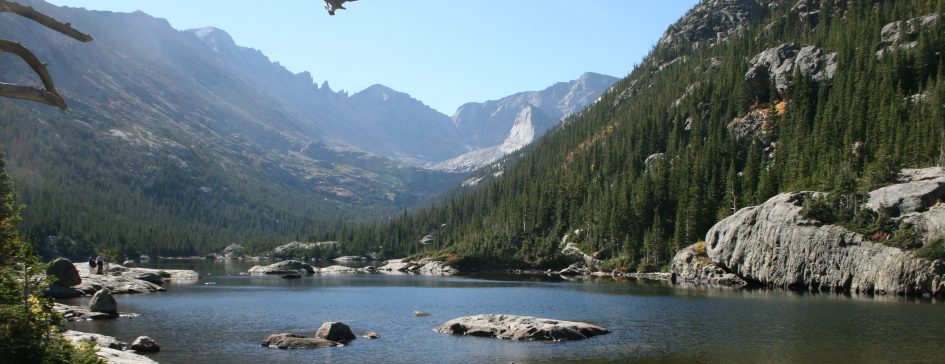
In the last blog I showed what reclaimed wastewater could do for an ecosystem.  Very cool.  But what about for drinking water.  I actually was involved in an indirect potable reuse project several years ago.  The concept was to take wastewater, filter it with sand filters, filter it with microfiltration, reverse osmosis and then hydrogen peroxide and ultraviolet light.  This is what they do in Orange County California when they recharge groundwater, and have been for over 30 years.  Epidemiological studies in the 1990s indicated no increased incidence of disease when that water was withdrawn from the aquifer, and then treated in a drinking water plant before distribution.  So our project was similar – recharge to the Biscayne aquifer in south Florida.   It worked for us.  Total phosphorous was below 10 ppb, TDS was less than 3 mg/L (<1 after RO), and we were able to show 3 log removal of endocrine disruption compounds an d pharmaceuticals.  It worked well.  This is a concept in practice in California.  And will be at some point in south Florida since only the Biscayne aquifer provides sustainable water supplies.  Here is what our system looked like.

IMG_3100

sand filters

IMG_3106

microfiltration

IMG_3085

Reverse osmosis

IMG_3152

ultraviolet/peroxide

This is also the same basic concept Big Springs Texas uses for their direct potable program, demonstrating that the technology is present to treat the water.  A means for continuous monitoring is lacking, but Orange County demonstrates that for indirect potable reuse projects, a well operated plant will not risk the public health.  This is how we do it safely.