Archive

planning


Fred+Bloetscher+Senate+Committee+Holds+Hearing+cQCSwINqgm3l

Water and wastewater utilities spend a lot of time dealing with current issues =- putting out “fires.”  But there are larger trends that will affect the industry.  Here are a couple recent topics that we should consider in our industry:

Will robots be doing all our repetitive jobs?  If so what does that mean for all the people doing those jobs now.  Most do not require a lot of skills, and many of those in the jobs that will be lost, do not have the skills for other jobs?  Does the $15 per hour minimum wage accelerate this transition?  How does this affect the water industry?  Meter readers might be replaced with AMR systems.  Customer service is already migrating to direct banking.  There is a change coming.

What does the driverless car mean for us?  I am thinking about an old Arnold Schwartzenegger movie.  For utilities the issue may be how we interact with unmanned vehicles, especially when what we do can be disruptive to traffic.  What happens if those cars get into an accident?  And Warren Buffett is thinking about the impact of this on the insurance industry.  He owns a lot of GEICO stock.  It is doubtful many utility vehicles will be unmanned, in the near-term, but do our manned vehicles and the potential disruption leave us open to greater risk of loss?

Speaking of Warren Buffett says the economy is far better than certain candidates suggest.  I tend to trust Mr. Buffett.  He’s been doing this a long time and has been fabulously successful.  But he notes structural changes to the economy like those noted above, are ongoing.  That will create conflict for certain professions that migrate to automation, much as manufacturing did in the 1970s.  He raises concern about what happens to those workers and suggests that we have not planned enough for those workers who get displaced as the economy undergoes continuing transitions.  In the late 1970s we had CETA and other jobs training programs as we moved from manufacturing to other jobs.  He does not see that in place now.  The at-risk – the poor, minorities, the less educated, rural citizens…. in other words, the usual groups will be hit harder than the rest of the population.  I don’t hear that discussion on the campaign trail but utilities may want to follow these trends is the hope that we can acquire some of the skillsets that we need.  Or provide that training.

Florida’s flood protection plan received a C- from a study called States at Risk.  It said Florida lacks a long term plan for rising seas, despite being vulnerable.  On an unrelated note, the state is expecting insurance premiums to increase 25% or more for flood insurance for homeowners.  And local officials are working busily on FEMA maps to exclude as many properties as possible from flood insurance requirements.  Maybe those things are all related, just at opposite purposes, but who is going to get the calls when flooding occurs?  Storm water utilities, and sewer systems where the manholes are opened to “facilitate drainage.”  The question is what the ratings are for other states as Florida was not the least prepared nor is it the only state with exposure.

A final current trend to think about is this:  Current sea level rise projections have increase the high end, but remained steady for the 50 percentile case.  By 2200 we may see seas at 10 ft higher. That would be a major problem for south Florida.  But the world population will be over 15 billion, which exceeds the carrying capacity of agriculture (at present projections and techniques).  It also places over half the world in water limited areas.  So sea level rise is going to be huge in south Florida, but will concern be localized because of more pressing issues?   Is the number of people going to be our biggest issue in 2200?  Note both will be critical for a large portion of those 15 billion people, but the solution to either is…..?


Speaking of water supply problems, welcome to Flint, Michigan.  There have been a lot of coverage in the news about the troubles in Flint the last couple of months.  However if you read between the lines you see two issues – first this is not new – it is several years old, going back to when the City’s water plant came back on line in May 2014.  Second this was a political/financial issue not a public health issue.  In fact, the political/financial goals appear to have been so overwhelming, that the public health aspects were scarcely considered.  Let’s take a look at why.

Flint’s first water plant was constructed in 1917.  The source was the Flint River.  The second plant was constructed in 1952. Because of declining water quality in the Flint River, the city, in 1962, had plans to build a pipeline from Lake Huron to Flint, but a real estate scandal caused the city commission to abandon the pipeline project in 1964 and instead buy water from the City of Detroit (source:  Lake Huron).  Flint stopped treating its water in 1967, when a pipeline from Detroit was completed. The City was purchasing of almost 100 MGD.  Detroit declared bankruptcy.  The City of Flint was basically bankrupt.  Both had appointed receivers.  Both receivers were told to reduce costs (the finance/business decisions).  The City of Flint has purchased water for years from Detroit as opposed to using their Flint River water plant constructed in 1952.  The Flint WTP has been maintained as a backup to the DWSD system, operating approximately 20 days per year at 11 MGD.

The City of Flint joined the Karegnondi Water Authority (KWA) in 2010.  The KWA consists of a group of local communities that decided to support and fund construction of a raw water pipeline to Lake Huron. The KWA was to provide the City of Flint Water Treatment Plant with source water from Lake Huron. An engineer’s report noted that a Genesee County Drain Commissioner stated that one of the main reasons for pursuing the KWA supply was the reliability of the Detroit supply given the 2003 power blackout that left Flint without water for several days.  Another issue is that Flint no say in the rate increases issued to Flint by Detroit.  Detroit’s bankruptcy may also have been a factor given the likelihood of increased prices.  While discussion were ongoing for several years thereafter, the Detroit Free Press reported a 7-1 vote in favor of the KWA project by Flint’s elected officials in March, 2013.  The actual agreement date was April 2013. The cost of the pipeline was estimated to be $272 million, with Flint’s portion estimated at $81 million.

The City of Detroit objected due to loss of revenues at a time when a receiver was trying to stabilize the city’s finances (in conjunction with the State Treasurer).  In February 2013, the engineering consulting firm of Tucker, Young, Jackson, Tull, Inc. (TYJT), at the request of the State Treasurer, performed an analysis of the water supply options being considered by the City of Flint.  The preliminary investigation evaluated the cost associated with the required improvements to the plant, plus the costs for annual operation and maintenance including labor, utilities, chemicals and residual management.  They indicated that the pipeline cost was likely low and Flint’s obligation could be $25 million higher and that there was less redundancy in the KWA pipeline than in Detroit’s system.  In 2013, the City of Detroit made a final offer to convince Flint to stay on Detroit water with certain concessions.  Flint declined the final Detroit offer. Immediately after Flint declined the offer, Detroit gave Flint notice that their long-standing water agreement would terminate in twelve months, meaning that Flint’s water agreement with Detroit would end in April 2014 but construction of KWA was not expected to be completed until the end of 2016.

It should be noted that between 2011 and 2015, Flint’s finances were controlled by a series of receivers/emergency managers appointed by the Governor.  Cutting costs was a major issue and clearly their directive from the Governor.  Cost are the major issue addressed in the online reports about the issue.  Public health was not.

An engineering firm was hired as the old Flint River plan underwent $7 million in renovations in 2014 to the filters to treat volumes of freshwater for the citizens.  The project was designed to take water from the Flint River for a period of time until a Lake Huron water pipeline was completed.  The City of Flint began using the Flint River as a water source in May of 2014 knowing that treatment would need to be closely watched since the Michigan Department of Environmental Quality in partnership with the U.S. Geological Survey, and the City of Flint Utilities Department conducted a source water assessment and determined the susceptibility of potential contamination as having a very high susceptibility to potential contaminant sources (take a look at this photo and see what you think).

FLint WTP

Flows were designed for 16 MGD. Lime softening, sand filters and disinfection were in place.  Everything sounded great.  But it was not. Immediately, in May and August of 2014, TTHM samples violated the drinking water standards.  This means two things – total organic carbon (TOC) in the water and additional chlorine being added to disinfect and probably reduce color caused by the TOC.  Softening does not remove TOC.  Filtration is not very effective either.  High concentration usually needs granular activated carbon, ion exchange or membranes.  The flint plant had none of these, so the carbon staying in the water.  To address the TTHM issue, chlorine appears to have been reduced as the TTHM issue was in compliance by the next sampling event in Nov 2014.  However, in the interim new violations included a total coliform and E. coli in August and September of 2014, and indication of inadequate disinfection.  That means boil your water and lots of public outcry.  The pH, salinity (salt) and other parameters were reported to be quite different than the Detroit water as well.  A variable river system with upstream agriculture, industry and a high potential for contamination, is not nearly as easy to treat as cold lake water.  These waters are very different as they City was to find.  What this appears to indicate is that the chemistry profile and sampling prior to conversion and startup does not appear to have been fully performed to identify the potential for this to occur or this would have been discovered.  This is now being suggested in the press.

The change in water quality and treatment created other water quality challenges that have resulted in water quality violations. Like most older northern cities, the water distribution system in almost 100 years old. As with many other municipalities at the time, all of the service lines from the cast iron water mains (with lead joints) to end users homes were constructed with lead goosenecks and copper lines.  Utilities have addressed this with additive to prevent corrosion.  In the early 1990s water systems were required to comply with the federal lead and copper rule.  The concept was that on the first draw of water in the morning, the lead concentration should not exceed 0.015 mg/L and copper should not exceed 1.3 mg/L.  Depending on the size of the utility, sampling was to be undertaken twice and a random set of hoses, with the number of samples dependent on the size of the system.  The sampling was required to be performed twice, six months apart (note routine sampling has occurred since then to insure compliance).  Residents were instructed on how to take the samples, and results submitted to regulatory agencies.  If the system came up “hot” for either compound, the utility was required to make adjustments to the treatment process.  Ideally water leaving the plant would have a slightly negative Langlier saturation index (LSI) and would tend to slightly deposit on pipes.  Coupon tests could be conducted to demonstrate this actually occurred.  As they age, the pipes develop a scale that helps prevent leaching. Most utilities tested various products.  Detroit clearly did this and there were no problems.  Flint did not.

The utility I was at was a perfect 100% non-detects the first time were tested.  We had a few detections of lead and copper in samples the second time which really bothered me since the system was newer and we had limited lead in the lines.  I investigated this and found that the polyphosphate had been changed because the County purchasing department found a cheaper product.  I forced them to buy the old stuff, re-ran the tests and was again perfect.  We instructed our purchasing department that saving a few bucks did not protect the public health, but the polyphosphate product did.  Business and cost savings does not trump public health!  Different waters are different, so you have to test and then stay with what works.

Now fast forward to Flint.  They did not do this testing.  The Flint River water was different that Detroit’s.  Salinity, TOC, pH and overall quality differed.  Accommodations were not made to address the problem and the state found no polyphosphates were added to protect the coatings.  Veolia reported that the operations needed changes and operators needed training.  Facilities were needed to address quality concerns (including granular activated carbon filter media).  As a result the City appears to have sent corrosive water into the piping system, which dissolved the scale that had developed over the years, exposing raw metal, and created the leaching issue. Volunteer teams led by Virginia Tech researchers reported found that at least a quarter of Flint households have levels of lead above the federal level of 15 ppb, and as high as 13,200 ppb.  Aging cast-iron pipe compounded the situation, leading to aesthetic issues including taste, odor and discoloration that result from aggressive water (brown water). Once the City started receiving violations, public interest and scrutiny of the drinking water system intensified.

The City Commission reportedly asked the receiver to switch back to Detroit water, but that request was initially rebuffed and the damage to pipes continued.  Finally in October 2015, the water supply was switched back to Detroit and the City started adding additional zinc orthophosphate in December 2015 to facilitate the buildup of the phosphate scale eroded from the pipes by the Flint River water. But that means the pipes were stable, then destabilized, now destabilized again by the switch back.  It will now take some time for the scale to rebuild and to lower lead levels, leaving the residents of Flint at risk because of a business/finance/political decision that had not consideration of public health impacts.  And what is the ultimate fate of the KWA pipeline?

Just when things were starting to look up (?), in January 2016, a hospital in Flint reported that low levels of Legionnaires’ disease bacteria were discovered in the water system and that 10 people have died and another 77 to 85 affected.  From the water system?  A disinfection problem?  Still TOC in the water?  The lawsuits have begun but where does the problem lie?  Let’s look at Walkerton Ontario for guidance in the aftermath of their 2000 incident.

First it is clear that public health was not the primary driver for the decisions.  Treating water is not as simple as cost managers think.  You need to understand what water quality, piping quality and stabilization you have and address the potential issues with new water sources.  Membrane systems are very familiar with these challenges.  Cost cannot be the driver.  The Safe Drinking Water Act does not say cost is a consideration you use to make decisions.  Public health is.  So the initial decision-making appears to have been flawed. Cost was a Walkerton issue – cost cannot be the limiting factor when public health is at risk.

The guidance from consultants or other water managers is unclear.  If the due diligence of engineers as to water quality impacts of the change in waters was not undertaken, the engineering appears to have been flawed.  If the engineer recommended, and has lots of documentation saying testing should be done, but also a file full of accompanying denials from the receivers, another flawed business decision that fails the public health test.  If not, I see a lawsuit coming against the consultants who failed in their duty to protect the public health, safety and welfare.

The politics is a problem.  A poor community must still get water and sewer service. Consultants that can deal with rate and fee issues should be engaged to address fairness and pricing burdens.  Was this done?  Or was cutting costs the only goal?  Unclear.  The politics was a Walkerton issue.

Was the water being treated properly?  Water quality testing would help identify this.  Clearly there were issues with operations.  Telling the state phosphates were used when they were not, appears to be an operations error.  Walkerton also had operations issues as well.  A major concern when public health is at risk.  Veolia came to a similar conclusion.

The state has received its share of blame in the press, but do they deserve it?  The question I have is what does the regulatory staff look like?  Has it been reduced as the state trims its budget?  Are there sufficient resources to insure oversight of water quality?  The lack of provincial resources to monitor water quality was an issue in Walkerton – lack of oversight compounded local issues.  That would then involve the Governor and Legislature.  Politics at work.  Likewise was there pressure applied to make certain decisions?  If so, politics before public heath – a deadly combination.

So many confounding problems, but what is clear is that Flint is an example of why public utilities should be operated with public health at the forefront, not cost or politics.  Neither cost of politics protect the public health.  While we all need finances to pay for our needs, in a utility, money supports the operations, not controls it.  We seems to have that backward. Private entities look sat controlling costs.  Public agencies should look at public service first; cost is down the list.   We need the operations folks to get the funds needed to protect the public health.  And then we need to get the politicians to work with the staff to achieve their needs, not limit resources to cut costs for political gain.  Ask the people in Flint.

So is Flint the next Walkerton?  Will there be a similar investigation by outside unconnected people?  Will the blame be parsed out?  Is there a reasonable plan for the future?  The answers to these questions would provide utilities with a lot of lessons learned and guidance going forward and maybe reset the way we operate our utilities.  Happy to be a part of it if so!

My cousin  once asked me what I thought about deciding on who to vote for for President might be best done when evaluating how well your 401K or investments did.  Kind of an amusing thought.  In that vein the decisions might be very different than they were.  Clearly your 401k did with with Clinton.  The economy was flat for George W. Bush, and the end of his term was the Great Recession.  Reagan’s first term was flat.  We all know about George H.W. Bush.  Interesting thoughts.  Not so good.  So what about the last 8 years?   But is raises a more interesting issue.  So don’t get me wrong, this blog is not intended to lobby for any candidate (and Obama can’t run), but it is interesting to look at the last 8 years.  They have been difficult.   The economy responded slowly.  Wages did not rebound quickly.  But in comparison to 2008 are we better off?

The question has relevance for utilities because if our customers are better off, that gives us more latitude to do the things we need – build reserves (so we have funds for the next recession), repair/replace infrastructure (because unlike fine wine, it is not improving with age), improve technology (the 1990s are long gone), etc., all things that politicians have suppressed to comport with the challenges faced by constituents who have been un- or under-employed since 2008.

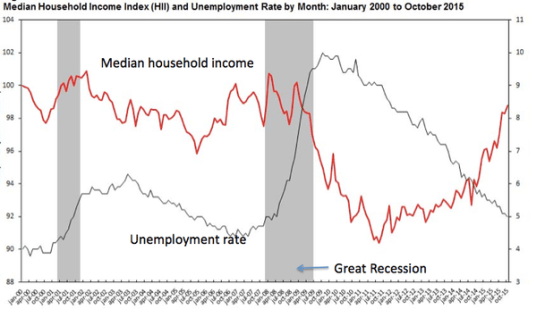
Economist Paul Krugman makes an interesting case in a recent op-ed in the New York times:  (http://krugman.blogs.nytimes.com/2016/01/13/yes-he-did/?module=BlogPost-Title&version=Blog%20Main&contentCollection=Opinion&action=Click&pgtype=Blogs&region=Body).  Basically he summarizes the figure below which shows that unemployment is back to pre-2008 levels, and income is back to that point.  Some income increase would have been good, but this basically tracks with the Bush and Reagan years for income growth – flat.  So the question now is in comparison to 2008 are we worse off that we were?  And if not, can we convince leaders to move forward to meet our needs?  Can we start funding some of the infrastructure backlog?  Can we modernize?  Can we create “smarter networks?”  Can we adjust incomes to prevent more losses of good employees?  Can we improve/update equipment?  All issues we should contemplate in the coming budget.

Krugman Income percent


photo 2Over the holidays there were a couple articles that came out about groundwater issues in the US, mostly from the declining water level perspective.  I also read a paper that suggested that rising sea level had a contribution from groundwater extraction, and of course USGS has maps of areas where the aquifer have collapsed as a result of overpumping.  In 2009 USGS published a report that showed a large areas across the country with this issue.  The problem is that of the 50,000 community water systems in the US, 500 serve over 50% of the population, and most of them are surface water plants.  There are over 40,000 groundwater systems, but most are under 500 customers.  Hence, groundwater is under represented at with the larger water associations because the large utilities are primarily surface water, while the small systems are groundwater. AWWA has difficulty reaching the small systems while RWA and NGWA reach out to them specifically.  But the small utility seems more oriented to finding and producing water and operating/maintaining/drilling wells than the bigger impact of groundwater use.  It is simply a matter of resources.  I ran a system like that in North Carolina, and just getting things done is a huge issue.  A couple of my medium size utility clients have the same problem.
The bigger picture may contain the largest risk.  Changing water supplies is a high cost item.  We have seen a couple examples (surface water) as a result of drought.  We saw Wichita Falls and Big Springs TX go the potable reuse route due to drought.  California is looking at lots of options. Both have had rain lately (Wichita Falls discontinued the potable reuse when the reservoir got to 4% of capacity).  Great, but someone is next.  Droughts come and go, and the questions is how to deal with them.

Groundwater supposedly is a drought-proof problem, but is it?  Groundwater has been a small utility solution, as it has been for agriculture.  But aquifer require recharge and water limited areas do not have recharge.  The result is a bigger problem – overpumping.  Throughout the west/southwest, Plains states, upper Midwest (WI, MN, IA), southeast (SC, NC), we see this issue.  Most of these areas have limited surface water so never developed much historically.  Rural electrification changes that because it made is easy to put in an electric pump to pull water out of the ground in areas that never had a lot of water on the surface, and hence were not farmed much. Pumps made is easier to farm productively, which led to towns. However, our means to assess recharge are not very good, especially for confined aquifers. The lowering water levels USGS and state agencies see is an indication that recharge is normally over estimated giving a false picture of water availability.  If your aquifer declines year after year, it is not drought – it is mining of the aquifer. You are sucking it dry like the eastern Carolinas did.  But, like many negative things, there is a lack of willingness to confront the overpumping issue in many areas. There are many states with a lack of regulations on groundwater pumping.  And I still think groundwater modeling use is limited to larger utilities, when smaller, rural systems may be most in need of it due to competing interests.

Concurrently, I think there is a tendency to oversell groundwater solutions (ASR, recharge), groundwater quality and the amount of available water (St George, UT).  Easy, cheap, limited treatment should not be the only selling point.  That leads to some curious decisions like some areas of California north of LA the utilities do not treat hard groundwater – then tell residents they cannot use softeners because of the salt in the wastewater prevents it from being used for reuse.  The reason they do not treat – cost, but it makes things difficult for residents.  The fact is we do not wish to confront is the realization that for many places, groundwater should probably be the backup plan only, not the primary source.

That leads to the question – what do we do about it when every politician’s goal is for their community to grow?  For every farmer to grow more crops?  But can they really grow sustainably?  DO we not reach a point where there are no more resources to use?  Or that the costs are too high?  Or that competition become unruly?  The growth and groundwater use ship is sailing, but in to many cases they do not see the rocks ahead.


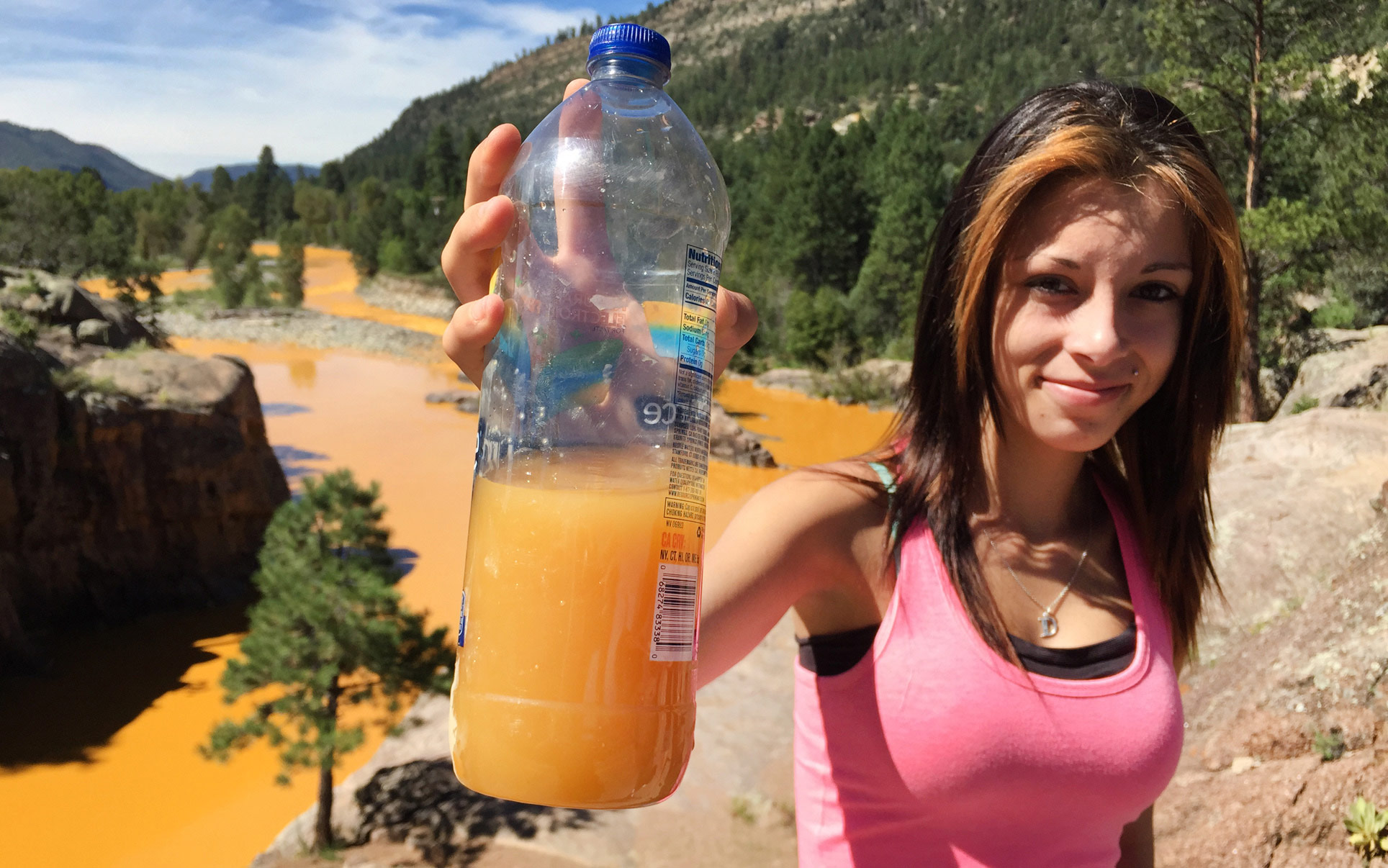
In an interesting twist of fate, USEPA caused a spill on the Animas River when a staffer accidently breached a dike holding back a solution of heavy metals at the Gold King mine because the misjudged the pressure behind the dike.  Pressure?  The spill flowed at 500 gpm (0.7 MGD), spilling yellow water spilled into the river.  Downstream, the plume has travelled through parts of Colorado, New Mexico and Utah, and will ultimately hit Lake Mead.  Officials, residents, and farmers are outraged.  People were told not to drink the water because the yellow water carried at least 200 times more arsenic and 3,500 times more lead than is considered safe for drinking. The conspiracy theorists are out.  The pictures are otherworldly.

colorado-mine-spillRayna Willhite holds a bottle of water she collected form the Animas River north of Durango Colo., on Thursday, August 6th, 2015. About a million gallons of toxic mine waste emptied out of the Gold King Mine north of Silverton that eventually made it into the Animas River. (Jerry McBride/Durango Herald via AP)

0807 colo spill epa-spill-

But they are all missing the point, and the problem.  This is one of hundreds of “legacy disasters” waiting to happen.  We are just surprised when they actually do.  A legacy disaster is one that is predicated on events that have happened in the past, that can impact the future.  In some cases the far past.  There are two big ones that linger over communities all over the west and the southeast – mines and coal.  Now don’t get me wrong, we have used coal and needed metals form mines.  That’s ok.  But the problem is no one has dealt with the effects of mining or coal ash for many years.  And then people are upset.  Why?  We can expect these issues to happen.

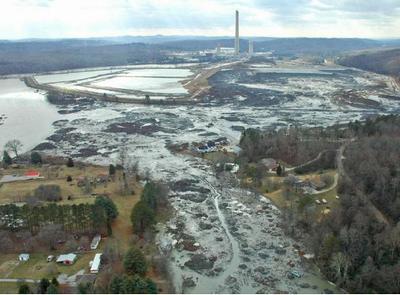
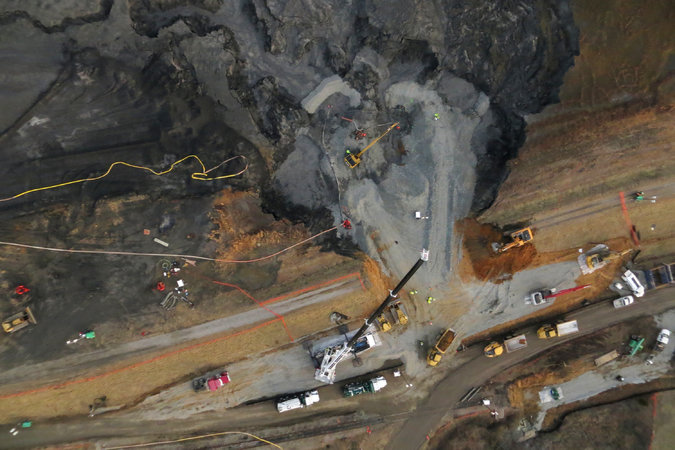
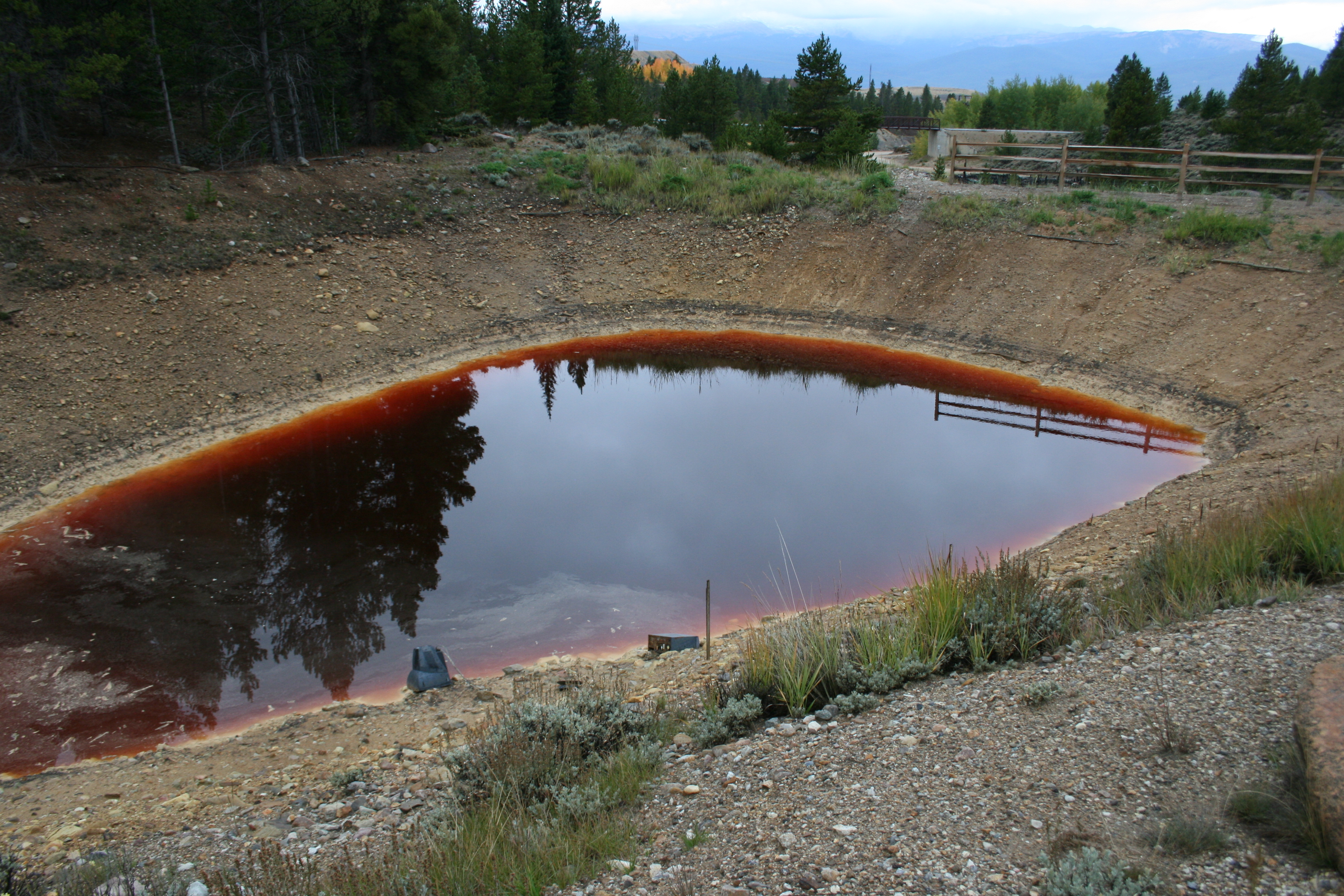
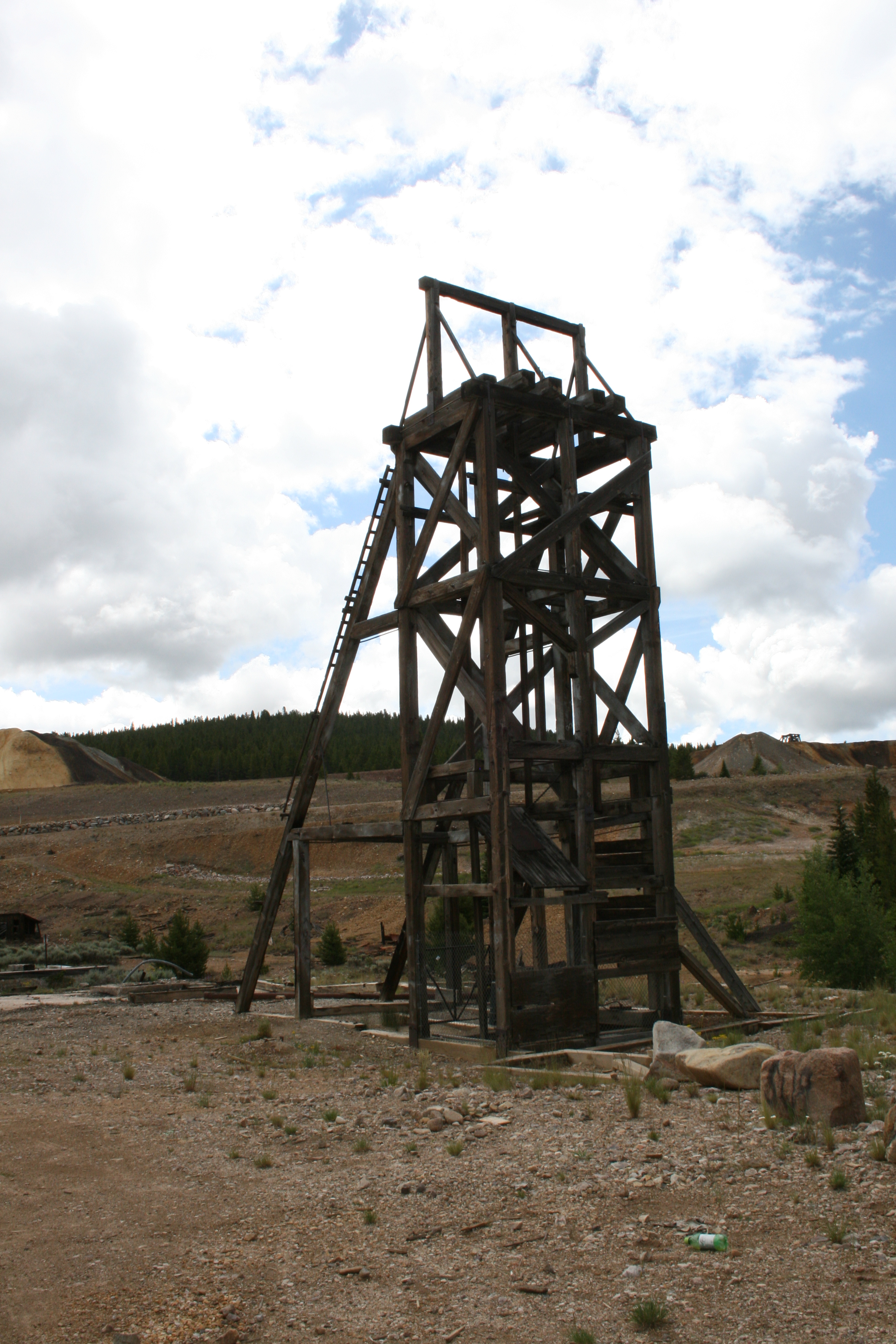
One major problem is that both are often located adjacent to or uphill from rivers.  That’s a disaster waiting to happen.  The King Gold mine is just the latest.  We had recent coal ash spills in Kingston, Tennessee (TVA, 2008) and the Dan River in 2014 (Duke Power). The Dan River spill was 30-40,000 tons.  Kingston cleanup has exceeded a billion dollars.  Coal ash is still stored at both places.  Next to rivers.  We had the federal government build ion exchange facilities in Leadville, CO and Idaho Springs, CO to deal with leaking water from mine tailings from the mountains. Examples are in the hundreds.  The photos are of the two coal spills, mine tailings that have been sitting the ground for 140 years in Leadville and one of the stormwater ponds – water is red in Leadville, not yellow.

kingston_coalash POLLUTE-master675 IMG_4803 IMG_6527 (2015_03_08 17_53_48 UTC)

When the disaster does occur, the federal government ends up fixing it, as opposed those responsible who are usually long gone or suddenly bankrupt, so it is no surprise that EPA and other regulatory folks are often very skeptical of mining operations, especially when large amounts of water are involved.  We can predict that a problem will happen, so expensive measures are often required to treat the waste and minimize the potential for damage from spills.  That costs money, but creates jobs.

For those long gone or bankrupt problems, Congress passed the Superfund legislation 40 years ago to provide cleanup funds.  But Congress deleted funding for the program in the early 2000s because they did not want to continue taxing the business community (mines, power plants, etc.).  So EPA uses ARRA funds from 2009.  And funding is down from historical levels, which makes some businesses and local communities happy.  The spectre of Superfund often impacts potential developers and buyers who are concerned about impacts to future residents.  We all remember Love Canals and Erin Brockovich.  Lack of development is “bad.”  They ignore the thousands or jobs and $31 billion in annual economic activity that cleanup creates, but it all about perception.

But squabbling about Superfund ignores the problem.  We continue to stockpile coal ash near rivers and have legacy mine problems.  Instead we should be asking different questions:

WHY are these sites permitted to store ash, tailings, and liquids near water bodies in the first place?  EPA would not be inspecting them if the wastes were not there.

WHY aren’t the current operators of these mines and power plants required to treat and remove the wastes immediately like wastewater operators do?  You cannot have millions of gallons of water, or tons of coal ash appear overnight on a site, which means these potential disasters are allowed to fester for long periods of time.  Coal ash is years.  Mine tailings… well, sometimes hundreds of years.

One resident on the news was reported to have said “Something should be done, something should be done to those who are responsible!”  Let’s start with not storing materials on site, next to rivers.  Let’s get the waste off site immediately and disposed of in a safe manner.  Let’s recover the metals.  Let’s start with Gold King mine.  Or Duke Power.  Or TVA.


Interesting that while we all love low gas prices and the low cost of energy is fueling an expansion of our economy, including the first gains in middle income salaries since 2008, the states reliant on oil and gas may be facing real problems financially.  A year ago I read an article that noted the reluctance of North Dakota residents and politicians to invest in roads and other infrastructure despite the influx of oil money.  Keep taxes low was the mantra.  SO they did.  A recent Governing magazine article notes that a dollar drop in oil means $7.5 million decrease in revenues for the State of New Mexico.  Since oil has lost about $30 a barrel in the past year – that is $200 million loss.  Louisiana sees a $12 million cost/dollar drop so they have $171 billion less to work with.  Alaska, perhaps the most oil dependent budget (90 percent) has a $3.4 billion shortfall, but $14.7 billion in revenues.  Texas, North Dakota, Oklahoma and Kansas are other states facing losses.  Fast growing states like North Dakota and Wyoming now have hard decisions to make.  Growth in Texas, Oklahoma, Louisiana and Arkansas may be cut by 2/3 of prior estimates as a result.  A double hit on anticipated revenues.

The comparison is interesting financial straights experienced by the “property value” states like Florida, Nevada and Arizona before and after the economic collapse in 2008.  Florida politicians couldn’t wait to cut taxes and slow spending during boom years, then got caught badly after the 2008 recession when property values dropped in half and state sales tax revenues (tourism) dropped steeply.  They ran out of reserves and refused to raise taxes (after cutting them), so cut things like education and health care to balance the budget.  Not sure how either helped low and middle class Floridians get back on track since Florida has primarily create low wage jobs since that time, not high paying jobs.  We are paying the price still.  I am guessing Nevada and Arizona are similar.

We clearly have not learned the lessons of the many mill towns in the south or the rust belt cities of the Midwest that encountered difficulties when those economies collapsed. Everyone refused to believe the good times would end.  Now Detroit is half of its former self and Akron has the same population as it did on 1910.

The moral of the story is that booms great, but short term.  Diversity in the economy is a key.  Florida will continue to be subject to economic downturns more severe than other states when it relies primarily on tourism and retirees to fuel the economy.  Detroit relied on automobiles, Akron rubber and chemicals, Cleveland steel, etc.  Some day the Silicon Valley will suffer when the next generation of technology occurs that makes the current works obsolete.  It is what happens when you are a “one economy” town.  It is also what happens when you believe the booms are “normal” and fail to financially plan by putting money aside during the boom to soften the subsequent period.

An argument could be made that if the federal government had not enacted tax cuts in 2000 when the budget was finally balanced and surpluses were presumed to loom ahead, we could have banked that money (or bought down our debts), and the amount of borrowing would have been less in 2008.  Buying down debt when times are good is good business.  So is putting money in reserve.  The question is why the politicians do not understand it.  We can run government like a business financially, but takes leadership to do it.  It takes leadership to explain why reserves are good and tax cuts are a future problem.  It takes leadership to make hard decisions like raising taxes, spending more on infrastructure, requiring people to move out of flood plains, not rebuilding in vulnerable areas, and curtaining water use policies when they damage society.  Leadership is making decisions that help the needs of the many, versus the needs of the few.  Oh wait, I see the issue now.  We need Spock to lead us…


ASCE came out with more bad news about infrastructure.  60 Minutes did a piece about deterioration of bridges. The magazine American City and County has published a couple articles about the risks of aging infrastructure.  Asset management is practiced by few governments, and even fewer small ones.  The public doesn’t want to foot the bill and lobbyists want taxes cut further.  Where does it end?

The infrastructure crisis is a political and business leadership crisis.  Or vacuum.  The economy of America and much of the developed world was built on advanced (for their time) infrastructure systems constructed by governments with a vision to the future.  Some of this infrastructure was repurposed (federal interstate system for example), but much of it has addressed critical issues that hampered our development.  For example, the lack of water severely inhibits many third world nations.  Even when they have water, it is unsafe to drink or use.  In America, at the turn of the 20th century 1:100,000 people DIED each summer from typhoid.  Just typhoid, not all the other waterborne disease options.  Many more were sick.  And the population was much smaller.  Talk about reduced productivity.  Now we have advanced water systems, disinfection practices that protect people and pipes, and few event get sick from contaminated water.  Those that do, become headlines.  You don’t want to be a headline.  Productivity is up.  But we expect good water and can’t see the pipes.

Sewer is an even better example.  People just don’t want to know.  Flush and it’s gone.  But the equipment, treatment and materials may be even more complex than the water system.  But few people get sick from sewage because of the systems we have built.  Now think about third world examples.  Or conditions you have seen in documentaries, the news or movies.  Being in sewage is not a great place to be.  Even the manhole thriving cockroaches agree..

Stormwater is probably the laggard here, in part because changes in development patterns have overwhelmed the old systems.  Miami Beach experienced this when redevelopment replaced small houses on permeable lots with large housed with mostly impermeable property.  Oops.  Meanwhile road and bridges have received a lot of funding – with much to do (see bridge that collapsed on I-75 in Cincinnati a few weeks back).  Most states fund transportation at a magnitude more than water and sewer.

What is the problem?  Local officials do not convey an understanding of these complex system to the public very well.  In part this may be because understanding the maintenance needs is difficult and highly variable.  And many do not fully comprehend the assets they have, their condition, life expectancy or technological needs.  No one knows when things will fails, so maintenance or replacement of some equipment or pipeline is always the thing cut in the budget, with no real understanding of the consequences.

The public does not see the asset, assumes it will have a long life, so is unconcerned until they are affected.  Then it is personal.  The public does not understood the impact or value that these assets have to society – they tend to be personal focused, not societal.  That is a leadership issue.  That leadership starts with vision and communication from those that understand the issue to the elected officials that need to advocate for their infrastructure.  Elected officials need to take ownership of infrastructure.  It is like your house – you need to upgrade and protect it constantly.  You do not let that roof leak keep leaking!  Elected officials that do not invest in infrastructure, are letting the roof leak.  Making is someone else’s problem for political expediency is not leadership.

Despite the infrastructure crisis, the good news is that construction of piping is increasing – both new and replacement.  Every so many months, the magazine Utility Contractor will note current trends and pipe seems to be going up.  That’s good but there is a long way to go.  Better news – the construction of buildings is increasing.  That could lead to more revenues.  In Florida, all of a sudden finding experienced construction workers is a problem.  Things are definitely better economically, but are we taking advantage to improve the local infrastructure, or is you economy simply an infrastructure disruption away from another fault?


Have we passed peak diamonds? Just as a prior blog outlined the concept of peak oil, gas, metals etc, the recent news not suggests that diamond miners are decreasing their exploration investments because the number of new finds is decreasing each year, and those found are far more expensive to extract than the current values.  Sounds like oil?  We find less each year, it is more expensive and current oilfield yields are on the decrease.  Phosphorous is similarly situated which is why there is much research taking place to find means to recover phosphorous from ag lands and wastewater effluent – recover phosphorous meant to be resold to ag interests as fertilizer as the price of phosphorous continues to increase as a result so increasing demand and decreasing supplies.

We are also being told that while peak diamonds have passed perhaps chocolate will become scarcer and the demand for chocolate is outstripping the supply, and the available land for cropping is being out competed by more lucrative crops in South America.  At some point the available land for many crops will be exhausted.  It is then that we reach peak agriculture?


Once upon a time, people worked until they died.  But the longer people lived, the more infirmities impacted older people, and the concept of stopping work came into play.  So these folks labored all their lives, put some money away in a safe place, like a bank, where someone else would watch over an manage their money until they needed it.  Then one day, they found out that the banks have gambled and lost on real estate, and their money was gone.  There was no government to bail anyone out.  So the people had to try to go back to work, became beggars and destitute or died.  The government thought this was unfair to those older folks who had worked so hard, but through absolutely no fault of their own, had lost everything.  So the government decided that it would “tax” people a portion of their income, and put it into a retirement system.  People could retire at 65, and of course they were only expected to live another r3 or 4 years.  There were 16 people laying in for every person taking out.  And the government told the banks that they could not gamble with people’s hard earned savings, passed legislation and created an insurance pool to backstop losses by criminal or unethical activity.  All was good and the people were happy.

As time went on some things changed.  For one, people lived more than 3 or 4 years.  The population retirees increased, and the ratio dropped to 1:10 and then to 1:6 ration of retirees:workers, but the “tax” did not go up, but investments were made that increased the pool.  It was called good management.  The government also encouraged people to save money by deferring taxes, which they did, and the banks used it to make money.  All good as long as the investors gambled well.  They gambled so well, they were able to talk the government into undoing the anti-gambling rules from the past, so their pool to invest was twice as much.  And the markets grew and the portfolios grew and the people were happy.

And then it came to pass that the banks again gambled on real estates, and created complicated investment tools to hide the risk, but the risk was exposed and half the money was gone overnight.  And the retired were wondering about jobs again.  But there were no jobs.  And the employed now had fewer jobs.  So less people paid into the system.  And the people were sad.  And mad because they thought they were being protected from the gambling of the past.  They did not understand.

And the government could supply no answers because they had changed the rules and they knew the people would be unhappy, so the government felt there was no choice, so they borrowed money, and bailed out the banks.  And some people were happy.  And some people were concerned about all that debt.  And some people wondered why it was that history could repeat itself and put society at risk.  And some people asked why people who did bad things were not punished.

And none of these questions has been answered.  Good thing that these fairy tales don’t depict anything real right?


A Ponzi scheme is an illegal program whereby investors are promised big return son investments in a short period of time, and where the underlying basis for this return is deliberately mis-stated.  We continually find people who perpetrate Ponzi schemes and when they are finally caught, they get put in jail.  For those unsure, a Ponzi scheme is defined as a scheme where the scheme operator says they will pay a high return to its investors from their original investment, but instead uses money from new capital paid to the operator by new investors rather than from profit earned by the operator.  Hence it is a flow through of money from people putting money in to people who are getting out.  To get returns on the investments for the earlier investors, the pool of new people must increase with time, so that there are always more people paying in that there were previously.  It that does not occur, then we have a problem.

What is a retirement system?  A retirement system is a form of deferred compensation used to attract and keep workers, by deferring a portion of their pay 10, 20 30 or 40 years from now.  It is part of the compensation to the employee.  With a retirement system, people pay into a program, where their money is invested.  A retirement system tends to rely on the fact that the number of people paying in increases exponentially so that the actual invested dollars are never touched, instead the new proceeds exceed the monies paid out.  For a pension, plan it assumes your invested dollars remain invested and profitable, and that the revenues from the new people in the system, exceed the monies paid to retirees.  What is the difference?  Well, the retirement system actually supposedly has assets while Ponzi scheme does not.  Otherwise, the systems work similarly – dollars paid in generally go out to others, and there is an assumption that the number or payees increases exponentially (a percentage every year).

So what happens to a pension plan when the number of employees decreases from 6.7 million to 4.4 million over 40 years?  Would you expect there to be a pension plan problem?  And if so why?  And who is at fault?  That is exactly what has happened to federal government employees since 1967.  And many states have seen reductions in the last 20 years as well.  So it is any wonder why these pension systems might be at risk?  The push to privatize services ensures that the basic assumption that the number of payees in a pension plan increases exponentially will be violated, which makes the pension plan vulnerable.  And ho is at fault.  I would suggest the people pushing privatization, who look only at short term consequences as opposed to long-term impacts.  Perhaps this needs to be part of any such discussion going forward.  Just a thought…