Dr. Jeffrey Shaman said the Trump administration should have developed a robust plan to control outbreaks as states seek to reopen safely.
— Read on www.nydailynews.com/coronavirus/ny-coronavirus-shaman-meet-the-press-20200510-cew7nouxqzf2fjj6bwudvvpjga-story.html


coltrip

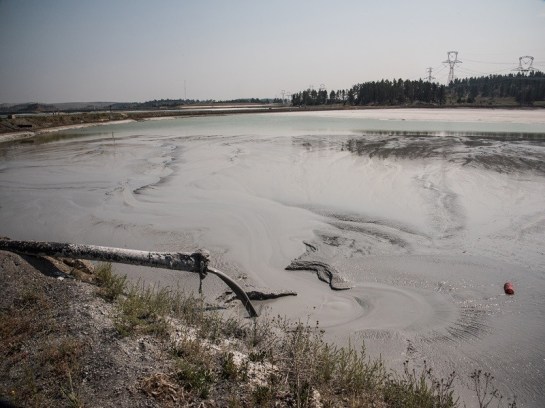
(source earthjustice (https://www.google.com/search?q=coal+ash+colstrip&rlz=1C1CAFA_enUS637US637&sxsrf=ALeKk004AREfCJSrTWaKecd-ZpjyJkxkZw:1587325972064&source=lnms&tbm=isch&sa=X&ved=2ahUKEwiakdSFovXoAhVrdt8KHX4YDnsQ_AUoAnoECAsQBA&biw=1342&bih=743#imgrc=2-VWv2rrptxAbM)

In a recent blog I talked about the issues with coal ash along side water bodies.  North Carolina is doing some cleanup.  TVA closed it last Kentucky coal plant, and coal use is declining worldwide.  There is a 50% decline in the past 10 years in the US alone.  But declining is not gone, and gone will not mean the threats are gone.  Exhibit A (like we need another one) – Colstrip coal fire power plant in Montana.  Which stores coal ash in 3 locations which have been leaking since the 1970s and have yet to be cleaned up.  Two of the four site have approved remediation action plans, the other does not.  While the current flows are under 0.5 million gallons per day, coal ash contains mercury, selenium, arsenic, chromium and a host of other toxins at concentrated levels.  Mercury is acutely and chronically toxic.  Selenium has been indicated as the cause of spinal deformities in fish.  The concern is that these ponds will leak faster and impact downstream users like the coal ash spill in West Virginia did 4 years ago – and it still remains ap problem.  Coal ash should not be stored near streams.  he Montana Ligsilature approved $107 million to help clean the mess up, but I am still trying to figure out the wisdom behind this practice.


Licensure_2017

Did you know that many states have proposed, and some have enacted, legislation that threatens the engineering licensure process?  You should because some of the things proposed are a little scary.

Over half the states have had legislation introduced over the past 5 years associated with one of two issues.  The first is a series of “Right to Engage in a Lawful Occupation”-type acts that seek to limit or lessen business or occupation regulating (NSPE 2020).  The legislation often proposes the elimination of licensure requirements for certain professions under the premise that a person has a “right to engage in a lawful profession or vocation without being subject to an occupational regulation.”  Many of these acts do contain language that retains regulatory authority on occupations that are necessary and to meet public health, safety, or welfare objectives and require a review over 4 or 5 years of each and every license and licensing board.

These proposals are often related to sunset laws that require review and analysis of licensing boards, associated with a regulatory requirement that the respective board be dissolved when no longer needed.  In addition, some states proposed these laws to “remove any unnecessary or overly burdensome licensing requirements,” and recommendation for continuation of the Board.  For example, Ohio enacted legislation that states “Ohio will use the least restrictive regulation to protect public health and safety” as a part of reviewing all licensing boards.

Two states, Indiana and Missouri, introduced a “Consumer Choice” bill that proposed to allow unlicensed persons to practice occupations that require licensure, provided the persons disclosed that they are unlicensed.  Both bills fortunately died in the legislature in 2019, but could return.  Neither bill was specifically oriented toward engineers, but the Indiana Job Creation Commission (JCC) recommended to elimination of licensure of Professional Engineers in 2014.   The State of Montana introduced legislation ins 2017 to eliminate the licensing for profession al engineers.  It died in committee in 2017.

New Mexico’s governor issues and executive order (2018-048) to permit unlicensed persons doing work that otherwise requires a license if the customer is informed and signs and contract acknowledging the unlicensed person is doing work.  The Tennessee and West Virginia legislatures are considering such a bill in 2020.  The idea that it is ok to have non-licensed people doing engineers because the person paying of the work said it was is preposterous.  It is a clear devaluation of engineers, engineering degrees and licensure on the part of elected officials, an issue that we need to change!

Remember the difference between an engineer and a medical doctor is that a doctor’s mistake can only kill one patient at a time.  Engineers on the other hand….Well think 737 Max, BRidges that fail, Hyatt in St. Louis to name a few….  To value engineers so little is clearly not in the interests of public health safety and welfare, which is what elected officials are tasked to protect.


When you read the news or listen to commentary on TV, it’s easy to presume that most of the COVID-19 cases are in big cities. In terms of absolute numbers, that’s true. However, if you scale the case count for local population size, a different picture…
— Read on m.dailykos.com/stories/2020/5/4/1942482/-COVID-Spread-in-Rural-Areas-We-really-do-have-a-problem


t_bfe6fd085eb9478fb57a4ae6aac8e31c_name_Screen_Shot_2019_12_27_at_11_23_33_AM_scaled

January 2020 – sewage in the streets.  December 2019 – sewage in the streets.  November 2019 – sewage in the streets. Over 100 million gallons of raw sewage flow into the Venice of the New World’s waterways in 3 months.  And three water main breaks to start February 2020.  What is going on in Fort Lauderdale?  It is bad materials, bad engineering, bad construction, growth?  The answer is why infrastructure is getting such a poor grade in the US.

Many of the gravity mains in Fort Lauderdale are vitrified clay, installed in the 1950s, 60s and 70s.  Those lines have a tendency to crack and allow groundwater into the  pipe  – infiltration.  And the City has an issue with this as does virtually every city with clay pipes and a lot with pvc as well.  And a lot of water flows off the streets through manhole covers (30 gpm), broken cleanouts, bad laterals, interconnections with storm drains and people creating openings to drain their yard.  That is inflow and most cities have an issue with this because they focus more on infiltration.  That latter is easier to address.

But the gravity lines are not what is causing the sewage spills.  That would be the cast and ductile iron force mains installed at the same time as the sewer lines.  Ductile iron is a great pipe materials, but when exposed to hydrogen sulfide, damage can occur.  Put it in acidic or salty soils and corrosion is accelerated.  And breaks occur – especially near where these iron pipes connect o gravity lines and no longer flow full.  The example repeats everywhere in every community over time.

It is also not bad engineering or construction.  Cast/ductile and vitrified clay piping were the materials recommended for installation at the time – plastic pipes were not in general use and the C900 and high density polyethylene pipes we use today had not been invented.

It is also not growth although more sewage being pumped adds to wear.  But the sewage is old customers, new customers, inflow and infiltration – which one is the tipping point as Malcolm Gladwell would say, is unclear (read the book if you are not familiar with tippling pints – fascinating).  The combination is problematic.

The problem also is not going away – in fact expect it to accelerate as pipes reach their life.  There are many more pipes like these in Fort Lauderdale.  Nearly 50% are pre-1970.  That is not atypical nationwide.  The City has a consultant that suggested about $150 million in force main upgrades/replacements are needed.  The SunSentinel published a map of the problem areas identified by consultants.  They also noted that after 2011, the City diverted funds to the general fund from the water/sewer fund to cover lost revenues from property devaluation to avoid raising property taxes.  That was money that was paid by water and sewer customers, not necessarily taxpayers.  Robbing the utility to fix general fund issues sounds like   About $20 million per year is what the local officials say.  The papers report as much as $100 (in 2017).  Even if the number is the lower $20 million per year is correct, it still sounds like a lot of deferred maintenance issues could have been addressed in the past 9 years.

The situation is not just Fort Lauderdale’s – they are this year’s poster child for pipe neglects.  St. Petersburg was a couple years back (2015/2016).  Miami Dade County before that.  Nearby cities like Hollywood and Pompano Beach, both with similarly aged pipes, have had their challenges in the past 5 years.  Nationwide the trend sis pipes hit 50 years on the wastewater side and something needs to be done.  Pipe does not last forever.  Diverting funds to the general fund, something s that was noticeably different after 2010, needs to change.  The general funds need to pay back the utilities for those borrowed funds.  A tough choice for local officials.  Something residents need to understand.

Regulation is also not the answer and fines is not the answer for cash-strapped communities.  Solutions to help get funding in place and evaluation pipes that have not yet broken is a better solution.  All utilities will need to upgrade their infrastructure.  Current residents will pay the cost – they are using the system.  New residents will pay impact fees and assessments as well.  These systems have remained buried with few worries beyond the life of most residents but as  ASCE’s Infrastructure Report cards show, not doing your homework will cause community infrastructure to fail the test.

At the same time, utilities need to be honest about condition.  Public trust is everything.  Failure is not an option.  But failure to convince local officials there is a potential problem endangers that trust, something Fort Lauderdale is currently dealing with.

The good news was that in Feb 2020, the projection was for utilities to spend over $11 billion for water, sere and stormwater related infrastructure improvements.  Half that was for sewer.  Let’s hope the coronavirus does not derail this goal.