The impact of loss of biodiversity in our lifetimes
Leave a comment
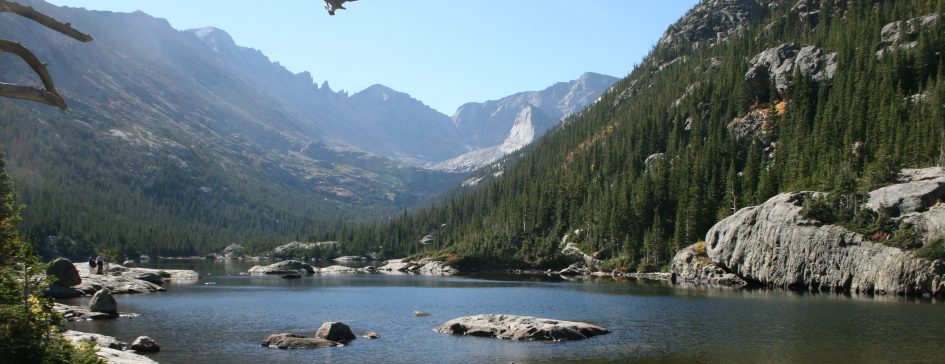
I spent a day in early October in doing a drive that I enjoyed as a teenager, later as a 21 year old and a 30 year old. But has been a few years since I drove the dams of the AuSable River in the upper lower peninsula of Michigan. The AuSable is a famous river, – starting out as the eastern boundary of the land Between Waters” as the native Americans called it before the loggers showed up. The upper reaches of the river, 8 miles east of the turn east, was a cedar laden river – cold, hidden from the sun due to dense vegetation and full of a funny little fish called the grayling. The AuSable was one of the few streams in the lower 48 states where grayling could be caught. And caught they could – so many that anglers drove up from Detroit and Chicago to fish for the plentiful fish that was easy to catch. Ice houses in Chicago bought the fish and sold them commercially. However, logging on the river damaged the streambed, and access to the stream necessitated removing some of the cover. In a short time the forces caused the demise of the little fish, but not the town of Grayling it left behind. Around the turn of the century, brook trout were introduced to the river to maintain its reputation with anglers. The brook trout bred, and the AuSable because world famous as a trout stream. Alas, the brook trout were probably the death Nel to the grayling as they would eat the grayling fry.
The dams started in 1916 as a means to supply power to the northern peninsula and communities downstream. A total of six dams were installed between 1916 and 1924: Mio, Alcona, Loud, Five Channels, Cooke, and Foote. The latter were named to the financier and visionary for the dam construction. The dams remain in use today as hydropower on the river. They remain much as I remember – each brick and concrete structures built in another time. The pride of workmanship and engineering from 100 years ago is clearly present throughout. The look sturdy, just as they did 100years ago when the lights first flickered on.
The dams share the river with canoeists who often do the run from Grayling to its outlet at Lake Huron, navigating around each dam. The trip takes a couple days. My Dad and three buddies did it after he received a wooden canoe (from LL Bean) from his parents for graduation. Two of his buddies were Ted and Jay Stephan, who lived on the river 8 miles east of town, and who would go on to be part of the Great AuSable Canoe Marathon, what is today one of the three great canoe races in North American. Jay won this race multiple times and is a legend in Grayling (as is Ted). You have to navigate the dams to win. I am guessing being able to navigate them at night helps.
The canoe race negatively impacts the trout however because the river needed to be clearer to improve the race. Canoeing became a major stream for canoeing – it is a huge industry for Grayling. Today the main branch is more open and a few rainbow and brown trout inhabit the former grayling waters. The fish decline started in the 1940s. Trout Unlimited was created in Grayling as an organization to protect the trout. The organization is international today, but old friends Jay and Ted were original members.
So finishing the river run (by car), I stayed overnight in Grayling. Up on the ceiling of the restaurant/bar I ate dinner in was Jay and Ted’s canoe that they used to win the race multiple times in hanging from a ceiling in a bar, dated 1952. It looks exactly like the canoe my Dad lost in a forest fire in 1990, which I remember him using to ride the river to fish when I was a little kid.
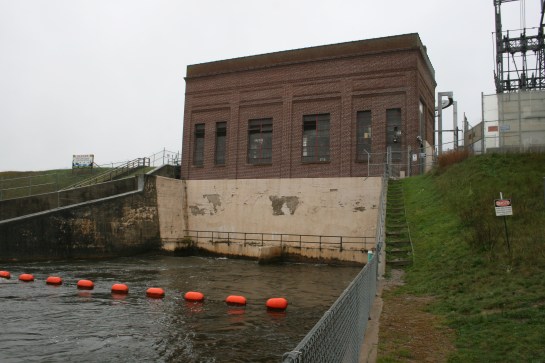
Mio Dam
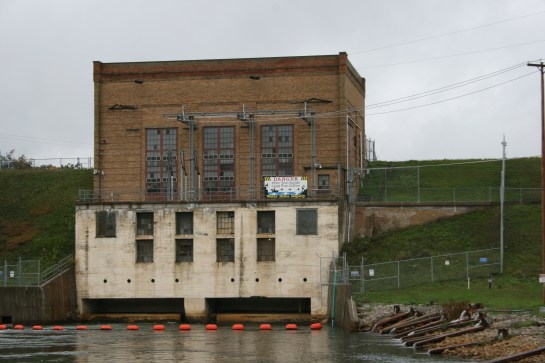
Alcona Dam
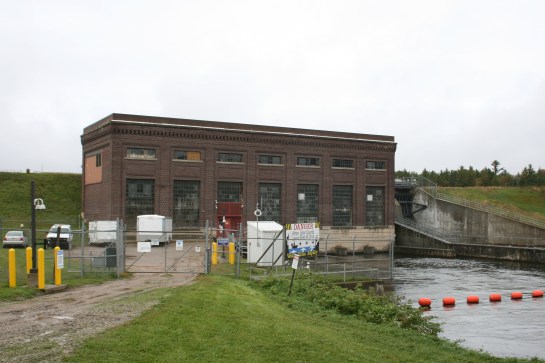
Loud Dam
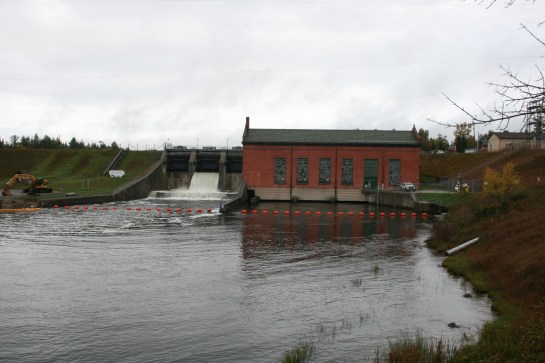
Five Channels Dam
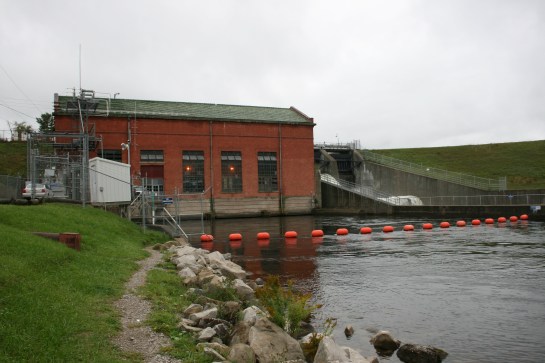
Cooke Dam
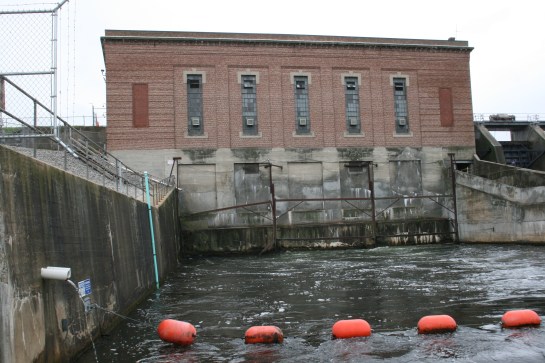
Foote Dam
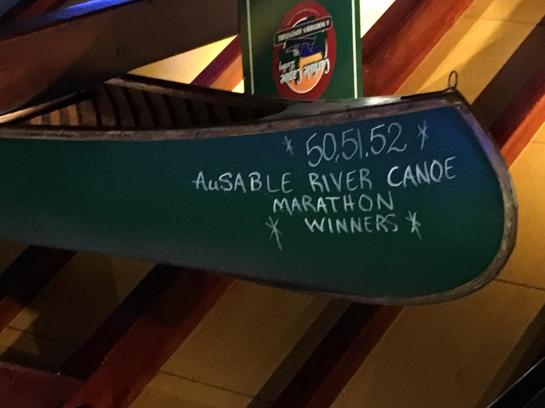
Jay and Ted’s canoe in Spike’s Bar in Grayling
Enjoy the weekend with friends and family or whatever makes you happy! We have much to be thankful for!

We hear a lot about coal these days in the news. The current Administration has clearly made making the coal industry happy a major component of its energy policy, along with oil exploration. Much of the policy has been focused on the USEPA rules and Department of Interior access to public lands and offshore leases for oil drilling as opposed to Department of Energy policies. The question is whether these policies will matter in the long-term. World-wide there is a push toward renewable energy. Oil consumption in the US is 1 million barrels less per day than in 2005, while gas use is up.
Of concern, China is leading the way toward renewable supplies given the impact on air quality that coal imported from the US creates in their major cities (recall the 2 week shutdown of Beijing prior to the 2008 Olympics). As a result, China is making the advances in solar power that the US hoped to make just a few years ago. The tariffs imposed on Chinese goods includes a 35% tariff on solar panels, which creates a challenge to the competitiveness of solar power for the near future, but may ultimately put the US further back of the pack with respect to solar research. In addition, the coal industry employs just over 50,000 people, while the solar industry employees 260,000. So how will these employees be impacted by the policies proposed by our elected officials? Why is it that oil and coal can captivate a group of officials so tightly that they ignore the longer term view – while we need oil and gas for now, those are limited fuels and the country with the patents for the next wave of technology, just as is has been for cars, nuclear power, and computers, is the economy that will grow most quickly. If we do not want to be left behind economically, we need to consider the past experiences.
Speaking of ethics, there has been a lot of discussion about climate changes and the cause (or in some sectors is it real). It seems to me that the political concern about acknowledging climate change has more to do with the continued use of fossil fuels and coal as much as anything else. But those who have been around a while can see changes in our lifetime, and opposed to geologic timescales, and that should be a concern. And especially civil engineers need to think about climate changes when designing infrastructure. And I am not thinking so much about Florida, sea level rise or hurricane intensity.
For example, the recent fires in California remind us that extended drought conditions will exacerbate the potential for forest fires. With people moving to forested areas, the potential for property damage and life safety issues increase. Forest fires are a fact of life in forests – my grandmother lost her cabin in the woods in 1990 in a forest fire. However, the real concern is the size of fires is increasing as drought conditions repeat and extend and that they appear to create their own weather patterns that inhibit fire fighting. One of the first things climate experts have told us we will notice is higher temperatures and changes in precipitation patterns. The fires appear to be climate impacts manifesting in front of us.
When I was growing up, we nearly always had snow for Christmas in northeast Ohio. That seems to have stopped after 1980. Now it seems like temperatures are mostly in the 50s for Christmas. But I have noted that snowfall seems to increase in the February/March timeframe in the Midwest when as a kid March was often the start of spring. A shift in weather patterns? The climate is changing in our lifetimes. That is way faster than it probably should and suggests something is at work that should concern us.
Heat created closures for fishing in the streams of the upper Colorado River (Grand County). The rivers warmed up and higher temperatures imperil native trout in the river. Fishing stresses the fish and the higher temperatures were not permitting the stressed, caught fish to recover, and they died. Temperature also reduces dissolved oxygen levels that worsens the potential for fish to survive. The temperature issue is exacerbated by drier than normal conditions that reduced streamflow. This is the second time (2012 was the last) for this to occur. Again, are we seeing climate change manifest itself in front of us?
Ultimately climate issues should be an ongoing consideration for water managers. Less water, less snow and lessening glaciers means less water for water supply. Less water also often leads to higher water temperatures – a water quality concern. Bacteria rise as do algae in warmed water, confounding water treatment and increasing the potential for taste, odor and biological concerns. Unfortunately, many utilities do not have plans to address climate impacts. Sure Portland, Seattle, Denver, some California utilities and some south Florida utilities might, but there is a large number of smaller utilities in at risk areas that do not have plans in place or have not included potential future water supply challenges in their plans. Maybe it is time to rethink that.

In keeping with this day long event that I chaired last year, I pose a question about a practice that I think should concern engineers. The practice that should be of concern to public officials and engineers is lobbying by engineering companies or their representatives. I searched a while back for rules on this, and finally found a Florida statute that is appropo – “Chapter 287.055 Acquisition of professional architectural, engineering, landscape architectural, or surveying and mapping services; definitions; procedures; contingent fees prohibited; penalties.” This statute states that “the agency shall consider such factors as the ability of professional personnel; whether a firm is a certified minority business enterprise; past performance; willingness to meet time and budget requirements; location; recent, current, and projected workloads of the firms; and the volume of work previously awarded to each firm by the agency, with the object of effecting an equitable distribution of contracts among qualified firms, provided such distribution does not violate the principle of selection of the most highly qualified firms.” Further is notes that each contract entered into by the agency for professional services must contain a prohibition against contingent fees as follows: “The architect (or registered surveyor and mapper or professional engineer, as applicable) warrants that he or she has not employed or retained any company or person, other than a bona fide employee working solely for the architect (or registered surveyor and mapper, or professional engineer, as applicable) to solicit or secure this agreement and that he or she has not paid or agreed to pay any person, company, corporation, individual, or firm, other than a bona fide employee working solely for the architect (or registered surveyor and mapper or professional engineer, as applicable) any fee, commission, percentage, gift, or other consideration contingent upon or resulting from the award or making of this agreement. It further notes that “Any individual, corporation, partnership, firm, or company, other than a bona fide employee working solely for an architect, professional engineer, or registered land surveyor and mapper, who offers, agrees, or contracts to solicit or secure agency contracts for professional services for any other individual, company, corporation, partnership, or firm and to be paid, or is paid, any fee, commission, percentage, gift, or other consideration contingent upon, or resulting from, the award or the making of a contract for professional services shall, upon conviction in a competent court of this state, be found guilty of a first degree misdemeanor, punishable as provided in s. 775.082 or s. 775.083.” So why is it that it is increasingly common for big engineering contracts to have lawyers, lobbyists, etc. get involved in what is intended to be a qualifications based selection process?
I would suggest that employing lobbyists and lawyers might violate this statute when those folks are the ones donating to campaigns or increasingly “foundations.” And it is not like Florida hasn’t had elected officials go to jail and/or be indicted over such issues. So as the public becomes more aware of these activities, does it move the perception of engineers away from a profession and more towards profession toward developers, lawyers and others who are often seen as less ethical than perhaps engineer, doctors, educators, and scientists? And if so, is this good for either the engineering profession or the local governments (and their utilities) involved in the selection process? The comment that “that’s how business get done” is not an acceptable argument when the priority purpose of engineers, and utility operators is the protection of the HEALTH, SAFETY AND WELFARE OF THE PUBLIC. In many states, qualifications-based selection processes have been enacted for public agencies because getting a professional who has the best qualifications usually means fewer issues arise since they have designed similar projects before and know the pitfalls. Someone who has not, likely will not which can add unexpected costs to a job. Just a thought. Comments?
A
 publicutilitymanagement