The election and post-election discussions have included some concepts about funding for infrastructure.  While this may have been more focused had Clinton been elected, it remains a discussion topic in the Trump White House.  How it would be manifested is a question, with Trump’s faction discussion private cash influxes to make this happen.  The Senate seems to view infrastructure as DOA, which means nothing might occur.  However, in any instances, there needs to be a definition of the word infrastructure and what would qualify for funding.  There are three basic types of infrastructure – public, private and regulated private.  Most SRF programs limit recipients of funding to public entities.

The infrastructure in the public arena falls into three categories which have vastly different types of infrastructures:

Local – water, sewer, stormwater/drainage, local roads, limited bridges.  In larger communities, rail and airports might be included, but the latter is mostly federal subsidies.  Much of water and sewer infrastructure is over 50 years old and is showing signs of weakening.  Buried pipelines are the most at risk.  This would include the 6 million lead services lines in place.  Sewer lines are primarily vitrified clay, also 50+ years old and likely cracked.  Stormwater is corrugated metal and concrete.  Roadway bases in most communities are historical and do not meet today’s standards.  Hence ASCE rates these a D or D-.  Municipal buildings in older communities may also have lead services, asbestos, wood and galvanized pipelines, and other issues to address. The majority of infrastructure under this definition is under local control.

State – highways and bridges – much of America’s commerce depends on these roadways.  25% of bridges need work, 10% are deficient.  Funding for rail and airports is a need from a state perspective.  States may spend more money on transportation that all other infrastructure combined.

Federal – these are very large scale projects like dikes, dams, reservoirs and water transmission systems.  It also includes national parks ($11 billion deficiency), and federal buildings.  The dikes in New Orleans are an example.  However a lot of the funds for these projects are disseminated to locals (like New Orleans), so the actual use may be unclear.

The literature suggests that public investments in infrastructure create at least a 4:1 return.  Good infrastructure is necessary for a vibrant economy.  Deteriorating infrastructure leads to …. Flint, New Orleans after Katrina, and a host of obvious failures.  The impact of climate on communities, particularly sea level rise, can be partially addressed with infrastructure improvements.  Large scale construction can secure jobs both immediately and for the foreseeable future.  The question then is how to secure finding that will lead to jobs, lead to economic development and return on those investments, and will make notable improvements.  That is the challenge at all three levels.  The easiest to address from a sill perspective is state roads and local infrastructure.  From a state perspective the work is focused on highways and transportation.  Locally, the benefit is the local labor force that requires no travel or added overhead.  Just training.  So the question is whether an infrastructure bill can/should have a jobs component built in?


It is hard to believe that it is already Thanksgiving.  2016 is almost over and it has gone so fast.  And there are a bunch of things I have not done yet!!  I need more time!!.  We all do.

But today is a day to be thankful for what we have, especially friends and family.  the holidays are for celebrating.  Let’s have a  thankful time.  Enjoy the turkey!!

IMG_7918


We may never know the true depths of fake information on the internet.  For years people have warned that 40+ percent of the stuff posted on the internet was clearly false and more misleading.  Clearly it is likely more when you add social media.  The internet, for all its good points, is also the place where everyone who wants to create trouble can connect with others who create trouble.  There is no need to fact check or to provide sources on the internet – just get “likes” and “follows.”  You can say almost anything and post almost anything without many limits – the crazier the more people seem to pay attention.  So much reality TV on the web.

So trying to get the message to people about important items is a challenge for water utilities.  The internet can help, and hurt  Even legitimate news can go both ways.  Now think about people deliberately sabotaging you.  And it happens, as we saw throughout the recent election.  How do we combat this?  How to ordinary people sift through the fake stuff and find the facts as most of us want to convey? Way too many people think everything on the internet is real.  But it is not….

I thought this was an interesting take anyway on the depths of the problem.  I see that twitter and Facebook are going to try to address the most egregious stuff, but…..

Obama is worried about fake news on social media – and we should be too — The Guardian


It is Wednesday November 9.  The election day is over. FINALLY!  You get your internet, TV, phone, text messages, cable, radio and other devices back from the slog that have been the election season.  Record amounts of nastiness, hate, divisiveness, demagoguery.  Record amounts of money were spent on this election.  Billions of dollars spent.  Think about it.  Billions just for ad and  spin-doctors.  Couldn’t those billions be spent on something more productive?  Anything?  Please?  Like infrastructure?  Maybe all contributions to elections should be matched with contributions to fix the nation’s infrastructure?


I have been saying this for a number of years – China, Indonesia, Japan, Korea and Immigrants didn’t take our jobs.  Robots did.  And now Paul Wiseman agrees:

https://www.pressreader.com/usa/richmond-times-dispatch-weekend/20161106/282969629631569

We make more cars in the US today than in the 1970s, with 1/3 of the labor force, mostly with robots.   We make more steel in the US today that in the heyday of the steel towns of Pittsburgh and Bethlehem because of robots and small scale recycle pug mills.  What’s more, industrial experts think the US, not China, will be the most manufacturing competitive country in the world because the costs to manufacture are cheaper due to automation (a fancy word for robots).

Ok, wait, isn’t unemployment now under 5% and we have had 70+months of continuous job increases?  How is that possible?  Companies want to cut costs.  Labor is easy when that labor can be replaced by robots. The trend will continue.  Automatic driving trains are real.  Automated trucks are coming – billions are being put into truck automation to reduce the 1.4 million truckers to as close to zero as possible, saving 1/3 the cost of transportation.  But automation does not mean less jobs – there are needs for higher tech jobs to maintain the robots.  And the ability to cut costs in one area means more income to spend on others, increasing jobs in other areas. So in reality there are more, higher skill jobs out there.

More to come, but  maybe we are now starting to understand what is meant by the “new” economy and how that might transfer to the water industry..


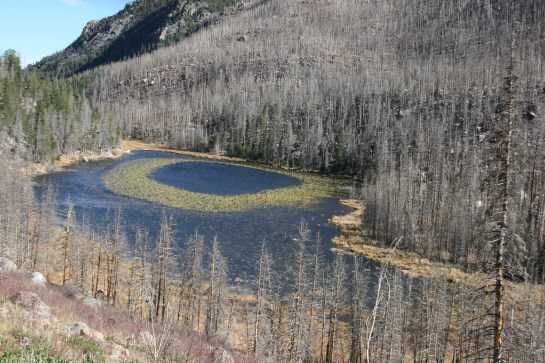
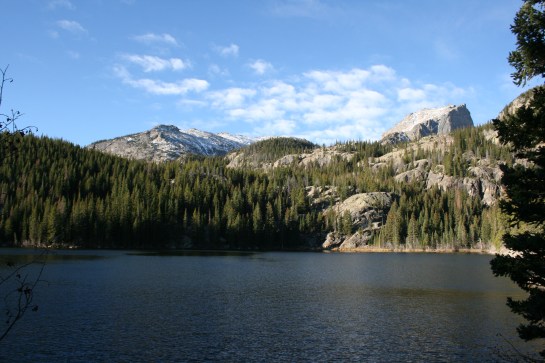
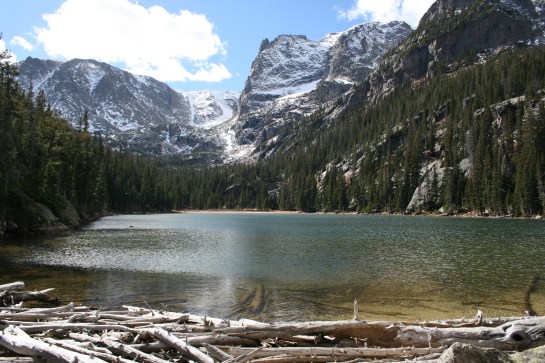
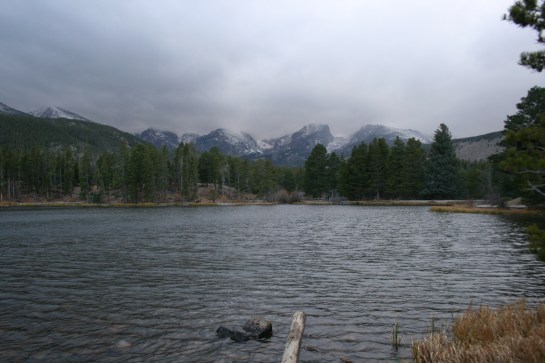
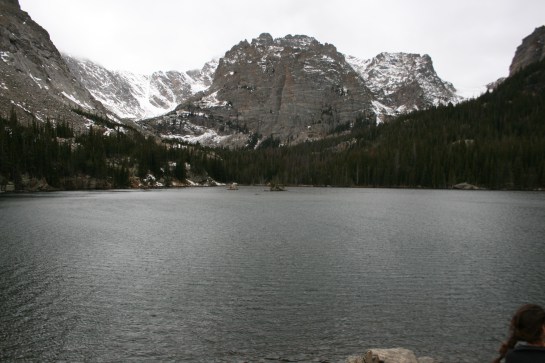
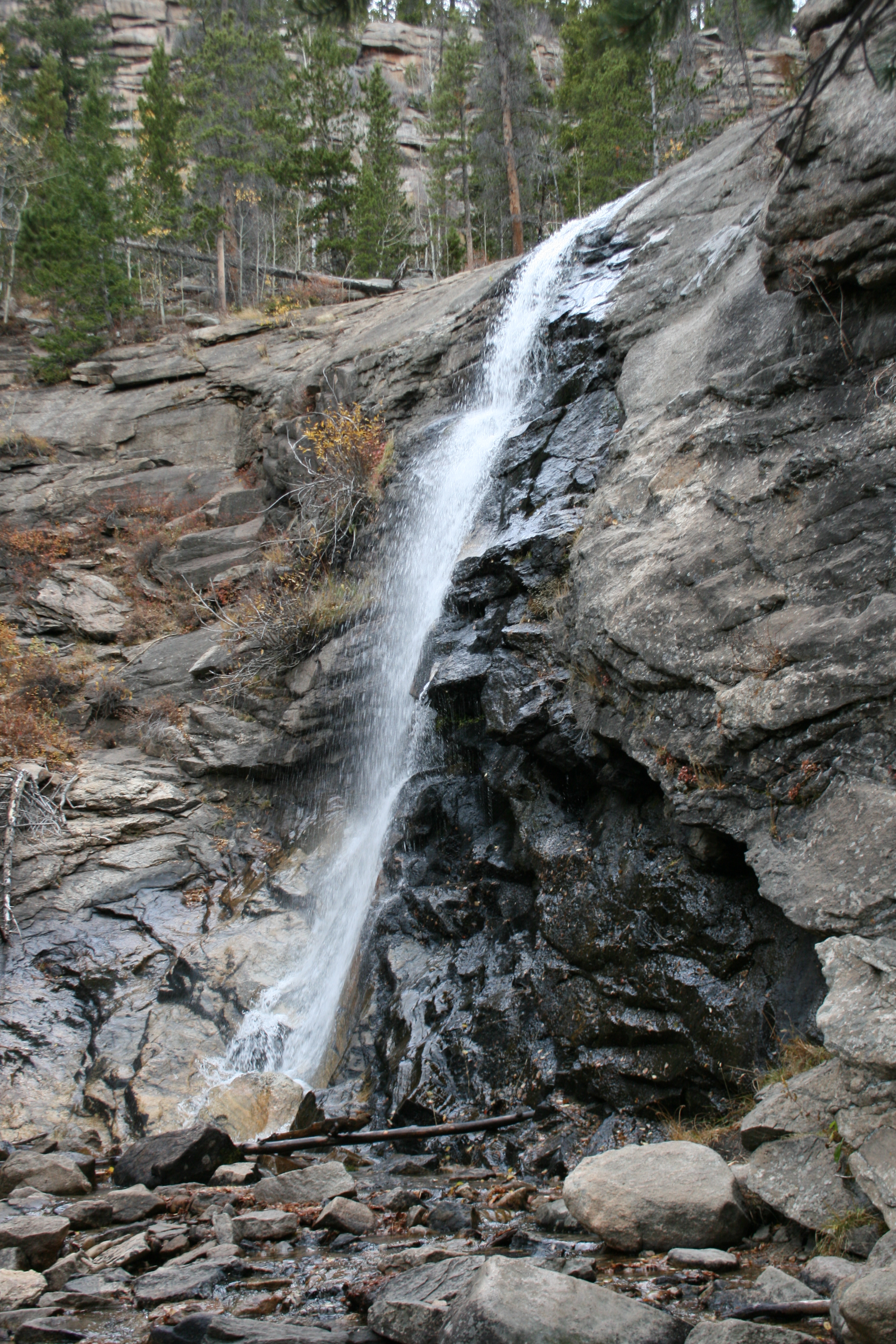
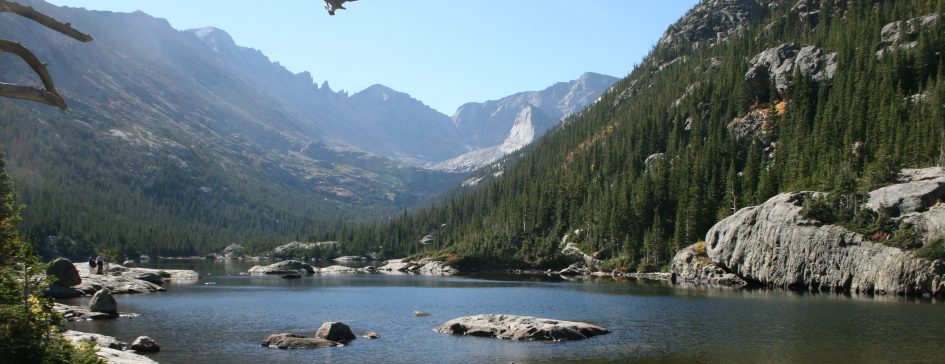
I spent 3.5 days hiking 45 miles hiking over 8000 ft in the Rockies two weeks ago.  Evening were spent working on my infrastructure book. It snowed on my 2.5 days of the time.  Winds 60 mph at Mills Pond, but it was all good.  Hiking in the cool weather is the right way to do it.  Thank goodness for lined jeans.  300+ elk.  50+ deer.  No coyotes but I heard them.  Most of the leaves were gone, but caught a few.  One spot near Cub Lake had a gold carpet of fallen leaves.  Take a look…

img_9371

Golden carpet

img_9489Cub Lake

img_9536Lake Helene

img_9460Bear Lake

img_9542Emerald Lake

img_9541Dream Lake

img_9478Odessa Lake

img_9483Fern Lake

img_9570Sprague lake

IMG_9557.JPGThe Loch

img_9562Mills Pond (note the chop in the water – 60 mph winds w snow)

img_9546Lake Hayiaha

IMG_9629.JPGBridal Veil Falls

img_9635Balanced Rock

img_9600Big Bull elk

img_9452

Colors

In have been a very warm fall so far despite the snow.  The west side still has no snow in the valley.  Here is hoping they get lots this winter.  See you next year RMNP!


The Flint saga continues.  The latest is that they continue to use Detroit water, but will convert to the new Lake Huron supply in 2018. The argument now is who’s water plant will be used. The County is building a plant.   John Young notes that the Mayor of Flint wants to use their own plant.  I think we know how that worked out last time. All the non-elected officials overseeing the City say buy from Genessee County.  Should be interesting to see how that plays out.

Meanwhile Midwest regional EPA officials appear are being criticized for failing to deal with the problem in a timely fashion.  EPA delayed their emergency declaration for 7 months, but EPA says the state action prevented EPA from acting.  This is exactly what the states asked for when they persuaded Reagan to delegate authority from EPA to the states.  Then the finger pointing starts when state officials do not react quickly because the state legislature cut their budget and no one is asking about that like they did in Walkerton in 2001.  It could have been predicted especially when too many states have legislatures that want to starve the bureaucracy.  But they forget why the bureaucracy was there to begin with – because something bad happened and government reacted to it by passing laws and creating oversight.  Delete the oversight and bad things happen.  It is human nature.

That will play out, but there still is the problem of the people who made the decisions in the first place.  As the elected officials in the class I taught this summer noted, it was a political decision to save money that created this problem to start with, not an operation issue.  The operational issue came up after the elected officials decided to start up a 50 year old plant that had not been run more than 18 months in 50 years, and after improvements were quickly made to the plant, but never tested.  Not sure how the engineers (sorry) let that happen, but why is it that no elected officials have been scrutinized for their bad decisions?  It makes us all look bad and sends a poor message to the residents of the country, not just Flint.


Happy Halloween.  It is time for trick or treat.  Unfortunately the Sunday SunSentinel headline was a trick, not a treat.  “We’re Going to make them suffer,” was the headline – attributed to former Dania Beach Mayor and Commissioner, and now Broward Planning Council chair Anne Castro.  Oooops.  Now anyone driving in Broward County knows that the signals are not timed, which creates traffic issues during rush hours.  Everyone I talk to has the same complaint and similar stories.  I recall driving home late at night from my Dad’s condo realizing one street with a posted 45 mph sign, required people to go 52 to make the lights.  Wrong message.  Closer to my house, a main road required me to stop at every traffic light at midnight, for reasons still unclear to me.  No cross traffic.  No commercial activity.  Engineers with the County say there is too much traffic to fix it in Mondays paper despite the computers to simulate and controllers to adjust timing by cycle.  But my Dad pointed out that Detroit figured it out in the 1930s on Woodward Avenue, by hand.  I95 is being widened to add express lanes and improve traffic flow.

But the trick did not stop there.  The front page story followed with this nugget:  “Until you make it so painful that people want to come out of their cars, they’re not going to come out of their cars.”  Um, ok, but I think we have a penny sales tax referendum going on to help fund transit and transportation, but this is not helping.  Having worked for a transit company, people do not ride unless the buses come frequently enough that they don’t have to wait long.  It is a double edged sword which is why heavy investments (and losses) are required to get transit started.  Once people get used to using it, and it is convenient, they keep using it.  The bus or train ride length is less important, it is the wait that matters.  People will ride an hour if they only wait 10 minutes to get picked up.  And don’t have to walk far on either end because heat & rain matter.  I recall going to a Miami Heat game a number of years ago.  Taking TriRail and the MetroRail worked great, until I realized that there was no train back.  Not convenient.  Had to drive.  In rush hour.  Haven’t gone back.  It was so irritating I decided not to go. Not the solution business wants so I think maybe we need to rethink that statement.  Transit would help, but is needs to be convenient.  That’s what we should be selling.