Archive

Tag Archives: management


June was a tough month and looking back I realize I really didn’t post.  I was in Chicago, spent 2 weeks with middle schoolers, prepared my promotion package, god the doors completed on the house, etc. and suddenly it was the 4th of July.  Yikes time flies.  But it was interesting.  Here I want to talk a little about Chicago.

I went to Chicago to do a 3 day, 12 hour class with elected officials.  Most are board members for their local utility, but they went from a small South Carolina system to San Antonio and St. Paul.  A huge variety.  And we learned a lot.  Obviously the Flint crisis was on their minds.  But I thought the most interesting thing was that these folks understood what happened.  I asked what they thought the real issue was in Flint and the resounding answer was – politics.  Bad decision-making.  Poor preparation.  Notably, not lead service lines.  These people got it.  They read behind the headlines.  Of course these are the officials that wanted to learn more about their water and sewer systems, as opposed to the many that do not take the time to, but interesting nonetheless.

Another issue was talked about was finances.  I ask them to bring their budget, water use, pipelines, etc.  The goal is to do a quick comparison between systems and then discuss what it means (if anything).  I have started doing the exercise each year and we find the same thing – smaller systems cost more per thousand gallons to run than larger systems, so hence their rates must be higher or they are not doing repairs and replacements on a timely basis. This group got that as well and understood that comparisons of their system to others needed to be carefully vetted.  No two system are alike, but size, treatment, terrain can all affect costs to the customer.

We also talked about leadership.  I am applying for an AWWA project on leadership, but when asked, these folks had some great answers. They see leadership as a personal trait (inspiration, vision) as well as being driven by event (negotiating crisis or change), and having the ability to bring people along through the rough patches.  Leadership is an issue that needs more exploration, but I thought this was a good start to preface the larger survey I hope to do for AWWA’s members.

In the meantime, I learned a lot about the Chicago River bridges, enjoyed the planetarium, a Cubs night game, Millenium Park and a walk along the waterfront.  Very cool.


WTPspiractorI have a question – what was the impact of the 2008 economic crisis on water and sewer infrastructure funding?  I have a hypothesis – the amount of monies transferred to non-water and sewer operations increased.  Is the hypothesis true?

The next question to answer is that if transfer monies increased, did they decrease once property values started to come back?  My hypothesis is no.

Finally what impact does this have on water and sewer infrastructure going forward?  I suspect that the answer is that we underfund infrastructure or justify the lack of funding through actuarial means (I actually had a utility director tell me that his pipes were designed to last 250 years.  Seriously.  Of course that is nonsense, but it is a means to keep your need for replacement funding down).

I have a student and we are working on these issues now.  We are going to gather data from several hundred utilities over the next six months, crunch 11 years of data and let’s find out.  If you or your clients are interested in adding your data to the mix, please send it to me.  I need 2005 -2015 expenditure info.  Also some operational data like ADF, MDF, miles of pipe, customers, treatment type and CCR. We will be publishing the results.   Should be interesting……


DSCF0032Curtailed water use and conservation are common topics of conversation in areas with water supplies limitations.  As drought conditions worsen, the need for action increases, so when creating a regulatory framework, or when trying to measure water use efficiency, water supply managers often look for easily applied metrics to determine where water use can be curtailed.  Unfortunately, the one-size-fits-all mentality comes with a potential price of failing to fully grasp the consequences decision-making based on such metrics.

One of the issues that water supply regulator like to use is per capita water use.  Per capital water use is often used to show where there is “wasted” water use, such as excessive irrigation.  However such a metric may not be truly applicable depending on other economic factors, and may even penalize successful communities with diverse economic bases.  A heavy industrial area or dense downtown commercial center may add to apparent per capita use, but is actually the result of vibrant economic activity. Large employment centers tend to have higher per capital use than their neighbors as a result of attracting employees to downtown, which are not included in the population.

In south Florida, a recent project I was involved with with one of my students showed that while there was significant variability among utilities, but the general trend of increased economic activity was related to increased per capita use.  Among the significant actors were health care, retail trade, food service and scientific and technical services.  It appears to be these sectors that drive water use upward.  As a result when evaluating the efficiency of a utility, an analysis should be conducted on the economic sectors to insure that water regulations do not stifle economic growth and jobs in a community.   And conversely if you do not have these sectors, you water use should be lower.  Something to think about when projecting or regulating water use.  Limited water use may in fact be limiting economic activity in the area. Of course if you are water limited, limited new withdrawals may be perfectly acceptable if you want to encourage other options, like direct or indirect potable reuse, irrigation, etc.  

It would be interesting to expand this study across the country to see what the national trends look like and how different tourism oriented South Florida might actually be.


Fred+Bloetscher+Senate+Committee+Holds+Hearing+cQCSwINqgm3l

Water and wastewater utilities spend a lot of time dealing with current issues =- putting out “fires.”  But there are larger trends that will affect the industry.  Here are a couple recent topics that we should consider in our industry:

Will robots be doing all our repetitive jobs?  If so what does that mean for all the people doing those jobs now.  Most do not require a lot of skills, and many of those in the jobs that will be lost, do not have the skills for other jobs?  Does the $15 per hour minimum wage accelerate this transition?  How does this affect the water industry?  Meter readers might be replaced with AMR systems.  Customer service is already migrating to direct banking.  There is a change coming.

What does the driverless car mean for us?  I am thinking about an old Arnold Schwartzenegger movie.  For utilities the issue may be how we interact with unmanned vehicles, especially when what we do can be disruptive to traffic.  What happens if those cars get into an accident?  And Warren Buffett is thinking about the impact of this on the insurance industry.  He owns a lot of GEICO stock.  It is doubtful many utility vehicles will be unmanned, in the near-term, but do our manned vehicles and the potential disruption leave us open to greater risk of loss?

Speaking of Warren Buffett says the economy is far better than certain candidates suggest.  I tend to trust Mr. Buffett.  He’s been doing this a long time and has been fabulously successful.  But he notes structural changes to the economy like those noted above, are ongoing.  That will create conflict for certain professions that migrate to automation, much as manufacturing did in the 1970s.  He raises concern about what happens to those workers and suggests that we have not planned enough for those workers who get displaced as the economy undergoes continuing transitions.  In the late 1970s we had CETA and other jobs training programs as we moved from manufacturing to other jobs.  He does not see that in place now.  The at-risk – the poor, minorities, the less educated, rural citizens…. in other words, the usual groups will be hit harder than the rest of the population.  I don’t hear that discussion on the campaign trail but utilities may want to follow these trends is the hope that we can acquire some of the skillsets that we need.  Or provide that training.

Florida’s flood protection plan received a C- from a study called States at Risk.  It said Florida lacks a long term plan for rising seas, despite being vulnerable.  On an unrelated note, the state is expecting insurance premiums to increase 25% or more for flood insurance for homeowners.  And local officials are working busily on FEMA maps to exclude as many properties as possible from flood insurance requirements.  Maybe those things are all related, just at opposite purposes, but who is going to get the calls when flooding occurs?  Storm water utilities, and sewer systems where the manholes are opened to “facilitate drainage.”  The question is what the ratings are for other states as Florida was not the least prepared nor is it the only state with exposure.

A final current trend to think about is this:  Current sea level rise projections have increase the high end, but remained steady for the 50 percentile case.  By 2200 we may see seas at 10 ft higher. That would be a major problem for south Florida.  But the world population will be over 15 billion, which exceeds the carrying capacity of agriculture (at present projections and techniques).  It also places over half the world in water limited areas.  So sea level rise is going to be huge in south Florida, but will concern be localized because of more pressing issues?   Is the number of people going to be our biggest issue in 2200?  Note both will be critical for a large portion of those 15 billion people, but the solution to either is…..?


photo 2A week or so ago, on a Sunday afternoon, I flew across Middle America to Colorado for a meeting and was again struck by the crop circles that dominate the landscape west of the Mississippi River.  They are everywhere and are a clear sign of unsustainable groundwater use.  I recently participated in a fly in event for National Groundwater Association in Washington DC, where several speakers, including myself, talked about dwindling groundwater levels and the impact of agriculture, power and economies.  The impact is significant. Dr. Leonard Konikow, a recently retired USGS scientist, noted that he thinks a portion of sea level rise is caused by groundwater running off agriculture and from utilities and making its way to the ocean. He indicated that 5% of SLR each year was caused by groundwater runoff, and has upped his estimates in the past 10 years to 13%.  This is because it is far easier for water to runoff the land than seep into rocks, especially deep formations that may take many years to reach the aquifer.  And since ET can reach 4 ft below the surface, many of the western, dry, hot areas lose most of this water during the summer months.  Hence the impact to agriculture, and the accompanying local communities and their economies will be significant.

It should be noted that the US is a major exported of food to much of the world, including China, so the impact on our long-term economic trade may be significant.  Fortunately the power industry has historically preferred surface waters, but must as power demands increase, they have begun to explore groundwater in rural areas without access to surface waters.  Keep in mind that air-cooled power plants are 25% or more less efficient than water cooled systems and many of these communities lack sufficient reusable water supplied to substitute for cooling.  Hence the projection is a long term negative impact on all of us.

So the question is why isn’t the federal government talking more about this problem?  Is it fear of riling up local political officials that see growth at all costs as necessary?  It is private rights arguments that may spawn lawsuits?  Is it a lack of interest in long-term?  Or the idea that “we have always found a way”. Or is it just buried heads in the sand, leaving the next generation to deal with the problem?  A big issue, yet we do not talk enough about it.  Maybe this is not a surprise since we have not gotten very far with the discussion of limited oil, precious metals, phosphorous or other materials, and unlike them, water appears to be renewable globally.  But water is location specific.  If you have it, great.  If you lose it, a problem.  There are several recent journal articles that make the argument that much of the strife in the Middle East and Africa is water depletion related: water depletion kills local economies.  So we need to ask –what happens if we ignore the looming crisis?  Do we create more “Bundy-type” actions in the rural, dry west because they already lack water?  I suggest it is a cause for concern.


How to Predict the next Flint?

IMG_4803In the last blog we talked about Flint’s water quality problem being brought on by a political/financial decision, not a public health decision.  Well, the news get worse.  Flint’s deteriorated water system is a money thing as well – the community has a lot of poverty and high water bills, so they can’t pay for improvements.  They are not alone.  Utilities all over the country have increasing incidents of breaks, and age related problems. So the real question then is who are the at risk utilities?  Who is the next Flint?  It would be an interesting exercise to see if a means could be developed to identify those utilities at risk for future crises, so we can monitor them in more detail as a means to avoid such crises.

So what would be the measures that might identify the future “Flint?”  These could be things like age of the system, materials used, economic activity trends, income, poverty rate, unemployment rate, utility size, reserves, utility rates, history of rate increases, etc.?  Could these be developed into a means to evaluate risk?  If so, who would use it and how would we address the high risk cases?  I suggest that lenders have means to evaluate this using many of these same measures, but from a risk of events, this method has not been applied.  So I think this would be a useful research project.  So if anyone has some ideas, time or ideas for funding, let me know.  Let’s get rolling!


I was at a recent AWWA technical and Education Council meeting in Denver. One of the major discussions was the issues with lead service lines as highlighted by the current problem in Flint, and how many utilities are now fielding questions about and dealing with lead in their services lines, research that will come for lead, and regulatory requirements for upgrades. One issue that remains unanswered is what happens on the customer’s side of the meter, which may also be lead piping. So removing the utility’s lead service would not solve the lead issue completely, but it will help. But why has lead not been an issue in 25 years? Did it suddenly arise?
While the lead has arisen again as a public health topic, the lead and copper rule has been in effect for nearly 30 years and much of the lead and copper testing was conducted in the early 1990s. Most utilities made water treatment upgrades based the findings from the testing, and utilities have been required to continue to monitor their system ever since. Normally lead levels, even when present, were not a health issue because the zinc orthophosphates and other treatment methods kept the pipe
encapsulated. Others like Cincinnati, Lansing, Madison, Boston and others had ongoing programs to replace lead pipes. 30 years ago in North Carolina we changed out lead goosenecks and galvanized lines rather than replace them – it was just easier.
Most of the folks in the room agreed most utilities have or have such programs and that the number of lead service lines and lead goosenecks on the utility side is
limited. So I suggested that maybe the lesson we should learn from Flint is not about lead service lines, but instead the risks we incur with decision-makers who only look at money when making decisions. Flint’s decision to change water sources was driven by money, not public health.
In fact the report just published indicates that public health was not a real consideration at all. But decisions based on money impacted not only Flint, but Alamosa, CO in 2008, where disinfection was not practiced, and Walkerton,
ONT in 2001 where a Flint like set of decisions cascaded into contamination that killed people. There are utiity systems who contract operations and their contract operator makes decisions based on money, and now there is a distribution system problem. This is a repetitive pattern that has less to do with personnel operating these systems, than decision-makers, who tend to look more at the business case or money as opposed to public health. The lesson we need to learn is that money cannot be the
deciding factor when operating public water and sewer system. And to reduce the chance it happens in the future, perhaps there should be penalties if it does.


before+and+after+animas

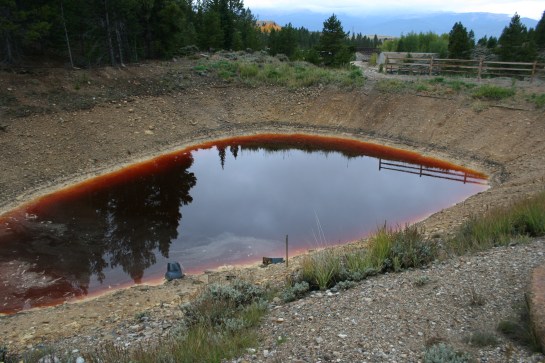
In the last blog we talked about a side issue: ecosystems, bison, wolves, coyotes and the Everglades, which seem very distant form our day-to-day water jobs, but really are not.  So let’s ask another, even more relevant issue that strikes close to home.  Why is it that it is a good idea to store coal ash, mine tailings, untreated mine waste, garbage, and other materials next to rivers?  We see this over and over again, so someone must think this is brilliant.   It cost Duke Energy $100 million for the 39,000 tons of coal ash and 24 MG of wastewater spilled into the Dan River near Eden NC in 2014. In West Virginia, Patriot Coal spilled 100,000 gallons of coal slurry into Fields Creek in 2014, blackening the creek and impacting thousands of water supply intakes.  Fines to come.  Being a banner year for spills, again in West Virginia, methylcyclohexamethanol was released from a Freedom Industries facility into the Elk River in 2014, contaminating the water supply for 300,000 residents.   Fines to come, lawsuits filed.  But that’s not all.  In 2008, an ash dike ruptured at an 84-acre solid waste containment area, spilling material into the Emory River in Kingston TN at the TVA Kingston Fossil Plant.  And in 2015, in the Animas River in western Colorado, water tainted with heavy metal gushed from the abandoned Gold King mining site pond into the nearby Animas River, turning it a yellow for dozens of miles crossing state lines.

Five easy-to-find examples that impacted a lot of people, but it does not address the obvious question – WHY are these sites next to rivers?  Why isn’t this material moved to more appropriate locations?  It should never be stored on site, next to water that is someone else’s drinking water supply.  USEPA and state regulators “regulate” these sites but regulation is a form of tacit approval for them to be located there.  Washington politicians are reluctant to take on these interests, to require removal and to pursue the owners of defunct operations (the mine for example), but in failing to turn the regulators loose to address these problems, it puts our customers at risk.  It is popular in some sectors to complain about environmental laws (see the Presidential elections and Congress), but clearly they are putting private interests and industry before the public interest.  I am thinking we need to let the regulators do their job and require these materials to be removed immediately to safe disposal.  That would help all of us.


IMG_7871

Most water suppliers realize that the more natural their land is upstream of their water supplies, the less risk there likely is for their customers.  Under the source water protection programs that state, local officials and water utilities implement, the concept is to keep people related activities out, and let the natural forests and landscapes remain.   For the most part the natural areas support only a limited amount of wildlife (sustainable) and thereby there natural systems are attuned to compensate for the natural pollutant loads, sediment runoff, ash, detrital matter, etc., that might be created through natural processes.  For thousands of years these systems operated sustainably.  When people decide there needs to be changes, it seems like the unanticipated consequences of these actions create more problems.  Now many of these same ecosystems do not work sustainably and water quality has diminished, increasing the need for treatment and the risks of contamination to the public.  It would be better, but decidedly less popular on certain fronts, to provide more protection to natural systems that extend into watersheds (which is most of them), not less.

So this leads to a series of questions that go to the greater questions about natural environments:

Is it really necessary to cull the small Yellowstone bison herd by 1000?  What do bison have to do with watersheds?  Well, the bison create much less damage to grasslands and underlying soil than cattle due to the size of their hooves.  An argument is that we need to cull the herd because they transmit disease to cattle, but Brucellosis has never been demonstrated to move from bison to cattle, so disease is not an answer.  What is really happening is that there is competition between buffalo and cattle for grazing.  Competition with cattle means that the cattle are on public property, not private ranch lands, and the cattle trample the public lands which creates the potential for soil erosion and sediment runoff.  So I am thinking water folks should be siding with the bison. Of course without wolves, there is no natural predator for bison, which raises a different sustainability problem, so maybe instead of killing them, we move them to more of their native ranges – maybe some of those Indian reservation might want to restart the herds on their lands?  That might be good for everyone, water folks included.

Part 2 – is it necessary to continue to protect wolves or should we continue to hunt them in their native ranges?  Keep in mind wolf re-introduction efforts are responsible for most of the wolf populations in the US, specifically in the Yellowstone area.  Without wolves, there is no control of large grazing animal populations (see bison above, but also elk and deer), and there is a loss of wetland habitat because the elk eat the small shoots used by beavers to build dams and trap sediment.  Eliminating wolves has been proven to create imbalance.  Wolves = sediment traps = better water quality downstream.  Sounds like a win for everyone. (BTW there is a program in Oregon to protect wolves and help ranchers avoid periodic predation of calves by wolves so they win too).

Part 3 – Is it really necessary to kill off coyotes in droves?  The federal government kills thousands of coyotes and hunters and others kill even more.  This is a far more interesting question because it leads to one of those unintended consequences.  !100+ years ago people decided wolves were bad (we still have this issue ongoing – see above).  So we eradicated wolves.  No wolves means more rodents, deer, elk, etc. which mean less grass, less aspens and less beavers, which means more runoff which does not help water suppliers.  It also means more coyotes, because there is more food for the coyotes.  Interesting that coyotes have pretty much covered the entire US, when their ranges were far more limited in the past.  Coyotes are attracted to the rodents and rabbits.  But the systems are generally not sustainable for coyotes because there is not enough prey and there is no natural control of the coyotes – again, see wolves above.  A Recent Predator defense report indicates that culling coyotes actually increases coyote birth rate and pushes them toward developed areas where they find cats and small dogs, unnatural prey.  Not the best solution – unintended consequences of hunting them on more distant land pushes them into your neighborhood.  Not the consequence intended.  So maybe we keep the small dogs and cat inside at daybreak and nightfall when the coyotes are out and let them eat the rats and mice that the cats chase and once consumed they go away.   Coyotes need to eat grazers and rodents but you need the right mix or the grazers overgraze, which leads to sediment runoff issues – which is bad for us.  That also seems like a win.

Everglades restoration is a big south Florida issue.  The recharge area for the Biscayne aquifer is the Everglades.  So water there seems like a win for water suppliers?  So why aren’t we the biggest Everglades advocates out there?  Still searching for that answer, but Everglades restoration is a win for us and a win for a lot of critters.  Federal dollars and more federal leadership on restoration is needed.  Which leads to ….

Do we need more, not less management of federal lands?  Consider that the largest water manager in the west is the federal government, which has built entire irrigation systems to provide water to farmers who grow crops in places that are water deficient.  Those farms then attract people to small towns that consume more of the deficient water.  Then people lobby to let cattle graze on those public lands (see bison above), timber removal – which increases sediment erosion, or mining (what could possible go wrong there?).  So since the federal government manages these lands, wouldn’t better regulations and control to keep the federal properties more protected benefit water users and suppliers?  Contrary to the wishes of folks like the guys holed up in a federal monument in Oregon, or the people who have physically attacked federal employees in Utah and Nevada, more regulations and less freedom is probably better in this situation for the public good.  If we are going to lease public lands (and most lands leased are leased to private parties for free or almost free), and there should be controls on the activities monitoring for compliance and requirements for damage control caused by those activities.  There should be limits on grazing, timber and mining, and monitoring of same.  Lots of monitoring.  It is one of the things government really should do.  And we need it to protect water users downstream.  Again a win for water suppliers.

So as we look at this side issue, ecosystems, bison, wolves, coyotes and the Everglades seem very distant from our day-to-day water jobs.  But in reality they are not.  We should consider the impacts they might have on water supply, keeping in mind natural system decisions are often significantly linked to our outcomes, albeit the linkage is not always obvious.

Fred+Bloetscher+Senate+Committee+Holds+Hearing+cQCSwINqgm3l

In my last blog I introduced our ethics project we hope to make progress on.  But here is one of the interesting questions, especially in Florida.  I could not find any actual laws or rules issues here, but it is increasingly common for big engineering contracts to have lawyers, lobbyists, etc. get involved in what is intended to be a qualifications based selection process? There is an interesting issue raised in 287.055 FS (CCNA) where the legal intent is that governmental agencies “shall negotiate a contract with the most qualified firm for professional services at compensation which the agency determines is fair, competitive, and reasonable.” Most states use credentials and qualifications for selection as opposed to cost, because the lowest cost may not get you the best job.  You want people doing engineering that have experience with the type of project you are doing.  This has come up to me with storage tanks, membrane plans, deep wells, etc.  You want someone that has done it before, not someone who is cheaper but hasn’t. There is too much at risk.

In addition the statute is fairly specific about contingent fees (as are most states):

Ch 287.055  (6) PROHIBITION AGAINST CONTINGENT FEES.—

(a) Each contract entered into by the agency for professional services must contain a prohibition against contingent fees as follows: “The architect (or registered surveyor and mapper or professional engineer, as applicable) warrants that he or she has not employed or retained any company or person, other than a bona fide employee working solely for the architect (or registered surveyor and mapper, or professional engineer, as applicable) to solicit or secure this agreement and that he or she has not paid or agreed to pay any person, company, corporation, individual, or firm, other than a bona fide employee working solely for the architect (or registered surveyor and mapper or professional engineer, as applicable) any fee, commission, percentage, gift, or other consideration contingent upon or resulting from the award or making of this agreement.” For the breach or violation of this provision, the agency shall have the right to terminate the agreement without liability and, at its discretion, to deduct from the contract price, or otherwise recover, the full amount of such fee, commission, percentage, gift, or consideration.

So here is the question:  As the public becomes more aware of these types of political lobbying activities, does it move the perception of engineers away from a profession and more towards profession toward developers, lawyers and others who are often seen as less ethical than perhaps engineer, doctors, educators, and scientists?  And if so, is this good for either the engineering profession or the local governments (and their utilities) involved in the selection process?  The comment that “that’s how business get done” is not an acceptable argument when the priority purpose of engineers, and utility operators is the protection of the HEALTH, SAFETY AND WELFARE OF THE PUBLIC.  Somehow I think the politicizing of engineering contracts does not help our profession.  Looking forward to your thoughts.