Archive

What could possibly go wrong?


Most states were doing pretty well before the 2008 recession hit, but that ended in 2009. Most states had to make extremely difficult cuts or raise taxes, which was politically unacceptable. Of course invested pension systems received a lot of attention as their value dropped and long term sufficiency deteriorated, which was fodder for many changes in pensions, albeit not how they were invested. The good news is a lot of them came back in the ensuing 5 years, but 2015 may be different. A number of states have reported low earnings in 2015 and whether this may be the start of another recession. The U.S. economy has averaged a recession every six years since WWII and it has been almost seven years since the last contraction. With China devaluing their currency, this may upset the economic engine. At present there are analysts on Wall Street who suggest that some stocks may be overvalued, just like in 1999. If so, that does not bode well states like Illinois, Kansas, New Jersey, Louisiana, Alaska and Pennsylvania that are dealing with significant imbalances between their expenses and incomes. Alaska has most of its revenue tied to oil, so when oil prices go down (good for most of us), it is a huge problem for Alaska that gives $2200 to every citizen in the state. An economic downturn portends poorly for the no tax, pro-business experiment in Kansas that has been unsuccessful in attracting the large influx of new businesses, or even expansion of current ones. California and next door Missouri, often chided by Kansas lawmakers as how not to do business, outperform Kansas.

Ultimately the issue that lawmakers must face at the state and as a result the local level is that tax rates may not be high enough to generate the funds needed to operate government and protect the states against economic down turns. There is a “sweet spot” where funds are enough, to deal with short and long term needs, but starving government come back to haunt these same policy makers when the economy dips.   It would be a difficult day for a state to declare bankruptcy because lawmakers refuse to raise taxes and fees.


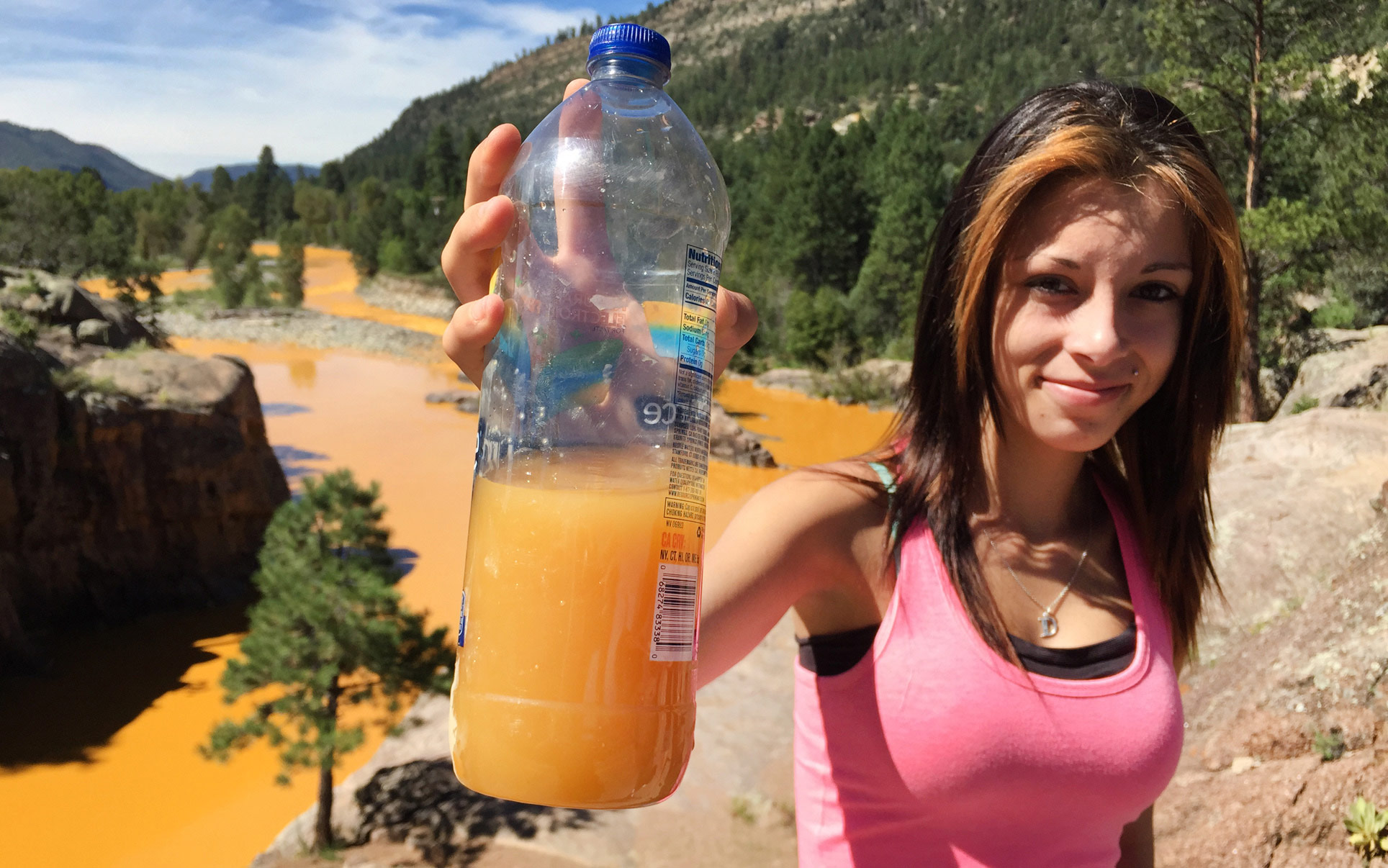
In an interesting twist of fate, USEPA caused a spill on the Animas River when a staffer accidently breached a dike holding back a solution of heavy metals at the Gold King mine because the misjudged the pressure behind the dike.  Pressure?  The spill flowed at 500 gpm (0.7 MGD), spilling yellow water spilled into the river.  Downstream, the plume has travelled through parts of Colorado, New Mexico and Utah, and will ultimately hit Lake Mead.  Officials, residents, and farmers are outraged.  People were told not to drink the water because the yellow water carried at least 200 times more arsenic and 3,500 times more lead than is considered safe for drinking. The conspiracy theorists are out.  The pictures are otherworldly.

colorado-mine-spillRayna Willhite holds a bottle of water she collected form the Animas River north of Durango Colo., on Thursday, August 6th, 2015. About a million gallons of toxic mine waste emptied out of the Gold King Mine north of Silverton that eventually made it into the Animas River. (Jerry McBride/Durango Herald via AP)

0807 colo spill epa-spill-

But they are all missing the point, and the problem.  This is one of hundreds of “legacy disasters” waiting to happen.  We are just surprised when they actually do.  A legacy disaster is one that is predicated on events that have happened in the past, that can impact the future.  In some cases the far past.  There are two big ones that linger over communities all over the west and the southeast – mines and coal.  Now don’t get me wrong, we have used coal and needed metals form mines.  That’s ok.  But the problem is no one has dealt with the effects of mining or coal ash for many years.  And then people are upset.  Why?  We can expect these issues to happen.

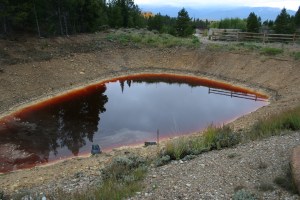
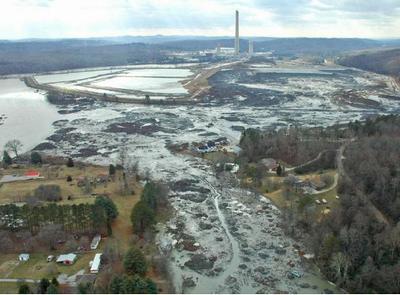
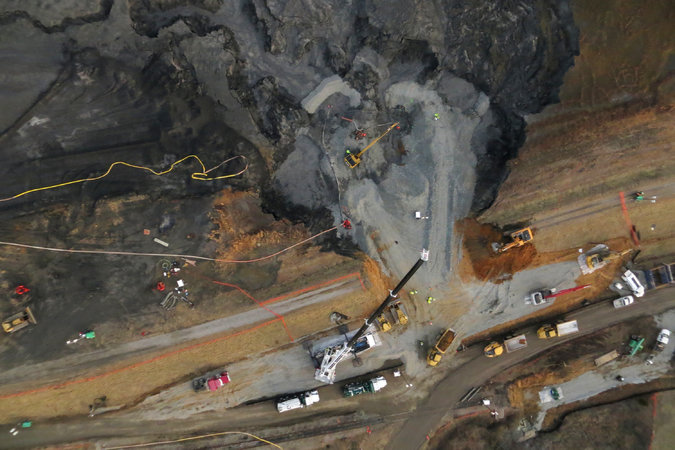
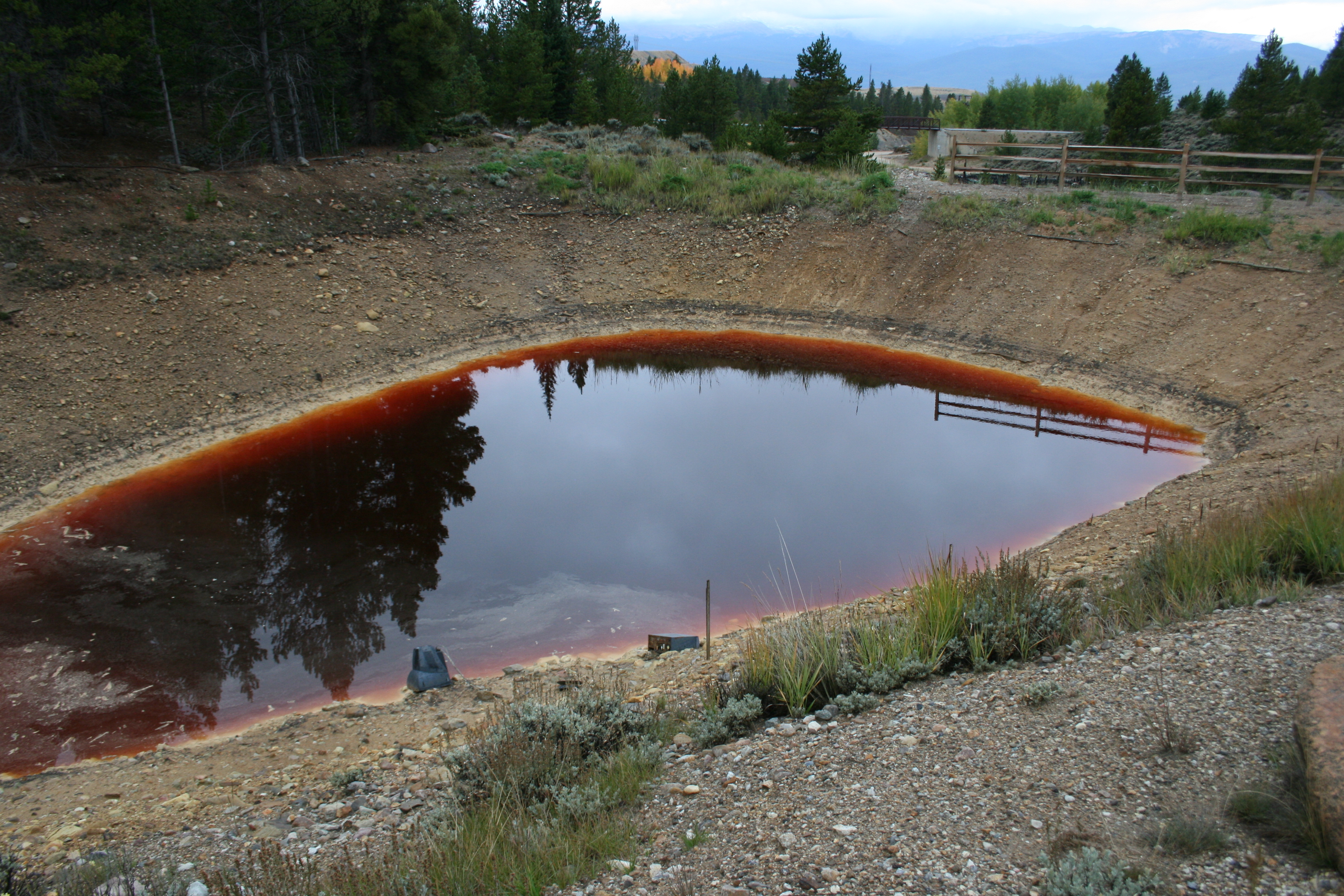
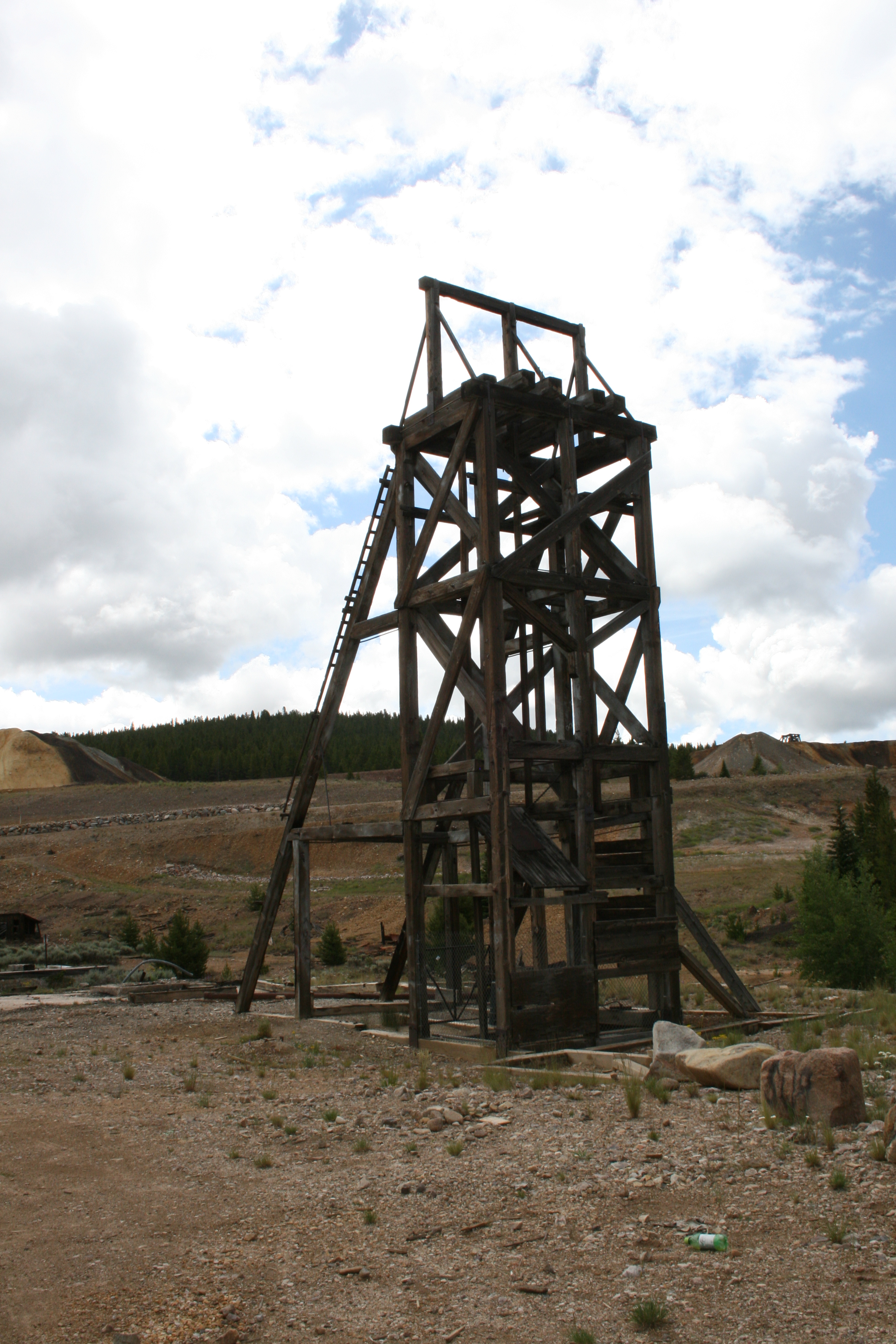
One major problem is that both are often located adjacent to or uphill from rivers.  That’s a disaster waiting to happen.  The King Gold mine is just the latest.  We had recent coal ash spills in Kingston, Tennessee (TVA, 2008) and the Dan River in 2014 (Duke Power). The Dan River spill was 30-40,000 tons.  Kingston cleanup has exceeded a billion dollars.  Coal ash is still stored at both places.  Next to rivers.  We had the federal government build ion exchange facilities in Leadville, CO and Idaho Springs, CO to deal with leaking water from mine tailings from the mountains. Examples are in the hundreds.  The photos are of the two coal spills, mine tailings that have been sitting the ground for 140 years in Leadville and one of the stormwater ponds – water is red in Leadville, not yellow.
kingston_coalash POLLUTE-master675 IMG_4803 IMG_6527 (2015_03_08 17_53_48 UTC)

When the disaster does occur, the federal government ends up fixing it, as opposed those responsible who are usually long gone or suddenly bankrupt, so it is no surprise that EPA and other regulatory folks are often very skeptical of mining operations, especially when large amounts of water are involved.  We can predict that a problem will happen, so expensive measures are often required to treat the waste and minimize the potential for damage from spills.  That costs money, but creates jobs.

For those long gone or bankrupt problems, Congress passed the Superfund legislation 40 years ago to provide cleanup funds.  But Congress deleted funding for the program in the early 2000s because they did not want to continue taxing the business community (mines, power plants, etc.).  So EPA uses ARRA funds from 2009.  And funding is down from historical levels, which makes some businesses and local communities happy.  The spectre of Superfund often impacts potential developers and buyers who are concerned about impacts to future residents.  We all remember Love Canals and Erin Brockovich.  Lack of development is “bad.”  They ignore the thousands or jobs and $31 billion in annual economic activity that cleanup creates, but it all about perception.

But squabbling about Superfund ignores the problem.  We continue to stockpile coal ash near rivers and have legacy mine problems.  Instead we should be asking different questions:

WHY are these sites permitted to store ash, tailings, and liquids near water bodies in the first place?  EPA would not be inspecting them if the wastes were not there.

WHY aren’t the current operators of these mines and power plants required to treat and remove the wastes immediately like wastewater operators do?  You cannot have millions of gallons of water, or tons of coal ash appear overnight on a site, which means these potential disasters are allowed to fester for long periods of time.  Coal ash is years.  Mine tailings… well, sometimes hundreds of years.

One resident on the news was reported to have said “Something should be done, something should be done to those who are responsible!”  Let’s start with not storing materials on site, next to rivers.  Let’s get the waste off site immediately and disposed of in a safe manner.  Let’s recover the metals.  Let’s start with Gold King mine.  Or Duke Power.  Or TVA.

ASCE came out with more bad news about infrastructure.  60 Minutes did a piece about deterioration of bridges. The magazine American City and County has published a couple articles about the risks of aging infrastructure.  Asset management is practiced by few governments, and even fewer small ones.  The public doesn’t want to foot the bill and lobbyists want taxes cut further.  Where does it end?

The infrastructure crisis is a political and business leadership crisis.  Or vacuum.  The economy of America and much of the developed world was built on advanced (for their time) infrastructure systems constructed by governments with a vision to the future.  Some of this infrastructure was repurposed (federal interstate system for example), but much of it has addressed critical issues that hampered our development.  For example, the lack of water severely inhibits many third world nations.  Even when they have water, it is unsafe to drink or use.  In America, at the turn of the 20th century 1:100,000 people DIED each summer from typhoid.  Just typhoid, not all the other waterborne disease options.  Many more were sick.  And the population was much smaller.  Talk about reduced productivity.  Now we have advanced water systems, disinfection practices that protect people and pipes, and few event get sick from contaminated water.  Those that do, become headlines.  You don’t want to be a headline.  Productivity is up.  But we expect good water and can’t see the pipes.

Sewer is an even better example.  People just don’t want to know.  Flush and it’s gone.  But the equipment, treatment and materials may be even more complex than the water system.  But few people get sick from sewage because of the systems we have built.  Now think about third world examples.  Or conditions you have seen in documentaries, the news or movies.  Being in sewage is not a great place to be.  Even the manhole thriving cockroaches agree..

Stormwater is probably the laggard here, in part because changes in development patterns have overwhelmed the old systems.  Miami Beach experienced this when redevelopment replaced small houses on permeable lots with large housed with mostly impermeable property.  Oops.  Meanwhile road and bridges have received a lot of funding – with much to do (see bridge that collapsed on I-75 in Cincinnati a few weeks back).  Most states fund transportation at a magnitude more than water and sewer.

What is the problem?  Local officials do not convey an understanding of these complex system to the public very well.  In part this may be because understanding the maintenance needs is difficult and highly variable.  And many do not fully comprehend the assets they have, their condition, life expectancy or technological needs.  No one knows when things will fails, so maintenance or replacement of some equipment or pipeline is always the thing cut in the budget, with no real understanding of the consequences.

The public does not see the asset, assumes it will have a long life, so is unconcerned until they are affected.  Then it is personal.  The public does not understood the impact or value that these assets have to society – they tend to be personal focused, not societal.  That is a leadership issue.  That leadership starts with vision and communication from those that understand the issue to the elected officials that need to advocate for their infrastructure.  Elected officials need to take ownership of infrastructure.  It is like your house – you need to upgrade and protect it constantly.  You do not let that roof leak keep leaking!  Elected officials that do not invest in infrastructure, are letting the roof leak.  Making is someone else’s problem for political expediency is not leadership.

Despite the infrastructure crisis, the good news is that construction of piping is increasing – both new and replacement.  Every so many months, the magazine Utility Contractor will note current trends and pipe seems to be going up.  That’s good but there is a long way to go.  Better news – the construction of buildings is increasing.  That could lead to more revenues.  In Florida, all of a sudden finding experienced construction workers is a problem.  Things are definitely better economically, but are we taking advantage to improve the local infrastructure, or is you economy simply an infrastructure disruption away from another fault?


Orange County, FL has become the second school district I know of that has decide that giving students a zero on a assignment causes the kids to lose hope of passing so they just quit.  To address this problem, the worst grade you can give them is a 50 instead of a zero.  That way they can recover from one missed assignment.  Huh?!?!  No, you read this right.  The school superintendent was quoted in the SunSentinel as saying that only 43 percent of the students who received a 50 actually recovered to pass the class with a D.  I have several questions.  First, how does this policy teach these kids any responsibility?  For the kids that do their work, how is that fair?  What message does this policy send to the kids?  Be a lazy dumbass and do nothing and you can still pass?  That reinforces the concept of entitlement which we all agree is a problem in society that we need to overcome.  Finally, if one missed assignment causes the kids to fail, why are there not more assignments so missing one is not fatal?  That is what happens with my students (who still get a zero for not doing an assignment).

It would seem that such a policy is not based on an educational goal but more like a political one to improve school perception.  That is as bad an idea as having kids beg for money for uniforms and class trips etc.  Kids do not sell anything they just beg for money.  So are we teaching them that begging and panhandling is an acceptable career?  Seriously what impression does that provide to these young minds?  How does either experience prepare kids for the real world where doing nothing gets you fired, not rewarded, and begging for money vs actually work is also not rewarded.

Once upon a time, education was the purview of the wealthy.  American businesses argued that a basic education was needed to train a workforce for industrial jobs.    The American public education system was created with this in mind- to train the next generation of workers.  With education came great social and economic advancement.  We clearly are deviating from that goal.  Students need a good foundation in math, writing and reading (in English!), civics and science so they understand social responsibility, can communicate, understand how things work the world and can solve complex problems.  They do not need pseudo-science or politicized science, but real science.  Business understands this.  But where is the business community on job training in schools?  It would seem the business community has abdicated their responsibility to local districts who are trying to meet political goals, not economic goals.  Why are we not using all the extensive testing to figure out the strengths of students and encourage them to play to those strengths? Not every kid can go to college, or should, but that does not mean they cannot achieve or be successful.  They may need different training to hone their strengths.

Back in the day my Dad told me that as the education system was developed in his hometown of Detroit, students were given aptitude tests.  I was also.  The kids were divided up based on skills and aptitude.  Students were even sent to different schools as they got older that tailored programs to their interests and skills set.  Kids that the schools system felt had the aptitude to succeed in college had different courses than students that were less academically included but perhaps more mechanical, more artisan, more labor, clerical, etc.  Different kids go training to help them succeed with their skills.  Less academic did not mean less inclined to succeed or be successful. just differently.  And they had a better chance to be successful.  We seem to miss that today.

Today we have parents insisting that everyone be treated the same, and that no kid gets left behind.  But putting kids with different aptitudes, maturity, and academic inclinations in one class is destined to either fail for all, or fail for everyone but the average.  Such a protocol begets policies like Orange (and Broward) County that direct teachers to adjust grades so “Little Johnny” doesn’t feel bad.  Extensive college prep testing and disconnected learning discourage the less academic kids, leading to dropping out, or other behaviors.  Such policies and expectations by parent and political leaders are not helpful for building an educated society.  Instead we need to search further into the root causes.  Are there too few assignments?  Are they too disconnected for students to appreciate?  Should we sort out strengths and treat different students differently to discourage disinterest?  How do we assess their strengths and design programs to help students succeed.   And who takes responsibility for these kids?  And perhaps we should revisit some of the lessons learned from the early years of the industrial development (1930s) to figure out what they did well, and see how policies today frustrate those goals.  Maybe the way forward is rooted in the past.


IMG_7871

How did southeast Florida not end up on the list of US cities with the worst drivers?  This seems like an annual rite for us and if you have lived down here you know why.  Things have not improved, so what does that say for Worcester, MA, Boston, Washington DC and Springfield MA that they took the top 4 spots?  Sometimes it is good not to be number 1!  LOL

A group called Idaho for Wildlife requested and got approval for a hunting contest open to children on public lands whereby they will attempt to be the child who kills the most wolves.  What could possibly go wrong here?  First the only ones with guns are children.  Those children are running around public lands trying to shoot the most wolves.  We assume there are people with them, but since they are trying to kill the most wolves, I would expect more shooting than normal.  So what if the critter is a coyote or fox or missing German shepard or guy working on a water system?  And aren’t we trying to bring wolves back because we have figured out that eliminating them vastly impacts the ecosystem negatively.  Maybe if Idaho for Wildlife (interesting misconcepted title) thinks there are too many wolves, wouldn’t trapping a few and releasing them in a place that maybe needs some would be a better idea?